A temp email for Yello is useful for low-stakes signups like employer event registration, talent community opt-ins, and early platform exploration.
It becomes risky once you expect real recruiter follow-ups, interview scheduling, application updates, or any account you may need to recover later.
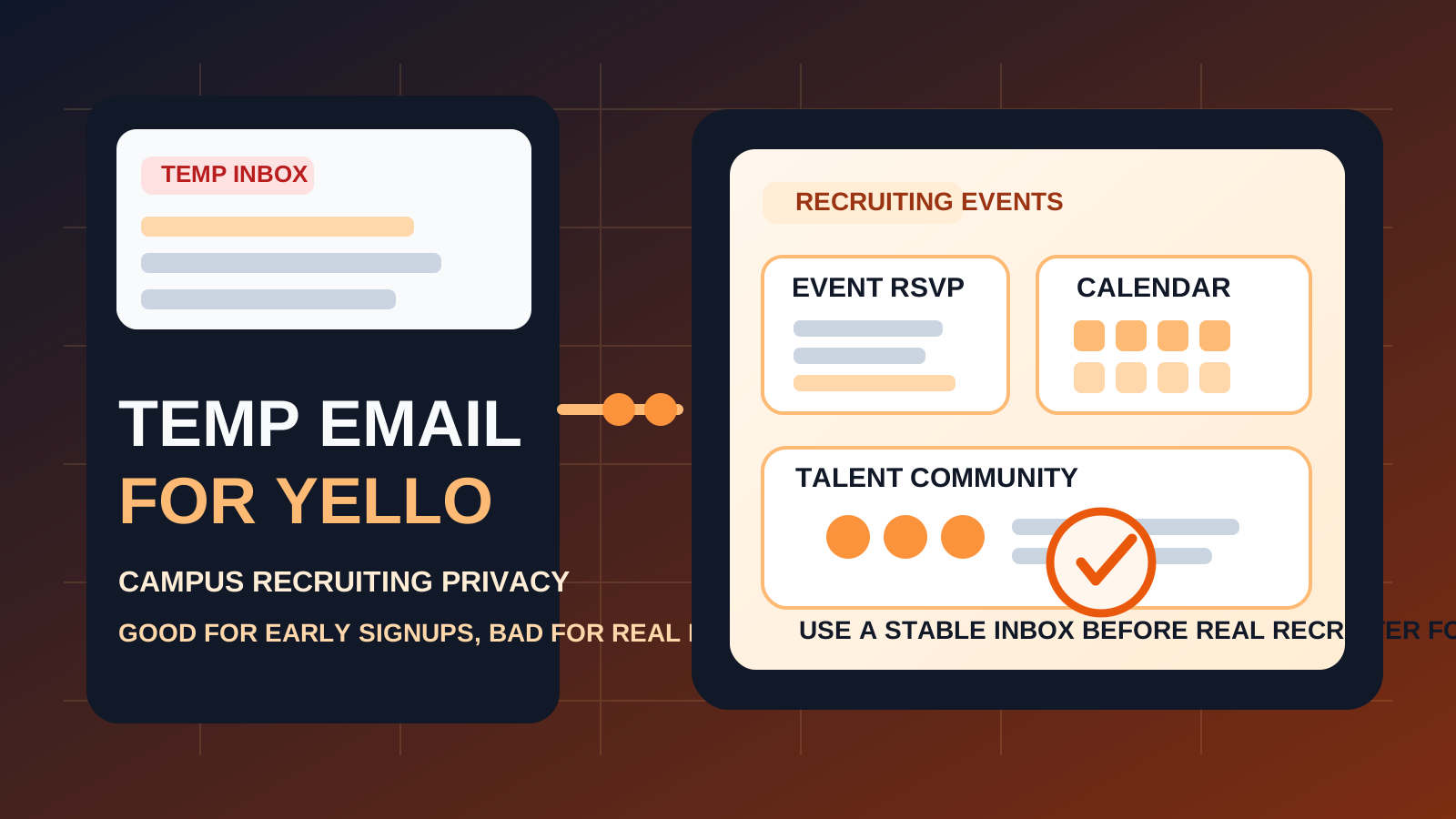
Campus recruiting platforms create a familiar privacy trade-off. On one hand, they make it easier to discover employers, RSVP for events, join talent communities, and hear about internships or graduate roles. On the other hand, signing up too freely can fill your real inbox with newsletters, reminders, promotional follow-ups, and messages from companies you only wanted to check once. That is why many job seekers wonder whether using a temp email for Yello is a smart move.
The honest answer is yes, sometimes. If you are only testing a signup flow, registering for a low-stakes event, or exploring employer pages without committing to a full application, a disposable inbox can be a practical privacy buffer. But if you are applying for roles, expecting recruiter outreach, or relying on the account for future access, temporary email becomes a weak foundation very quickly.
That same pattern shows up across other student and graduate job platforms too, including Handshake, Symplicity, JobTeaser, and Bright Network. Early discovery and inbox protection are one thing. Real applications and recruiter communication are another.
When a temp email for Yello makes sense
There are a few situations where using a temporary inbox is reasonable.
- Exploring the platform before committing: you want to see what kinds of employers, events, or registration flows appear before you start using your main inbox.
- One-off event signups: you are registering for a webinar, campus event, or employer info session and mainly need the confirmation email.
- Testing low-stakes employer discovery: you want to browse opportunities or join an interest list without immediately opening the door to long-term marketing email.
- Separating trial activity from your main job-search inbox: if you already have multiple recruiting tools in play, a disposable address can keep your first-pass research organized.
In these cases, the goal is not to build a lasting identity on the platform. The goal is to protect your primary inbox while still receiving the confirmation link or event details you need right now.
Why people use disposable email on recruiting platforms
Early-stage recruiting tools often create more email than you expect. You might get event reminders, employer nudges, talent-network invitations, profile prompts, and messages encouraging you to complete a signup or return to an unfinished flow. None of that is automatically bad, but it adds up fast when you are checking several tools at once.
If you use a temporary inbox service like Anonibox for this early stage, it can act as a filter. You still receive the useful first message, but you do not immediately give every platform a permanent line into the inbox you use for school, work, or your real application pipeline.
Where a temp email for Yello becomes risky
The problem is not the initial signup. The problem is what happens when a casual signup becomes part of a serious job search.
1. Recruiter follow-ups can matter later than you expect
A throwaway inbox can feel harmless when you first register, but recruiting messages are often not one-and-done. A recruiter may follow up later, an employer may send an updated event link, or a candidate workflow may continue after your first interaction. If the inbox disappears, that thread disappears with it.
2. Real applications need reliable communication
If you use the same account for actual job applications, you are no longer dealing with low-stakes inbox clutter. You may be waiting for interview invitations, application updates, or next-step instructions. That is not the time to trust an address you may lose access to.
3. Account recovery is the obvious weak point
Many people only think about signup day. The bigger risk shows up later, when you need to reset a password, confirm a login, or re-enter an account you created weeks earlier. Temporary email is convenient until the platform expects you to still have it.
4. Your search history gets fragmented
Serious job searching already involves enough moving parts. If some event registrations are tied to one throwaway inbox, some applications go to a school address, and some recruiter messages land in a personal inbox, you create unnecessary friction for yourself. That is especially annoying when you are trying to remember where a company first contacted you.
A practical rule of thumb
Use a temp email for Yello if you are only exploring. Do not use one if you would be disappointed to miss an important follow-up.
That is the cleanest dividing line. Disposable email is good for curiosity, comparison, and inbox hygiene. A stable inbox is better for trust, continuity, and recoverability. Problems start when you treat a serious recruiting channel like a casual experiment.
How to use temporary email without sabotaging your own job search
1. Decide whether this is discovery or a real application path
Before signing up, ask what you actually want from the platform. Are you just checking an event or seeing which employers are active? Or are you looking for internships, graduate roles, or long-term recruiter relationships? If the second answer is even partly true, start with a permanent inbox.
2. Save the one message that matters
If you do use a temp address, treat it like a short-term tool. Save the confirmation message, event invite, or first relevant link immediately. Do not assume you will still have that inbox when you need it later.
3. Switch before the stakes go up
The safest time to move from a temporary inbox to a stable one is before you submit a serious application or start replying to recruiters. Waiting until after important communication begins is how messages get lost.
4. Keep one real inbox for real opportunities
Many privacy-minded job seekers do best with a layered system:
- a temporary inbox for low-stakes signups and exploratory clicks
- a dedicated permanent job-search inbox for actual applications
- clear rules for when to move from one to the other
That keeps your main personal email cleaner without turning real hiring communication into a scavenger hunt.
Examples of when a temp email helps and when it hurts
Good use case: one event, low commitment
You want to register for a campus recruiting event, receive the confirmation, and decide afterward whether the employer is worth pursuing. A temporary inbox can make sense here because the risk is low and the interaction is limited.
Borderline use case: joining a talent community
If you are joining an employer talent network just to stay informed, a temp address may still be reasonable at first. But remember that “just staying informed” can turn into real follow-up later. If you would care about hearing from that employer again, use a stable inbox instead.
Bad use case: real job applications
If you are applying for internships, early-career roles, or graduate positions through a recruiting workflow connected to the platform, do not gamble on a disposable address. Missing one interview request is more expensive than dealing with a little extra inbox clutter.
Bad use case: ongoing recruiter communication
Once you are in a back-and-forth with a recruiter, continuity matters. The convenience of hiding your main inbox is no longer worth the risk of missing a reply, scheduling update, or next-step instruction.
Common mistakes to avoid
- Using a throwaway inbox for a non-throwaway opportunity: the biggest mistake is treating real hiring activity like a casual test.
- Forgetting which address you used: this happens more often than people admit, especially when multiple platforms are involved.
- Leaving a temporary inbox attached for too long: if the opportunity becomes real, switch early.
- Assuming every message is replaceable: some are not. Event links, recruiter replies, and follow-up instructions can matter later.
- Optimizing only for privacy and ignoring reliability: the best setup protects your inbox without making you harder to reach.
What is the best setup for privacy-conscious job seekers?
For most people, the best approach is not “temporary email everywhere” and it is not “personal inbox everywhere” either. It is a split approach.
- Use temporary email for low-stakes exploration and one-off signups.
- Use a dedicated permanent job-search inbox for real applications and recruiter communication.
- Move from temporary to permanent as soon as the platform becomes part of your serious search.
This gives you the privacy benefits of disposable email without sacrificing the reliability you need when actual opportunities start moving.
Final takeaway
A temp email for Yello is a smart privacy tool for early event signups, platform exploration, and low-stakes employer discovery.
It is a poor choice for serious applications, recruiter follow-ups, and any account you may need to recover later. Use it for the first phase if you want less inbox clutter, but switch to a stable email address before anything important depends on that account.