A temp email for Untapped can be useful when you are exploring the platform, testing low-stakes signups, or protecting your inbox from early recruiter noise.
It becomes a poor choice once real applications, recruiter messages, interview follow-ups, or account recovery matter.
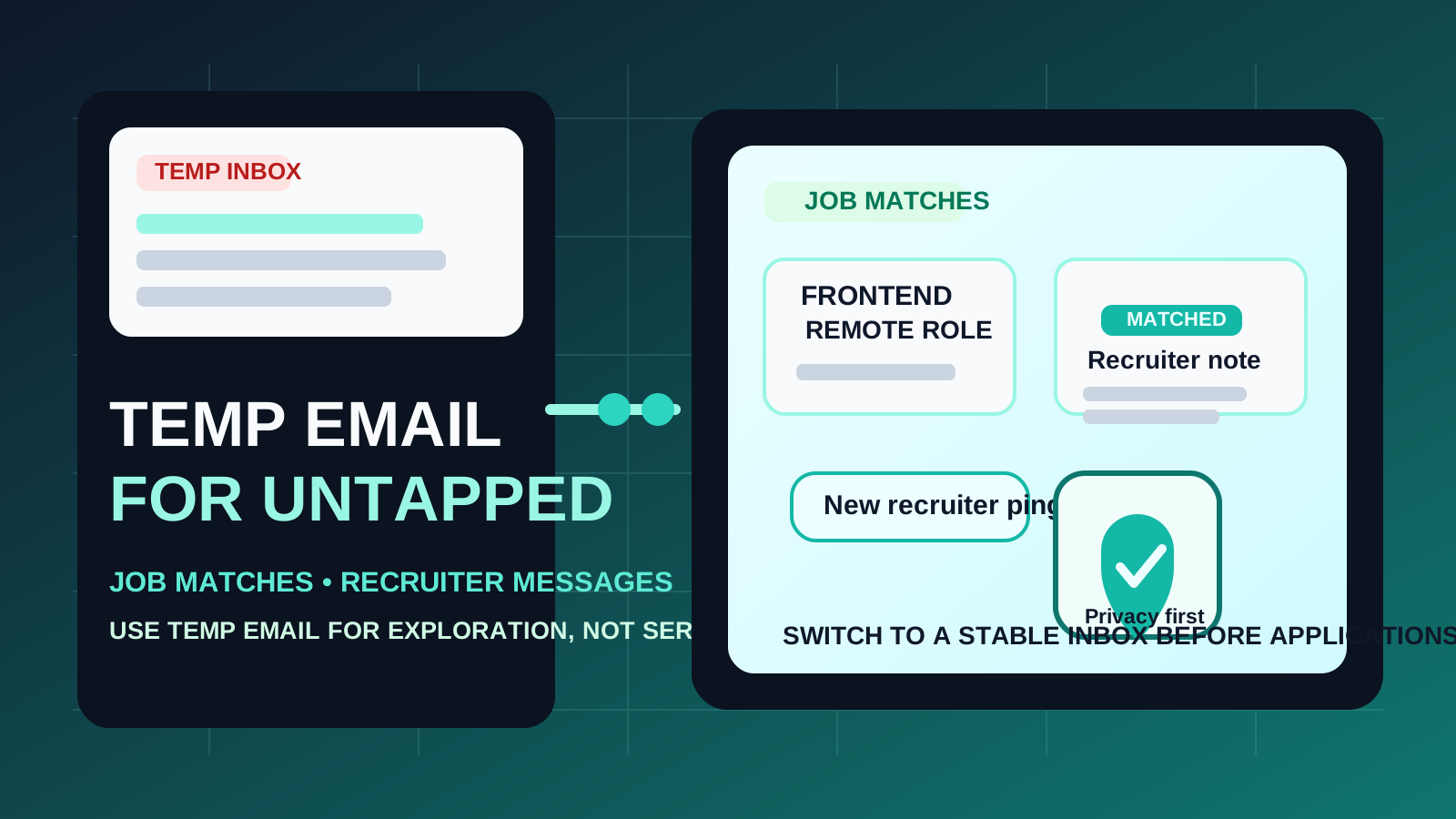
Untapped sits in a part of the job-search world where email can multiply quickly. You might create a profile, start getting matched with opportunities, receive recruiter messages, join events, or opt into talent communities before you have even decided whether the platform deserves a permanent place in your search. That is exactly why some people think about using a disposable inbox first.
That instinct is not wrong. If your goal is early exploration, a temporary inbox can reduce clutter and give you some breathing room. But Untapped is also built around ongoing recruiting conversations, profile visibility, and employer interest. Once the platform starts doing real job-search work for you, temporary email stops being a tidy privacy trick and starts becoming a reliability problem.
The same trade-off shows up on adjacent recruiting and early-career platforms like Handshake, Symplicity, JobTeaser, Bright Network, and Yello. Temporary email is useful for first-pass screening. Stable email is better for real opportunities.
When a temp email for Untapped makes sense
There are a few cases where using a temporary inbox is practical and low risk.
- You are only testing the signup flow: you want to see how the platform works before tying it to your primary address.
- You are comparing job platforms: you are reviewing several recruiting sites and want to keep the first wave of emails separated.
- You are browsing, not applying: you want to explore profiles, job categories, or employer presence without committing to long-term outreach yet.
- You want to contain early recruiter noise: you are open to discovery, but not ready for another stream of newsletters, reminders, and platform nudges landing in your main inbox.
In those situations, a temporary inbox can act like a filter. You still get the verification email and first messages you need, but you avoid instantly opening your long-term inbox to every automated sequence attached to a new profile.
Why people consider disposable email for recruiting platforms
Job platforms rarely send just one email. The moment you register, you may start seeing profile-completion prompts, suggested jobs, recruiter notifications, event invitations, reminders to upload documents, and updates about employers that want to hear from you. Some of those emails are useful. Many are only useful for a short window.
That is why a service like Anonibox can be helpful during the research stage. It lets you verify access, inspect the product, and judge whether the platform fits your search before you hand over the inbox you actually rely on every day. If you are already testing resume tools, job boards, and candidate platforms in parallel, that separation can keep your search much more organized.
Where a temp email for Untapped becomes risky
The problem is not the first login. The problem starts when a casual signup turns into a real part of your job hunt.
1. Recruiter conversations may matter later
Untapped is designed to connect candidates with recruiters and employers, not just collect one-time registrations. A message that seems minor today can become important a week later when someone follows up about a role, invites you to apply, or asks for availability. If your inbox disappears, that thread disappears too.
2. Real job matches are time-sensitive
Many recruiting opportunities have short windows. A company might reach out, ask clarifying questions, or send next steps while you are juggling applications elsewhere. Missing those messages because the address was temporary defeats the point of using the platform in the first place.
3. Account recovery is an obvious weak point
Even if everything goes smoothly at first, account access often becomes important later. Password resets, security checks, profile updates, and notifications about message activity all depend on an email address you still control. Disposable inboxes are convenient right up until you need them again.
4. Your profile can turn from test account to real identity
A lot of job seekers sign up “just to look around” and then gradually invest more time. They improve the profile, respond to messages, save roles, and rely on the platform more than expected. That is exactly when a throwaway inbox becomes a weak foundation for something that no longer feels disposable.
A good rule of thumb
Use a temp email for Untapped if you are evaluating the platform. Do not use one if you expect the platform to become part of your real application and recruiter workflow.
That line is simple, but it keeps you out of most avoidable trouble. Temporary email is good for reducing noise during low-stakes exploration. Permanent email is better when timing, trust, and long-term access matter.
How to use a temp email for Untapped without creating a mess
1. Decide whether this is exploration or execution
Before you sign up, ask yourself what you actually want. Are you only testing how Untapped works, or are you actively trying to land interviews through it? If the answer is exploration, temporary email is reasonable. If the answer is execution, start with a stable inbox instead.
2. Save the useful early messages
If you do use a temporary inbox, keep the important first emails while you still have them. That might include:
- verification links
- welcome emails with setup steps
- profile or matching instructions you may want later
- any recruiter note that looks worth acting on
The mistake is assuming you will always be able to return later and retrieve them. That is not how temporary inboxes work.
3. Move quickly through the evaluation
A disposable address is most helpful when you use it deliberately. Instead of drifting around the platform for weeks, decide what you want to learn in one or two focused sessions. For example:
- Does the platform show roles that are actually relevant to you?
- Do recruiter messages feel credible and useful?
- Are the profile fields worth completing in depth?
- Does the matching workflow feel better than your other job-search channels?
- Would you trust this platform with real follow-up communication?
If the answer is yes, switch to a permanent address before more activity piles up.
4. Switch before anything important depends on the account
The safest time to stop using temporary email is early, not late. Do it before you apply seriously, before you build a profile you care about, and before recruiter follow-ups start to matter. Waiting until an account is valuable is how people get trapped.
When a permanent inbox is the smarter choice
You should use a stable email address from the start if any of the following are true:
- you are actively applying for roles, not just browsing
- you want recruiter replies and reminders to arrive reliably
- you plan to polish your profile and keep it visible
- you care about long-term access to messages and account settings
- you would be genuinely annoyed to lose the account later
That last point is underrated. If losing the account would bother you, it probably should not be tied to a disposable inbox.
Practical examples
Example 1: low-stakes research
You heard about Untapped from a friend and want to see whether the opportunities look relevant. A temp inbox can work well here. You verify the account, explore the interface, and avoid giving your main address to another platform before you are sure it helps.
Example 2: early recruiter curiosity
You are willing to see what kinds of companies or recruiters appear, but you are not deep into applications yet. A disposable inbox can still be useful, as long as you understand that any promising thread should trigger a fast move to a stable email strategy.
Example 3: active search for internships or tech roles
If you are seriously searching for internships, new-grad roles, or tech jobs and you want employers to reach you without friction, temporary email is the wrong tool. At that stage, reliability matters more than inbox cleanliness.
Common mistakes to avoid
- Using a throwaway inbox for a non-throwaway search: if the opportunity is real, your contact channel should be real too.
- Forgetting that recruiters may follow up later: the useful email is not always the first one.
- Leaving a temporary address attached too long: once you know the platform is useful, switch early.
- Treating all recruiting messages as low value: some are noise, but some genuinely lead to interviews.
- Confusing privacy with invisibility: a temp inbox can reduce clutter, but it is not a substitute for careful judgment about where you apply and how you respond.
A cleaner privacy approach for job seekers
If you care about privacy but still want to stay reachable, the most practical setup is usually a layered one:
- Use temporary email for early platform testing and low-stakes signups.
- Keep a dedicated permanent job-search inbox for serious applications and recruiter communication.
- Move promising opportunities off the disposable address quickly.
- Check that your long-term inbox is professional, monitored, and easy to recover.
That approach gives you the best of both worlds. You get protection from unnecessary inbox clutter, but you do not sabotage the platforms that might actually help you land a role.
Final takeaway
A temp email for Untapped is useful for first-pass exploration, low-stakes signup testing, and protecting your inbox from early recruiter noise.
It is a bad long-term choice once job matches, recruiter conversations, applications, and account recovery become important. Use temporary email during the evaluation phase, then move to a stable address as soon as the platform starts producing real opportunities.