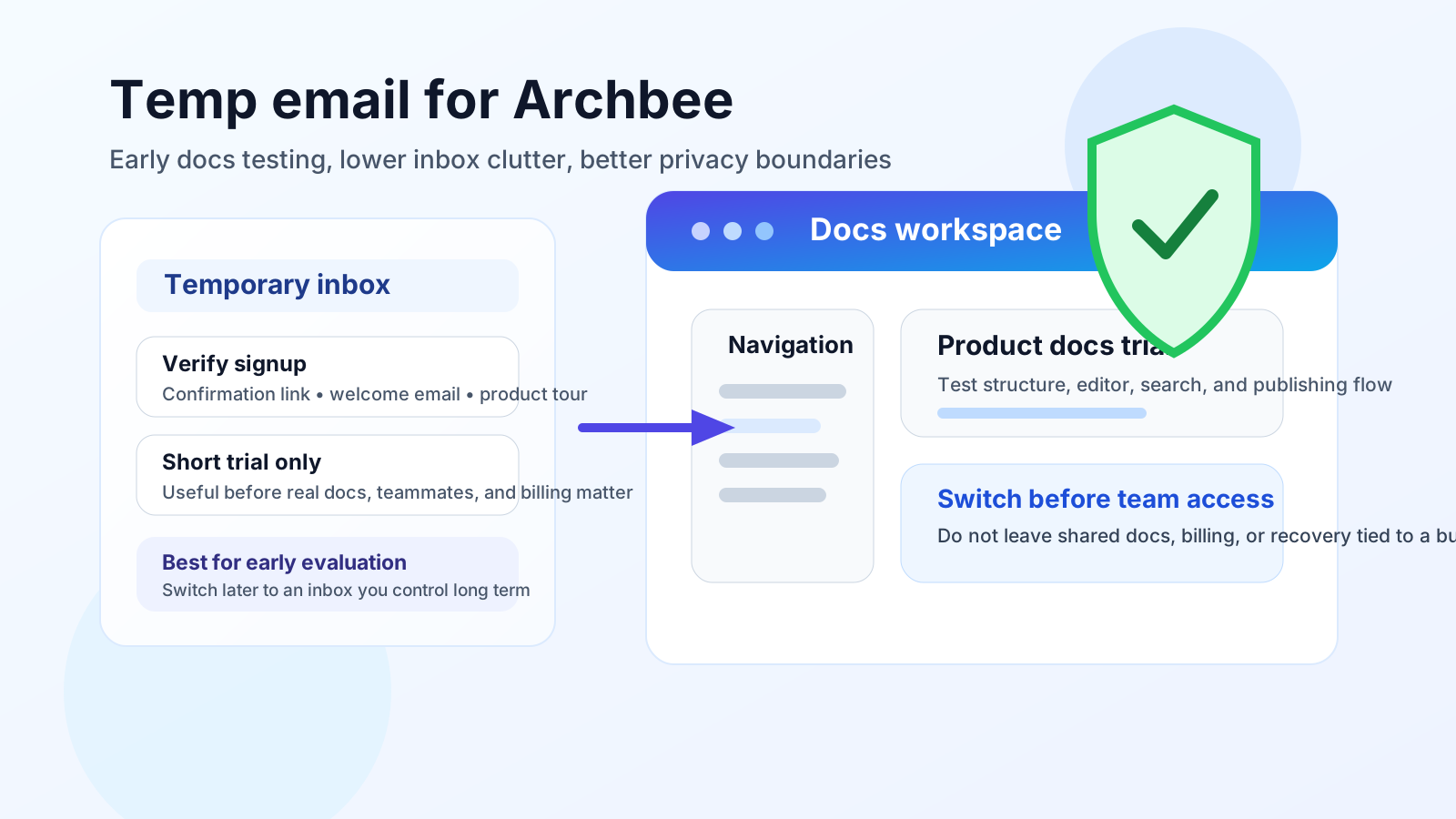
A temp email for Archbee is fine for a short docs trial, but it becomes a bad long-term choice once your shared docs, teammates, billing, or recovery settings depend on that inbox.
Use it for early testing if you want less signup spam; switch to an address you control before the workspace becomes operational.
That is the practical answer most people actually need. When you are comparing documentation platforms, the first few minutes are usually about access: create the account, verify the inbox, click around, and decide whether the product feels promising enough to explore further. In that phase, a disposable address can be genuinely helpful.
Archbee fits that pattern well. People usually sign up because they want to test internal docs, product documentation, API references, onboarding materials, or a team wiki without immediately committing their main inbox to another long sales sequence. If you are already comparing tools like Document360, GitBook, Mintlify, or Redocly, it makes sense to keep that early research clean.
Tools like Anonibox are most useful during that early stage. You get the verification email and first setup messages you need, but you avoid turning one trial into months of follow-up mail after you already moved on.
When a temp email for Archbee makes sense
There are several situations where using a temporary inbox for Archbee is completely reasonable.
- Short product evaluation: you want to see how the editor, page tree, permissions, and publishing flow feel before involving the rest of the team.
- Comparison shopping: you are signing up for multiple docs tools in the same week and do not want every vendor feeding your main inbox.
- Low-stakes prototyping: you are testing rough structures, sample content, or internal notes that are not yet part of a real documentation operation.
- Solo exploration: no one else depends on the workspace yet, so the signup is just for your own review.
- Inbox hygiene: you only need the verification email and maybe a welcome sequence, not a permanent relationship with a tool you may never adopt.
That is the sweet spot for a burner inbox: low commitment, quick access, and fewer long-tail marketing emails if the product turns out not to be the right fit.
Why people look for a temporary inbox here
Most people searching this are not trying to game anything. They are usually trying to separate evaluation from commitment.
Documentation tools often get tested before there is a final owner, a migration plan, or a budget decision. Someone on a product, support, or engineering team just wants answers to a few practical questions:
- Is the writing experience actually pleasant?
- Can we organize docs in a way customers or teammates will understand?
- Are permissions and collaboration good enough for our workflow?
- Does search feel useful, or is the whole thing going to frustrate readers?
- Would we really migrate here, or are we only curious because someone recommended it?
A temporary address keeps that first pass lightweight. You can verify the account, inspect the product, and decide whether it deserves deeper attention without giving every trial direct access to the inbox you use for real work.
Where a temp email for Archbee starts to become risky
The problem is not using a disposable inbox at all. The problem is leaving an important workspace attached to one after the trial stops being disposable.
That risk shows up earlier than people think.
Shared docs and team collaboration
If teammates start joining the workspace, the signup email is no longer just a throwaway detail. It can become tied to ownership, admin controls, workspace notices, and key changes. Losing access to that inbox later can create a messy handoff.
Account recovery
Recovery emails matter the moment the account becomes real. If the only route back into the workspace depends on an inbox you no longer control, you are creating avoidable operational risk for a small short-term convenience.
Billing and plan changes
Trial-to-paid transitions are another obvious boundary. If invoices, plan alerts, renewal notices, or failed-payment warnings start landing in a temporary inbox, you are setting yourself up for preventable confusion.
Important notifications
Even outside billing, product emails can become relevant once the workspace matters: invite notices, security alerts, account changes, or ownership-related messages. A burner inbox is a poor place for any message you may actually need next month.
A safer way to test Archbee without cluttering your real inbox
If your goal is simply to keep research tidy, the best approach is not “use a disposable inbox forever.” It is “use one briefly, then switch at the right moment.”
- Start with the temp inbox. Use it for signup confirmation, first-login verification, and quick product exploration.
- Evaluate the real workflow fast. Spend that early window testing structure, navigation, collaboration basics, search, and publishing rather than drifting around the product for days.
- Decide whether the tool is a real contender. If the answer is no, you walk away with almost no inbox residue. That is the win.
- Switch to a permanent address before the workspace matters. If the answer is yes, move the account to an email your team controls before you invite others or build serious docs there.
- Document ownership clearly. Make sure the admin address belongs to a person or shared function that makes sense operationally, not a forgotten test inbox.
This workflow keeps the privacy benefit while avoiding the long-term mess that disposable-email misuse can create.
Signs it is time to stop using the temporary inbox
If any of the following are true, you have probably crossed the line where a burner address stops being a smart choice:
- You are inviting teammates into the workspace.
- You are building docs that other people will actually rely on.
- You are testing permissions, roles, or admin functions seriously.
- You are entering payment information or discussing a paid plan.
- You would be annoyed or blocked if you missed a recovery or security email.
- You expect the workspace to survive beyond the current evaluation week.
At that point, the inbox should stop being temporary too.
Common mistakes people make
The most common mistake is confusing easy signup with safe long-term ownership. Those are not the same thing.
- Mistake 1: keeping the burner address attached too long. A test account quietly turns into a semi-production workspace, and no one updates the email until it becomes a problem.
- Mistake 2: inviting teammates before switching. That creates shared reliance on an inbox that was never meant to be durable.
- Mistake 3: ignoring recovery implications. People think about inbox spam but forget about password resets, ownership notices, and admin alerts.
- Mistake 4: treating all product trials the same. Some tools stay lightweight for a long time. Documentation platforms often become collaborative assets quickly, which changes the risk profile.
Is a separate permanent inbox better than a temporary one?
Often, yes. If you already know the evaluation may continue for a while, a dedicated work-controlled evaluation inbox can be a better compromise than a purely disposable address.
That gives you a few benefits:
- You still keep vendor mail separate from your personal or primary work inbox.
- You retain access if the trial becomes a serious shortlist candidate.
- You can hand the account over more cleanly if another teammate becomes the owner.
- You reduce the chance of losing useful setup or recovery emails.
So if you are doing a fast yes-or-no trial, a temporary inbox is fine. If you suspect the evaluation may stretch into procurement, migration planning, or team onboarding, use a controlled long-term inbox instead.
Final answer
A temp email for Archbee is useful when you are only testing the platform, verifying the account, and trying to avoid unnecessary inbox clutter during early research.
It becomes a poor choice once the workspace starts holding real docs, involves real teammates, or depends on account recovery and billing notices reaching the right person. That is the line that matters.
If you want the privacy and convenience of a disposable address, use it briefly and intentionally. Then, the moment Archbee stops being a disposable experiment and starts looking like a real documentation home, move the account to an inbox you actually control. That gives you the best of both worlds: cleaner evaluation now, fewer avoidable headaches later.