A temp email for Storylane is useful for low-stakes signup, quick interactive demo evaluation, and keeping trial follow-up out of your main inbox.
It becomes risky once your account holds shared workspaces, prospect-facing demo links, teammate access, or recovery details you may need later.
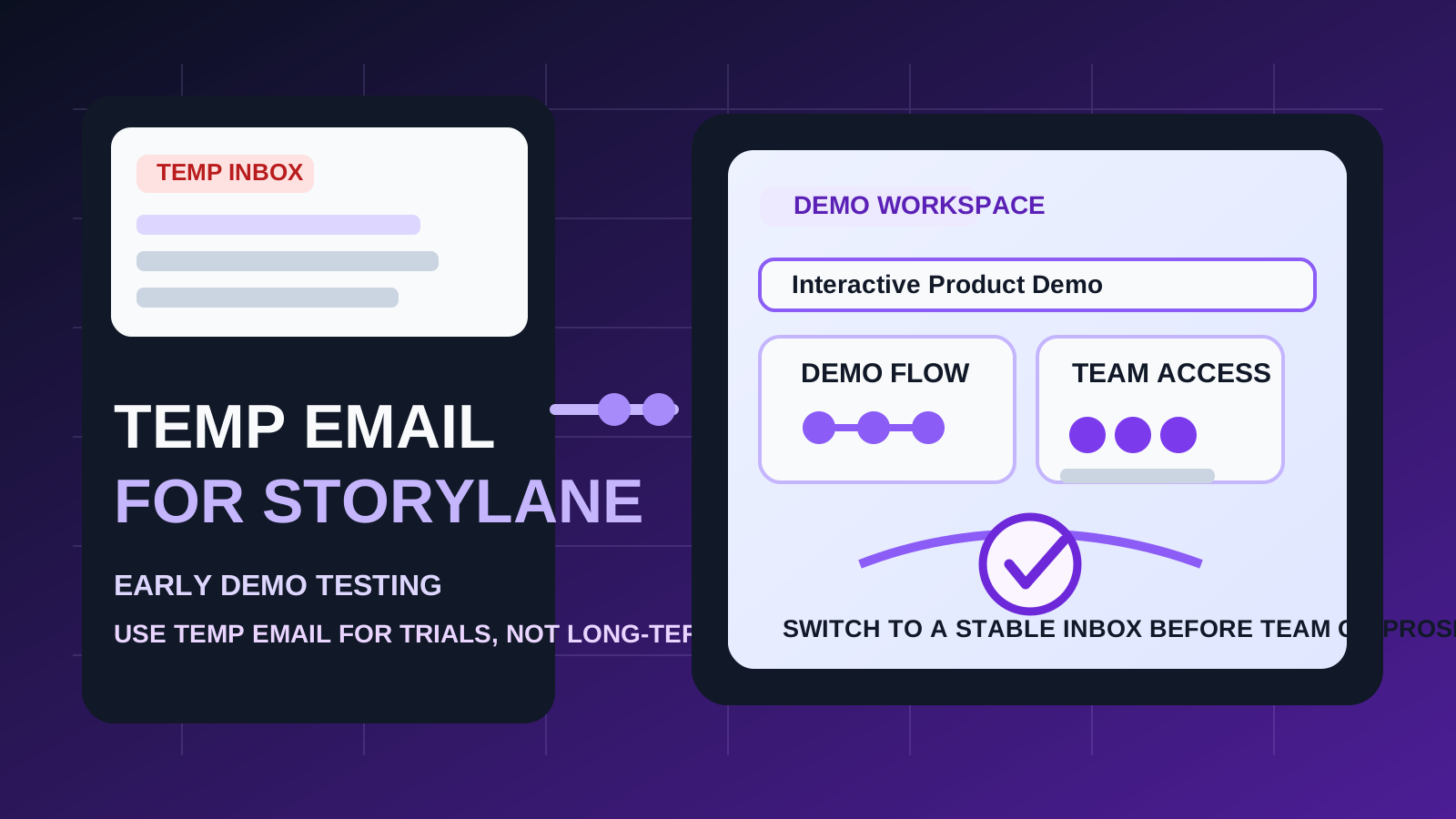
If you are comparing interactive demo tools, you probably do not want every trial to follow you around for months. Product-led growth teams, founders, sales engineers, and marketers often sign up for several platforms in the same week, then get hit with welcome sequences, feature announcements, webinar invites, pricing follow-ups, and repeated “book a demo” nudges. A temporary inbox gives you a cleaner way to test the product without handing your main address to every vendor immediately.
That makes Storylane a good candidate for temporary email during the earliest stage. You may only want to verify the signup, open the workspace, see how the editor feels, and decide whether the platform deserves deeper time. In that phase, a disposable inbox can be practical. The problem starts when a quick trial quietly turns into a real account with reusable demos, shared assets, teammate access, or customer-facing links. At that point, the email address stops being a throwaway detail and starts becoming account infrastructure.
When a temp email for Storylane makes sense
There are several situations where a temporary inbox is a reasonable first move.
- Fast product comparison: you are reviewing Storylane alongside other onboarding and demo tools and want a separate inbox for each trial.
- Low-stakes exploration: you only want to see how the product works before deciding whether it belongs in your stack.
- Inbox control: you want the verification email and first-run setup messages without turning your long-term work inbox into a parking lot for trial follow-up.
- Short evaluation window: you expect to make a go or no-go decision quickly rather than nurturing the account for weeks.
That is the sweet spot. A temporary inbox helps you get through the front door, confirm the account, and test the basic workflow. It does not need to do more than that.
Why teams are tempted to use a throwaway inbox
The temptation is obvious. Early software evaluation is messy. You want to know whether the tool is intuitive, whether the setup flow is tolerable, and whether it solves a real problem. You do not necessarily want to commit your permanent address just to answer those questions.
That is where a service like Anonibox fits naturally. If you are doing first-pass screening, a temporary inbox can keep those early messages separate from your everyday work. You can verify the account, grab the onboarding links you need, and decide whether the product deserves a real setup later.
The key is understanding that this works best for evaluation, not for ownership. Storylane may start as a curiosity, but if the account becomes part of your live demo process, your email choice needs to catch up with that reality.
Where disposable email starts becoming risky
1. Shared workspaces need continuity
If you expect other people to touch the account, the email address matters more than it did on signup day. Even if the first tests are solo, shared workspaces introduce a different level of responsibility. When teammates need access, permissions change, or someone has to prove ownership later, a disposable inbox becomes a weak foundation.
2. Prospect-facing demo links can outgrow the trial phase
One of the easiest mistakes is creating something “just for testing” and then realizing it is actually useful. A demo that starts as an internal experiment can quickly become something you want to show to prospects, reuse in outreach, or refine over time. If that asset lives inside an account tied to an inbox you do not control long term, convenience turns into fragility.
3. Team invites and handoffs become harder
Trial accounts rarely stay tidy once another person gets involved. A sales teammate may want access. A product marketer may want to update copy. A founder may want to review the flow. If the original account owner signed up with a throwaway address, handoffs get harder than they should be.
4. Account recovery is the obvious weak point
The biggest downside of disposable email often appears later, not earlier. Password resets, security checks, confirmation steps, and recovery messages all assume you still control the inbox attached to the account. If you do not, logging back in after a few weeks can turn into avoidable friction.
A simple rule that keeps you out of trouble
Use a temp email for Storylane if you are evaluating the tool. Do not use one if you already expect the account to matter next month.
That rule sounds almost too simple, but it works. Temporary email is good for screening, comparing, and reducing clutter. Stable email is better for ownership, recovery, and collaboration. Most problems happen when people keep pretending they are in “just testing” mode after the account has already become useful.
How to use a temp email for Storylane without creating a mess
1. Decide whether this is a trial or a real setup
Before you sign up, be honest with yourself. Are you checking whether the product is even worth a second look, or do you already suspect it may become part of your actual demo workflow? If it is only a first-pass evaluation, a temporary inbox is reasonable. If you are already planning to build reusable assets inside it, start with a stable address.
2. Save the messages that actually matter
During short evaluation, you usually only need a small number of emails:
- the verification email
- initial setup or onboarding links
- any message that explains the first important workflow
- details you may want later if you recreate the account properly
Do not assume you will still have the inbox later. If something is useful, save it while the context is fresh.
3. Test deliberately, not casually
The point of using a disposable inbox is to speed up evaluation, not to create a half-serious account that drifts into permanent use. Move through the trial with a clear checklist. For example, you might review:
- how easy the onboarding flow is
- whether building a first interactive demo feels intuitive
- how quickly you can understand the workspace structure
- whether sharing and preview steps make sense for your use case
- whether the platform feels meaningfully better than the alternatives you are testing
That kind of focused session lets you get the value of the trial without pretending a disposable account is a safe long-term container for real work.
4. Switch before anything valuable depends on the account
The safest time to move from a temporary inbox to a permanent one is before the account matters, not after it already matters. Do it before you invite teammates, publish links externally, or build demo assets you will want to maintain later.
When a permanent inbox is clearly the better choice
Start with a stable email address if any of these are true:
- you expect to keep using the account beyond a short evaluation
- you are creating demos that may be reused in sales or onboarding
- you plan to invite teammates or share ownership
- you need a dependable recovery path later
- you are building assets for a company, client, or team rather than a one-off personal test
Once any of those points become true, the value of a throwaway inbox drops fast. What helped you stay private on day one can become the thing that makes the account harder to manage on day thirty.
Real-world examples
Example 1: a same-day comparison sprint
You want to compare a few demo tools in one afternoon and narrow the field quickly. In that case, a temp email is sensible. You get access, check the flow, and avoid long-term follow-up from products that never make the shortlist.
Example 2: a founder testing solo before choosing a stack
If you are exploring alone and only need a fast answer about product fit, temporary email can still work well. The key is keeping the account disposable too. If the tool proves promising, recreate or update it early with a permanent address.
Example 3: a team building real demo assets
This is where temporary email usually stops being the smart choice. If the workspace will hold demos that sales, growth, or customer success may rely on, stable ownership matters more than inbox privacy. Start with a permanent address and avoid the cleanup later.
Common mistakes to avoid
- Using a throwaway inbox for a non-throwaway account: this is the biggest and most common mistake.
- Waiting too long to switch: if the trial becomes useful, move to a stable address before more people and more assets pile on.
- Forgetting about recovery flows: the signup email is only the first checkpoint; the harder problems usually show up later.
- Confusing inbox cleanup with account safety: reducing marketing email is helpful, but it should not come at the cost of losing control of a valuable account.
- Letting “temporary” work leak into prospect-facing use: if a demo may be shown externally, treat the account like a real one.
A cleaner workflow for Storylane evaluation
- Use a temporary inbox only for first-pass evaluation.
- Verify the account and review the early onboarding.
- Test the core demo-building and sharing workflow in one focused session.
- Decide quickly whether the platform is disposable to you or strategically useful.
- If it is useful, switch to a permanent email before teammates, customer-facing links, or long-term recovery matter.
That workflow gives you the privacy and inbox control benefits of temporary email without pretending it is the right answer for every stage of adoption.
Final takeaway
A temp email for Storylane is useful when you want to test the platform, compare interactive demo tools, and keep low-stakes signup messages out of your main inbox.
It is a poor long-term choice once the account becomes something you want to share, recover, refine, or rely on. Use a disposable inbox for the trial phase, then move to a stable address before real ownership starts to matter.