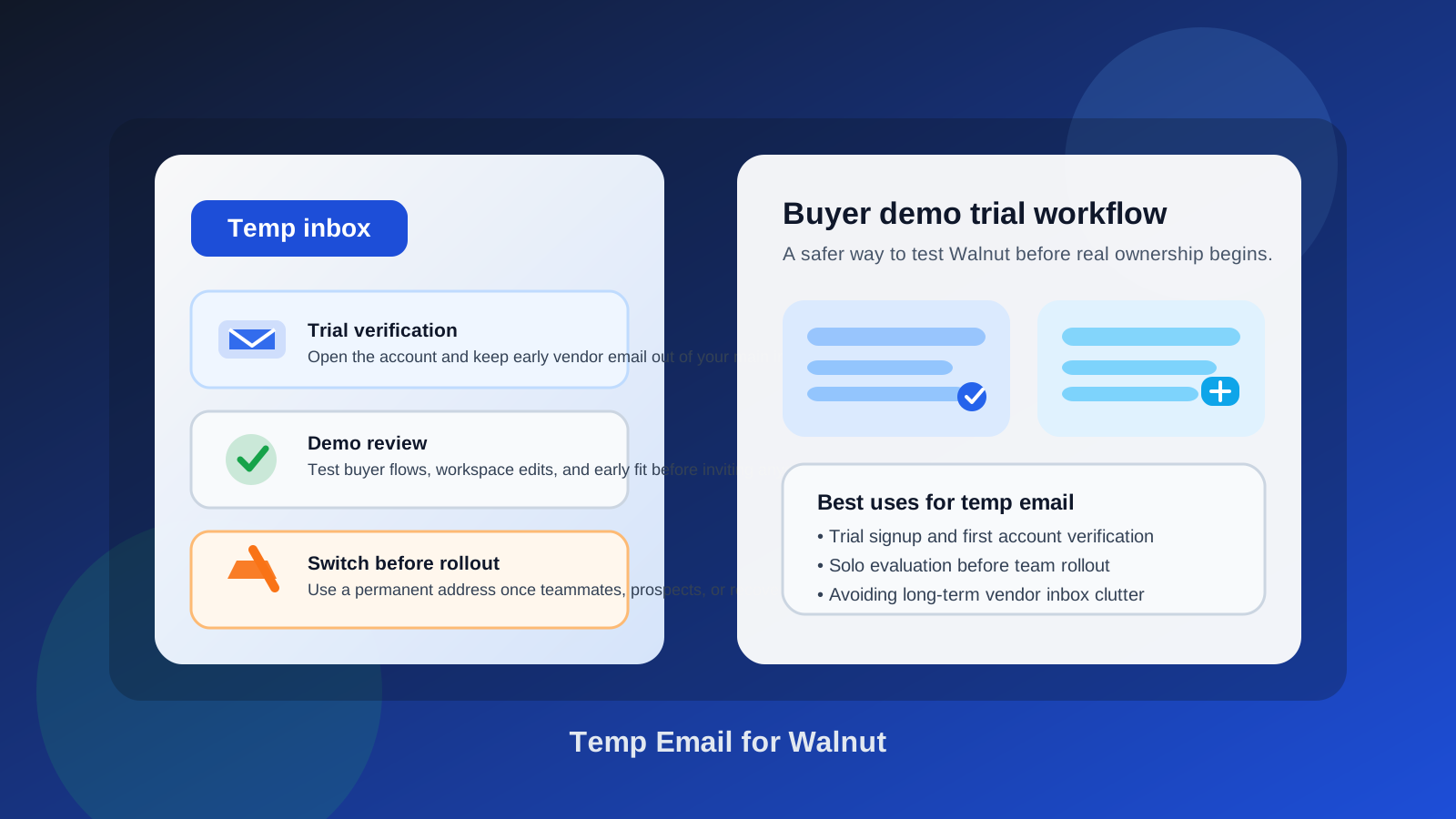
If you are wondering whether a temp email for Walnut is a good idea, the short answer is yes for early trial signup and solo testing, but no for long-term workspace ownership.
A temporary inbox can help you review Walnut without feeding another vendor sequence into your main inbox, but you should switch to a permanent address before shared workspaces, buyer-facing demos, or account recovery become important.
Why people look for a temp email for Walnut
Walnut fits a very specific kind of software evaluation. Teams usually do not sign up out of casual curiosity alone. They sign up because they want a better way to show product value before a live call, give prospects a guided experience, and help sales or product marketing teams tell a more controlled story.
That also means the trial often sits close to revenue work. The moment you create an account, you are not just browsing a blog or downloading a checklist. You are testing a platform that could end up touching demos, handoffs, qualification, and buyer education. Even during the research stage, though, the inbox pattern is familiar: verify the account, get the welcome emails, receive setup nudges, and then keep getting follow-up even if you decide the tool is not for you.
That is why a temporary inbox can be useful. It gives you a clean way to open the account, collect the messages you need, and decide whether Walnut deserves deeper attention before your main work inbox gets added to yet another sales and nurture stream.
When a temporary inbox makes sense for Walnut
A disposable address is most useful at the beginning, when the goal is simple: figure out whether the product belongs on your shortlist.
- Trial access: you want to create the account and see the workspace quickly.
- One-person evaluation: you are testing it on your own before involving teammates.
- Vendor comparison: you are reviewing Walnut alongside other interactive demo tools and want to keep those trial signups separate.
- Inbox control: you want verification and onboarding messages without committing your main address too early.
- Low-stakes research: you are exploring features, fit, and workflow rather than rolling anything out yet.
In those situations, a temp inbox does exactly what it should do. It keeps the first stage lightweight. You get into the product, review the basics, and avoid the long tail of follow-up if the platform does not make the cut.
When a temp email becomes risky
The problem is not opening the account with a disposable address. The problem is leaving it that way once the account starts to matter.
- Shared workspaces: once teammates need access, the account should live on an address your team actually controls.
- Buyer-facing demos: if prospects may see or depend on the demos, you do not want the underlying workspace anchored to a throwaway inbox.
- Support and troubleshooting: support is easier when the account belongs to a stable business identity.
- Billing and procurement: anything that could become a paid tool should move to a monitored permanent inbox early.
- Account recovery: if the inbox disappears, recovery can become much more annoying than it needed to be.
So the real rule is simple: a temp email is good for early evaluation, not for durable ownership. The closer the account gets to real collaboration or buyer-facing work, the less sense a disposable inbox makes.
A practical way to use a temp email for Walnut
1. Create the temporary inbox first
Start with the inbox, not the signup form. That way the whole trial stays compartmentalized from the beginning. If you use a service like Anonibox, the goal is not to hide from the vendor. It is just to keep exploratory software research from automatically becoming a permanent inbox relationship.
2. Use it for the first checkpoint only
Use the temp address to verify the account, enter the workspace, and test the first-run experience. Treat it like a temporary pass to the evaluation stage, not the forever identity of the account.
3. Save the useful messages early
The first emails are usually the only ones that matter right away: verification, a welcome guide, maybe a setup checklist or invitation note. If anything looks important, save it before you move on. Disposable inboxes are helpful because they are lightweight, which is also why they are not ideal for long-term record keeping.
4. Decide quickly whether Walnut belongs on the shortlist
If the product is not a fit, you can walk away without handing your main inbox over to another vendor sequence. If it does look promising, that is the moment to move to a stable address before you build anything meaningful inside the workspace.
What to evaluate inside Walnut before switching to a permanent email
The value of the trial is not the signup flow. It is whether the product can support your actual sales or product marketing workflow.
Can you build a demo that feels credible?
Some interactive demo tools look polished in a product tour but become awkward when you try to tell a believable buyer story. Check whether the experience feels helpful and realistic rather than over-scripted or gimmicky.
Does the sharing experience feel smooth?
A demo platform lives or dies on what happens after the link is shared. Open the experience the way a buyer would. Is the path intuitive? Does it feel like a useful product preview? Is it obvious what someone should do next after they finish?
Can non-technical teammates work with it?
If every demo update depends on a single technical owner, you may be buying friction along with the software. A strong evaluation checks whether product marketing, enablement, or sales teams can actually maintain the experience without constant rescue work.
Does it fit your larger motion?
Even a strong demo tool can be a bad fit if it does not align with how your team captures leads, qualifies interest, routes buyers, or updates messaging over time. Look at the workflow around the demo, not just the demo itself.
Will it still feel useful after the novelty wears off?
First impressions are cheap. A better test is whether the platform still seems worthwhile once you imagine maintaining several demos, adjusting them after product changes, and coordinating edits across a team. That is where the real cost of ownership starts to show.
What a temp email does not solve
A temp inbox helps with inbox clutter and early-stage privacy. It does not solve tool governance, content ownership, procurement, or your internal decision process. It also does not guarantee acceptance. Some signups block disposable domains or push users toward company-email verification, and that is normal.
It also does not create discipline by itself. If your team has no clear owner for demo software, no plan for keeping demos current, or no agreement on how the platform will be used across marketing and sales, the email choice is not the core problem. It just keeps the first stage cleaner.
Common mistakes to avoid
- Leaving the throwaway inbox attached too long: casual testing quietly turns into operational dependency.
- Inviting teammates before switching: shared work should not depend on an inbox nobody properly owns.
- Forgetting to save key setup emails: disposable inboxes are easy to lose track of.
- Judging the vendor mostly by follow-up volume: the real question is whether the tool fits your workflow.
- Confusing easy signup with production readiness: a smooth first login says little about long-term fit.
When you should switch to a permanent email
You should move from a temp inbox to a permanent monitored address when any of these become true:
- You want teammates inside the workspace.
- You are building demos that could be shown to real buyers.
- You are discussing pricing, rollout, procurement, or a longer proof of concept.
- You need a reliable admin owner, support history, or recovery path.
- You would care if losing the inbox meant losing access.
That handoff point matters. Temporary addresses are good for reducing friction at the start. They are not a good foundation for something your team may actually depend on.
A quick decision checklist
- Am I just testing Walnut, or am I already building something important?
- Will other teammates need access soon?
- Could this workspace become buyer-facing?
- Do I want another vendor using my main inbox before I know the tool is worth it?
- If the inbox disappeared tomorrow, would it create a real problem?
If you are still in early evaluation mode, a temp inbox is reasonable. If several answers point toward shared ownership or revenue-facing use, switch now instead of later.
Final takeaway
Using a temp email for Walnut is a sensible move when you want to verify the trial, explore the workspace, and compare interactive demo tools without immediately committing your primary inbox to another stream of vendor follow-up.
It stops being sensible once the account becomes important. When teammates need access, prospects may see the demos, or billing and recovery matter, move the account to a stable email your team actually controls. That way you keep the privacy and inbox-cleanup benefits of a temporary address at the start without creating avoidable problems later.