If you are wondering whether a temp email for Demostack is a good idea, the short answer is yes for early trial signup and solo evaluation, but no for long-term workspace ownership.
A temporary inbox helps you verify the account, review Demostack, and protect your main inbox from extra vendor follow-up, but you should switch to a permanent address before shared workspaces, buyer-facing demos, or account recovery start to matter.
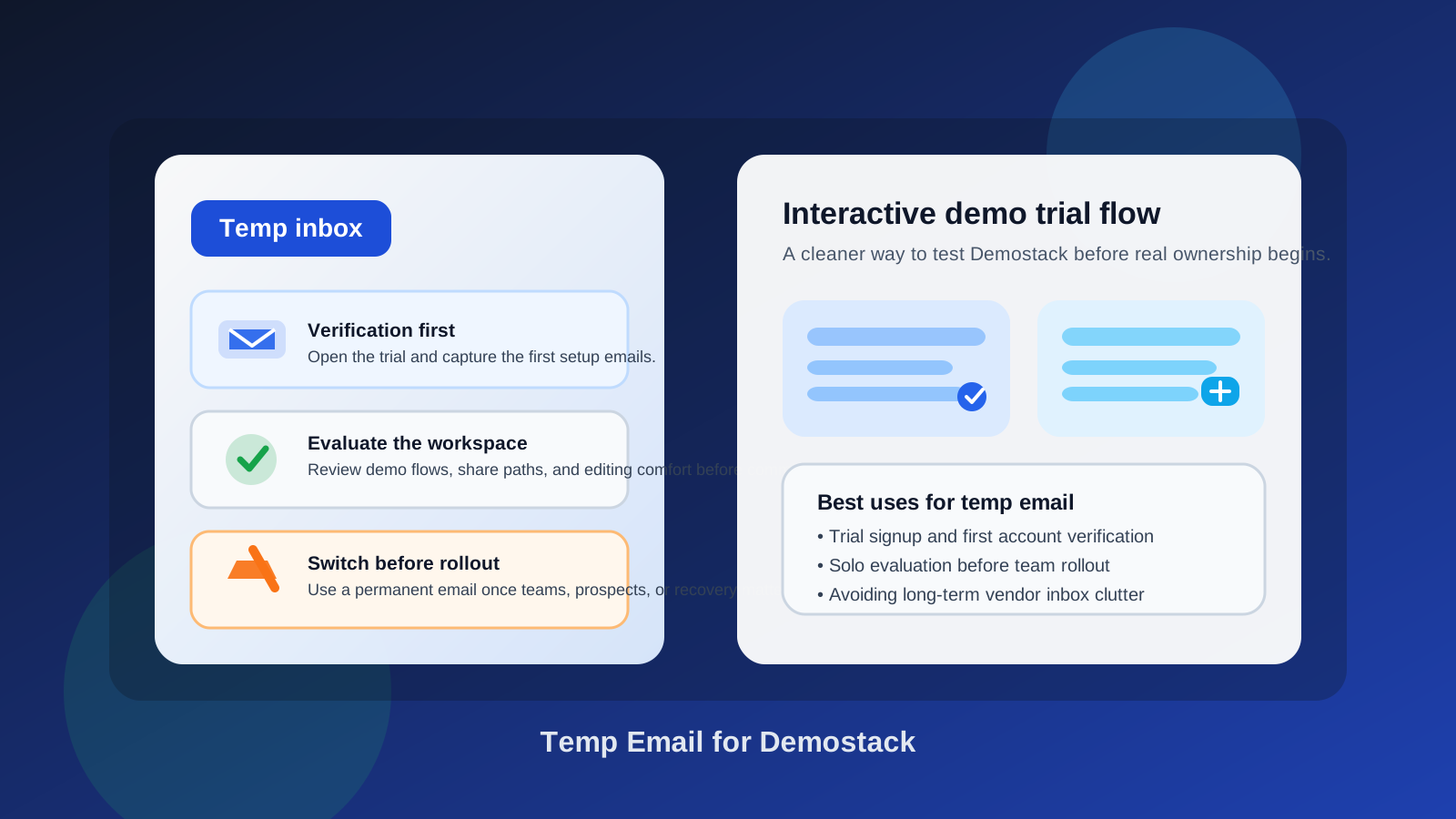
Why people search for a temp email for Demostack
Interactive demo platforms are useful because they let revenue teams show a realistic version of a product without making every buyer book a live walkthrough first. That makes them attractive for product marketing teams, sales engineers, founders, and anyone trying to shorten the path from first interest to real evaluation.
But most trials start the same way: a form, an email verification step, a welcome sequence, and then a stream of follow-up. If you are comparing multiple demo tools at the same time, those emails pile up quickly. One platform sends setup tips, another sends webinar invites, another sends trial reminders, and before long your normal inbox is doing extra work for tools you may never keep.
That is where a temporary inbox can help. It gives you a clean place to receive the verification link and early onboarding messages without immediately tying your main work email to yet another vendor sequence. Used carefully, it is less about hiding and more about keeping early research separate from long-term account ownership.
When a temporary inbox makes sense for Demostack
A temp email is most useful in the first phase, when your goal is simply to decide whether Demostack deserves a deeper look.
- Trial signup: you want to create the account and access the workspace quickly.
- One-person testing: you are exploring the editor, testing demo paths, and reviewing the first-run experience by yourself.
- Vendor comparison: you are evaluating Demostack alongside other interactive demo tools and want to keep those signups compartmentalized.
- Inbox hygiene: you want the useful setup emails without committing your main address to long-term nurture flows yet.
- Low-stakes exploration: you are still deciding whether the tool fits your workflow at all.
In those situations, a disposable inbox does exactly what it should do. It gets you through the front door, gives you the messages you need right now, and limits the long tail of follow-up if the product turns out not to be a fit.
When a temp email becomes the wrong choice
Where people get into trouble is assuming that a disposable inbox is fine forever just because it worked on day one. Demostack is not just a casual newsletter signup. Once you start building something useful, the email attached to the account becomes part of operational ownership.
- Shared workspaces: if teammates need access, the account should live on an address your team can manage and recover.
- Prospect-facing demos: if real buyers may interact with the demo, you do not want the underlying workspace tied to a throwaway inbox.
- Support and troubleshooting: once you need help, a stable account identity is easier to work with.
- Billing and procurement: anything that could become a paid tool should move to a monitored address early.
- Account recovery: losing access to the original inbox can create unnecessary risk later.
So the clean rule is this: use a temp inbox for early evaluation, not for lasting ownership. The more the account starts to matter, the less sense a disposable address makes.
A practical workflow for using a temp email with Demostack
1. Generate the inbox before you sign up
Create the temporary address first so the whole evaluation stays contained from the beginning. If you use a service like Anonibox, the value is simple: one place for verification and early trial messages, separate from your everyday inbox.
2. Use it only for the first checkpoint
Think of the temp inbox as a gate opener, not the permanent home of the account. Use it to get into the product, confirm you can access the workspace, and review the initial experience. Do not mistake successful signup for a long-term account strategy.
3. Save anything you may need later
The early useful emails are usually limited: verification, a quick-start guide, maybe a setup checklist or invitation message. Capture those details if they matter. Temporary inboxes are convenient precisely because they are lightweight, which means they are not ideal for records you may need weeks later.
4. Decide quickly whether the product belongs on your shortlist
If Demostack is clearly not a fit, you can walk away without giving your primary work email to another vendor. If it does look promising, that is the signal to switch the account to a stable inbox before the workspace becomes important.
What to evaluate inside Demostack before switching to a permanent email
The point of the trial is not to admire the onboarding sequence. It is to answer whether the product can support your actual go-to-market workflow.
Can you build a believable demo, not just a flashy one?
Some demo platforms look polished at first but become awkward when you try to build a realistic buyer journey. Pay attention to whether the experience feels clear, useful, and credible rather than just visually interesting.
How well does the sharing experience hold up?
A demo tool is only as useful as its output. Look at how the shared experience feels when someone else opens it. Are the steps intuitive? Is the pacing sensible? Does it feel like a helpful preview of the product or a forced click-through?
Can non-technical teammates manage it?
If only one highly technical person can keep the demos updated, you may be buying maintenance burden along with the tool. A good evaluation checks whether product marketing, sales enablement, or other non-engineering users can actually work with it comfortably.
Does it fit the rest of your process?
Even a strong standalone demo tool can become annoying if it does not fit your lead capture, handoff, messaging, and internal ownership model. Evaluate the workflow around the demo, not just the demo itself.
Will this still feel good after the novelty wears off?
First impressions are cheap. A better question is whether the platform still looks worth it once you imagine maintaining multiple demos, updating them as the product changes, and coordinating edits across a team.
What a temporary email does not solve
A temp inbox helps with inbox control and early privacy. It does not solve governance, internal ownership, approval workflows, or content quality. It also does not guarantee that a vendor will accept the address. Some signup systems block disposable domains or push users toward a company email, and that is normal.
It also does not make the evaluation more disciplined on its own. If your team has no clear owner for demo software, no plan for keeping demos current, or no agreement on how sales and marketing will use the platform, the email choice is not the real issue. It just keeps the first stage cleaner.
Common mistakes to avoid
- Keeping the throwaway inbox attached too long: low-stakes testing turns into real dependency without anyone noticing.
- Inviting teammates before switching: shared work should not depend on an inbox nobody owns properly.
- Forgetting to save important setup messages: temporary inboxes are easy to lose track of.
- Judging the vendor mostly by follow-up email volume: the real question is whether the product solves your workflow problem.
- Confusing trial convenience with production readiness: a smooth signup says very little about long-term fit.
When you should switch to a permanent email
You should move from a temp inbox to a permanent monitored address when any of the following becomes true:
- You want teammates in the workspace.
- You are building demos that may be shown to real buyers or prospects.
- You are discussing a proof of concept, pricing, procurement, or rollout.
- You need a reliable admin owner, support history, or recovery path.
- You would genuinely care if losing the inbox meant losing access.
That handoff point matters. Disposable addresses are good for reducing friction at the start. They are not good foundations for something your team may actually rely on.
A quick decision checklist
- Am I only testing Demostack, or am I already building something important?
- Will other people need access soon?
- Could this workspace become buyer-facing?
- Do I want another vendor using my main inbox before I know they are worth it?
- If the inbox disappeared tomorrow, would it create a real problem?
If you are still in the early testing phase, a temp inbox is reasonable. If several answers point toward shared ownership or meaningful business use, switch now instead of later.
Final takeaway
Using a temp email for Demostack is a sensible move when you want to verify the trial, review the workspace, and compare interactive demo tools without immediately handing your primary inbox over to another stream of vendor follow-up.
It stops being sensible once the account becomes important. When demos may be shared externally, teammates need dependable access, or recovery and billing matter, move the account to a stable email your team actually controls. That way you keep the privacy and inbox-cleanup benefits of a temp address at the start without creating preventable problems later.