A temp email for Jiminny is fine for early evaluation, quick workspace access, and low-stakes product comparison.
It becomes a weak choice once team access, call libraries, coaching workflows, CRM-connected activity, or account recovery start to matter.
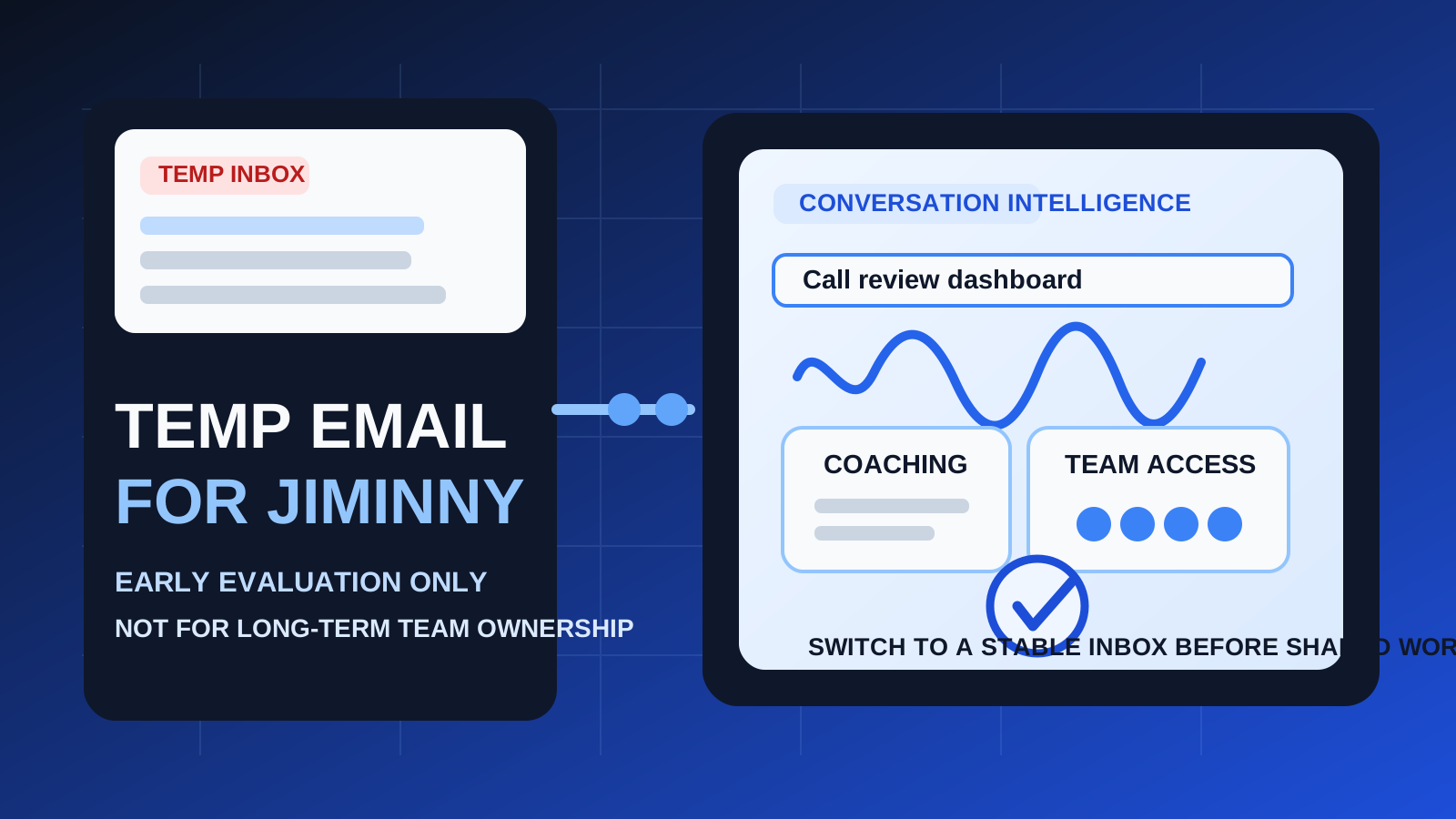
If you are comparing conversation intelligence or sales coaching tools, it is normal to want some distance between your real inbox and every trial signup. Platforms in this category often send welcome sequences, onboarding prompts, webinar invitations, feature announcements, and follow-up outreach quickly after registration. That can be useful during evaluation, but it can also turn your primary inbox into a mess if you are checking multiple tools in the same week.
That is where a temporary inbox can help. A disposable address lets you verify the account, review the first-run experience, and decide whether Jiminny is worth deeper time without automatically committing your long-term work email to another vendor funnel. For an early test, that is practical. For a real revenue-team workflow, though, the trade-off changes fast.
Jiminny is not just another newsletter gate. It is the kind of product that can become tied to coaching reviews, shared team access, conversation libraries, and workflows you may need to revisit later. Once that happens, a throwaway inbox stops being clever and starts being risky.
When a temp email for Jiminny makes sense
There are several situations where using a temporary inbox is perfectly reasonable.
- Early product comparison: you are looking at Jiminny alongside tools such as Gong, Avoma, ExecVision, or similar conversation-intelligence products and want to keep each trial separate.
- Low-stakes verification: you mainly want to confirm the account, see the interface, and judge whether the platform deserves a second session.
- Inbox hygiene: you do not want a quick product test to create months of follow-up email in your daily work inbox.
- Vendor research: you are helping shortlist tools for a team, but you are not yet ready to make your permanent address part of the ongoing relationship.
In those cases, a temporary inbox can do exactly what it should do: help you evaluate the signup and onboarding experience while protecting your main inbox from clutter. A service like Anonibox can be useful here because the goal is not secrecy theater. The goal is simply to keep early testing clean and separate from the address you actually rely on for work.
Where disposable email starts becoming risky
The problem is not the first login. The problem is everything that may happen after the first login.
1. Team access changes the stakes
If you are the person creating the initial account and other teammates may join later, the email on that account matters more than it did on day one. Invitations, ownership questions, role changes, and handoffs are all easier to manage when the account is tied to an address you still control.
2. Conversation libraries are not throwaway assets
In a conversation-intelligence tool, value builds over time. Saved calls, coaching notes, shared snippets, and internal review workflows may become genuinely useful. If the account that anchors those assets lives behind a disposable inbox, you create unnecessary recovery risk for yourself later.
3. Coaching workflows need continuity
A temporary address may be acceptable for a first look, but a coaching platform becomes more important once managers, reps, and revenue leaders depend on it regularly. By that stage, the account should live on an email address that fits long-term ownership and support needs.
4. Recovery and security are the obvious weak points
You may not care about password resets or verification changes during the first hour of testing. Six weeks later, that changes. A login issue, team handoff, browser reset, or security prompt can become much more annoying when the original inbox was never meant to exist for long.
5. CRM-connected or operational use raises the cost of mistakes
Once a tool is touching real workflows, linked systems, or recurring review habits, disposable email becomes a poor foundation. Even if the product lets you update the account email later, waiting too long to switch adds friction you could have avoided by treating the early trial as temporary and the real account as permanent.
A simple rule of thumb
Use a temp email for Jiminny if you are evaluating the product. Do not use one if you already expect the account to become part of your real team process.
That distinction sounds obvious, but it prevents most mistakes. Disposable inboxes are good for filtering, comparing, and avoiding vendor clutter. Stable inboxes are good for ownership, collaboration, and recovery. Problems usually begin when people try to use one address for both phases.
How to use a temp email for Jiminny without making a mess
Start with a clear goal
Before you sign up, decide what kind of session this really is. Are you only checking the dashboard, the onboarding, and the general fit? Or are you already half-expecting to pilot the tool with a manager or a revenue team? If it is just exploration, a temporary inbox is reasonable. If it already feels like the beginning of implementation, start with a real address instead.
Capture the few messages that matter
During an early evaluation, you usually only need a small number of emails:
- the verification message
- the welcome email
- any useful onboarding or setup notes
- details you may want to reference if you later recreate the account properly
Save those while the test is fresh. Do not assume you will remember everything later or still have convenient access to the inbox.
Evaluate the product quickly and deliberately
If you are using a disposable address, the session should stay purposeful. Focus on the questions that matter most:
- Does the interface make it easy to find useful call insights?
- Do the coaching and review workflows feel practical or noisy?
- Is the platform clearly built for your sales motion?
- Does the trial reveal enough value to justify deeper evaluation?
- Would you trust this tool in a real team environment, or is it only interesting on the surface?
A temporary inbox is at its best when it supports a fast, focused first-pass decision.
Switch early if the tool looks promising
The safest time to move from a disposable inbox to a permanent one is before anything important depends on the account. Do it before team invites, before shared workflows, before valuable call libraries build up, and definitely before you rely on the account for account recovery or recurring coaching work.
When a permanent inbox is the better choice from the start
You should usually begin with a stable address if any of the following are true:
- you are evaluating Jiminny on behalf of a real sales or enablement team
- you expect to invite coworkers soon
- you may connect the account to real work systems or recurring workflows
- you want the option to keep saved conversations, notes, or review history
- you already know the platform is likely to move beyond a quick one-person test
At that point, the value of inbox protection is smaller than the value of clean account ownership.
Realistic examples
Example 1: vendor shortlist research
You are helping compare several tools for a later discussion with leadership. You want to see which ones feel worth a second look without filling your real inbox with marketing email from every vendor. A temp email is sensible here because the account itself is still disposable too.
Example 2: solo exploration before involving the team
You are curious about the product and want to inspect the workflow privately before bringing it to anyone else. That can still be a good use case for a disposable inbox, as long as you treat the whole test environment as temporary and avoid building anything you expect to keep.
Example 3: real pilot planning
If the next step is likely to involve a manager, reps, or shared access, start with a stable inbox right away. The more realistic the pilot becomes, the less attractive a throwaway address looks.
Common mistakes to avoid
- Using a throwaway inbox for a non-throwaway account: if the account is becoming valuable, the email should stop being temporary too.
- Waiting too long to switch: once the tool looks promising, move early instead of promising yourself you will handle it later.
- Forgetting the recovery problem: the signup email is not the only message that matters. Password resets and verification messages may be far more important later.
- Treating shared workflows like a casual trial: if another person may rely on the account, the setup should reflect that reality.
- Optimizing only for less spam: inbox cleanliness matters, but so do continuity, access, and control.
A practical workflow that keeps both privacy and control
- Use a temporary inbox only for first-pass evaluation.
- Verify the account and review the initial onboarding.
- Decide quickly whether Jiminny is just an experiment or a serious contender.
- If it is a contender, switch to a stable email address before real collaboration begins.
- Keep permanent ownership tied to an inbox your team can actually maintain.
That approach gives you the privacy benefits of a disposable inbox without pretending it is the right long-term foundation for a conversation-intelligence platform.
Final takeaway
A temp email for Jiminny is useful for early evaluation, cleaner vendor comparison, and protecting your main inbox from low-stakes trial clutter.
It becomes the wrong choice once team access, call libraries, coaching workflows, and account recovery start to matter. Use temporary email for the research phase, then move to a stable address before the account becomes part of real revenue-team operations.