A temp email for Speakeasy is useful for early API docs and SDK testing, low-stakes signup checks, and first-pass workspace evaluation.
It becomes risky once shared portals, team access, SDK publishing workflows, or account recovery depend on that inbox.
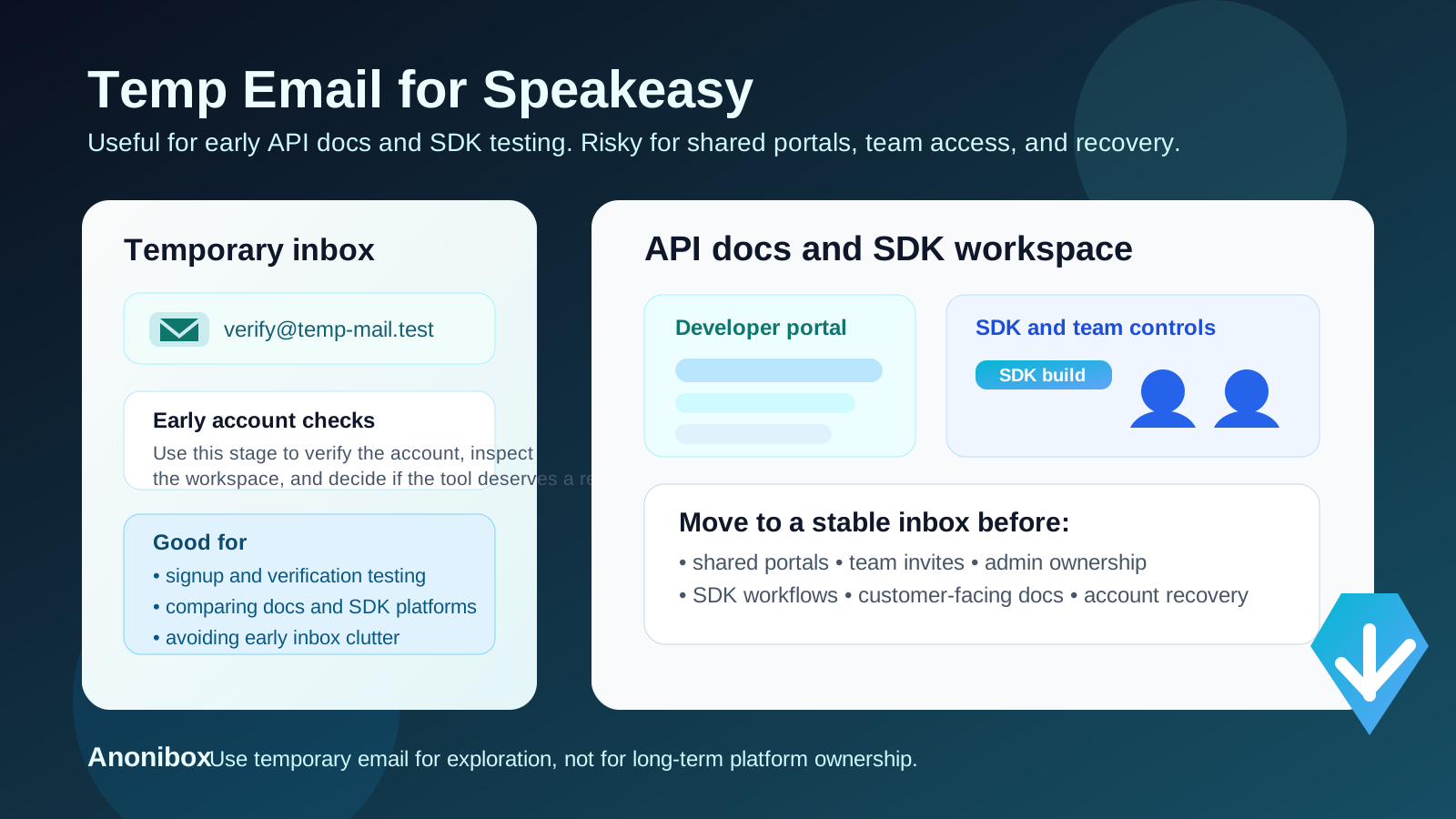
If you are evaluating Speakeasy, email matters sooner than many teams expect. Even when the real goal is to explore SDK generation, developer portals, API docs, or workflow automation around your API surface, the account still sits behind practical inbox steps like verification, invite acceptance, password resets, admin ownership, and follow-up onboarding. That is why people search for a temp email for Speakeasy: they want to inspect the platform without tying their main work inbox to another tool before they even know whether it belongs on a serious shortlist.
That is a reasonable instinct. Teams comparing developer tooling often test several products in a short window, and each signup can trigger onboarding emails, nurture sequences, product tips, webinar invites, and sales outreach. A service like Anonibox can help during that stage because it gives you a clean inbox for verification and first-pass product review without committing a long-lived mailbox to a platform you may abandon the same day.
The important part is understanding where temporary convenience stops being smart. Disposable email works well while the account is truly disposable. Once the workspace starts holding team settings, shared docs, generated SDK workflows, publishing controls, or customer-facing portal responsibility, the inbox behind it needs to be durable too.
Why people use a temp email for Speakeasy
The biggest reason is simple inbox control. Early SaaS evaluation is noisy, especially in developer tooling. One quick product check can turn into welcome emails, setup nudges, docs reminders, follow-up prompts, and commercial outreach that keeps arriving long after the trial is forgotten. If you only want to answer “Is this worth deeper time?” it makes sense to avoid handing over a permanent business inbox too early.
There is also a workflow reason. A temporary inbox makes it easier to isolate one evaluation from another. If you are comparing Speakeasy with adjacent docs and API tooling such as ReadMe, Redocly, Mintlify, GitBook, Archbee, Document360, or even other developer portal and SDK workflows, separate inboxes keep the comparison cleaner. Each trial gets its own context instead of becoming one messy mailbox thread.
The third reason is privacy. An exploratory account does not always need to become a permanent vendor relationship. A temporary inbox lets you receive the confirmation message, inspect the early product flow, and decide whether the platform deserves more attention before attaching it to a mailbox your team actually depends on every day.
When a temporary inbox makes sense for Speakeasy
1. You are doing a first-look evaluation
If you only want to see how Speakeasy feels during the earliest phase, a temporary inbox is usually fine. This is the stage where you are asking basic questions: is the setup clear, does the product match your API workflow, and is the platform relevant enough to justify deeper engineering or documentation time?
At that point, the account is still low stakes. You are not yet relying on it for long-term docs ownership, shared publishing, or production developer experience decisions.
2. You want to test signup, verification, and initial workspace access
Sometimes the inbox is just there to confirm the account, unlock the dashboard, and receive the first setup prompts. When that is the whole purpose, a disposable address can do the job well. You get the email you need without automatically feeding your main inbox into a long follow-up sequence.
3. You are comparing several docs or SDK platforms at once
API teams rarely evaluate one tool in isolation. Speakeasy may sit next to several other platforms during the same research cycle. A temporary inbox helps you keep each test separate, makes it easier to inspect how each vendor handles email-driven flows, and lets you walk away from weaker options without carrying their marketing trail for months.
4. You want to inspect email-dependent edge cases
Some evaluations are less about the main interface and more about the workflow around it. Does the verification email arrive quickly? Is the invite copy clear? Does the reset flow feel trustworthy? Are the ownership cues obvious? A temporary inbox is useful when the goal is to inspect those low-stakes edges before anything important depends on the account.
When a temp email becomes the wrong choice
The risk is not using temporary email for the first hour. The risk is forgetting to stop using it after the account becomes meaningful. A lot of teams create a throwaway account “just to take a look,” then keep building on top of it because it is already there. That is when convenience quietly turns into operational fragility.
1. Shared portal or docs ownership
If multiple teammates will depend on the account, the owner inbox needs to be stable. Shared docs, API portal configuration, publishing settings, and workspace permissions should not sit behind an address that may disappear or go unmonitored.
2. SDK generation or publishing workflows that matter
Temporary email is a poor fit once the account starts influencing the artifacts or workflows your team actually cares about. If the workspace becomes part of how you manage generated SDK output, developer-facing docs, release coordination, or collaboration around the API, the login address stops being a casual detail.
3. Customer-facing or externally shared developer experiences
If your evaluation grows into something external users may rely on, the stakes rise quickly. The inbox behind the account may become relevant to resets, permissions, alerts, and ownership verification. A disposable address is not a strong foundation for anything that could affect customers, partners, or public developer experience.
4. Admin recovery and long-term continuity
Recovery only feels unimportant right up until the day someone needs it. If the account may last, if an admin may leave, or if ownership may be handed to another person later, a durable inbox is the safer choice from the beginning of that transition.
A safe workflow for using temp email with Speakeasy
Start with a narrow goal
Use the temporary inbox for one clear purpose: sign up, verify access, and run a focused early evaluation. The goal is to learn quickly, not to create a semi-permanent workspace by accident.
Keep the first session lightweight
While the account still uses a disposable address, avoid loading it with anything you would be unhappy to rebuild later. This is the wrong phase for deep process dependency or broad internal rollout.
Decide early whether Speakeasy is real shortlist material
If the answer is no, you can walk away cleanly and keep your main inbox out of another long follow-up loop. If the answer is yes, move quickly and switch the account to a stable address before the workspace starts accumulating real team value.
Move to a permanent inbox before collaboration expands
The cleanest handoff happens early. If teammates are about to join, if portal settings are about to matter, or if generated outputs may start influencing live developer workflows, that is the point where the inbox should move from temporary to durable.
Use a real owner address for anything long-lived
That might be an evaluator’s work inbox or a monitored team-owned address used for vendor tools and shared platform evaluations. The exact mailbox matters less than the principle: the business should be able to keep accessing it when roles change, responsibilities shift, or recovery is needed later.
What to evaluate during an early Speakeasy trial
If you are already using a temporary inbox, make the session worthwhile. Do not stop at “the confirmation email arrived.” Use the evaluation to answer practical questions such as:
- Does the initial setup make sense without a lot of guesswork?
- How clear are the verification, invite, and reset messages?
- Does the product appear to fit your actual API docs or SDK workflow, not just the demo pitch?
- How easy would it be to hand ownership to another teammate later?
- At what point would this account stop being safely disposable?
Those questions give you a more useful signal than simply creating an account and calling it research.
Common mistakes to avoid
Letting a temporary account become the real account
This is the classic mistake. A team signs up casually, likes what it sees, and keeps building on the original workspace because it is already there. Fixing ownership early is easy. Fixing it later is annoying and avoidable.
Inviting teammates before ownership is stable
If you are still on a disposable inbox, keep the evaluation personal and exploratory. Team participation is often the moment when the account stops being low stakes.
Optimizing only for inbox cleanliness
A temporary inbox solves clutter. It does not solve governance, continuity, accountability, or recovery. Those require a real address with durable access and clear responsibility.
Assuming recovery can be sorted out later
By the time you need the recovery path, it is already too late to wish you had planned it better. Stable ownership should be part of the decision to continue the pilot, not an afterthought once something breaks.
Should you use a temp email for Speakeasy?
Yes, if the account is truly temporary. A disposable inbox is a practical tool for early API docs and SDK testing, signup verification, and first-pass workspace review when you do not want exploratory research tied to a primary business inbox yet.
No, if the account is starting to matter. Once shared portals, team access, generated SDK workflows, admin settings, or account recovery enter the picture, a permanent address is the safer foundation.
Final takeaway
A temp email for Speakeasy can be a smart move during the exploration stage. It helps you separate curiosity from commitment, compare developer tooling more cleanly, and keep your main inbox from collecting noise before you know whether the platform deserves serious attention.
The discipline is knowing when to stop using it. If the workspace starts carrying real team value or external responsibility, switch to a stable inbox before convenience turns into a preventable ownership problem. Used that way, temporary email is not sloppy at all. It is simply a clean boundary between early testing and long-term administration.