No — in most cases, you should not use your work email on a cover letter. A personal or dedicated job-search email you control is safer, more professional, and much easier to keep once applications start moving.
If you are asking should you use your work email on a cover letter, the practical answer is simple: use an address you own, monitor, and can keep using through interviews, follow-ups, and offer-stage messages without exposing your search to your current employer.
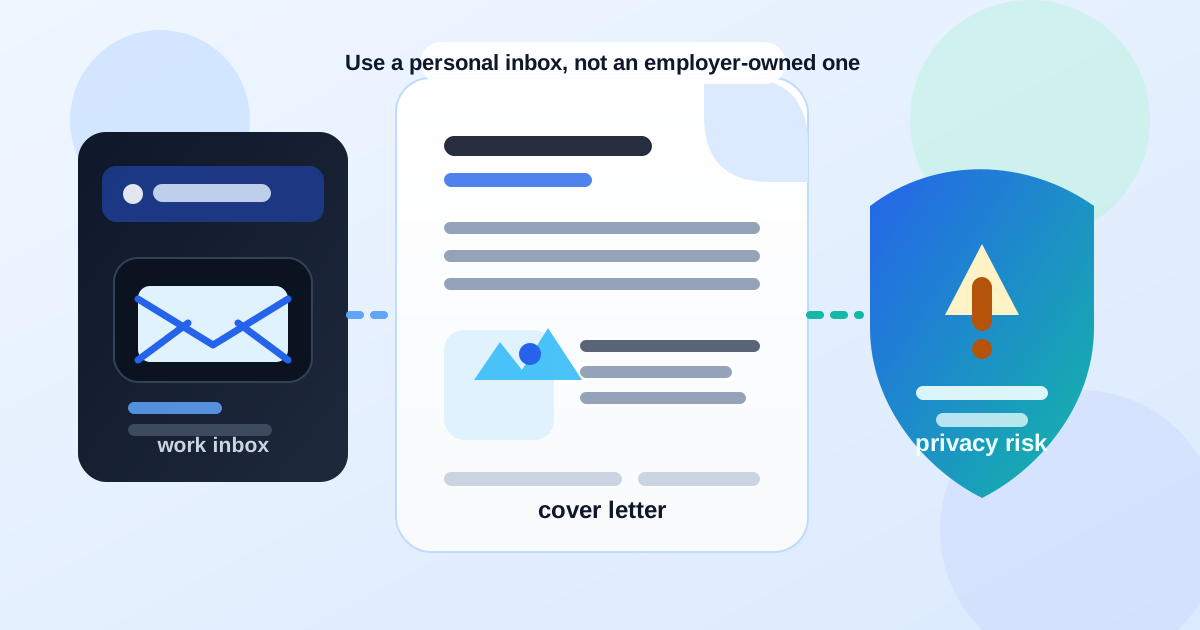
Why this detail matters more than people think
A cover letter looks like a small piece of the application, but it often travels farther than applicants expect. It may be uploaded into an applicant tracking system, forwarded to a hiring manager, saved as a PDF, copied into internal notes, or revisited weeks later when a team reopens a role. The email address attached to that document is not just a contact field. It is part of the signal you send and part of the privacy risk you take.
When that email address belongs to your current employer, you create an unnecessary dependency on an account you do not fully control. That can affect confidentiality, message reliability, and even the impression you make on the people reading your application.
The biggest risks of using your work email on a cover letter
1. It can expose your search in ways you do not intend
Employer-managed email accounts live inside employer-managed systems. Even if nobody is actively watching for job-search activity, work accounts often connect to device management, browser sync, corporate phones, notification previews, retention logs, and security tooling. That means a recruiter reply or application confirmation can surface in more places than you expect.
The risk is not always dramatic. Sometimes it is as simple as a notification appearing on a work laptop during a meeting, a message preview showing on a lock screen, or an autofill suggestion revealing the wrong account when someone is standing nearby. Those little moments are usually how confidentiality slips happen.
2. You may lose access at the worst possible moment
Your work email is not really yours. If you change jobs, get locked out during a leave, lose device access, or leave a company sooner than expected, that inbox can disappear from your control. That is a bad place to anchor hiring communication.
Imagine a recruiter responds two weeks later asking for interview availability, a writing sample, or salary expectations. If the message goes to a mailbox you no longer check or can no longer access, you may never see it. A cover letter should point employers to the most stable route to reach you, not the most convenient one for this afternoon.
3. It can send an awkward professional signal
Most hiring teams will not reject you just because they saw a work email, but it can still raise questions. It may suggest that you are job searching from company systems, that you have not separated your personal search from your current employer, or that you have not thought through privacy and boundaries very carefully.
Recruiters usually prefer straightforward, low-friction contact details. A personal address that matches your resume and application looks cleaner and more intentional than a current-employer address on a cover letter.
4. It can create mismatches across your documents
If your resume uses one email, the application form uses another, and the cover letter uses your work inbox, you make follow-up harder than it needs to be. Hiring teams are busy. Clean, consistent contact details reduce confusion and make it less likely that the wrong person reaches out to the wrong inbox.
For most candidates, the safest approach is consistency: one professional job-search email across the cover letter, resume, application profile, and recruiter communication.
Are there any situations where using a work email is acceptable?
For external job applications, usually no. The exceptions are narrow.
- Internal applications: if you are applying for another role inside the same company and the process explicitly runs through internal systems, work contact details may be normal.
- Business-owner scenarios: if your “work email” is actually a domain you own as an independent professional, contractor, or consultant, the privacy risk is different because you control the account.
- Very unusual industry instructions: if an employer explicitly requires a specific professional address format, follow the instructions carefully, but make sure you understand who controls that inbox.
Outside of cases like those, a personal address is the safer default.
What should you use instead?
A dedicated personal job-search inbox
This is the best option for most people. A separate personal inbox keeps applications organized, protects your everyday email from recruiter noise, and gives you a stable address you can keep using throughout the entire process. It also makes it easier to search for interview invites, confirmations, tests, and offer documents without mixing them into shopping receipts or family messages.
An email alias
If your email provider supports aliases, an alias can work well when it still routes into an inbox you control reliably. That gives you a little separation without forcing you to manage a completely separate account. Just make sure replies land where you expect, and use an alias that still looks professional.
A temporary inbox only for very early, low-trust activity
This is where a tool like Anonibox can fit naturally. If you are testing a job board, downloading a gated salary guide, checking a low-trust listing, or signing up for something that is likely to create long-term marketing noise, a temporary inbox can help protect your main address from spam.
But a disposable inbox is not the right long-term contact point for a real cover letter. Once you are applying to legitimate employers and expecting replies over days or weeks, use a durable address you can monitor consistently. Temporary email is useful for early filtering and privacy protection, not for the core hiring timeline.
What email should appear on a cover letter?
Use the same professional email you want the employer to use for the rest of the process. In practice, that usually means:
- an address you personally own
- an inbox you check daily
- a simple, readable format based on your name
- the same address shown on your resume and application form
If you are emailing the cover letter directly instead of uploading it through a portal, keep the From address, signature block, and document header aligned. Consistency makes you easier to contact and reduces the chance of missed replies.
If you already sent a cover letter with your work email
Do not panic. One application is not the end of the world. The better move is to correct the pattern now rather than repeat it.
- Create or choose a better inbox today. A dedicated personal job-search address is usually the easiest fix.
- Update your resume, templates, and saved cover letter header. Remove the work address everywhere it might reappear.
- Use the personal address for all future applications. Consistency matters more than perfection.
- If a recruiter replies to the work address, move the conversation carefully. You can say that your personal email is the best address for future correspondence and continue from there.
- Stop using employer devices and browser profiles for the search if you have been doing that too. The inbox choice is only one part of confidentiality.
Most hiring teams care far more about smooth communication than about whether your first touchpoint was ideal. Fix it early and move on.
A quick checklist before you send the cover letter
- Does the email belong to you rather than your employer?
- Will you still have access to it if your job situation changes tomorrow?
- Does it match the email on your resume and application form?
- Does it look professional and easy to read?
- Are notifications for that account private and under your control?
- If you used a temporary inbox earlier, have you switched to a durable address for real hiring communication?
If you can answer yes to those questions, you are in much better shape than someone who drops a company-managed address into a cover letter just because it was already open on a work laptop.
Final answer
You generally should not use your work email on a cover letter. It creates avoidable privacy risk, can make your search easier to expose, and gives employers a contact route you may not fully control over time.
A personal or dedicated job-search inbox is the better default. It keeps your communication consistent, protects confidentiality, and gives you a stable address for recruiter replies, interviews, assessments, and offer-stage conversations. If you want extra separation early on, temporary tools like Anonibox can help with low-trust signups and spam control, but your actual cover letter should point to an inbox you can depend on.