Yes — a temp email can make sense for WorkBright if you are only checking an early demo, testing the invite flow, or separating vendor follow-up from your main inbox. That is the low-stakes evaluation case.
No — it is a bad choice for real onboarding, signed forms, payroll setup, benefits enrollment, or any employee record you may need to access later. Once WorkBright is part of actual hiring or employment paperwork, use a stable address you control long term.
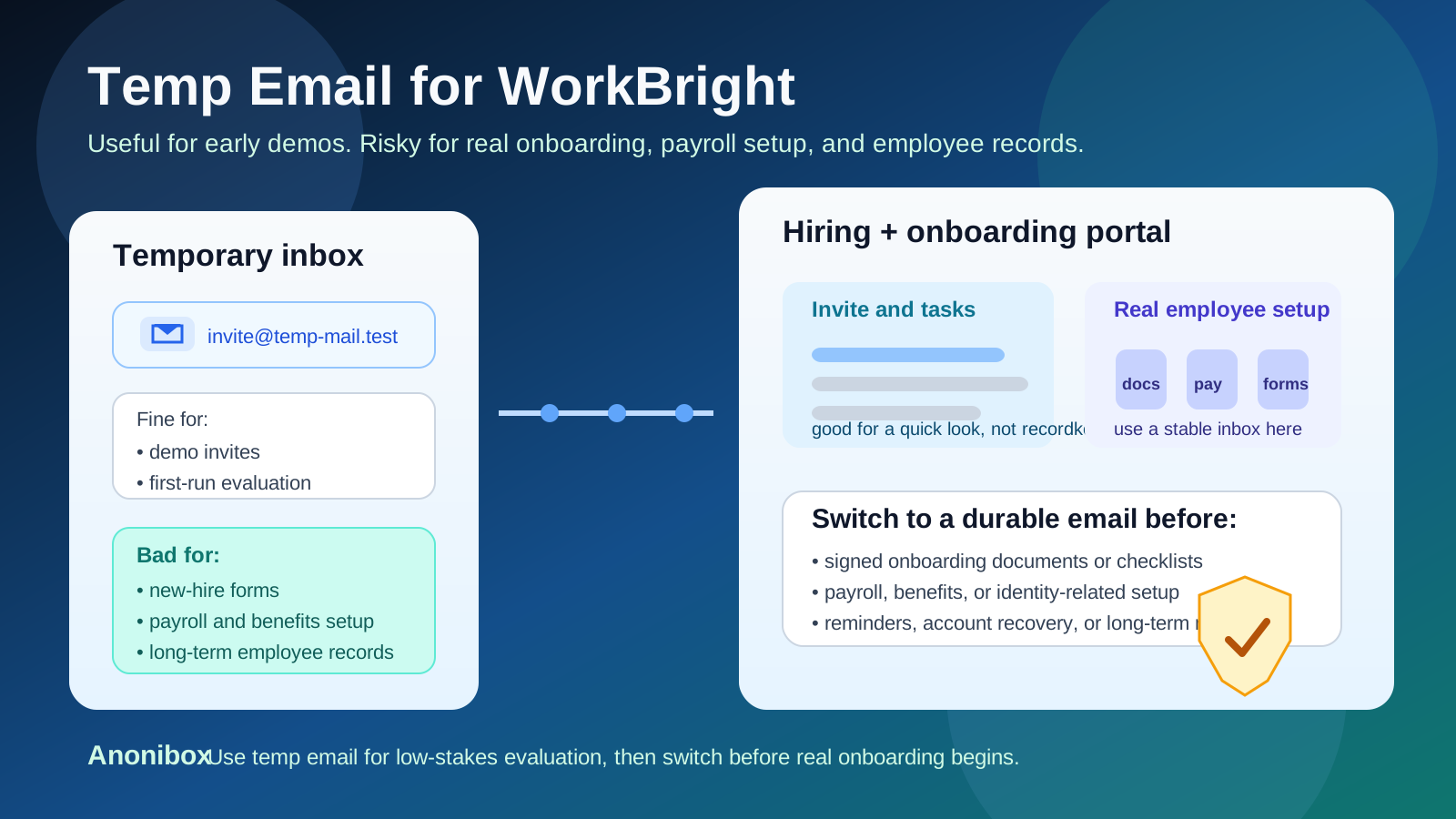
If you are looking up temp email for WorkBright, there are usually two different situations behind the question. The first is an HR buyer, recruiter, or operations lead who wants to evaluate an onboarding platform without turning one quick test into months of product emails. The second is a new hire or candidate wondering whether a temporary inbox is safe for a real onboarding invitation. Those are not the same scenario, and the right answer changes fast depending on which one you are in.
For a short first look, a temporary inbox can be practical. You can receive the invitation, review the product, and keep your main mailbox cleaner while you decide whether the tool deserves more time. For real onboarding, though, the trade-off changes completely. Onboarding messages are not just marketing clutter. They can connect to forms, reminders, task completion, signatures, access links, and records you may need again later. That is why the safest rule is simple: use temp email for curiosity, not for paperwork that actually matters.
Why people consider a temp email for WorkBright
Most people are not trying to be secretive. They are trying to stay organized. Vendor demos, hiring tools, and onboarding platforms tend to generate a lot of messages very quickly: invite emails, follow-up nudges, setup prompts, calendar links, feature updates, and sales outreach. A temporary inbox can help in a few realistic ways:
- It keeps trial and demo mail separate. If you are only comparing vendors, you may not want every message mixed into your long-term work inbox.
- It reduces future clutter. Some evaluations are useful for twenty minutes and noisy for six months. A throwaway inbox limits that downside.
- It helps you test the front door. If your goal is simply to see whether the invitation arrives and the workflow looks sensible, a temp inbox can do that job.
- It protects your primary address during early research. This matters when you are screening several tools and have not decided which ones deserve deeper engagement.
Those are legitimate reasons for a quick evaluation. The problem is that WorkBright sits close to real employment workflows. The moment the account is tied to actual onboarding tasks, the email stops being disposable in practice even if the address itself still is.
The most important distinction: demo evaluation versus real onboarding
Before you use a temporary inbox, figure out which side of the line you are on.
Demo or buyer-side evaluation
If you work in HR, recruiting, or operations and you just want to inspect the product, a temporary inbox can be reasonable. You may only need an invite link, a welcome email, or a few first-run messages while you assess the interface and decide whether the platform belongs on your shortlist.
Real employee onboarding
If the inbox will receive actual onboarding steps for a real job, the answer changes. At that point the messages may connect to forms, signatures, checklists, tax and payroll setup, document uploads, reminders, and account recovery. Losing access later can create a very annoying mess, even if nothing catastrophic happens.
In other words, a temporary inbox is fine for evaluating the process. It is not fine for becoming part of the process you genuinely rely on.
When a temp email for WorkBright makes sense
1. You are only testing a first-pass demo
If your team is comparing onboarding or HR tools, a temp inbox can help you review the invitation flow and basic product experience without committing your permanent mailbox right away. That is the cleanest use case.
2. You want to isolate vendor outreach
Maybe you are checking several platforms in the same week. Keeping each evaluation in its own inbox can reduce confusion and make it easier to compare who sent what.
3. The account is clearly disposable
If nobody plans to keep the workspace, no real employee data is involved, and the goal is simply to decide whether the platform looks promising, a temporary inbox is usually fine.
4. You only need the inbox for access, not recordkeeping
Some evaluations require just a verification or invitation link and not much else. In that narrow case, a throwaway address can do the job without much risk.
When it is a bad idea
1. You are a real new hire using the portal for actual onboarding
This is the clearest no. If you are completing tasks for a real employer, use an address you can still access later. Even if the onboarding seems simple today, you may need those messages again for follow-ups, reminders, or proof that you completed something.
2. Documents or signatures matter
As soon as the workflow involves signed forms, identity-related steps, payroll setup, or employee records, the inbox needs continuity. A temporary address is the wrong foundation for that kind of paperwork.
3. You may need reminders or status messages later
Onboarding rarely happens in one sitting. You may return to it after a day, a week, or after someone on the employer side asks you to complete another step. Disposable inboxes are poor companions for that kind of follow-through.
4. Recovery and password resets could matter
If you lose access to the mailbox, you may also lose access to the path back into the portal. That becomes more painful when the portal is not a toy account but part of a real employment workflow.
5. Your employer expects a stable contact address
Even when the portal itself works, an employer may reasonably assume the email on file is the address they can continue using. If you give them a disposable one and it disappears, you create avoidable friction for yourself and for them.
Risks people underestimate
The biggest mistake is thinking only about spam and not about continuity. With a marketing signup, losing the inbox later is mostly irrelevant. With onboarding software, losing the inbox later can be inconvenient at exactly the wrong moment.
- Missed reminders: you forget a deadline or do not see a task update.
- Lost access links: the original invitation or reset flow disappears with the inbox.
- Confusion with HR: they write to the old address because that is what they have on file.
- Incomplete records: you no longer have easy access to prior messages about what was submitted and when.
- Messy transitions: you eventually need to change the address after the process has already started.
None of those problems are glamorous, but they are exactly the kind that waste time and cause stress later.
A better workflow for HR buyers
If you are on the employer or software-evaluation side, there is a middle ground that preserves privacy without creating long-term account chaos.
Use a temp inbox only for the first look
Take the initial invitation, click through the basic workflow, and decide whether the product belongs on the shortlist.
Save the useful information outside the inbox
If the demo reveals something worth remembering, document it somewhere durable: pricing questions, setup friction, onboarding steps that looked strong or weak, integration concerns, and who else on your team should review it.
Switch to a stable address early if the tool survives
Once WorkBright becomes a real candidate, move the ownership path to a mailbox your team actually monitors. The best time to clean this up is before procurement, implementation, or shared access gets serious.
Keep evaluation and production separate
A throwaway demo account should stay a throwaway demo account. If the tool becomes real, treat the real account as a separate, intentional setup.
A better workflow for employees and new hires
If you are a candidate or employee receiving a real onboarding invitation, the safest move is boring but effective: use a normal address you control and check regularly.
- Make sure the mailbox is accessible from your phone and laptop.
- Archive important onboarding emails in a folder so they are easy to find later.
- If you need to change addresses, ask HR before the process gets complicated.
- Do not rely on a mailbox that may disappear before your onboarding is fully finished.
If privacy is your concern, a better solution is often a dedicated long-term email for job search and hiring activity rather than a truly temporary one. That keeps employment-related messages separate without sacrificing access later.
What to do if you already used a temp email
If you already started with a temporary inbox, do not panic. Just fix it sooner rather than later.
- Check whether the portal lets you update the address.
- Ask HR or the account owner to change it if needed.
- Save any important messages before the inbox expires.
- Make sure future reminders and recovery paths go to a durable address.
The sooner you make the switch, the less likely it is to interfere with the rest of the process.
Where Anonibox fits naturally
Anonibox is useful in the narrow stage where you want to inspect a product without handing over your long-term address too early. If you are evaluating WorkBright as software, a temporary inbox can keep the first round of invites and follow-ups tidy. That is a valid use.
But Anonibox should stay on the evaluation side of the line. Once the workflow touches real employee onboarding, forms, signatures, payroll setup, or records you may need later, a stable inbox is the smarter choice. The goal is not to avoid every message forever. The goal is to keep low-stakes research disposable and high-stakes workflows durable.
Final takeaway
A temp email for WorkBright is useful for an early demo or low-stakes product evaluation. It can help you inspect the invitation flow, reduce inbox clutter, and keep vendor follow-up separate while you decide whether the platform deserves more attention.
It is the wrong choice for real onboarding. If the email will connect to signed forms, employee records, payroll setup, or reminders you may need later, use a durable address you control. That one decision will save more trouble than any short-term inbox convenience is worth.