A temp email for Toggl Hire can work for a quick trial or first-pass assessment setup, but it is a poor choice once real candidate invites, recruiter collaboration, or account recovery depend on that inbox.
If you are only evaluating Toggl Hire, a disposable address can reduce clutter. If the account will touch real hiring, switch to a permanent address before the workflow becomes live.
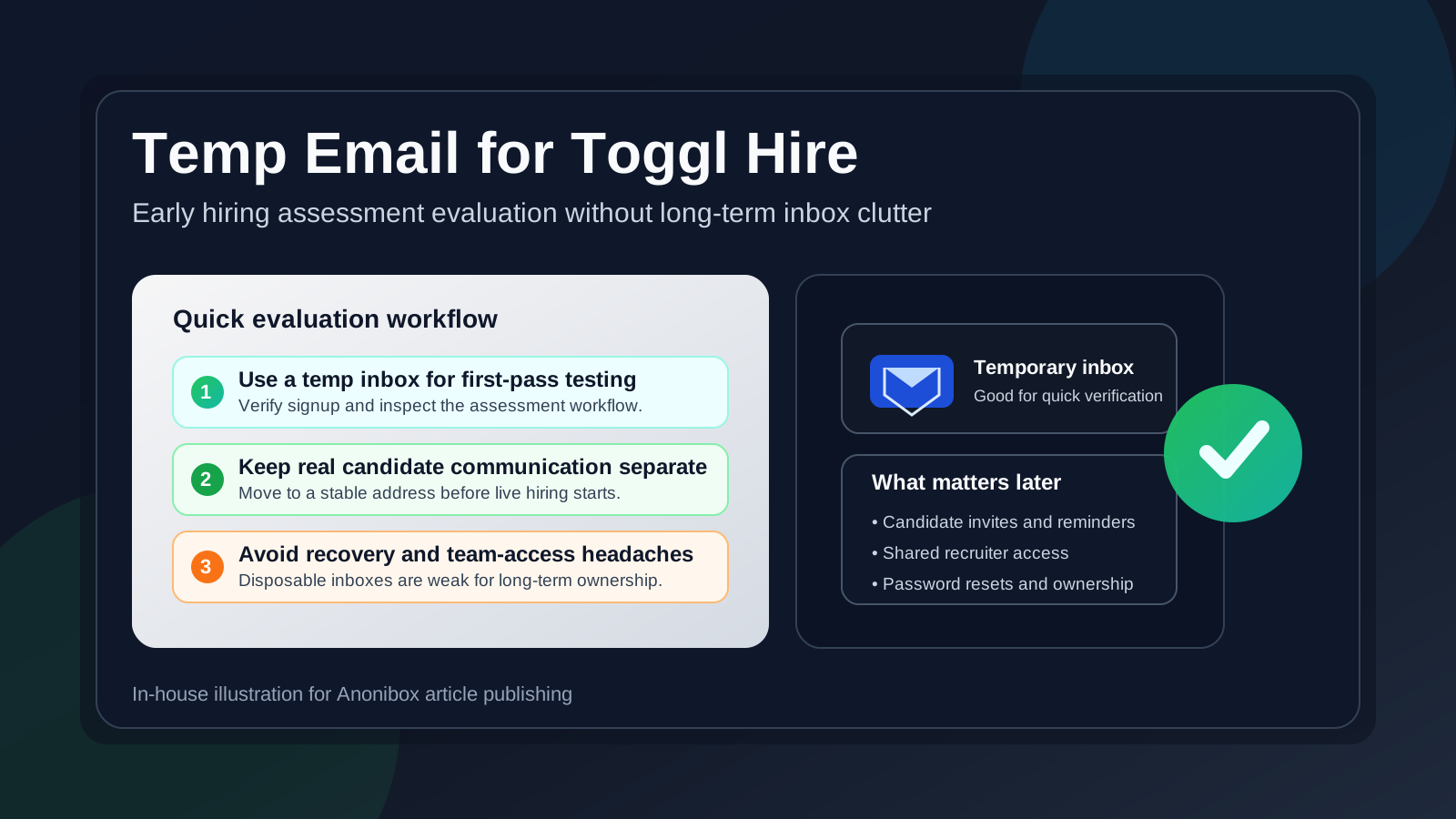
That distinction matters because hiring software creates two very different kinds of email traffic. One kind is low-stakes trial noise: verification emails, welcome messages, webinar invites, nurture campaigns, and sales follow-up. The other kind is operational: candidate invitations, reminders, shared evaluator access, password resets, and ownership handoffs. A temporary inbox is fine for the first category. It becomes fragile fast in the second.
So the practical answer is simple. Use a temp email for Toggl Hire if you are doing a short evaluation and want to keep product outreach out of your main inbox. Do not keep using a throwaway address once the account becomes part of real recruiting work or a real assessment process.
Why people look for a temp email for Toggl Hire
Most people are not trying to hide anything. They are trying to stay organized. Hiring tools can generate a lot of email surprisingly quickly, especially if you are comparing several platforms in one week. You may receive product tours, setup prompts, feature updates, case studies, webinar pushes, and “just checking in” sequences before you have even decided whether the tool belongs on your shortlist.
A temporary inbox gives you a buffer. It lets you verify the account, look around the workspace, and judge whether the assessment flow feels useful without handing your long-term work address to another vendor too early. That can be especially helpful if you are reviewing multiple hiring platforms side by side and want each test to stay neatly separated.
This is where a service like Anonibox fits naturally. For low-stakes product checks, it gives you the verification email you need while keeping early follow-up out of the inbox that runs the rest of your day.
When a temp email for Toggl Hire makes sense
1. You are doing a fast first-pass product evaluation
If you just want to see how the dashboard feels, how assessment creation is presented, or whether the overall workflow deserves deeper attention, a temporary inbox is reasonable. The goal is not to build a durable account. The goal is to answer a short, practical question: is this worth more of my time?
2. You are comparing several hiring assessment tools at once
Recruiting teams often compare multiple products before inviting anyone else in. Keeping each test in its own inbox can reduce confusion. You know exactly which welcome email belongs to which platform, and you do not end up mixing half a dozen vendor sequences into the same work mailbox.
3. You only need the earliest access emails
Some evaluations require very little at the start. You may only need a verification link, an onboarding note, and maybe one or two setup messages before you can judge the product. In that narrow situation, a disposable inbox can do its job well.
4. The account is truly disposable
This is the key condition. If nobody plans to keep the account, no candidate communication depends on it, and no teammate will rely on it later, the risks stay low. A throwaway inbox is fine for a throwaway account.
Where a disposable inbox becomes risky
1. Real candidate communication starts flowing through the account
The moment the account is connected to real hiring activity, the email address stops being a trivial detail. If candidate invitations, reminders, replies, or assessment access depend on that inbox, losing the address later becomes a real operational problem.
2. More than one person needs access
A solo evaluation is one thing. Shared recruiting work is another. Once hiring managers, recruiters, coordinators, or teammates start relying on the account, ownership matters. A temporary inbox is weak infrastructure for anything that needs handoff, continuity, or accountability.
3. Password resets and recovery become important
Recovery is where disposable email usually fails people. The trial phase feels fine because everything is fresh and easy. The problem appears later, when you need a reset email, a security notice, or proof that you still control the account. If the mailbox is gone, the convenience from day one can turn into unnecessary friction on day thirty.
4. The account starts holding decisions you care about
Even if you are not sending candidate messages directly from the platform, the account may still become useful enough to matter. Notes, setup decisions, test structures, evaluation history, or workflow preferences can accumulate quickly. At that point, treating the account like something disposable usually stops being smart.
What about job seekers and candidates?
This keyword can also come from the candidate side, so it is worth being clear here: if you are taking a real assessment or responding to a real employer invite, a temporary inbox is usually the wrong choice.
Why? Because hiring processes rarely end with a single click. You may need reminder emails, follow-up messages, another assessment link, scheduling details, or instructions tied to the same opportunity. If the inbox disappears or you lose track of it, you create extra risk for yourself for no real benefit.
If your goal is privacy during a job search, a better approach is usually a separate long-term job-search email rather than a truly temporary one. That keeps recruiting traffic away from your everyday inbox while still giving you a stable address for real opportunities.
A practical workflow that keeps things clean
Start with a temp inbox only for the first look
If you are on the buyer or recruiter side and you genuinely want a quick product test, use the temporary inbox at the very beginning and treat that account as a sandbox.
Evaluate with a checklist, not vague curiosity
The best use of a disposable inbox is a focused session. Go in knowing what you want to judge, such as:
- How easy the verification and setup flow feels
- Whether the assessment workflow is intuitive
- How clearly the product supports shortlisting or screening
- Whether the workspace seems built for your team size and process
- Whether it feels meaningfully better than the other tools you are considering
A disciplined evaluation keeps the account temporary in practice, not just in theory.
Save anything useful outside the inbox
If the product looks promising, capture the information that matters while the context is fresh. Save notes about workflow strengths, friction points, pricing questions, or integration concerns. Do not let valuable observations live only inside a temporary mailbox.
Switch to a stable email before the workflow becomes real
If Toggl Hire survives the first round and starts looking like a real option, move early. Change the contact path to a durable email address before candidate invites, team access, or account recovery depend on the temporary one. The best time to switch is before it feels urgent.
Common mistakes to avoid
- Using a throwaway inbox for a non-throwaway account: this is the most common mistake and the one that causes the most cleanup later.
- Waiting too long to switch: once an account becomes useful, delay turns convenience into risk.
- Mixing evaluation and production behavior: a trial account should stay a trial account unless you intentionally move it into a stable setup.
- Thinking only about spam: inbox clutter matters, but account continuity matters more once people and processes depend on the tool.
- Using temp email for a real job opportunity: if you are a candidate, stable access is usually worth more than short-term privacy gains.
When a permanent address is clearly better
Use a durable address from the start if any of these are already true:
- You expect to keep the account longer than a quick evaluation
- Other people on the hiring team may need access
- The account will touch live candidate workflows
- You may need reliable resets, alerts, or ownership continuity later
- You are a job seeker participating in a real assessment process
Once even one of those conditions applies, the case for disposable email gets weaker very quickly.
A better middle ground for privacy-conscious users
Not every choice has to be “main inbox forever” or “throwaway inbox for everything.” A practical middle ground is to use temporary email only for early product filtering and then use a separate long-term work or job-search address for anything real. That gives you privacy, cleaner organization, and continuity without the hidden downside of disappearing access.
For recruiting teams, that might mean using a temporary inbox for the very first test and a monitored team mailbox once the platform makes the shortlist. For candidates, it might mean using a dedicated job-search address you control long term instead of your everyday personal inbox.
Final takeaway
A temp email for Toggl Hire is useful when you want to explore the product quickly, compare hiring assessment tools, and keep early vendor follow-up out of your main inbox.
It is a bad long-term choice once the account becomes part of real candidate communication, shared team access, or anything you may need to recover later. Use temporary email for low-stakes evaluation. Use a stable address for real hiring workflows.