Usually no. Discord can work for niche follow-up after a job lead is verified, but it is a weak primary channel for job applications.
For most job seekers, official careers pages and company email are safer because Discord makes identity checks, recordkeeping, and professional boundaries harder.
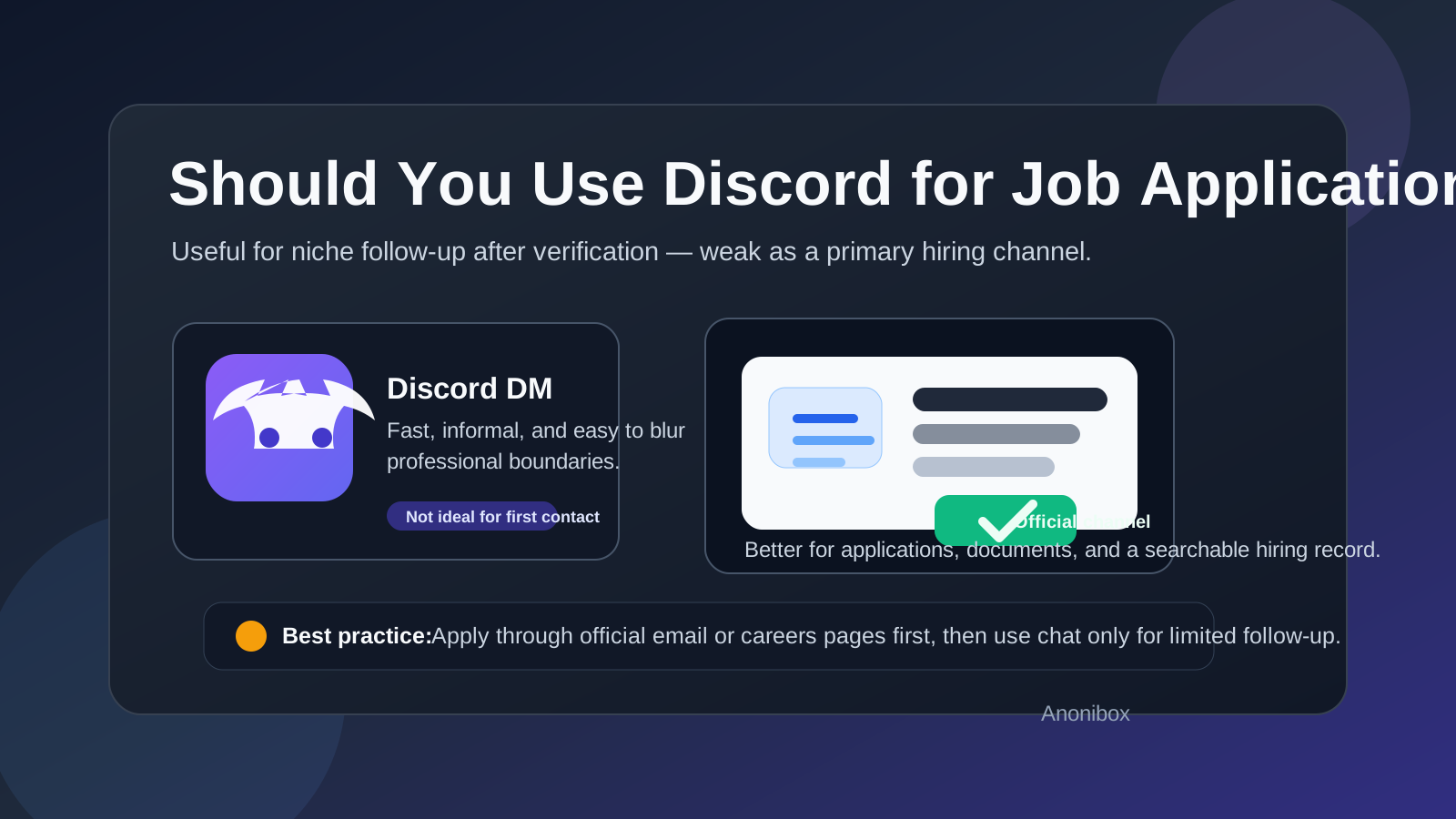
That does not mean Discord is automatically a scam. In some industries, especially gaming, creator work, community moderation, indie software, open source, and some startup circles, people really do network on Discord. A hiring lead might start in a server, a founder may answer candidate questions there, or a community manager might invite promising applicants into a short DM conversation. Those situations happen.
The problem is that job searching needs more than fast chat. It also needs a reliable paper trail, clear identity verification, sane document handling, and a clean boundary between your professional life and your social or hobby spaces. Discord is good at conversation. It is not especially good at being the foundation of a hiring process.
Short answer: fine for narrow follow-up, poor as the main application channel
If you already know the company is real, the role is real, and the Discord contact is tied to a verified person, Discord can be acceptable for quick follow-up. That might include clarifying a question from a community event, confirming a call time, or getting pointed to the correct application page.
If someone wants you to submit your entire application, send sensitive documents, do interview coordination only in Discord, or handle the whole process in a server or DM thread, that is where the risk rises. The convenience of chat starts to work against you.
Why people even consider Discord for job applications
People usually ask this for understandable reasons. Discord feels faster, more direct, and sometimes more human than a clunky applicant tracking system. In community-driven fields, it may also feel like the place where the real conversations happen.
- Some industries really use it: gaming communities, mods, creators, developer groups, and startup communities often spend time in Discord.
- It feels less formal and easier to approach: a DM can seem simpler than a cold email.
- It can reduce inbox clutter: some people would rather not expose their main email until they know an opportunity is serious.
- It can help with quick community Q&A: candidates sometimes learn about roles from people already in the server.
Those are real advantages, but they explain why Discord is attractive, not why it is a strong default for the actual application process.
What Discord does reasonably well in a hiring context
1. It can help with warm community introductions
If you are already in a credible professional community, Discord can make networking less stiff. You might discover that a team is hiring, ask whether a role is still open, or get told which official page to use. That kind of soft introduction can be useful.
2. It can work for lightweight scheduling
After a role is verified and a formal application already exists, a short Discord message can be fine for low-stakes follow-up. “We moved the call by 15 minutes” is very different from “Upload your ID and tax forms here.”
3. It may fit community-based roles better than traditional corporate roles
If the job itself involves Discord communities, moderation, creator support, or community operations, some Discord contact may be perfectly normal. Even then, normal does not mean ideal for every step.
Where Discord falls short as a primary application channel
1. Identity verification is weaker
This is the biggest issue. Discord handles, display names, nicknames, and server roles do not create the same trust as a company domain email or official careers page. Someone can look established inside a server and still be hard to verify independently. That matters when you are deciding whether to share a resume, portfolio, phone number, or other personal details.
2. The paper trail is worse
Real hiring processes benefit from clean records. You want to be able to search messages later, confirm exactly what was requested, forward details to yourself, and preserve an organized timeline. Discord can do some of that, but it is still chat-first. Important information gets buried in threads, DMs, channels, notifications, and server noise.
3. Professional and personal boundaries blur fast
Many people use Discord for hobbies, games, friends, and casual communities. If you use the same account for job searching, your professional life can end up next to your social identity in awkward ways. Your avatar, username style, old posts, server memberships, and online status may reveal more than you intended.
4. Discord makes it easy to move too fast
Chat lowers friction, and low friction is not always good in hiring. It becomes easier for a stranger to push you into a DM, ask for extra information early, or create false urgency. That is especially risky when the conversation starts in a public server where social proof can be faked.
5. Scam and malware risk still exist
A familiar app does not equal a safe employer. Fake recruiter accounts, copied branding, cloned servers, malicious links, suspicious attachments, and “join this private interview server” tricks are all plausible. Discord may feel informal and friendly, which can lower your guard at the exact moment you should be verifying more carefully.
6. Important documents belong in more stable systems
Resumes, assessments, interview instructions, offers, onboarding forms, and identity-sensitive material are better handled through official portals or professional email. Even if Discord starts the conversation, it should rarely be the only home for those steps.
When using Discord may be reasonable
Discord is not automatically the wrong choice in every case. It may be reasonable when:
- you already found the role on the employer’s real site and applied there first
- the Discord contact is clearly tied to a verified employee, founder, or community manager
- the messages are limited to logistics, clarifications, or community interaction
- the role itself is community-centered and Discord is part of normal day-to-day work
- any serious step still moves back to official email, a company site, or a trusted hiring portal
In other words, Discord can be a side channel. It is usually weaker as the channel where trust gets established in the first place.
When Discord should make you cautious
- The entire hiring process stays inside Discord. No careers page, no company email, no formal follow-up.
- You cannot verify the person independently. Their Discord role or handle is the only proof they offer.
- You are rushed into DMs. Especially if the public thread quickly disappears or the person wants everything off-channel.
- You are asked for sensitive documents too early. IDs, payment details, or tax information should raise alarms.
- The opportunity sounds great but stays vague. No clear job description, unclear company structure, or inconsistent answers.
- Links and files feel off. Shortened URLs, strange downloads, or “install this app to continue” requests are not good signs.
If several of those signs appear together, the problem is not just that the channel is Discord. The bigger issue is that the process looks untrustworthy.
A better workflow for privacy-conscious job seekers
If your main reason for considering Discord is privacy or inbox control, there is usually a better structure.
- Use Discord to discover, not to fully apply. Let it help you find the opportunity, ask public questions, or confirm where to apply.
- Move serious steps to official channels. Use the company’s careers page, recruiter email, or applicant system for your resume and core communication.
- Separate your contact strategy. If you do not want to expose your main inbox too early, use a dedicated job-search email. For one-off community signups or low-trust early verification steps, some people use Anonibox before deciding which opportunities deserve their long-term contact details.
- Keep documents out of casual chat. Portfolios, interview times, assessments, and offers are easier to manage when they live in searchable, professional systems.
- Verify independently before sharing more. Check the company site, LinkedIn presence, public role listing, and whether the Discord contact maps to a real person.
This gives you the speed and networking upside of Discord without letting a chat app become the entire hiring workflow.
Best practices if a recruiter or hiring manager wants to use Discord
- Ask for an official email follow-up. A legitimate employer should be able to confirm the conversation outside Discord.
- Check the role on the public site. If it is real, it should usually exist somewhere more formal.
- Keep the Discord thread narrow. Use it for short coordination, not for everything.
- Be careful with files and links. Open only what you can verify.
- Limit what your profile reveals. If you use Discord professionally, review your username, avatar, bio, and visible activity.
- Do not let urgency override judgment. Real hiring teams can tolerate basic verification questions.
A quick decision checklist
Before using Discord for any hiring conversation, ask yourself:
- Did I verify the company and the role outside Discord?
- Am I using Discord only for follow-up, or as the whole application channel?
- Would I feel comfortable if this conversation needed to be searched or reviewed later?
- Is the person asking for more information than this stage should require?
- Would the employer also be comfortable moving important steps to email or a portal?
If those answers feel shaky, trust that discomfort. Friction is sometimes your best warning sign.
Final answer
Discord can be useful for community discovery, warm intros, and limited follow-up after an opportunity is verified. But for most job seekers, it is not a strong primary channel for job applications. Official careers pages, company email, and structured applicant systems still do a better job of proving identity, preserving records, and protecting professional boundaries.
If a role genuinely lives near Discord, use the platform carefully and keep it in a supporting role. For the real application, the safer default is still a formal channel.