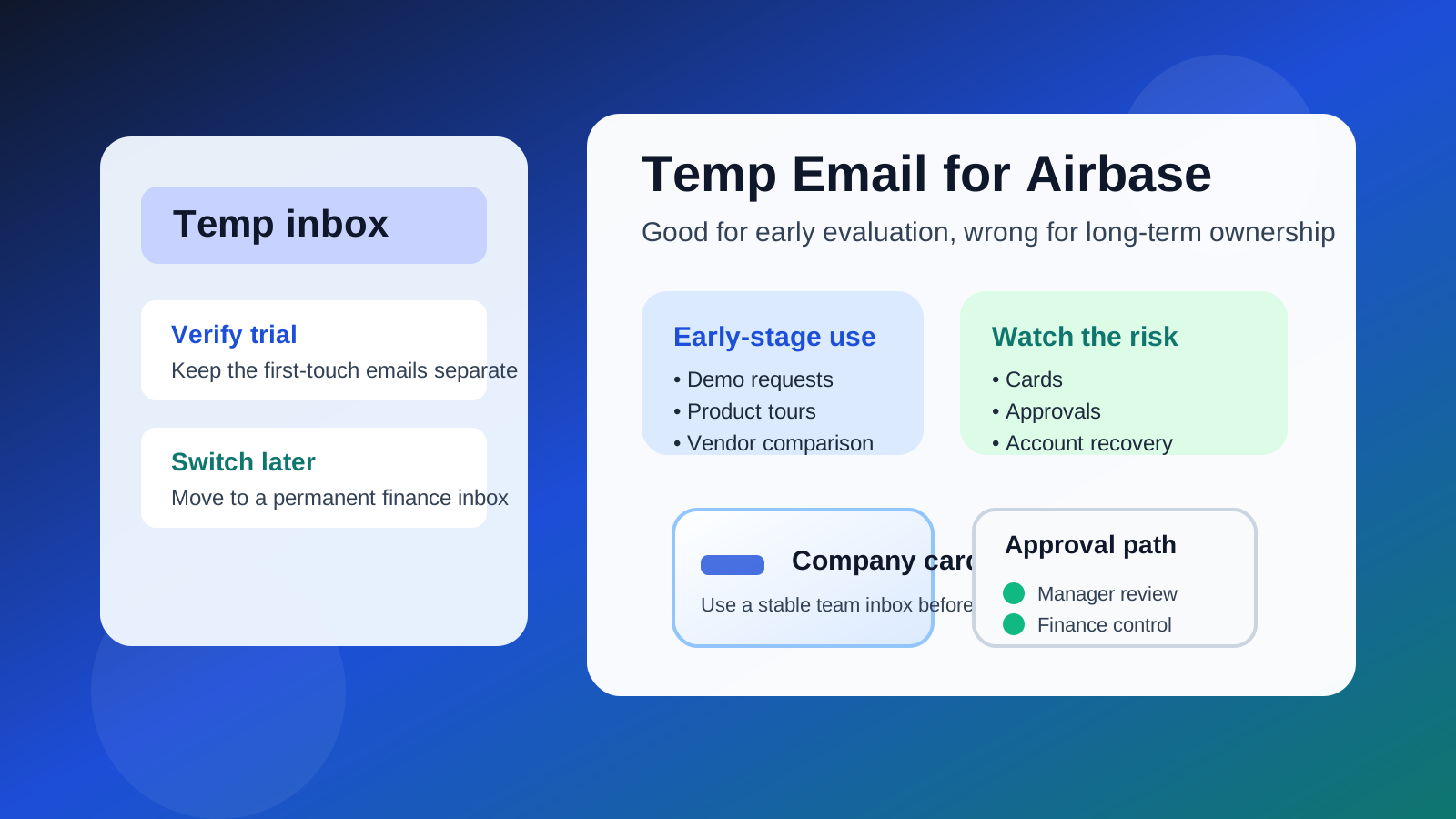
Yes, a temp email can be useful for Airbase if you are only testing the platform, requesting a demo, or comparing early spend-management workflows. No, it is not the right inbox once cards, approvals, reimbursements, vendor payments, or account recovery start to matter.
That is the practical answer: use a temporary inbox for light evaluation, then switch to a controlled long-term address before anything important depends on that mailbox.
Airbase is the kind of product teams often evaluate during a messy comparison phase. Finance leaders, operators, controllers, and procurement teams may want to see how a platform handles card issuance, approval routing, reimbursements, bill payments, vendor workflows, and spend controls before they hand over a permanent work inbox. That is a fair instinct. Early software evaluations can trigger a lot of follow-up email, and not every trial turns into a serious buying process.
A temporary inbox can help you separate that first round of testing from your main work email. It can keep the initial signup clean, reduce long-term promotional clutter, and make it easier to compare several spend-management tools at once. But the more real your Airbase setup becomes, the less appropriate a temporary address becomes. Once a platform touches approvals, payment flows, finance operations, or shared admin access, mailbox stability matters more than inbox cleanliness.
If you are using Anonibox or a similar temporary-email workflow, the smartest move is to treat it as an evaluation tool, not as the permanent identity for a real finance stack.
When a temp email for Airbase makes sense
Using a temp email for Airbase makes the most sense during the earliest stage of evaluation, when your goal is simply to learn whether the product belongs on the shortlist.
- Signing up to explore the product for the first time
- Verifying a demo request or gated product walkthrough
- Comparing Airbase with tools like Ramp, Brex, Spendesk, or Expensify
- Reviewing onboarding emails, implementation promises, or product-tour content
- Keeping early vendor outreach out of your primary finance or operations inbox
That early stage is where temporary email is most useful. You still receive the verification link and first-touch onboarding messages, but you do not commit your main address to every nurture sequence, follow-up reminder, webinar invitation, or sales cadence tied to the signup.
This can be especially helpful if several people on your team are testing multiple platforms in parallel. A separate temporary inbox for each vendor can keep the comparison organized and stop one shared mailbox from filling up with overlapping trial messages.
Why teams try this in the first place
Spend-management software evaluations generate more email than many buyers expect. Even before a team fully adopts a platform, the signup flow may lead to product-tour prompts, implementation checklists, reminders to invite teammates, scheduling requests, case studies, integration notes, and account-expansion follow-ups.
That does not mean the product is bad. It just means software vendors are trying to move a trial toward a buying conversation. If your team is still deciding whether Airbase is even a fit, it is reasonable to protect your main inbox during that stage.
A temp email also helps answer a practical question: does the platform look useful enough to justify deeper setup? If the answer is no, you can move on without leaving your real mailbox tied to one more tool you never plan to adopt.
Where a temp inbox starts becoming risky
The problem is that Airbase is not a lightweight newsletter product. It is tied to workflows that can become operational fast. Once the account starts to represent a real company process, a temporary address becomes a weak foundation.
Here are the main places where the risk goes up.
1. Card programs and spending controls
If your test expands into card issuance, spending limits, or policy controls, you need a mailbox that will still exist when approvals, notices, or recovery steps matter. A disposable address is fine for reading an introductory email. It is not ideal for an account that may control real spend.
2. Approval routing and finance operations
Approval systems often create a trail of notifications, exceptions, escalations, and workflow updates. If the account owner used a temporary inbox that later disappears, the team can lose easy access to a communication trail that may still matter during implementation or troubleshooting.
3. Reimbursements and bill workflows
Expense reimbursements and bill-payment processes often involve more than one step. Even in a test environment, you may need follow-up instructions, confirmation messages, or admin prompts later. A throwaway mailbox is a poor place to anchor anything that could turn into a real operational sequence.
4. Vendor and accounting integrations
As soon as your evaluation touches accounting syncs, ERP planning, vendor records, or structured finance workflows, continuity matters. Even if you are not live yet, the mailbox tied to the account should be one your team actually controls for the medium term.
5. Account recovery and admin ownership
This is the biggest reason not to stay on a temp email for long. If the original inbox disappears, recovering or transferring the account can become annoying at best and risky at worst. A serious evaluation should not depend on a mailbox that may be gone when you need a reset link or an ownership confirmation.
A safer way to evaluate Airbase with temporary email
If you want the privacy and inbox-control benefits of temporary email without creating downstream headaches, use a staged approach.
Step 1: Use the temp inbox only for the first gate
If your goal is just to see the early product experience, request access, or confirm whether the platform feels relevant, using a temporary inbox is reasonable. Treat it like a screening layer.
Step 2: Decide quickly whether Airbase is a real contender
Do not let a temporary inbox linger as the default identity for weeks. After the first product review, decide whether the platform is worth deeper work. If it is not, stop there. If it is, migrate the account to a durable team-owned mailbox.
Step 3: Move to a controlled long-term email before real setup
Before you invite teammates, test approval chains, upload meaningful data, or evaluate anything tied to real company controls, switch to an address your team manages intentionally. That might be a shared finance evaluation inbox or another controlled work address with predictable access and handoff rules.
Step 4: Save the useful messages from the early phase
If the temporary inbox received setup notes, product-tour links, or instructions you want to keep, copy them into your internal notes before you switch. Temporary email is good for filtering noise, but it is not where important buying context should live forever.
What this keyword really signals
Someone searching for temp email for Airbase is usually not asking whether it is technically possible to receive one email. They are asking whether it is smart. In most cases, the smart answer is: yes for early curiosity, no for anything that starts to resemble real finance infrastructure.
That distinction matters because spend-management software sits in an awkward middle ground. It often starts with a simple trial or demo request, but the value of the product only becomes clear when you dig into workflows that affect actual people, approvals, budgets, and payment operations. The mailbox strategy should change as the seriousness of the evaluation changes.
Good use cases for a temporary email during evaluation
- Separating vendor comparisons into clean, trackable inboxes
- Reducing sales follow-up noise during initial research
- Testing whether the signup experience is even worth your time
- Protecting your main inbox while you compare several spend tools side by side
- Running a lightweight first-pass review before bringing in finance stakeholders
Bad use cases for a temporary email during evaluation
- Using it as the long-term owner of a serious Airbase account
- Attaching it to workflows that may involve real spend or reimbursement logic
- Relying on it for account recovery or admin transfer
- Using it after teammates are invited and shared ownership begins
- Keeping it in place once the product is clearly a procurement finalist
A simple decision checklist
Before using a temporary inbox for Airbase, ask these questions:
- Am I only evaluating the product, or am I already setting up a serious workflow?
- Will this account stay single-user and temporary, or will teammates join?
- Could this inbox need to receive recovery, admin, or approval-related messages later?
- Would I be comfortable losing access to this mailbox next week?
- Do I already know this platform is a real contender?
If your answers point toward a short, low-stakes test, temporary email is fine. If they point toward shared ownership, process testing, or a real buying path, move to a permanent controlled address early.
Best practice: pair privacy with operational common sense
The best evaluation workflows balance privacy and practicality. Temporary email helps with the privacy side by limiting unnecessary exposure and long-term inbox clutter. Operational common sense handles the rest by making sure critical accounts are eventually tied to stable, recoverable, team-managed identities.
That is where Anonibox fits naturally: it is useful for the first layer of exploration, especially when you want to protect your main inbox during product research. But it should stay in that lane. Once Airbase becomes more than a curiosity, durability matters more than convenience.
Final answer
A temp email for Airbase is a good idea for early evaluation and a bad idea for long-term ownership. Use it to verify access, review the first onboarding steps, and compare the platform without exposing your main inbox too early. Then switch to a stable team-controlled address before cards, approvals, reimbursements, shared admin access, or recovery workflows start to matter.
That approach keeps your trial process clean without turning a short-term privacy tactic into a long-term operations problem.