Yes, a temp email can make sense for Pleo if you are only requesting access, checking the product, or comparing spend-management tools. No, it is not the right inbox once cards, reimbursements, receipt workflows, or account recovery start to matter.
The sensible middle ground is simple: use a temporary inbox for the first evaluation step, then move the account to a stable team-controlled address before anything operational depends on it.
That is the real answer behind most searches for temp email for Pleo. People are usually not asking whether a disposable inbox can technically receive a signup message. Of course it can. What they are really asking is whether using one is smart. In the earliest phase, it often is. Later on, it often is not.
Pleo sits in a category where buying teams want to move carefully. Finance leaders, operations teams, founders, and office managers may want to compare company cards, employee spending controls, reimbursements, receipt capture, approval logic, and spend visibility without instantly tying every test account to a permanent work inbox. That caution is reasonable. Trialing finance software can trigger a surprising amount of vendor follow-up, and not every demo turns into a serious rollout.
A temporary inbox from a tool like Anonibox can help keep that early research cleaner. You still receive the verification email, the welcome sequence, and the first onboarding prompts, but you do not hand your long-term inbox to every platform too early. The mistake is assuming that because a burner inbox is fine for the trial gate, it is also fine for the rest of the evaluation. For spend tools, that is where trouble starts.
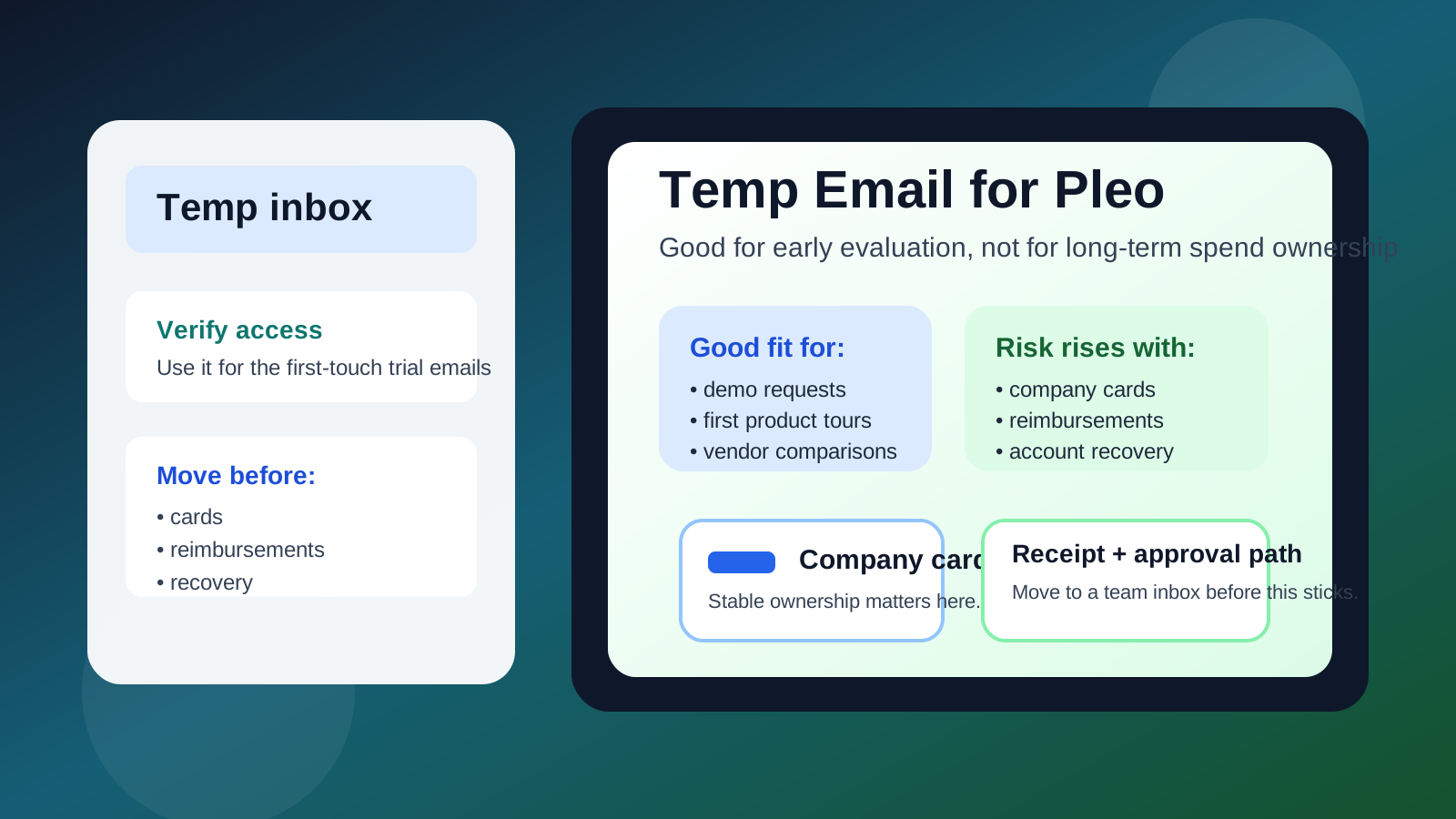
When a temp email for Pleo makes sense
Using a temporary inbox for Pleo is most defensible during the earliest, lowest-stakes part of product evaluation.
- Requesting access to explore the product for the first time
- Verifying a demo or gated product-tour flow
- Comparing Pleo with tools like Ramp, Brex, Airbase, Spendesk, Expensify, or SAP Concur
- Reviewing early onboarding emails before deciding whether the tool belongs on your shortlist
- Keeping vendor follow-up out of your main finance or operations inbox while you are still researching
That stage is where temporary email shines. You get the messages you need for a first-pass evaluation without signing up your permanent mailbox for every reminder, upsell prompt, webinar invitation, and sales cadence that often follows a software trial.
It can also help when several vendors are being tested at once. Separate temporary inboxes make it easier to keep each evaluation isolated, especially when multiple teammates are gathering screenshots, notes, or implementation impressions in parallel.
Why buyers look for this in the first place
Spend-management evaluations can become noisy fast. Even before a team decides whether a product is worth deeper implementation, the signup can trigger product tours, feature nudges, follow-up emails, meeting requests, and repeated prompts to invite more users or connect more workflows. None of that is unusual. It is just part of how SaaS vendors push an evaluation toward a buying decision.
If your team is still deciding whether Pleo is even relevant, using a temp inbox is a practical way to protect your main email from long-tail vendor noise. It keeps the research phase tidy and helps you move on cleanly if the product is not the right fit.
That matters more than it sounds. A lot of software clutter is not dangerous, just annoying. But good evaluation habits save time. They make it easier to focus on the actual product instead of managing inbox overflow from tools you will never adopt.
Where a temp inbox starts becoming a bad idea
The problem is that Pleo is not just a newsletter signup or a throwaway dashboard. It is software that can become tied to real money flows, real approvals, real receipts, and real admin ownership. Once the account begins to touch those things, a disposable email becomes weak operational scaffolding.
1. Company cards change the stakes
As soon as a product evaluation begins touching card issuance, card controls, limits, or spending notifications, the owner inbox stops being a minor detail. The account may still be “just a test,” but the surrounding workflow is no longer purely disposable. If the mailbox later disappears, recovery and handoff become harder than they need to be.
2. Reimbursements are not a throwaway workflow
Pleo is often evaluated partly for reimbursements and employee spending controls. Those workflows create follow-up actions, review steps, and communication that may still matter after the first day of testing. A temp inbox is fine for the first verification email. It is a poor home for a workspace that might soon involve real reimbursement logic or policy testing.
3. Receipt collection and approvals create continuity needs
Expense tools get stickier once you start thinking about receipts, approvals, audit trails, and who owns the account. Even in a pilot, the evaluation can quickly become structured enough that losing access to the original mailbox would be inconvenient at best and disruptive at worst.
4. Shared admin access complicates ownership
If more than one person is involved in the evaluation, the account identity matters more. A disposable inbox may feel harmless when one person is clicking around. It feels much less harmless once finance, operations, or a manager also expects the environment to remain accessible.
5. Account recovery problems show up late
This is the biggest reason not to stay on a burner address for long. The downside often does not appear on day one. It appears later, when a reset link, ownership verification, or login alert becomes important. That is exactly when teams regret treating the original inbox as an afterthought.
A practical way to use temporary email without creating a mess
If you want the privacy benefits of a temporary inbox without creating downstream pain, the answer is not “never use one.” It is to use it in a controlled, staged way.
Step 1: Treat the temp inbox as a screening tool
Use the disposable address only to get through the first gate. That means the signup, the first verification link, and the initial product-tour messages. At this point you are asking one question: is Pleo worth deeper time from the team?
Step 2: Decide quickly whether the product is a real contender
Do not let a temporary inbox remain the default identity for weeks out of inertia. After your first review, make a clear call. If Pleo is not a fit, stop there and move on. If it looks promising, promote the account to a durable mailbox before the evaluation grows roots.
Step 3: Switch to a stable team-owned email before real workflow testing
Before you invite teammates, test shared approvals, explore card controls in a serious way, or build anything that resembles a real finance workflow, move the account to an address your team actually controls. A shared evaluation inbox or another durable work-owned mailbox is usually a much better anchor.
Step 4: Save useful early messages outside the temp inbox
If the disposable mailbox receives setup instructions, product-tour links, or comparison details that matter, copy them into your team notes. Temporary inboxes are good for filtering noise. They are not where durable buying context should live forever.
Good use cases for a temp email during Pleo evaluation
- Protecting your main inbox during the first round of vendor research
- Running a low-stakes comparison against adjacent spend and expense platforms
- Checking whether the signup experience and early onboarding are even worth more time
- Isolating each vendor into its own inbox during a shortlisting phase
- Keeping demo requests and marketing follow-up out of a shared finance mailbox too early
Bad use cases for a temp email during Pleo evaluation
- Leaving it as the long-term owner of a serious evaluation account
- Using it once cards, reimbursements, or approval paths are becoming central to the trial
- Relying on it for admin handoff or password recovery
- Keeping it in place after more than one stakeholder depends on the environment
- Using it as a substitute for a proper team-owned evaluation mailbox when the product is clearly a finalist
What someone searching this keyword usually wants to know
A search like temp email for Pleo usually reflects two concerns at the same time. One is privacy: “Do I really want another vendor in my long-term inbox before I know whether this tool is good?” The other is practicality: “Will using a disposable inbox create problems later?”
The honest answer is that both concerns are valid. Temporary email is useful because it reduces early exposure and keeps research cleaner. But spend-management software is not a casual category. The more serious the evaluation becomes, the more important mailbox continuity becomes too.
That is why the best policy is not a blanket yes or no. It is a phase-based decision. Early curiosity? Temporary email is fine. Serious evaluation with real workflow implications? Move to a permanent address before the account becomes important.
A quick checklist before you do it
Before using a temp inbox for Pleo, ask yourself:
- Am I just exploring, or am I already building a real evaluation workflow?
- Could this account soon involve cards, reimbursements, or approval testing?
- Will other teammates need access or visibility?
- Would it be annoying if the original mailbox disappeared next week?
- Do I already know this platform is likely to make the shortlist?
If your answers point toward a short, low-stakes first look, a temporary inbox is reasonable. If your answers point toward shared ownership or real process testing, switch early.
Best practice: pair inbox privacy with operational discipline
The smartest evaluation workflows do both. They protect the main inbox during noisy research, and they establish stable ownership before the software becomes important. Anonibox fits well into the first part of that process. It helps contain the signup and early vendor communication. But it should not become the long-term identity for a tool your team may actually rely on.
In other words, temporary email is for reducing friction at the front door, not for supporting the whole building.
Final answer
A temp email for Pleo is a smart move for early evaluation and a poor choice for long-term ownership. Use it to request access, compare the product, and keep early vendor follow-up out of your main inbox. Then switch to a stable team-controlled address before cards, reimbursements, receipts, shared admin access, or account recovery start to matter.
That approach gives you the privacy advantage without turning a short-term convenience into a long-term operations headache.