Yes — Posteo can be a good choice for job applications if you want a privacy-conscious long-term inbox and you use a clean, professional address that you check reliably.
No — it is not automatically the best option for everyone, because some recruiters will be more familiar with Gmail or Outlook, and a niche provider only works well when the rest of your application feels easy to trust.
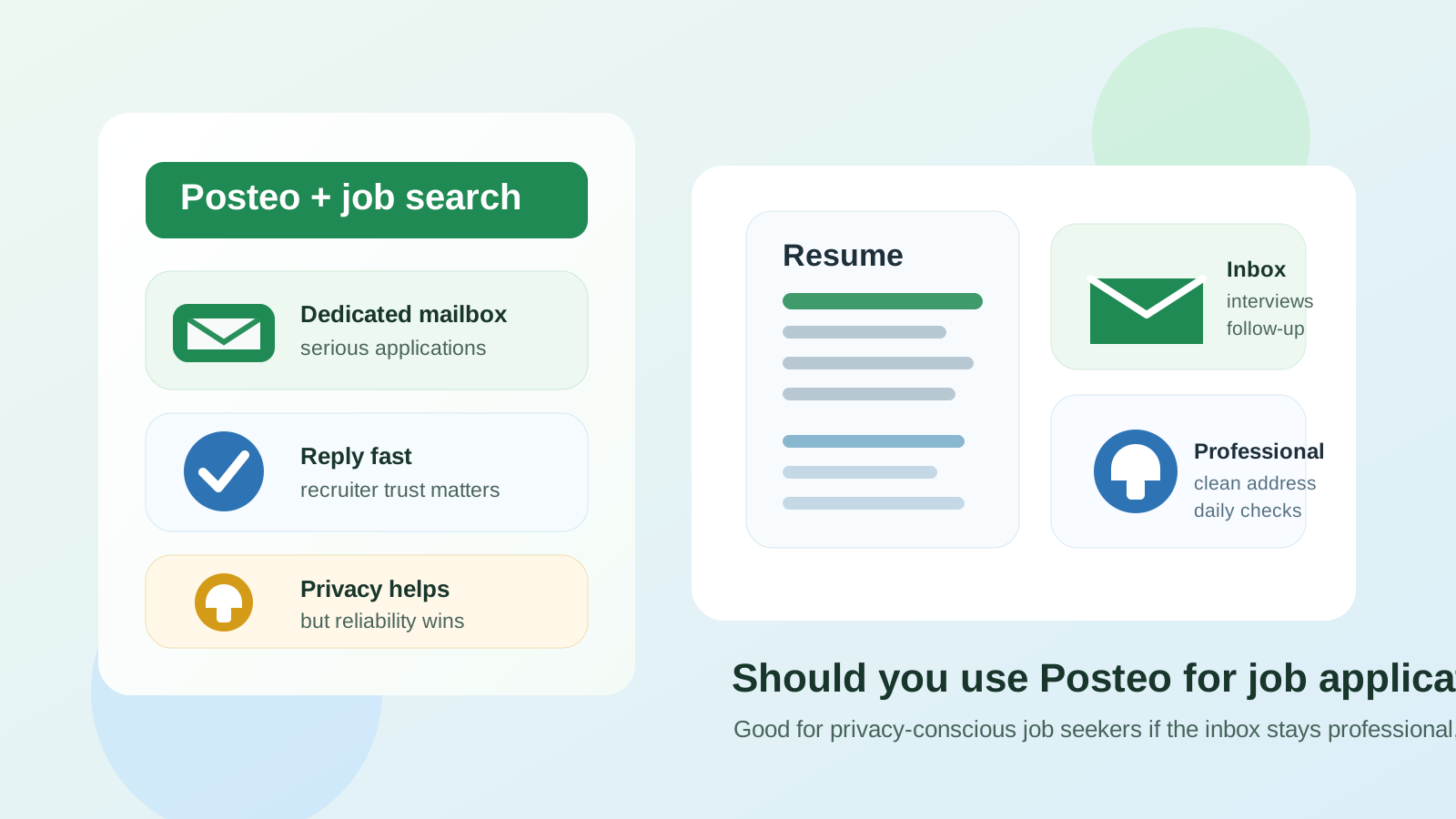
That balance is what matters. Job searching is partly about privacy, but it is also about reducing friction. You want an inbox that protects your personal data without making recruiters wonder whether the address is temporary, abandoned, or hard to monitor. Posteo can absolutely fit that role because it is a real mailbox you keep, not a disposable inbox. The practical question is whether it helps you stay organized and reachable, not just whether it feels more private.
For many applicants, the appeal is obvious. A job search can spread your contact details across company career pages, staffing agencies, job boards, résumé databases, scheduling tools, assessment platforms, and recruiter follow-ups. If you do not want your oldest personal email tied to all of that activity, a separate mailbox can be useful. Posteo can work well in that setup as long as you treat it like a serious communications channel rather than a clever privacy experiment.
Why some job seekers consider Posteo in the first place
Most people who look at Posteo for job applications are trying to solve a practical problem, not make a statement. They want more control over where their address goes. They may be worried about recruiter spam, low-trust job boards, or clutter piling up in the inbox they use for everyday life.
That is a reasonable concern. Job searches generate more email than many people expect: confirmations, rejection notices, interview scheduling, assessment links, recruiter outreach, reminders, newsletters, salary guides, “we found jobs for you” blasts, and occasional scam attempts dressed up like opportunities. A separate mailbox can make all of that easier to manage.
Posteo is appealing in this context because it is not a throwaway address. It is closer to a dedicated long-term mailbox for people who want more privacy and more separation from their main identity. That makes it much more suitable for real employer communication than a classic temp inbox that might disappear before a hiring process is finished.
What recruiters usually care about more than the provider name
Most recruiters are not deeply evaluating your email provider. They are moving quickly and asking simpler questions:
- Does this email address look normal and professional?
- Will the candidate actually see my message and reply on time?
- Does the application package feel polished and consistent?
- Is there anything about the contact details that creates unnecessary confusion?
That is why Posteo can work. It is a real email provider, and for many recruiters that is enough. But mainstream providers still have an advantage in familiarity. Gmail, Outlook, and iCloud feel instantly recognizable. A less common provider may be perfectly fine, yet still slightly unusual to someone who sees thousands of applicants. Usually that is not a deal-breaker. It just means your address format, résumé branding, and responsiveness matter even more.
What Posteo does well for job applications
It gives you long-term separation from your main inbox
A dedicated job-search mailbox can keep application traffic away from your oldest personal address. That is helpful if you want to stay organized or reduce how widely your main inbox is shared.
It avoids the reliability problem of temporary email
A real hiring process can stretch across days or weeks. Recruiters may follow up after you forgot you even applied. Because Posteo is a real mailbox rather than a disposable one, it is better suited to ongoing communication, interview scheduling, and late-stage follow-up.
It can support a more deliberate privacy workflow
Some people use one email for everything and only think about privacy after the spam starts. A separate mailbox lets you make a cleaner distinction between serious applications, casual signups, and personal life. That does not make you anonymous, but it does give you more control.
It helps if you want a professional inbox that is not tied to your oldest digital footprint
Job seekers often want a fresh start. Maybe their long-used address has old nicknames, too many subscriptions, or too much history attached to it. A dedicated mailbox can present a cleaner contact point.
Where Posteo can create friction
It is less familiar than mainstream providers
This is the main trade-off. An unfamiliar provider can create a split-second pause, especially for recruiters who are not privacy-minded and simply expect Gmail or Outlook. That pause is usually small, but hiring is full of small judgments.
Your address format matters more when the provider is niche
If your email handle is clean and based on your real name, the provider fades into the background. If the handle looks random, edgy, anonymous, or autogenerated, the combination of an unfamiliar provider and a strange username can work against you.
You still need to monitor it like a primary inbox
A separate mailbox only helps if you actually use it well. If it becomes the inbox you forget to check, the privacy benefit is not worth the lost opportunities.
Some situations reward maximum familiarity over maximum privacy
If you are applying at very high volume, working with conservative corporate hiring teams, or trying to remove every tiny bit of friction, a mainstream address may still be the easier path. Easy is not always better, but it is sometimes more efficient.
When Posteo makes sense for job applications
- You want a dedicated long-term inbox just for your job search.
- You care about privacy and do not want your oldest personal address spread everywhere.
- You are applying to legitimate roles and need a stable address for replies, interviews, and follow-up.
- You are organized enough to check one more inbox every day.
- You want something more private than a mainstream inbox without relying on disposable email.
In those situations, Posteo can be a smart compromise. It gives you separation without the obvious risk of using a throwaway inbox for serious communication.
When another address may be the easier choice
Sometimes the best answer is simply the most familiar one. If you are applying to traditional employers, moving fast, or worried about any extra recruiter hesitation, a mainstream email address can reduce unnecessary questions. That does not mean Posteo is a bad idea. It means the hiring context matters.
You might also choose another address if you are not confident you will monitor Posteo consistently. Privacy is helpful, but responsiveness matters more once a real employer wants to talk.
How to use Posteo professionally during a job search
Use a simple address based on your real name
This is the easiest way to make the provider feel ordinary. A clean format like your first and last name, or a close professional variation, builds trust quickly. Avoid joke handles, extra numbers, or anything that looks temporary.
Keep your contact details consistent everywhere
Your résumé, cover letter, LinkedIn profile, portfolio, and application forms should all point to the same address. Consistency makes you easier to trust and easier to contact.
Check the inbox daily
If you use Posteo for applications, treat it like a live business inbox. Check it daily, review spam or junk folders, and reply quickly when someone is trying to schedule the next step.
Do not overcomplicate things with too many aliases
Privacy tools can be useful, but job applications benefit from clarity. For serious applications, one stable professional address is usually better than juggling multiple rotating identities.
Make the rest of the application feel grounded
If the provider is less common, let everything else do the trust-building work: a strong résumé, polished formatting, a coherent LinkedIn profile, and prompt replies. The goal is for the address to look intentional, not obscure.
Posteo vs temporary email for job applications
This is where people often mix up two different privacy strategies. A temporary inbox and a privacy-focused long-term mailbox are not the same thing.
A temporary inbox is useful for low-trust browsing, one-off downloads, gated salary guides, test signups, or early-stage research when you do not want to expose your long-term address yet. That is where a tool like Anonibox fits naturally. It helps keep spam and low-value outreach away from the inbox you plan to monitor for important communication.
But once you are sending real applications, talking to recruiters, and entering interview pipelines, stability matters more than short-term separation. A real mailbox like Posteo is much better suited to that phase because it can still receive the interview invite, follow-up question, or offer paperwork two weeks later.
A simple rule works well here:
- Use temporary email for low-trust or exploratory activity.
- Use a real mailbox like Posteo for serious employer communication.
That split keeps your workflow practical. You get privacy where it helps most without making yourself harder to reach when a real opportunity appears.
A quick checklist before you use Posteo on applications
- Does the address use your real name or a close professional variation?
- Will you check this inbox at least once a day?
- Is the same address listed across your résumé and LinkedIn?
- Are you using it for real applications rather than disposable experiments?
- Would the address feel credible if a recruiter saw it for five seconds and moved on?
If the answer is yes, Posteo is likely workable. If the inbox is half-forgotten, oddly branded, or being used like a disposable identity, it is the wrong tool for the job.
Final answer
Yes, Posteo can be a good choice for job applications if you want a more private dedicated inbox and you use it in a straightforward, professional way.
The main caution is not that Posteo is bad. It is that unfamiliar providers come with slightly less built-in recruiter recognition than Gmail or Outlook. If you offset that with a clean address, consistent branding, and fast replies, Posteo can give you a useful mix of privacy, organization, and reliability during a job search.