A temp email for Zoho Books can work for a quick first-pass evaluation, but it becomes risky once live invoices, recurring billing, client records, or account recovery depend on that inbox.
Use a disposable inbox only for the research stage, then switch to a stable business email before Zoho Books starts handling anything you would not want to lose.
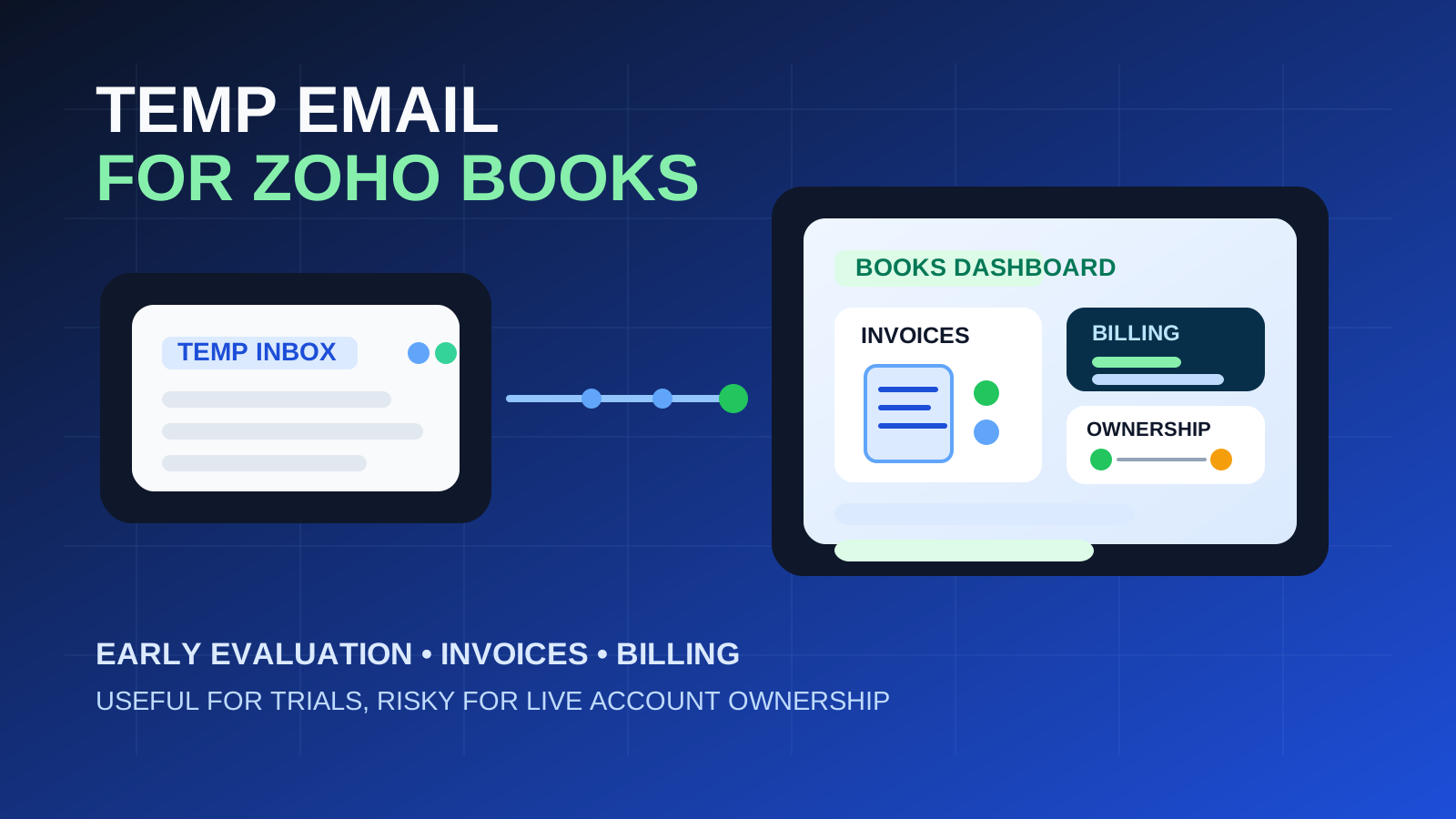
That is the practical answer behind searches for temp email for Zoho Books. Usually the person typing that query is not trying to bypass anything shady. They are comparing accounting tools, trying to avoid another long stream of trial emails, and wanting a clean way to receive the verification link without turning a permanent inbox into a holding pen for vendor follow-up.
That use case is reasonable. A service like Anonibox can help you open the account, receive the signup message, and inspect the product without immediately tying your everyday business inbox to another platform you may abandon after one afternoon of evaluation. The important limit is that accounting software stops being disposable quickly. Once the account begins holding real invoices, customer details, billing history, settings, or recovery value, the email behind it becomes part of the reliability of the whole setup.
Why people look for a temp email for Zoho Books
Zoho Books usually comes up when freelancers, small businesses, agencies, and finance-conscious operators want an accounting tool that feels lighter than an enterprise finance stack but more serious than a casual invoice generator. People often compare it with QuickBooks Online, Xero, FreshBooks, and Wave Accounting.
That comparison phase tends to create inbox noise fast:
- verification emails and welcome messages
- onboarding checklists and setup nudges
- feature tours around invoicing, estimates, expenses, or automation
- upgrade prompts and discount offers
- demo invitations or follow-up from sales and support teams
If you are evaluating multiple accounting platforms at once, that noise adds up quickly. A temporary inbox can make sense when your real goal is simply to inspect the product before deciding whether it deserves a place in your permanent workflow.
When using a temp email for Zoho Books makes sense
1. You are only doing a first-pass product review
If your questions are still basic — does the interface feel clear, can you understand the invoicing flow, do the reports look useful, and does the setup feel manageable — then a disposable inbox is usually fine. At that stage the address is mostly a gate into the trial.
2. You are comparing multiple accounting tools side by side
A separate inbox for product trials helps keep vendor communication organized. It also stops your main work inbox from absorbing a pile of “here is what you missed,” “invite your team,” and “book a walkthrough” emails from tools that may never make the shortlist.
3. You want to protect your main inbox until the tool earns it
This is one of the strongest reasons to use a burner inbox. You may be curious about Zoho Books, but not ready to give it the same inbox that already handles customers, contractors, payments, tax notices, and day-to-day business communication.
4. You can abandon the account without losing anything important
If the account contains no real invoices, no live client records, no recurring billing, no teammate access, and no business-critical settings, the risk is relatively low. Temporary email works best when the account can still be discarded with no operational fallout.
Where the temp-email approach starts to break down
The problem usually does not appear during signup. It appears later, when the account quietly becomes useful while still being tied to an inbox that was never meant to last.
Live invoices change the stakes immediately
The moment you start drafting or sending real invoices, estimates, payment reminders, or customer-facing documents, the Zoho Books account stops being a harmless experiment. Even if you opened it just to look around, it now affects real work and possibly real revenue. That is not the place for an inbox you may lose or stop monitoring.
Client records and billing history are not disposable
Accounting tools accumulate value faster than people expect. A workspace can quickly collect contact records, notes, invoice history, expense entries, recurring settings, and operational context. If the owner inbox disappears, you may not lose the data instantly, but recovery and control become harder exactly when you want less friction, not more.
Recurring workflows need continuity
If you start testing or using recurring invoices, payment reminders, expense tracking, or approval-style workflows, continuity matters. A disposable inbox can create trouble later when you need a verification message, password reset, ownership confirmation, or security notice.
Shared access raises the risk
Once a co-founder, bookkeeper, accountant, or assistant may need access, the owner email should already be durable and business-controlled. Shared financial workflows deserve predictable ownership from the beginning, not a leftover inbox from a trial signup.
Account recovery becomes the delayed problem people forget about
This is the classic trap. The temp inbox feels convenient on day one. Two weeks later the account still exists, somebody wants to revisit the product, and the original email is gone or buried in a workflow nobody remembers. That is when a small shortcut becomes a real annoyance.
Zoho Books-specific moments when you should switch to a permanent email
If any of the following is about to happen, it is time to move the account to a stable email you control long term:
- you are adding real customers or vendors
- you plan to send live invoices or estimates
- you are setting up recurring billing or reminders
- you are storing expense history or other financial records
- you want to connect banking, tax, or other accounting-adjacent workflows
- you are inviting teammates, accountants, or outside collaborators
- you expect the account to outlive a short product evaluation
Those are all signs the workspace is becoming part of actual operations rather than simple product research.
A safer workflow if you still want the privacy benefit
You do not have to choose between exposing your primary inbox on day one and building your full accounting setup on a throwaway address. The practical middle ground looks like this:
Start with the temp inbox only for access and early exploration
Use the disposable address to create the account, confirm signup, and review the dashboard. That gets you through the low-stakes phase while keeping trial communication separate.
Keep the evaluation focused
Go in with a shortlist of questions. Is the product easy to understand? Can you see how invoicing would work? Do the reports feel useful? Does the workflow look like something your business would actually stick with? The point is to gather signal quickly, not to drift into a half-built finance setup.
Save your notes outside the platform
Write down what you liked, what felt clumsy, and what questions remain. If the product turns into a finalist later, you want the insight even if you abandon the first inbox or recreate the account under a permanent address.
Move finalists to a durable address early
If Zoho Books makes the shortlist, do not wait until the account becomes important to switch ownership. Move it before you send anything live, add collaborators, or rely on the account for real bookkeeping context.
Treat the long-term email as part of your finance stack
Your accounting platform is not just another trial app. It sits close to revenue, expenses, records, and trust. That means the email behind it should be stable, monitored, and controlled by the person or business that will actually own the workflow.
What to evaluate during the temp-email phase
If a temporary inbox helps you keep the trial tidy, spend the saved attention on the product itself.
Invoice and estimate workflow
Can you create and understand customer-facing documents quickly? Does the process feel straightforward enough that you would trust yourself or your team to use it consistently without constant cleanup?
Daily bookkeeping usability
Even a short first pass can reveal whether the product feels intuitive or fussy. You do not need a full rollout to judge whether the navigation, account structure, and everyday workflow make practical sense.
Reporting clarity
Look for answers, not just polish. Can you tell what was billed, what is pending, and what would matter during a normal business week? Good accounting software should reduce confusion, not simply present colorful dashboards.
Fit for your business size
A freelancer, small agency, contractor, and growing small business may all want different things from the same platform. The early evaluation phase is the right time to ask whether Zoho Books fits your scale before you give it permanent ownership in your communication stack.
Common mistakes to avoid
Using the temp email too long
The biggest mistake is forgetting to switch once the trial becomes real. What began as a neat privacy tactic can quietly become the weakest link in a finance workflow.
Letting production work leak into a throwaway setup
If customers, invoices, reminders, or internal workflows depend on the account, the email behind it should already be permanent and monitored.
Assuming temporary automatically means safer
A temp inbox can reduce spam and keep research separate, but it does not automatically make the overall setup stronger. It solves one problem while potentially creating another if you keep it in place too long.
Failing to separate research from operations
Testing software and running your books are different phases. Treating them differently saves headaches later.
Bottom line: should you use a temp email for Zoho Books?
Yes — for a short, low-stakes evaluation, a temp email for Zoho Books is a sensible privacy move. It lets you verify the account, inspect the workflow, and keep yet another trial sequence out of your main inbox.
No — it is not a smart long-term setup once real invoices, customer records, recurring billing, shared access, or account recovery matter. Use the disposable inbox to explore, then switch to a durable business email before the account becomes part of something real. That is the balance Anonibox helps with best.