Yes, Hide My Email can work for job interviews if the real inbox behind it is stable, monitored, and kept active for the whole hiring process.
It is usually safer than a disposable inbox once interviews begin, but a dedicated long-term job-search email is often easier to organize if you are interviewing with several employers at once.
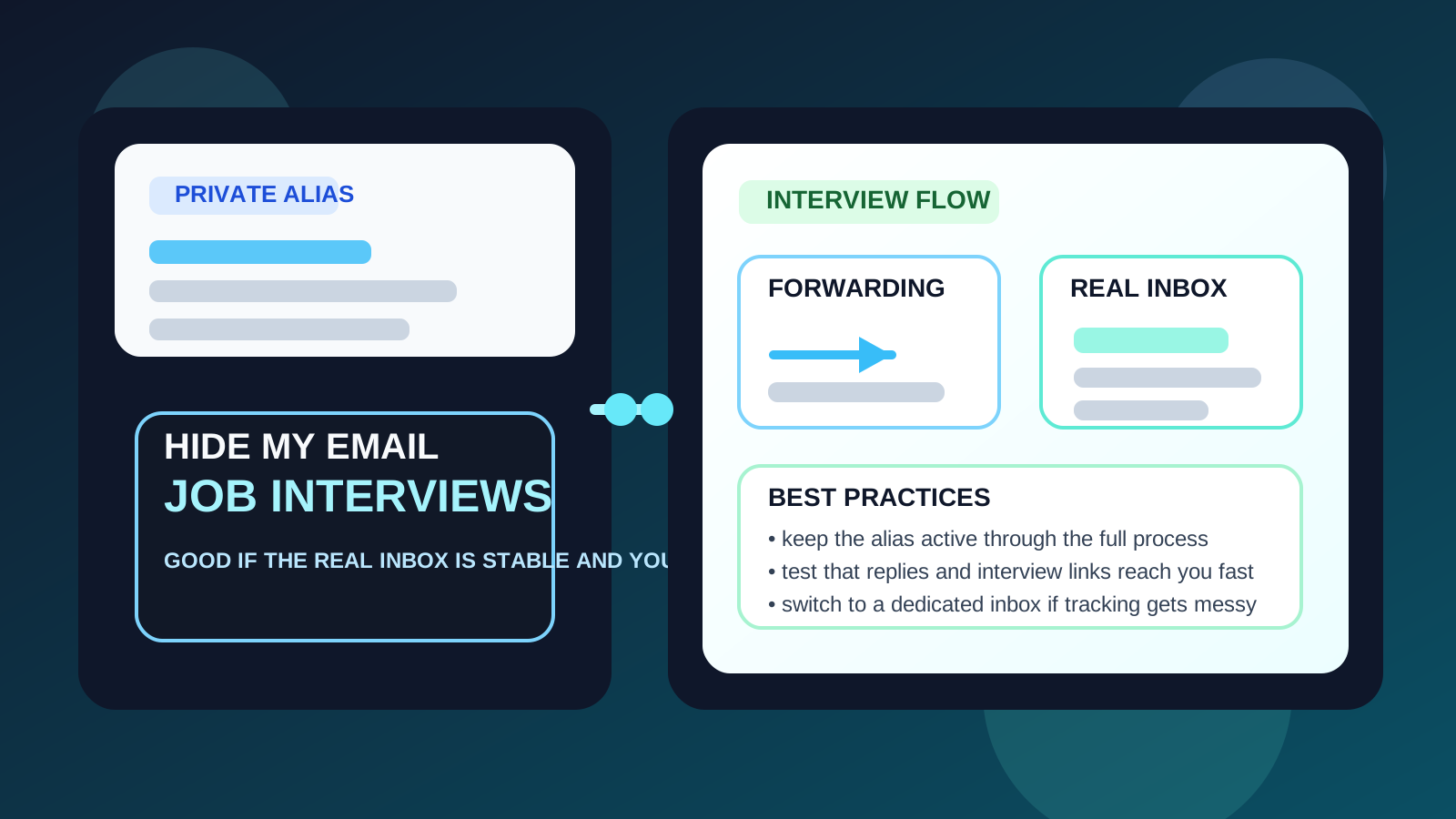
That is the practical answer behind searches for should you use hide my email for job interviews. At interview stage, email stops being a throwaway contact field and starts acting like a live communication channel. Recruiters may use it for scheduling, rescheduling, calendar invites, take-home assignments, follow-up questions, and sometimes even offer-stage logistics. So the issue is not only whether Hide My Email protects your address. It is whether it stays dependable enough when timing matters.
In many cases, Hide My Email is a reasonable middle ground. It gives you more privacy than handing out your main address everywhere, but it is still more stable than a pure temporary inbox. The catch is that it does not create a truly separate mailbox. It forwards messages into your real inbox, which means your underlying email habits still matter a lot.
Why interview-stage email is different from application-stage email
You can take more risks during early applications than you can during live interviews. A low-stakes signup, job alert, or recruiter database form can sometimes be handled with a privacy-first setup that would feel too fragile later. Interviews raise the bar because you may suddenly need to manage:
- same-day scheduling emails
- calendar invites and updated meeting links
- attachments, assessments, or portfolio requests
- follow-up questions from recruiters or hiring managers
- longer timelines where someone replies a week or two later
That is why stable forwarding matters. If a privacy tool hides your address but makes communication harder to track, it may stop being worth the tradeoff once an employer is actively trying to move you forward.
What Hide My Email actually changes
Hide My Email is not the same thing as a disposable mailbox. It works more like a forwarding alias. Employers see the alias instead of your underlying address, and messages are relayed into the real inbox you control.
That gives you a real privacy advantage. It reduces how widely your main address spreads across recruiter databases, applicant systems, and third-party hiring tools. If one company or job platform becomes noisy later, you have more separation than you would with a plain personal inbox.
But Hide My Email does not solve every interview workflow problem. It does not give you a fresh mailbox with its own clean folders, labels, or search history. It also does not protect the other personal details you share during a job search, like your phone number, resume, portfolio links, or LinkedIn profile.
When Hide My Email is a good fit for job interviews
You want privacy without looking disposable
This is where Hide My Email has a real advantage over throwaway inboxes. A disposable address can feel temporary because it is temporary. Hide My Email sits closer to a normal professional email path, which makes it a better fit for real interview coordination.
Your underlying inbox is already dependable
If the mailbox behind the alias is stable, easy to search, and checked often, the forwarding model can work well. That is especially true if you are interviewing with one or two employers rather than juggling ten active conversations.
You are trying to limit long-term spam
Interview traffic itself is not the only issue. Candidate portals, recruiter follow-up, and future outreach can keep arriving long after a role ends. Hide My Email can reduce that long-tail exposure by preventing every employer from getting your core address directly.
You want a cleaner privacy layer than a temporary inbox
For many job seekers, this is the sweet spot. A service like Anonibox can help at the noisy front edge of a search — signups, alerts, and lower-trust forms — but once interviews become real, a forwarding alias is usually more practical than a temporary inbox that might disappear or feel too fragile.
Where Hide My Email can create friction
It is still not a separate inbox
This is the biggest limitation. If your real inbox is already crowded with newsletters, receipts, personal mail, and old account noise, interview messages can still get buried. The alias hides your address, but it does not magically create a better organization system.
You still depend on the mailbox behind it
If the real inbox is messy, neglected, or not something you plan to keep using, the alias is only as good as that weak point. An alias can improve privacy, but it cannot compensate for a bad inbox strategy.
Alias management can get confusing
If you use several privacy layers across applications, interviews, and recruiter messages, you can lose track of which company has which address. That is manageable with a simple note or spreadsheet, but without one the process gets messy fast.
Some interview workflows are easier with a direct dedicated address
As the process gets more serious, you may have calendar invites, account logins, test links, and repeated threads with the same employer. A fully separate long-term job-search inbox is often cleaner because every interview message lives in one obvious place instead of passing through an alias layer first.
Hide My Email vs temporary email for job interviews
This is an important distinction. Temporary email is useful when you want quick protection from spam or you are still deciding whether a site deserves your real contact details. That is why it can be helpful for job-board experiments, gated downloads, or other early-stage signups.
Job interviews are different. Once a recruiter is actively scheduling you, reliability matters more than pure distance from your main inbox. Hide My Email usually beats temporary email at that stage because the communication still lands in a stable account you control. In other words, Anonibox can help you filter the noisy top of the funnel, while Hide My Email can be the privacy layer you use once the conversation becomes more real.
Hide My Email vs a regular email alias
Conceptually, Hide My Email is close to a normal alias strategy. The real decision is whether you are comfortable relying on a forwarding setup instead of using a fully separate mailbox. If you already like aliases and keep them organized, Hide My Email is a natural fit. If alias-driven workflows tend to become confusing for you, a dedicated interview inbox may be simpler.
Hide My Email vs iCloud Mail for interviews
These questions sound similar, but they are not identical. Using iCloud Mail for interviews means the employer sees your direct iCloud address. Using Hide My Email means the employer sees an alias that forwards into another inbox. That extra layer can be useful for privacy, but it also adds one more moving part. If your priority is maximum simplicity, a direct professional inbox may be easier. If your priority is reducing exposure of your true address, the alias has real value.
Best practices if you use Hide My Email for job interviews
Keep the alias active until the process is truly over
Do not treat an interview alias like a one-day signup trick. Hiring timelines can stretch. A recruiter may come back with a reschedule, reference request, or follow-up next week. If you are going to use the alias, keep it live for the full cycle.
Check the real inbox constantly
Because Hide My Email forwards into your real mailbox, response speed depends on your normal inbox habits. During active interviews, check it often, monitor spam folders, and make sure your notifications are working.
Track which employer got which address
If you use more than one alias, write it down. A small note that says “Company A used alias one, recruiter B used alias two” makes it easier to recognize real replies and spot future spam leakage.
Test your workflow before an interview invite matters
Do not wait until a recruiter sends a time-sensitive message to discover that your setup is confusing. Make sure the messages are arriving where you expect and that you can reply consistently without creating uncertainty about which address the employer should use.
Switch to a dedicated inbox if the process gets complex
If you move into multiple rounds, repeated attachments, candidate portals, or offer-stage paperwork, it is fair to decide that a direct long-term inbox is cleaner. Privacy tools are supposed to reduce friction, not add more of it.
When you probably should not rely on Hide My Email
- your underlying inbox is chaotic and you regularly miss messages
- you are interviewing with many companies and need stronger separation
- you know you may disable or forget the alias later
- you want every interview message in a dedicated searchable workspace
- you are already deep into a hiring process and want the simplest possible communication path
In those cases, a separate job-search email is often the more practical answer. It may expose a direct address, but it can still be private enough if it is used only for your search and not for the rest of your life.
A simple decision framework
- Use Hide My Email if you want privacy, your real inbox is strong, and you can keep the alias organized.
- Use a dedicated interview inbox if you want cleaner separation, easier search, and fewer moving parts.
- Use temporary email earlier in the funnel for low-trust signups or noisy job-board exposure, then switch to a stable interview-ready setup once a real employer engages.
Final answer
Yes, Hide My Email can be a good choice for job interviews, but only if the mailbox behind it is stable and you treat the alias like a serious long-term contact path.
It is usually better than a disposable inbox at interview stage because it preserves continuity while still protecting your real address. But if your job search is broad, fast-moving, or already complicated, a dedicated job-search email is often easier to manage. The best setup is the one that keeps you reachable for real interview messages without spreading your main address everywhere.
That balance between privacy and reliability is where Hide My Email works best.