Usually no: Instagram DMs are okay for first contact or a quick follow-up, but they are a weak primary channel for real job interviews.
Once an opportunity looks legitimate, move the conversation to a stable email thread or formal meeting invite so you can verify the recruiter, keep records, and avoid privacy messes.
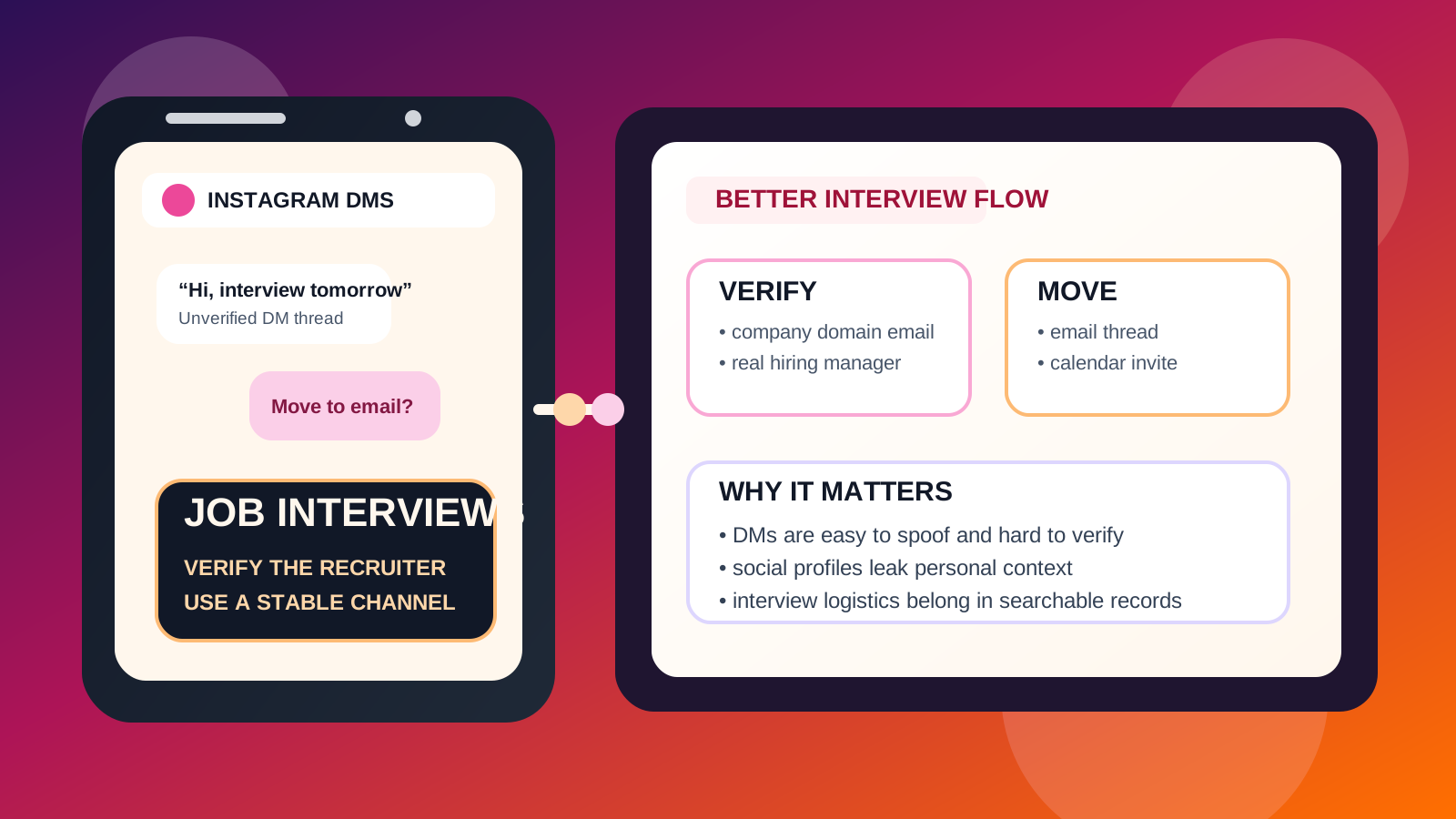
That is the practical answer behind searches for should you use instagram dms for job interviews. Instagram is built for lightweight social messaging, not for the kind of identity checks, scheduling records, and document trails that job interviews often need. A recruiter might send you a quick DM after seeing your portfolio, design page, creator profile, or public work. That can happen. The problem starts when the entire interview process stays inside DMs.
If you leave everything there, you create three issues at once: verification gets harder, personal boundaries get blurrier, and interview details become easier to lose. That does not mean every Instagram message about work is fake. It means Instagram DMs should usually be treated as a starting point, not the main operating system for a hiring process.
Short answer: use Instagram DMs only as a bridge, not the base
In most cases, the best move is simple. If someone reaches out on Instagram about a legitimate role, ask them to continue through a company email address, applicant portal, or formal calendar invite. That shift gives you a better way to confirm who they are and a cleaner place to manage next steps.
For candidates in creative fields, freelancing, beauty, media, hospitality, fashion, marketing, or small business hiring, Instagram outreach is not unheard of. But even in those industries, serious interview coordination usually works better once it leaves the DM thread.
Why Instagram DMs feel convenient at first
Instagram is fast, familiar, and already sitting on your phone. If a brand, recruiter, or founder sends a message, it can feel more direct and less formal than email. That can be attractive, especially when:
- your work is already visible on Instagram
- the employer found you through your portfolio, reels, or creator account
- the opportunity is early-stage or informal
- you want to respond quickly without opening another app
For initial contact, that convenience is real. A short message saying “Thanks, I’m interested — could you send details by email?” is perfectly reasonable. The trouble is that convenience and trust are not the same thing.
Why Instagram DMs are risky for actual interviews
1. Recruiter verification is weaker
One of the biggest issues with Instagram is identity. An account can look polished and still be fake, lightly impersonated, or unrelated to the real company behind the logo. A DM by itself does not prove that the sender is an official recruiter or hiring manager.
That matters because interview scams often lean on familiar platforms. A profile picture, company-like username, and urgent tone can be enough to trick people into continuing the conversation before they have verified anything properly.
2. Your personal life is usually much more exposed
Instagram is often more personal than email. Even if your account is public by choice, it may still reveal photos, friends, habits, locations, interests, or old content you would rather keep separate from a hiring process. Moving an interview into DMs can quietly collapse the boundary between your professional identity and your social one.
That is especially awkward if your account is casual, highly personal, or not designed to present you as a candidate. Some people keep a polished creator profile and may be comfortable there. Many do not.
3. Important interview details are easier to miss
Interview logistics do not stay simple for long. Once a process gets real, you may need to keep track of time zones, meeting links, reschedules, attachments, take-home assignments, next-round instructions, or follow-up notes. Instagram DMs are not the best place for that kind of workflow.
Email threads, by contrast, are easier to search, easier to archive, and easier to reference when you need an exact detail two days later.
4. Scam pressure often feels more informal in DMs
Scammers like channels where they can sound casual and create urgency. DMs make it easy to say things like “Reply fast,” “Download this app,” or “We need your details today” without the accountability that comes with a company domain, structured portal, or formal invite trail.
When Instagram DMs may be acceptable
There are situations where Instagram DMs are not automatically a red flag.
- A small business contacts you after seeing relevant public work.
- A creative studio reaches out about a role connected to your portfolio.
- A founder or hiring lead sends a first-touch message from a clearly established business account.
- A recruiter uses DMs only to ask whether you would like to continue by email.
In cases like those, the DM can be a useful introduction. The key is what happens next. If the sender is legitimate, they should not have a problem continuing through a more stable and verifiable channel.
When Instagram DMs are a bad sign
You should slow down if any of these show up early:
- the sender refuses to use a company email address
- the account looks new, thin, or strangely generic
- the role details are vague or copied from elsewhere
- they want you to move quickly to Telegram, WhatsApp, or another private channel
- they ask for personal documents, payments, or banking information too early
- they avoid giving a real company website, job page, or named contact person
Those warning signs do not become harmless just because the message arrived on a popular app. If anything, the casual setting can make them easier to miss.
A safer workflow if someone first contacts you on Instagram
Ask for an email from a company domain
The cleanest next step is usually: “Thanks for reaching out. Could you send the role details to my email?” A legitimate recruiter should be able to do that. A company-domain email is not perfect proof on its own, but it is still a much better verification layer than an isolated social DM.
Confirm the employer independently
Before sharing more information, check whether the company exists outside Instagram. Look for an official site, a careers page, named team members, and other public signals that the opportunity is real.
Move scheduling into email or a calendar invite
Interview times, links, and reschedules should live somewhere searchable and stable. A proper invite also reduces the chance that you miss a change because it got buried under ordinary app activity.
Keep sensitive information out of DMs
Do not send identity documents, bank details, tax forms, verification codes, or similar personal information through Instagram messages. Real employers may eventually need some of that data, but not at the first-contact stage and not through an unstructured DM thread.
Instagram DMs vs email for job interviews
Email wins on almost every interview-stage requirement that matters:
- verification: company domain addresses are easier to assess than social handles
- record keeping: interview threads, attachments, and follow-ups are easier to search
- privacy: you reveal less of your personal life than you do on a social profile
- professionalism: formal communication tends to stay clearer and easier to reference
- handoffs: multiple interviewers can join a thread more naturally than a DM chain
That does not mean email is perfect. It just fits interview coordination much better than Instagram does.
What role does a separate job-search inbox play?
This is where a privacy-minded workflow helps. Many candidates do not want every recruiter, job board, and casual outreach source landing in their main personal inbox forever. A dedicated job-search inbox creates cleaner boundaries.
That is also where tools like Anonibox can make sense earlier in the funnel. If you are testing low-trust job boards, downloading gated resources, or checking whether an opportunity is real, a temporary inbox can reduce spam and keep your primary email cleaner. But once a real interview is happening, move to a stable inbox you control and monitor consistently.
The pattern is simple: disposable or low-exposure tools for noisy early-stage contact, stable email for serious interviews.
Should creative professionals handle this differently?
Somewhat, but not completely. Designers, photographers, stylists, creators, tattoo artists, marketers, and freelancers are more likely than other job seekers to receive legitimate work messages through Instagram. That changes how surprising the channel is, but not the core advice.
Even if the first contact is normal for your field, the process should still become more formal once an interview is real. A professional employer should be able to send a clear email, outline next steps, and schedule through a channel that preserves records properly.
Best practices if Instagram is part of the process
- use DMs for acknowledgement, not for the full interview workflow
- ask for a company email or official scheduling link early
- verify the company independently before sharing sensitive details
- avoid mixing deeply personal social content with interview logistics when possible
- save screenshots or notes if something about the contact feels off
- move to a stable inbox as soon as the opportunity looks legitimate
When Instagram DMs are probably fine
They are usually fine for:
- a first-touch message
- a brief “please email me details” reply
- a quick confirmation that you saw the outreach
- a follow-up nudge when the main conversation already lives elsewhere
They are usually a poor choice for:
- full interview scheduling
- sharing confidential documents
- verifying employer identity
- handling multi-round interview logistics
- keeping a reliable long-term record of the process
Final answer
No, Instagram DMs are usually not the best primary channel for job interviews. They can be acceptable for first contact, especially in creative or social-media-heavy industries, but they are too weak on verification, privacy, and record-keeping to carry the full process well.
The better move is to acknowledge the message, confirm the opportunity is real, and shift into a stable email thread or formal invite as early as possible. That protects your privacy, gives you a better paper trail, and makes the interview itself much easier to manage.
If the sender resists that move, treat it as useful information. Legitimate employers may start in DMs, but serious interview communication should not have to stay there.