Yes — you can use SimpleLogin for job applications when you want an extra privacy layer between job boards, recruiters, and your real inbox.
It works best for alerts, one-off signups, and early-stage applications; once a role becomes serious, a stable long-term inbox you check every day is usually the safer choice.
That short answer matters because job hunting creates email sprawl fast. One profile on a job board turns into alerts. One application turns into follow-ups. A few recruiter replies turn into scheduling threads, assessments, and account notices. If you hand out the same primary email address everywhere, your personal inbox can become noisy long after your search ends.
That is why people look at tools like SimpleLogin in the first place. They want more control over who gets their real address, how job-search traffic is organized, and what happens if one platform starts generating more noise than value. The idea is sensible. The trick is understanding where an alias-based forwarding setup helps and where it can become a liability.
What SimpleLogin changes in a job-search workflow
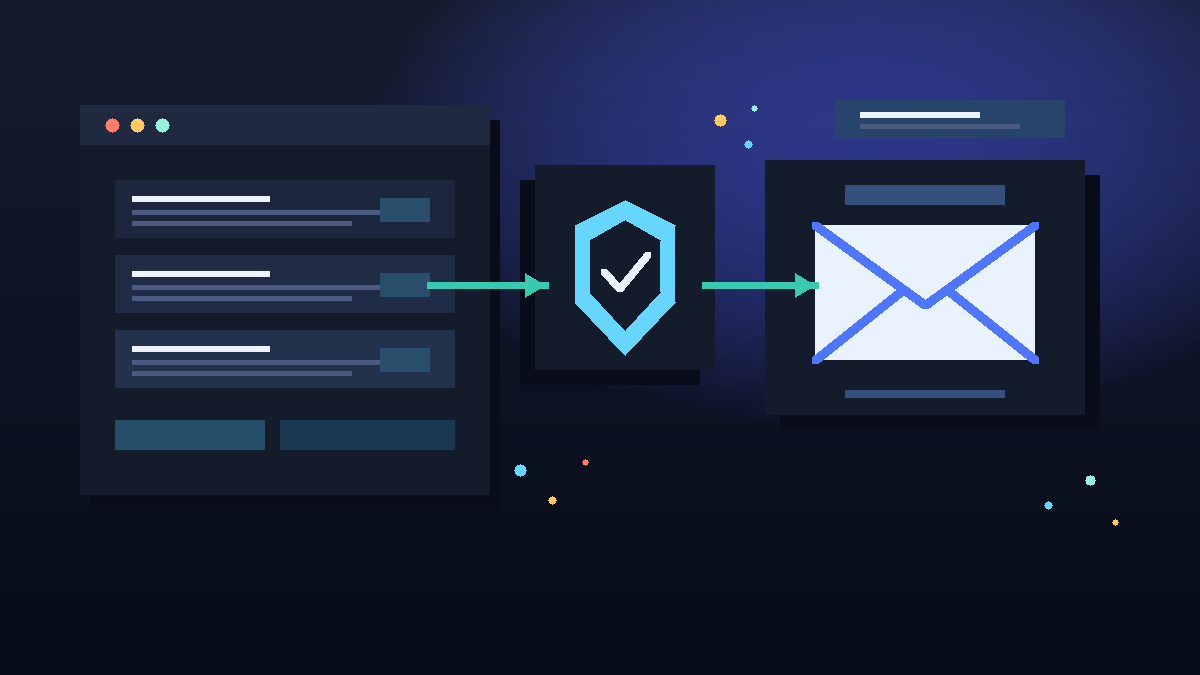
At a high level, an email alias service gives you a masking layer. Instead of sharing your main inbox directly with every job board, recruiter, or employer portal, you share an alias that forwards mail to an inbox you already control. That setup can be more flexible than a truly disposable inbox because you still receive messages in a long-term mailbox, but the sender does not necessarily get your primary address.
For job applications, that creates a middle ground between two common extremes:
- Using your real inbox everywhere: easy, but it exposes your long-term address broadly and can lead to more clutter later.
- Using a throwaway temp inbox for everything: private at first, but risky when an application becomes important and you need continuity.
An alias-based setup sits between those options. It can preserve privacy and organization while still keeping your messages in an inbox you actually monitor.
When using SimpleLogin for job applications makes sense
1. You are testing job boards or alerts before committing
This is one of the strongest use cases. If you are comparing platforms, creating a few accounts, or subscribing to alerts just to see which sites are worth your attention, an alias can keep that exploratory traffic from mixing into your everyday mailbox too early.
That is especially useful if you are checking multiple channels at once. A separate alias for each major platform makes it easier to see which one is actually generating worthwhile opportunities and which one is mostly sending low-value email.
2. You want better privacy during the early stage of a search
Not every signup deserves direct access to your long-term email identity. If you are quietly browsing while still employed, or if you simply prefer to limit how widely your main address is shared, an alias is a practical privacy tool. It does not make you invisible, and it is not a guarantee against spam or tracking, but it does reduce direct exposure of your primary inbox.
3. You want cleaner organization
Job searching gets messy when every alert, every “recommended role,” every recruiter email, and every actual employer response lands in one place. An alias-based workflow can help you segment traffic. You can keep exploratory applications separate from serious employer conversations and avoid losing important messages in a pile of newsletters and platform notifications.
4. You want a better option than a fully disposable inbox
Temporary inboxes can be useful for low-stakes signups, but they can also create obvious continuity problems. With an alias, you still receive messages in a real inbox you control long term. That makes the setup more realistic for actual job searching, where replies can arrive days or weeks later.
When it can be a bad idea
Using SimpleLogin for job applications is not automatically the best choice in every situation. The same privacy layer that helps early on can create friction later if you use it carelessly.
Serious applications need dependable continuity
If you are applying to a role you care deeply about from the start, reliability matters more than elegance. You do not want a complicated forwarding setup to become the reason you miss an interview request, a take-home assignment, or a salary follow-up.
That does not mean aliasing is wrong. It means your setup has to be stable, actively monitored, and easy for you to manage under pressure. If you already know the opportunity is high priority, many people are better off using a dedicated long-term job-search inbox instead of a more experimental system.
Account recovery and access can matter later
Applications do not always end after the first reply. You may need to revisit a candidate portal, reset a password, confirm an assessment, or receive offer-stage documents days later. If your alias setup is not something you maintain confidently, it can add unnecessary fragility right when timing matters.
Some employers prefer obvious, simple contact details
Most legitimate employers care more about responsiveness than the specific email service you use. Still, some hiring teams are conservative. If an alias looks strange, overly disposable, or difficult to recognize, it may create a small amount of avoidable friction. That is not always a deal-breaker, but it is worth thinking about if you are applying to more formal organizations or high-trust roles.
Is an alias better than a temp email for job applications?
Often, yes. For real job-search use, an alias can be safer than a classic throwaway inbox because it preserves continuity. Messages still arrive in a mailbox you already use. That gives you a better chance of catching recruiter follow-ups and keeping records together.
A fully temporary inbox is usually best for the lowest-stakes layer of the process: account verification, testing a platform, or one-off research where you do not expect an ongoing conversation. Once you move into real applications, an alias or a dedicated long-term inbox usually makes more sense than something designed to be disposable.
If your goal is to protect your primary email without increasing the odds of missing something important, the usual ranking looks like this:
- Best for serious searching: a dedicated long-term job-search inbox you monitor daily.
- Best for privacy with continuity: a well-managed alias-based forwarding setup.
- Best for low-stakes testing: a true temporary inbox from a tool like Anonibox.
Best practices if you want to use SimpleLogin for job applications
Use it in stages
The smartest workflow is usually staged rather than all-or-nothing.
- Exploration stage: use aliases or a temporary inbox for job boards, newsletters, and early platform testing.
- Application stage: keep using the alias only if the forwarding setup is dependable and easy to manage.
- Serious interview stage: consider moving the thread to a stable long-term inbox if the role becomes important.
- Offer or onboarding stage: use the most stable professional inbox you control.
This approach gives you privacy early without forcing every high-stakes conversation to stay inside a setup that was chosen mainly for inbox control.
Keep the destination inbox boring and reliable
The alias is only as good as the inbox behind it. If the forwarded mail lands in an account you rarely check, the privacy benefit is not worth the communication risk. The destination inbox should be one you monitor carefully, with notifications, folders, and spam settings you understand.
Do not treat every role the same
A low-trust job board signup is not the same thing as an application to a company you genuinely want to join. Use more caution and more privacy for the first category. Use more reliability and simplicity for the second. Job searching is easier when you match the tool to the seriousness of the opportunity.
Watch for spam and scam patterns anyway
An alias can reduce exposure of your primary address, but it does not magically make bad actors disappear. You still need to watch for fake recruiter outreach, strange requests to move off-platform immediately, suspicious attachments, and pressure to share sensitive information too early.
If a recruiter claims to represent a company, verify the company independently. If a message asks for banking details, identity documents, or login codes before a real hiring process exists, stop. Privacy tools help, but judgment matters more.
Retire or replace aliases when they become noisy
One underrated benefit of alias-based email is that it can help you see which platform or source is causing clutter. If one channel starts generating mostly noise, you can isolate that stream instead of sacrificing your main inbox. That is much harder when every service already has your real address.
Common mistakes job seekers make with alias-based email
Using privacy tools without a clear system
The problem is not the alias itself. The problem is randomness. If you create multiple aliases and do not track which one is tied to which platform or employer, your setup becomes harder to manage than the spam you were trying to avoid.
Keeping a throwaway mindset too long
Privacy-minded job seekers sometimes make the mistake of treating every stage of hiring like disposable experimentation. That works for newsletters and low-trust signups. It does not work well for interviews, assessments, or offer-stage logistics.
Forgetting how time-sensitive recruiting can be
Some recruiters move fast. A message at 9 a.m. can turn into a scheduling question by noon. If your email setup adds even a small amount of confusion, you may create unnecessary delays. The more serious the opportunity becomes, the less clever your communication stack needs to be.
So, should you use SimpleLogin for job applications?
Yes — in the right context. It can be a smart privacy tool for job alerts, exploratory applications, and platform signups when you want to shield your primary inbox without losing the continuity that a real forwarded mailbox provides.
But it is not automatically the best choice for every application. If the role is important, time-sensitive, or likely to involve extended back-and-forth, a stable long-term inbox is often the safer default. The best setup is the one you can manage confidently without missing important messages.
If you want a simple rule of thumb, use temporary tools like Anonibox for low-stakes exploration, use aliases when you want privacy with continuity, and switch to a dependable long-term inbox when a real hiring conversation begins. That balance protects your privacy without making your job search harder than it needs to be.