Yes — Firefox Relay can be a good option for job applications if the masked address forwards reliably into an inbox you check constantly and you plan to keep it active for the full hiring process.
It is usually safer than a disposable inbox for serious applications, but a dedicated long-term job-search email is still better when you expect months of recruiter follow-up, applicant-portal logins, or offer paperwork.
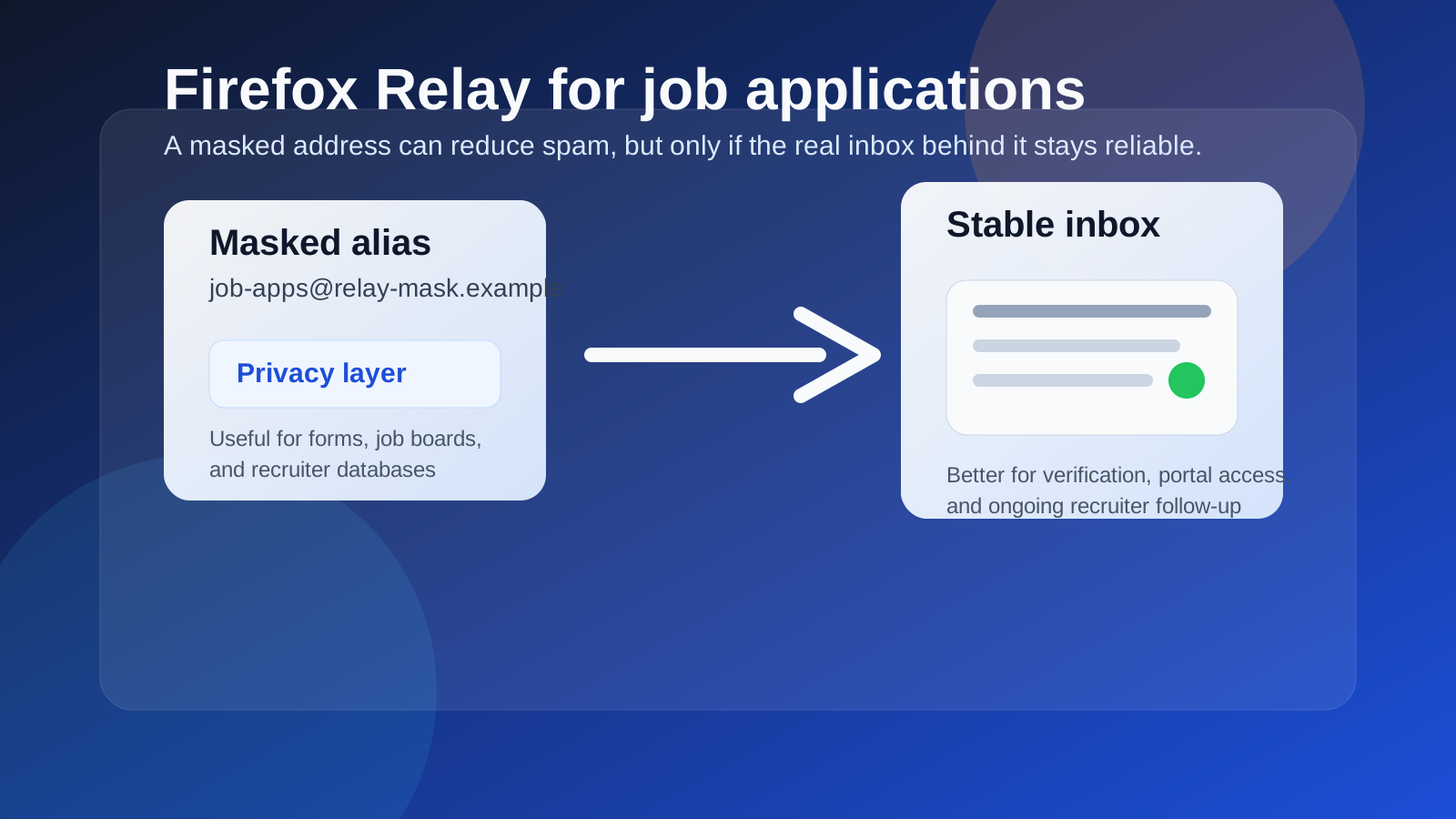
That middle-ground position is exactly why this keyword matters. Firefox Relay feels more private than handing out your everyday personal address, but less fragile than using a throwaway inbox that may disappear before a recruiter replies. For many job seekers, that instinct is sensible. A masked forwarding address can reduce spam, limit how widely your real inbox spreads, and keep job-search traffic easier to manage. The catch is that job applications are not just one-time signups. They often lead to confirmation links, follow-up questions, skills tests, applicant-tracking-system logins, interview scheduling, and delayed replies weeks later. If the email setup is not stable, the privacy benefit can quickly turn into missed opportunities.
Why people consider Firefox Relay for job applications
Most job seekers are not trying to be mysterious. They are trying to stay organized and avoid turning a short search into months of recruiter spam. The moment you start applying broadly, your address can end up in employer databases, staffing platforms, job boards, and marketing lists you never meant to join. A masked address feels like a practical compromise: professional enough to use, private enough to reduce exposure.
That is where Firefox Relay fits. It is closer to an email alias than to a fully disposable inbox. In other words, it can help you hide your main address without forcing you to rely on a mailbox that feels temporary or low-trust. If you use Anonibox for one-off job-board experiments or low-trust signups, Firefox Relay sits one step closer to a normal long-term contact method.
What Firefox Relay helps with during applications
- Less direct exposure for your main inbox: employers and platforms see the masked address instead of your long-standing personal email.
- Cleaner filtering: job-search traffic can stay distinct from family, banking, travel, and other personal messages.
- Better control over spam: if one platform becomes noisy, you are not giving that same platform your oldest primary address.
- A more durable option than a temp inbox: for serious applications, a forwarding setup is usually safer than a disposable mailbox that might not stay available long enough.
Those are real benefits. They matter even more if you are applying through multiple job boards, talking to third-party recruiters, or running a confidential search while still employed.
Why job applications create different risks than simple signups
People sometimes treat a job application like any other online form, but it carries more continuity risk than a newsletter or product trial. A real application may generate a confirmation message, a password setup link, a portal login, an assessment invitation, or a follow-up from a recruiter who writes back two weeks later. If you lose access, stop checking the underlying inbox, or forget which alias you used, you can make your own search harder.
That is why the main question is not only “Will the message arrive today?” It is also “Will this address still make sense if the employer contacts me next month?” Privacy is helpful, but continuity matters too.
When Firefox Relay is a good fit
Firefox Relay can be a smart choice when you want a buffer between your real inbox and the outside world, but you still need a stable path for legitimate replies. It tends to work best when:
- you are applying to real roles but want less long-term inbox exposure,
- the masked address forwards into a mailbox you already monitor carefully,
- you are using a consistent naming strategy so you do not lose track of which address went where,
- you expect normal recruiter follow-up rather than highly sensitive onboarding or payroll steps,
- you are privacy-conscious but not trying to rely on a disposable inbox for a serious hiring process.
In those situations, most recruiters are unlikely to care. They mainly care that the email works, that your replies are prompt, and that your application details stay consistent.
Where it can create friction
1. Applicant-portal continuity can matter more than people expect
Many hiring systems send recurring emails from different systems over time. A screening request may come from one address, a testing platform from another, and a portal reminder from a third. If your masked-address setup becomes confusing or the underlying inbox is not well managed, you can miss something important without realizing it.
2. A masked address still depends on a real inbox behind it
Firefox Relay does not replace the need for a dependable mailbox. If the real inbox behind the alias is overloaded, poorly filtered, rarely checked, or already tied to too many parts of your life, the privacy layer does not solve the core reliability problem. It only hides your address from the sender.
3. Long job searches usually need stronger organization
If your search will last months, a dedicated job-search mailbox may be cleaner than a masked layer on top of your regular inbox. You may want separate folders, separate recovery methods, a professional voicemail pairing, and a single place for all recruiter traffic. At that point, a full inbox is often easier to manage than a privacy workaround.
4. You should not assume every workflow behaves perfectly
Before you use any masked-email system at scale, test it. Make sure verification messages arrive, replies are clear, and nothing about the setup creates unnecessary confusion. A job application is the wrong place to discover that your privacy workflow is harder to use than you expected.
Firefox Relay vs temporary email for job applications
This is the most important comparison for Anonibox readers. A true temporary inbox is great for low-stakes browsing, one-off downloads, noisy job-board experiments, and situations where long-term access may not matter. A serious job application is different. Employers may reply later, ask you to log back in, or keep the thread alive far longer than expected.
Firefox Relay is usually the safer option when the opportunity is real and you care about a response. It gives you a privacy layer without the same obvious short-life risk as a temp inbox. That said, if you are only testing whether a platform floods you with junk, a temporary inbox can still be useful earlier in the funnel.
Firefox Relay vs a separate email alias or dedicated mailbox
Firefox Relay is not your only privacy-friendly option. A general email alias can offer similar benefits, and a full separate mailbox gives you the cleanest long-term separation.
- Firefox Relay vs a generic email alias: both can work. The real question is whether the setup stays stable, easy to search, and easy to monitor.
- Firefox Relay vs a separate mailbox: a dedicated mailbox is stronger for long searches, repeated portal logins, and late-stage communication.
- Firefox Relay vs your main personal inbox: the masked option is better when you want to reduce spam exposure and protect a long-standing personal address.
If you want the simplest rule, it is this: use more disposable tools earlier, and more durable tools as the opportunity becomes more serious.
How to use Firefox Relay safely for job applications
- Send everything into an inbox you truly monitor. If you do not check the underlying mailbox promptly, the privacy layer is not helping you.
- Use a consistent job-search system. Keep a note of which alias you used for which employer or platform so later replies do not feel random.
- Save key emails early. Confirmation links, assessment invites, and applicant-portal messages should not be left to chance.
- Do not switch addresses mid-process without a reason. Consistency reduces confusion for both you and the employer.
- Move serious finalists to a long-term address if needed. Once the process becomes document-heavy or time-sensitive, simplicity usually beats extra privacy layers.
- Watch your spam and junk folders. Even a good setup is only useful if you are actively checking where messages land.
When you should avoid it
Firefox Relay is usually not the best choice if:
- you are already at the offer, onboarding, or background-check stage,
- you expect the employer relationship to continue for a long time and want the cleanest possible continuity,
- you know you are bad at maintaining alias systems,
- the role requires repeated portal access and you want the fewest possible moving parts.
Those are not absolute bans. They are signals that a plain dedicated job-search inbox may be safer and simpler.
A practical decision checklist
- Do I want to protect my main address from long-term recruiter spam?
- Will the underlying inbox stay active and monitored for as long as this search may last?
- Am I applying to real opportunities, or just testing a platform?
- Would a dedicated mailbox give me cleaner organization than a forwarding layer?
- If this turns into interviews or an offer, will I still want this address in the chain?
If your answers point toward privacy plus stability, Firefox Relay can be a good fit. If your answers point toward long-term account management, heavy follow-up, or complicated portal access, a separate permanent mailbox may be the better tool.
Final answer
Yes, you can use Firefox Relay for job applications, and for many privacy-conscious job seekers it is a sensible middle ground. It is more durable than a disposable inbox, better for reducing spam exposure than handing out your primary personal address everywhere, and often good enough for normal application-stage follow-up.
But it is not magic. A masked address is only as dependable as the inbox behind it, and the more serious the hiring process becomes, the more useful a stable long-term job-search mailbox becomes. Use Firefox Relay when you want privacy with real continuity. Switch to a simpler dedicated address when the stakes rise and reliability matters more than one extra layer of masking.