Yes, you can use Google Voice for job interviews if the number is stable, monitored closely, and reliable enough for calls, texts, voicemail, and last-minute schedule changes.
No, it is not the best choice if you treat it like a throwaway number, ignore notifications, or rely on it without testing how it handles interview communication first.
That is the practical answer most job seekers need. Google Voice can be a smart privacy layer, especially if you do not want your main personal number spread across recruiter databases, staffing agencies, job boards, and application portals. But interviews are a different stage of the process. Once a real employer wants to speak with you, your phone number stops being just another form field and becomes a live scheduling tool.
Recruiters use phone calls for screenings. Coordinators use texts for confirmations and reschedules. Hiring managers may call when a video link breaks, a panel runs late, or they need to move quickly. So the real question is not whether Google Voice is private enough. It is whether it is dependable enough for the kind of interview process you expect.
If you already use Anonibox to keep early job-search email separate from your main inbox, Google Voice can serve a similar role on the phone side. The idea is not to look mysterious. It is to stay reachable while keeping more control over where your personal contact details end up.
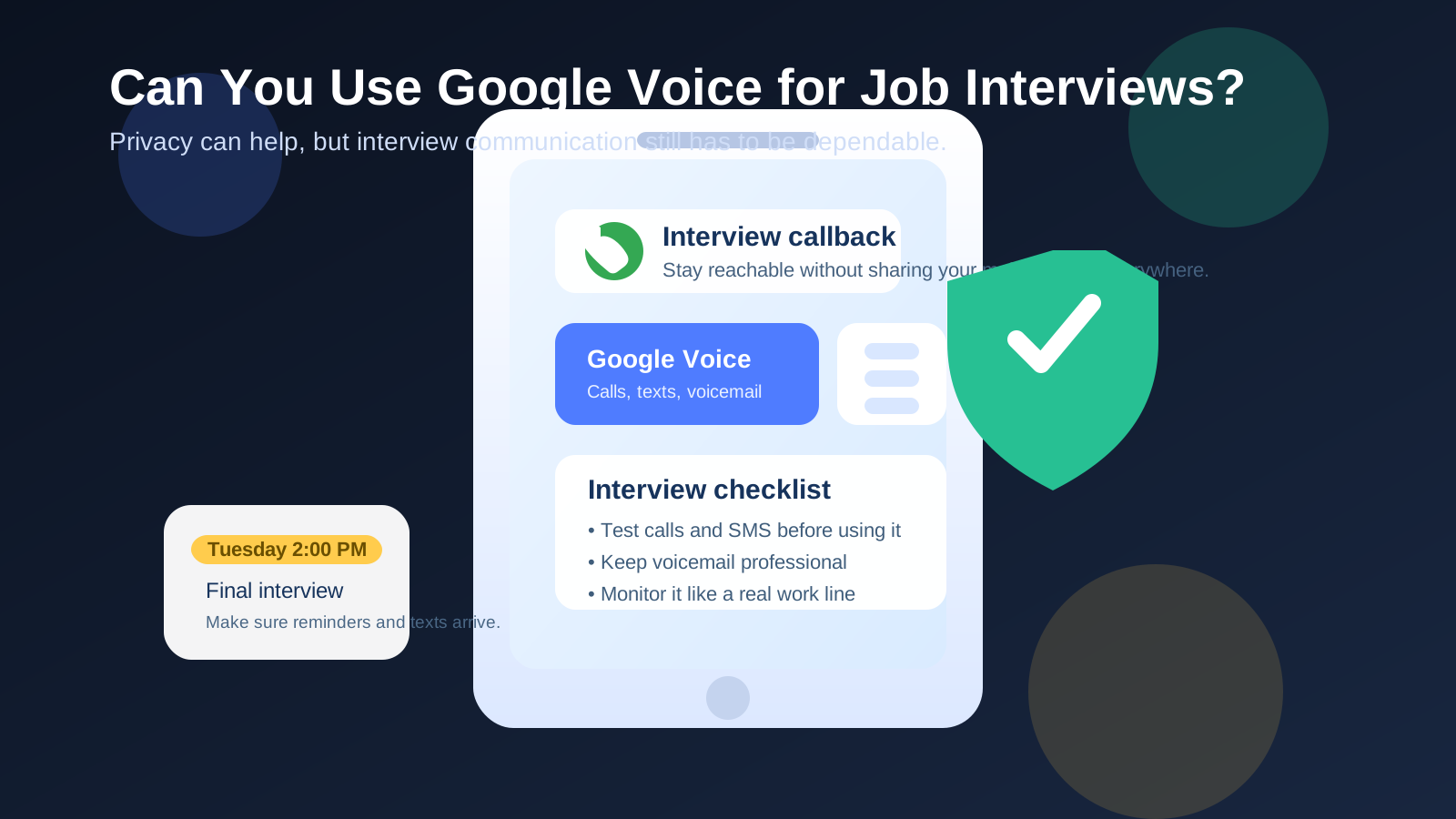
Short answer: yes, often — if you treat it like a real interview number
Google Voice can work well for job interviews when you use it as a dedicated, professional contact method. That means the number stays active, notifications work, voicemail is set up properly, and you actually check it throughout your search.
Where people get into trouble is treating it like a temporary workaround. Interview communication can be time-sensitive, and employers will not always chase you across multiple channels if your first contact method fails. If your setup causes missed calls, lost texts, or voicemail confusion, the privacy benefit is not worth the risk.
Why job seekers consider Google Voice for interviews
Most people asking this question are really trying to solve one of three problems.
- They want more privacy. They do not want their main number attached to every job board, recruiter, and application system.
- They want less spam. Once a number spreads through hiring databases, low-quality recruiting outreach and scam texts can continue long after the search ends.
- They want cleaner organization. A dedicated number makes it easier to spot recruiter calls and separate interview logistics from daily life.
Those are all reasonable goals. A dedicated interview number can help, and Google Voice often appeals because it is familiar, easy to manage from multiple devices, and useful for voicemail and text organization.
Why interviews are harder than applications
Applications are broad and noisy. You might send out dozens, hear back from only a few, and tolerate a little friction. Interviews are different. Timing matters more, and communication becomes more human and more immediate.
An interviewer may call from an unfamiliar number while you are away from your desk. A recruiter may text a time change. A coordinator may call because the meeting link is wrong or because the panel is ready early. These are small moments, but they can affect how responsive and organized you look.
That is why Google Voice for interviews is not exactly the same decision as Google Voice for applications. At the interview stage, reliability matters more than contact-method creativity.
When Google Voice is a good fit for job interviews
Google Voice is often a strong option when:
- you want a separate number for job-search privacy but do not want a truly disposable line
- you are interviewing with multiple employers and want cleaner call and text boundaries
- you already know you can receive calls and texts reliably through your setup
- you check the app, voicemail, and notifications consistently
- you want a number you can keep active throughout the full interview process
In these situations, Google Voice can act like a dedicated interview number rather than a gimmick. That distinction matters. A stable second number is often helpful. A temporary or neglected number usually is not.
The main benefits of using Google Voice for interviews
1. It protects your main personal number
This is the biggest reason people use it. If a recruiter database becomes noisy or a low-trust application starts generating unwanted outreach, the spillover hits your job-search number instead of the number tied to your personal life, family, banks, and everyday accounts.
2. It makes recruiter traffic easier to recognize
When interview communication arrives on a dedicated number, you immediately know the category. That can make you faster at responding and less likely to miss something important in the middle of unrelated daily notifications.
3. It can help with voicemail and message organization
For many job seekers, one practical advantage is having voicemail, call logs, and text history in a single place that is separate from everything else. If you are juggling several interview processes, that extra organization can reduce confusion.
4. It gives you better long-term boundaries
If the job search ends and the number later attracts spam or weak recruiter outreach, you have more control over what happens next. That is much easier than trying to pull your main number back out of systems that already stored it.
The real risks and limitations
Google Voice can work well, but it is not risk-free. These are the issues that matter most during interviews.
1. Missed calls or delayed notifications
If your phone, browser, or app notifications are set up badly, you may not notice a screening call or scheduling text quickly enough. That is not a Google Voice branding problem. It is a responsiveness problem, and interview-stage communication does not forgive it very well.
2. SMS behavior can matter more than you expect
Interview logistics often happen by text because it is fast. You may get reminders, building instructions, or same-day schedule updates. If your setup is inconsistent, or if you do not actively monitor messages, you create friction for yourself.
3. Availability is not the same everywhere
Google Voice availability and workflow can vary depending on region, account setup, and how you access it. A setup that feels simple for one person may be awkward or unavailable for someone else. That is why this should be treated as a practical option, not a universal answer.
4. It is not ideal if you want a truly temporary number
Interview processes can stretch over weeks. You may have screening calls, panel interviews, assessments, follow-ups, and a delayed final decision. If your plan is to use a number casually and then stop monitoring it, you are using the wrong tool for the wrong stage.
5. It does not protect you from fake recruiters by itself
A separate number can reduce exposure, but it does not make scam texts and impersonation attempts disappear. You still need to verify employers independently, watch for suspicious links, and be cautious when someone tries to rush you off normal hiring channels.
Google Voice vs. a burner number vs. a normal second line
These options often get lumped together, but they are not the same.
- Google Voice: usually best viewed as a stable dedicated number if you manage it well.
- Burner or short-lived temporary numbers: often too fragile for interviews because they can expire, break, or go unmonitored.
- A separate regular mobile line: sometimes the most straightforward option if you want maximum SMS and call consistency.
The key difference is not whether a number is “primary” or “secondary.” It is whether the number is dependable enough to support a real hiring process from first call to final decision.
Best practices if you use Google Voice for job interviews
Test everything before you need it
Call the number from another line. Send yourself texts. Leave a voicemail. Make sure notifications appear where you expect them. Do this before an interview is on the line, not after.
Set up a professional voicemail greeting
A simple greeting with your name is enough. If a recruiter calls when you are unavailable, the fallback experience should still feel polished and normal.
Check it like a real work channel
If you only open the app once a day, the setup is probably too loose for active interviewing. During interview periods, treat it as a live communication channel that deserves regular attention.
Keep your Google account secure
If the number is tied to an account you barely maintain, you create an avoidable weakness. Use strong account security, keep recovery access current, and make sure you can still get into the account if a hiring process stretches longer than expected.
Do not switch numbers mid-process unless necessary
Consistency matters. If you start interviews with one number, keep that number active until the process clearly ends or you intentionally move a trusted employer to a different line.
Save important details outside the app too
Do not let one call log or text thread become your only source of truth. Put interview times, recruiter names, and meeting details into a calendar or notes system you control.
When your main number may be the better option
You do not need Google Voice in every interview process. Your main number may be better if:
- you are interviewing with only a few known, legitimate employers
- you already manage call spam well
- you want the simplest possible setup with no extra moving parts
- your region or device setup makes Google Voice awkward to maintain
There is nothing unprofessional about using your normal number. A separate number is a privacy and organization tool, not a requirement for serious candidates.
Red flags that matter more than the number itself
Whether you use Google Voice or your primary number, pay attention if:
- the recruiter refuses to email from a real company domain
- the role is vague, rushed, or unrealistically generous
- you are pushed immediately toward WhatsApp, Telegram, or another off-platform chat with no explanation
- someone asks for verification codes, payment, or sensitive documents too early
- the company cannot be verified independently
Those are trust problems. A cleaner phone strategy can help limit exposure, but it is not a substitute for judgment.
A quick decision checklist
- Will I monitor this number closely enough for fast interview communication?
- Have I tested calls, texts, voicemail, and notifications already?
- Do I want stronger privacy than my main number provides?
- Can I keep this number active for the full interview cycle?
- Would a normal second mobile line be simpler for my situation?
If the answer to the first four questions is yes, Google Voice can be a practical interview number. If not, using your main number or another stable secondary line may be the better choice.
Conclusion
So, can you use Google Voice for job interviews? Yes, often you can — and for many job seekers it is a smart way to add privacy, reduce spam, and keep recruiter communication organized.
The catch is that interview communication has to be reliable. If your setup is stable, tested, and monitored like a real professional contact method, Google Voice can work very well. If it is half-configured, rarely checked, or treated like a throwaway line, it can cost you real opportunities. The best approach is simple: protect your privacy, but never at the expense of being reachable when the interview process gets serious.