Usually no. A burner email can help at the edges of a job search, but it is usually the wrong primary inbox for a real job offer.
Once an employer is sending offer letters, compensation details, e-signature requests, and onboarding steps, you need a stable email address you can monitor and keep long term.
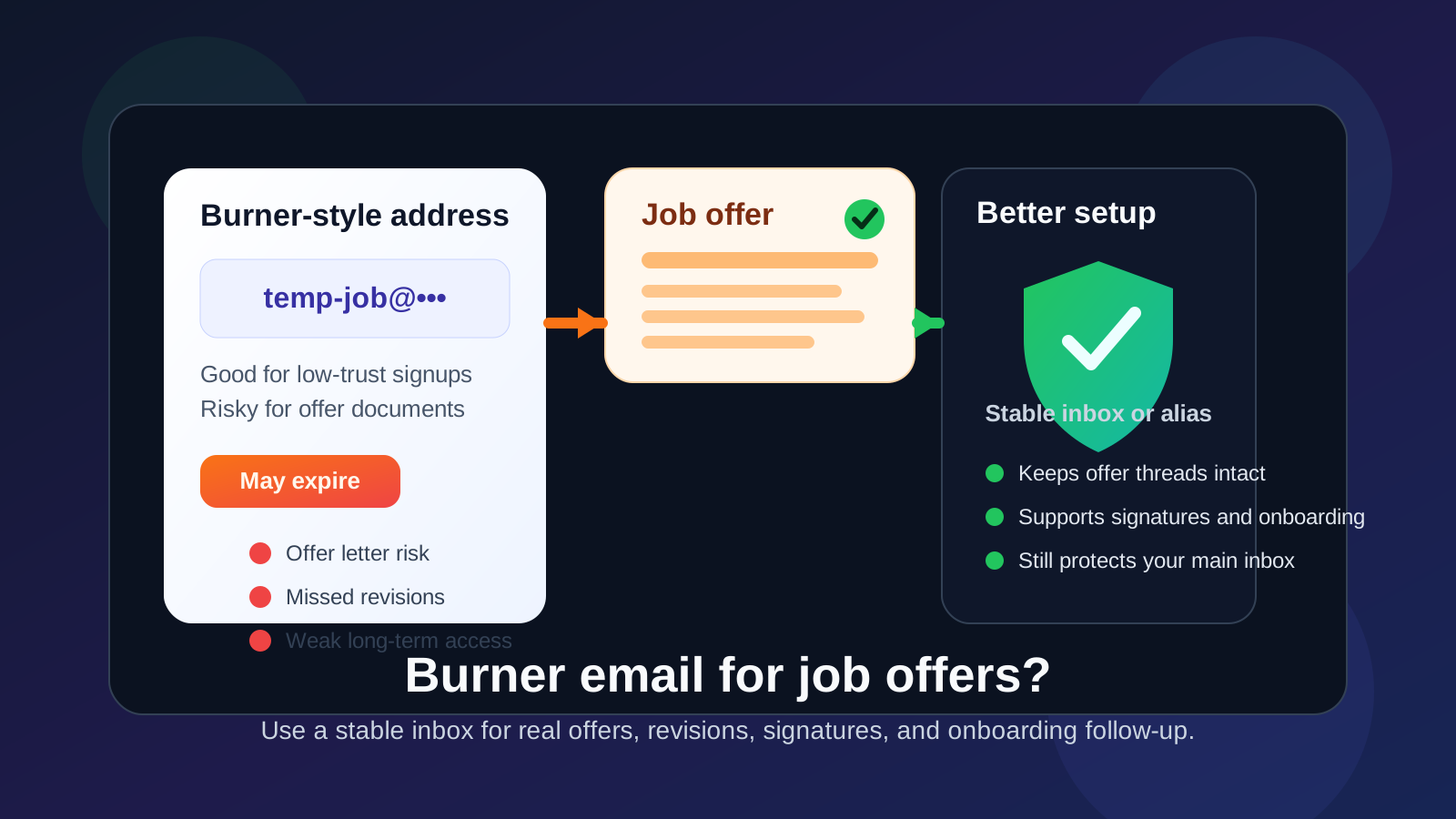
That is the practical answer, but the phrase burner email covers a few different setups. Some people mean a truly disposable inbox that may expire soon. Others mean a second account they keep only for job-search use. Others mean an alias that forwards into a real mailbox they already control. Those options are not equally risky, and the difference matters most when a company is actually trying to hire you.
The offer stage is where a job search stops being mostly exploratory and starts becoming operational. A recruiter may send a verbal summary first. Human resources may send a formal letter next. A third-party platform may then send a document-signing link, background-check instructions, or tax paperwork. You may reply with questions, negotiate a revised package, ask for more time, or confirm a start date. That kind of workflow needs continuity.
If you already used a privacy-first tool like Anonibox earlier in your search to keep low-trust signups away from your main inbox, that was probably a sensible move. The mistake is assuming the same disposable setup is automatically the best choice once the conversation becomes a real job offer. At that point, reliability usually matters more than pure disposability.
Why the offer stage changes the email decision
Applications, referrals, and offers are not the same communication problem.
At the application stage, you may be dealing with job boards, talent communities, résumé tools, and recruiter databases that could generate spam for months. A burner or disposable inbox can make a lot of sense there. The downside of missing one message is often small because many of those contacts are still low trust, early stage, or interchangeable.
A job offer is different. By the time an employer is ready to make an offer, the messages landing in your inbox are usually more important and more time-sensitive. Missing one can create real friction:
- you miss the formal offer letter and lose time reviewing it
- you overlook the deadline to accept, decline, or ask questions
- you miss a revised compensation document after negotiation
- you fail to see e-signature instructions or portal invites
- you lose track of the thread later when onboarding begins
That is why the right offer-stage inbox is less about hiding your identity from every sender and more about preserving a dependable record of everything the employer sends next.
What counts as a burner email in practice?
Before answering the question, it helps to separate three common meanings.
1. A true disposable inbox
This is the classic throwaway address: quick, isolated, and easy to abandon. It is useful when you want to verify a signup, download something gated, or test a low-trust platform without exposing your main inbox. It is usually a bad fit for real offers because the entire point is short-term convenience, not long-term stability.
2. A separate long-term job-search account
This is an account you intentionally keep for applications, recruiter communication, interviews, offers, and perhaps even the first part of onboarding. It is not your oldest personal inbox, but it is stable and monitored. This setup is often the best answer for privacy-conscious candidates.
3. A forwarding alias backed by a real inbox
An alias can be a strong middle ground. It gives you separation while still delivering everything into a mailbox you actually control and check every day. If the forwarding is dependable and you keep the destination inbox organized, this can work well even at later stages.
So when people ask whether they should use a burner email for job offers, the real answer depends on which of these they mean. A true throwaway inbox is usually too fragile. A stable secondary account or reliable alias can be perfectly reasonable.
The biggest risks of using a burner email for job offers
Offer-stage messages rarely stop at one email
People often imagine a job offer as a single message with a salary number attached. In practice, it is usually a sequence. One email may summarize the offer. Another may include the formal letter. Another may ask you to confirm legal details. Another may come from a background-check vendor. Another may arrive after you negotiate. A disposable inbox that seemed fine for one message can become a liability once the chain gets longer.
You can miss deadlines or revisions
Offer communication often includes dates: accept by Friday, review the revised letter today, complete the signature packet within forty-eight hours, confirm your start date this week. Even if the employer is flexible, slow replies create unnecessary stress. A fragile inbox increases the chance that a deadline becomes a surprise.
You may need the thread later
Even after you decide, the original offer messages can still matter. You may want to recheck the title, bonus structure, remote-work terms, equipment promises, relocation details, or the name of the person who sent a specific attachment. A burner inbox is poor long-term storage for any of that. You do not need to treat email as your only archive, but you also do not want your offer thread living in a mailbox designed to be disposable.
Third-party hiring systems often arrive after the initial offer
Many employers split the process across systems. The recruiter may send the first offer note, but the formal letter, signing workflow, identity checks, or onboarding invitations may come from different domains and at different times. A short-lived inbox can seem acceptable on day one and become a problem on day five.
A disposable-looking address can create avoidable friction
Not every recruiter cares what domain you use. Many only care that you respond quickly. Still, a clearly throwaway-looking inbox can raise small trust questions at exactly the stage where you want the process to feel smooth and professional. You may not lose an offer because of the address alone, but you can still add avoidable awkwardness.
When a burner email can still make sense around job offers
There are narrow situations where a burner-style setup still has value near the offer stage, but notice the difference between near the offer stage and for the actual offer thread.
- Screening suspicious outreach: if someone claims to have an amazing offer out of nowhere and you are not sure the sender is legitimate yet, a privacy buffer can protect your main inbox while you verify the company.
- Testing low-trust recruiter marketplaces: if the “offer” is really just an invitation to join a talent network or vague staffing funnel, a disposable inbox may still be fine.
- Separating early exploratory traffic: if you have not confirmed that the opportunity is real, using a limited-exposure address first can be sensible.
But once the conversation turns into a real employer sending real documents, the safer move is usually to switch into a stable long-term inbox immediately.
Better alternatives than a true burner email
A dedicated long-term job-search inbox
This is the simplest option for most people. You get privacy and separation without the fragility of a throwaway account. It can stay active across applications, interviews, offers, and early onboarding, which means you do not have to keep changing contact details every time the process gets more serious.
A controlled alias that forwards to a stable inbox
If you want stronger privacy boundaries, an alias can be a good answer. The key is not the alias itself. The key is whether the destination inbox is dependable, checked often, and likely to remain available for months. If the underlying inbox is solid, an alias gives you privacy without sacrificing continuity.
A staged workflow
Many privacy-conscious job seekers do best with layers:
- low trust: temporary inboxes for noisy signups and unknown platforms
- medium trust: a separate job-search inbox for real applications and recruiter contact
- high trust: the most stable inbox you control for offers, signed documents, and onboarding
That approach lets you keep the protection benefits of disposable email where it helps most without forcing a fragile system onto the most important stage of the search.
If you already used a burner email and now have a real offer
If the offer thread is already tied to a burner-style address, you do not need to panic. You just need to transition carefully.
1. Confirm the inbox still works reliably
Check that it still receives mail, that attachments open, and that you can find earlier messages. Do not assume it is fine just because the first email arrived.
2. Save the important messages immediately
Download the offer letter, preserve any key attachments, and note the names, numbers, and deadlines involved. You want redundancy before you make any changes.
3. Move the conversation to a better inbox early
A short note is enough. You can say that you want to continue the process from a monitored address so you do not miss offer or onboarding updates. Most legitimate employers will not find that strange.
4. Keep the old inbox alive during the handoff
Do not abandon it the same day. Leave it active long enough to catch late replies, vendor emails, or messages from someone still using the old thread.
5. Make one clean source of truth
Once you switch, keep all later documents in the stable inbox. The goal is to reduce confusion, not create two half-active trails.
Red flags where privacy still matters
Even though stable communication matters more at the offer stage, you should still be cautious if something feels wrong.
- the sender uses a strange or misspelled domain
- you are promised a job before any credible interview process
- the employer pushes you to click links or open files before you can verify them
- the message asks for personal or financial data unusually early
- the whole offer feels rushed, vague, or unrealistically generous
In those situations, a privacy buffer may still be reasonable while you verify the opportunity. Just do not confuse a burner inbox with full protection. You still need to confirm the company, the recruiter, and the role independently.
A quick decision checklist
Before you rely on a burner email for job offers, ask yourself:
- will this inbox still exist and be monitored next week?
- can I trust it with attachments, revisions, and follow-up steps?
- would I be comfortable using this same address for onboarding messages?
- am I protecting privacy, or am I adding unnecessary communication risk?
- would a stable separate inbox solve the same problem better?
If your honest answer is that the inbox is temporary, hard to monitor, or likely to be abandoned, it is not the right inbox for a real offer.
Final answer
No, a true burner email is usually not the best choice for job offers. Offer-stage communication needs continuity, searchability, and long-term access more than it needs extreme disposability.
If privacy matters to you, the better answer is usually a stable separate inbox or a reliable alias backed by a real mailbox you control. Use burner-style tools at the low-trust edges of the search if they help you stay organized, but switch to a dependable address before an offer letter, negotiation thread, or onboarding workflow depends on it.