Yes — you can use SimpleLogin for job offers if the alias is stable, you monitor the destination inbox closely, and you are confident the employer’s messages will keep reaching you without forwarding surprises.
For most job seekers, though, the offer stage is where a direct durable inbox is usually safer than an alias-first setup, because offer letters, deadlines, background-check steps, and onboarding forms are too important to risk on a fragile workflow.
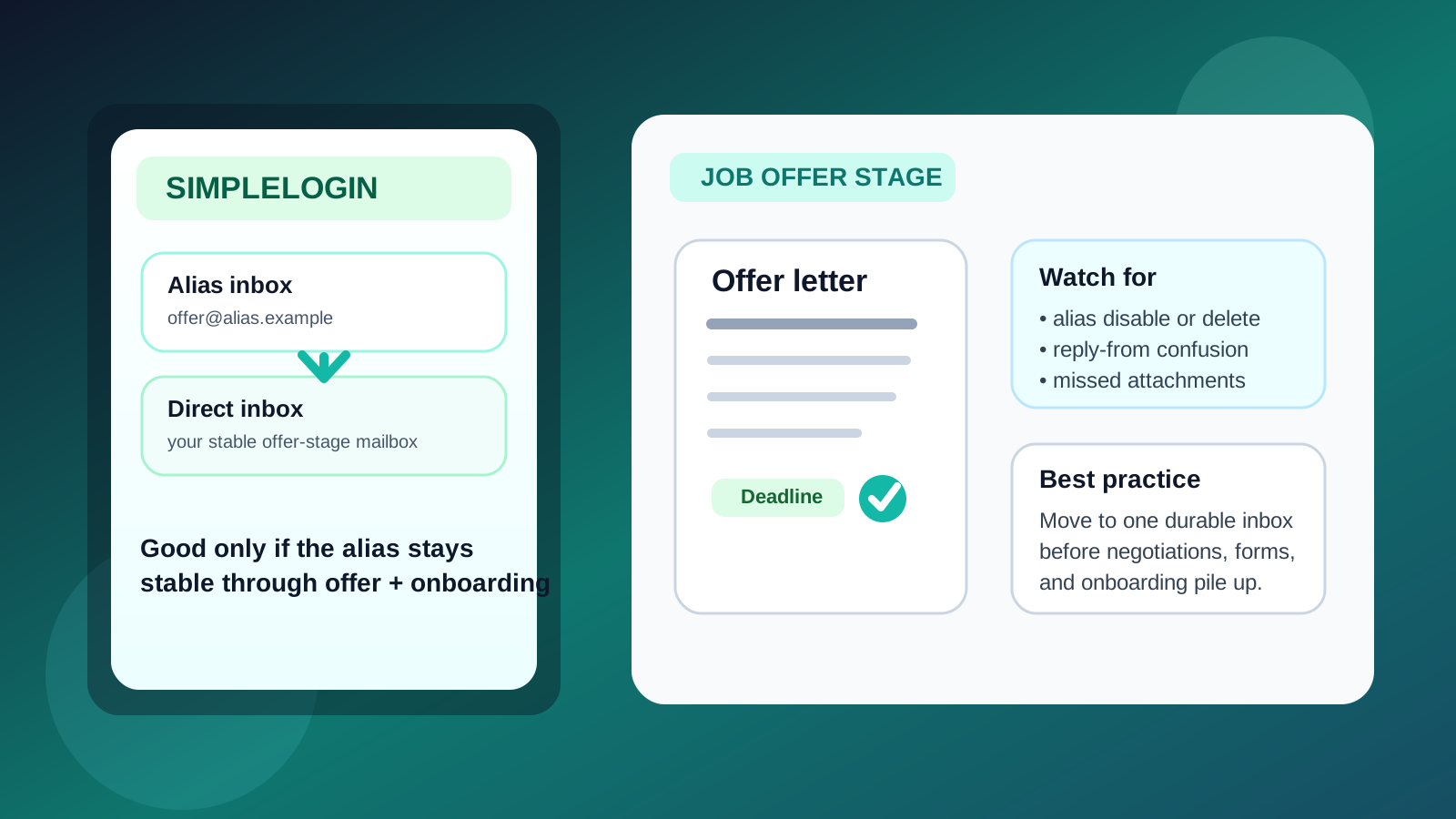
That is the practical answer behind searches for should you use SimpleLogin for job offers. The question is not really whether alias forwarding is clever or privacy-friendly. The question is whether it is reliable enough for the most sensitive part of a hiring process. Once a company is sending formal offer details, compensation notes, benefits summaries, background-check links, identity-verification requests, and start-date paperwork, your email setup becomes part of operational trust. If the message flow is messy, the job offer itself starts feeling messy too.
SimpleLogin is useful because it gives you separation. You can create aliases, route messages away from your main personal address, and keep your job search from exposing the same inbox you use everywhere else. That can be smart earlier in the funnel. It is easy to understand why privacy-conscious candidates like it. A job search can expose your email to job boards, recruiter forms, third-party vendors, and plenty of opportunities that never turn into anything serious.
But job offers are different from cold applications. At the offer stage, you are no longer just protecting your inbox from spam. You are managing a live negotiation and a document trail. That makes stability, searchability, and continuity much more important than clever abstraction.
Why the offer stage changes the rules
An application can be low-stakes. If a weak lead disappears, nothing much happens. A job offer is different. One thread can contain a compensation breakdown, a deadline to respond, follow-up questions about benefits, a revised letter after negotiation, and onboarding instructions that arrive days later. You may need to find that thread again fast. You may need to prove what was said. You may need to keep receiving messages after the first signed document is sent.
That is why the best email setup for offers is usually the one that feels boring in the best possible way. It should be stable, familiar, and easy to monitor. If SimpleLogin helps you create that kind of workflow, it can work. If it adds even a little uncertainty about whether messages will arrive, where replies will go, or how long the alias will remain active, then it starts becoming the wrong tool for this stage.
When SimpleLogin can work for job offers
SimpleLogin is not automatically a bad choice. In some cases it is perfectly workable, especially if your setup is disciplined. It makes the most sense when:
- The alias is long-lived and intentional. You are not treating it like a disposable experiment that might vanish next week.
- The destination inbox is one you trust. The forwarded mail lands in a mailbox you already check often and use reliably.
- You understand the reply flow. You know exactly how to respond so the thread remains clean and professional.
- You want privacy without losing continuity. The alias is there to reduce exposure, not to make yourself hard to reach.
- You are prepared to keep the setup active through onboarding. Offers often lead directly into background checks, tax forms, scheduling, and start-date logistics.
If all of that is true, SimpleLogin can function more like a privacy layer than a risky detour. The problem is not the brand. The problem is whether the workflow is solid enough once the stakes rise.
Where the setup starts to get risky
1. The alias feels disposable even if the offer is not
The offer stage is the wrong moment for anything temporary in spirit. If you created an alias casually during the application phase and never intended to rely on it for important documents, you should think twice before leaving the whole conversation there. The employer may keep sending follow-ups long after the initial letter, and those messages matter.
2. Forwarding adds one more thing that can go wrong
A direct inbox has one path. Alias forwarding has more moving parts. Even when everything usually works, the extra layer means there is more to think about: the alias itself, the forwarding destination, how replies are handled, whether you are watching the right inbox, and whether you could get confused mid-thread. When deadlines are real, simplicity is valuable.
3. Reply-from behavior can create friction
At the application stage, a little awkwardness may be tolerable. At the offer stage, you want communication to feel effortless. If replying through the alias makes you hesitate, increases the chance of responding from the wrong address, or makes the thread harder to follow, that is a practical downside. Employers do not need to be impressed by your privacy architecture. They need the conversation to be clear.
4. Offer-stage emails often include attachments and later follow-ups
Once offer letters, benefits documents, ID requests, and background-check links enter the picture, you need a workflow that is easy to search and easy to trust. You do not want to wonder whether a message was delayed, filtered strangely, or attached to the wrong thread. Even small confusion feels bigger when the content is time-sensitive.
5. Negotiation and onboarding can last longer than you expect
Some candidates think only about the first offer email. In reality, the process may continue for days or weeks. There might be revisions, clarifications, signatures, document requests, and orientation details. If the alias was originally meant just to shield you during the search, it may stop making sense once the relationship becomes more formal.
What employers actually care about
Most recruiters and HR teams are not evaluating whether you use SimpleLogin specifically. They care about simpler signals:
- Do you respond promptly?
- Does your inbox seem stable?
- Can they send formal documents without confusion?
- Will later onboarding messages still reach you?
- Does the thread stay professional and easy to follow?
If your alias setup supports those goals, it can be acceptable. If it interferes with any of them, the privacy benefit is no longer worth much.
How privacy still fits in
Privacy is not irrelevant just because the process has reached the offer stage. Many job seekers want to avoid spreading a primary personal address everywhere, and that instinct is completely reasonable. The key is understanding that privacy and stability are not the same thing. A temporary inbox, a burner inbox, or a casually created forwarding alias may be great for low-trust signup moments, but they are not always the best place to receive serious employment documents.
Anonibox fits most naturally earlier in the funnel: job-board signups, alert subscriptions, or low-commitment applications where spam risk is high and the opportunity may never become real. Once an employer is discussing compensation and next steps, most people benefit from shifting into one durable mailbox they control and check constantly. That can still be a privacy-conscious mailbox. It just should not feel disposable.
Best practices if you keep using SimpleLogin for an offer
Use one alias consistently
Do not keep switching addresses mid-process. If the employer already knows one alias and the thread is working, constant changes create more risk than privacy value.
Make sure the destination inbox is excellent
The forwarded-to inbox matters more than the alias label itself. It should be stable, easy to search, and something you check multiple times a day while the offer is active.
Test your reply workflow before anything urgent arrives
Do not wait until a deadline-heavy message shows up to remember how your alias replies behave. Know exactly how you will respond so the employer sees a clean thread.
Save attachments outside the mailbox too
Download offer letters, compensation summaries, and onboarding files into a folder you control. Even a good inbox should not be your only record-keeping system.
Keep the alias alive through onboarding
If you decide to use the alias for the offer itself, do not treat the signed letter as the finish line. Background-check vendors, HR systems, and start-date coordinators may still use that address afterward.
When you should switch to a direct inbox instead
For many candidates, the safest move is to switch to a direct stable inbox before the offer stage gets busy. That is especially true if:
- the alias was only meant for early-stage privacy
- you are negotiating terms and expect multiple revised documents
- you are worried about losing track of attachments or follow-ups
- you do not fully trust your reply workflow
- the employer is about to start onboarding or compliance-related steps
A direct inbox does not have to mean oversharing forever. It just means that, for this phase, clarity beats cleverness. If you do switch, make the change once, explain it briefly, and ask the employer to use the new address for all future offer and onboarding communication.
Common mistakes to avoid
- Keeping a temporary mindset too long. What worked for noisy applications may not be right for a live offer.
- Assuming privacy tools are automatically stable enough. Helpful is not the same thing as ideal for every stage.
- Replying from the wrong address. Offer-stage threads should feel polished and consistent.
- Forgetting about post-offer communication. The inbox still matters after the first yes.
- Using complexity when simplicity would do. Reliability is the main goal here.
Final answer: should you use SimpleLogin for job offers?
Yes, you can — but only if the alias behaves like a long-term stable contact point rather than a temporary privacy trick. If the forwarding path is reliable, the destination inbox is strong, and you are comfortable handling replies and documents through that setup, SimpleLogin can work.
Still, most job seekers are better off treating the offer stage as the point where stability matters more than abstraction. Temporary email tools and burner-style workflows help earlier in the search. Formal offers need a mailbox that is easy to trust, easy to search, and easy to keep alive through every follow-up that comes next.