Usually no. You generally should not use your work phone number for job offers if that line is tied to your current employer, because offer-stage calls, texts, voicemail, and follow-up can become visible on devices, plans, or systems you do not fully control.
A personal number or a stable separate number you manage yourself is usually safer. At the offer stage, reliability matters a lot, but so does keeping your search private and making sure you do not lose access to important messages at exactly the wrong moment.
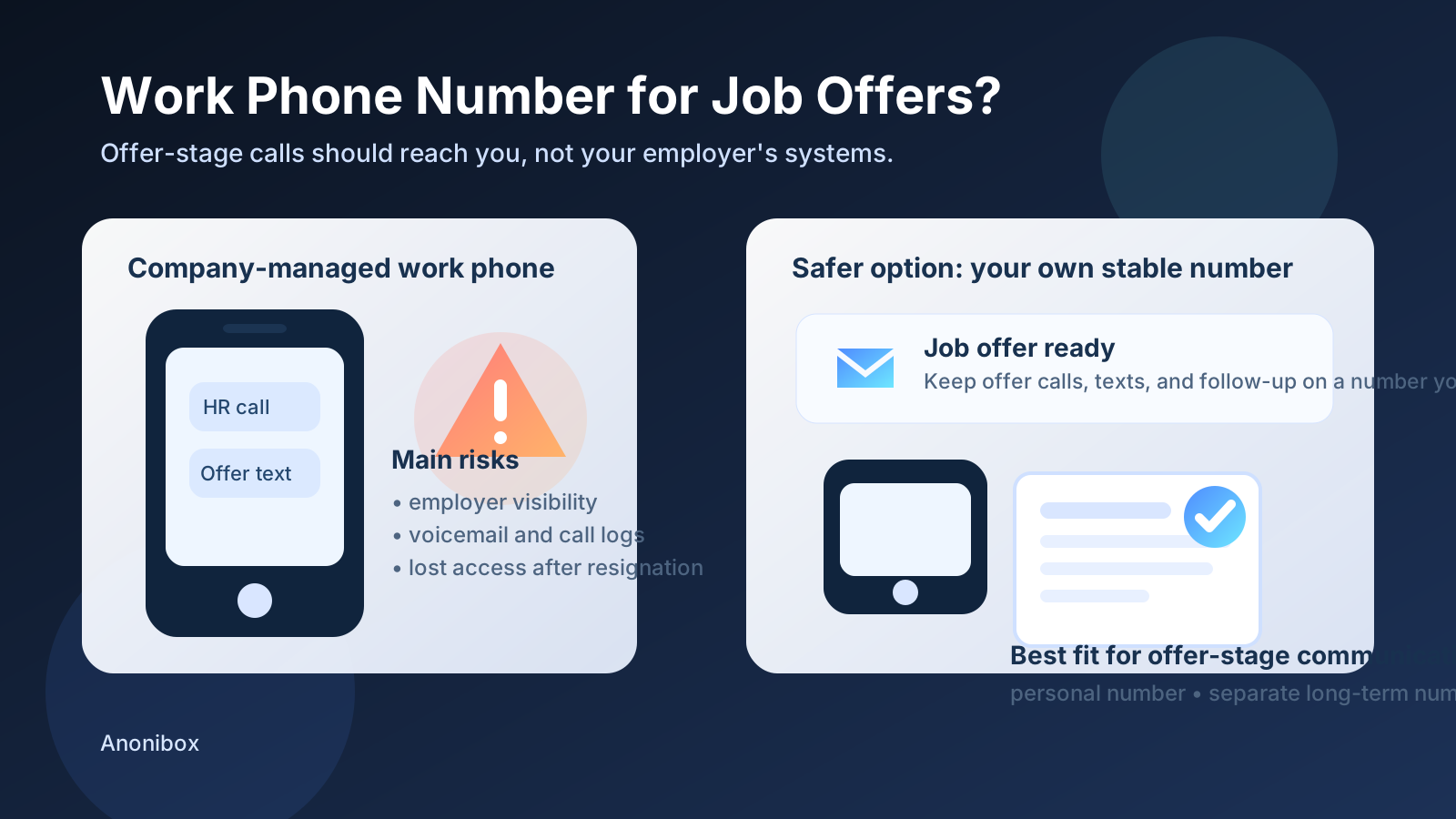
People often think hardest about privacy when they choose an email address for job applications, but phone numbers can create just as much exposure. In some ways they can create more. Recruiters call when they want a quick answer. HR texts when timing changes. Hiring teams leave voicemails when they cannot reach you by email fast enough. Once a real offer is close, that communication becomes more frequent, more urgent, and more personal.
That is exactly why a work number is risky. A company-managed phone can feel convenient because you already carry it, answer it during business hours, and maybe even assume it sounds more professional. But convenience is not the same as control. If the number belongs to your employer, lives on an employer-managed device, or runs through a company phone system, using it for a private job offer can expose your search and create access problems later.
Short answer: use a number you own, not a number your employer controls
If the question is should you use your work phone number for job offers, the practical answer is usually no. Job offers are time-sensitive, and the safest number is one that is both reliable and fully yours. That usually means your personal mobile number or a dedicated job-search number you control long term.
A work number is different. Even if nobody is actively watching your calls, the line may still create records, notifications, or device-level traces that are simply not meant for a confidential job search. And if you leave your current employer, that number may stop being available right when you still need it for paperwork, start-date coordination, or post-offer follow-up.
Why the offer stage changes the phone-number question
The phone number that seems acceptable during early applications is not always the right number once an employer is ready to make an offer. Earlier in the process, many people focus on limiting exposure. They are dealing with job boards, third-party recruiters, and forms they do not fully trust yet, so privacy and spam control matter most.
At the offer stage, the communication pattern changes. Recruiters may call before sending the written offer. HR may text to confirm timing, compensation discussions, references, or start-date details. Someone might need a quick answer about notice periods, background-check forms, relocation questions, or a revised document. That makes the phone number more important, not less.
But more important does not mean your work number becomes a good choice. It means the stakes get higher. You need a line that is private enough, dependable enough, and still under your control after the offer arrives.
What makes a work phone number risky for job offers?
1. The line may belong to your employer, not to you
This is the biggest issue. A work number may live on a company mobile plan, a corporate VoIP account, a desk line, or a softphone system your employer administers. Even if you are the daily user, the real ownership may sit with the company.
That matters because job offers often lead to ongoing back-and-forth. If the line is not really yours, you are building an important communication trail on infrastructure you may lose.
2. Calls, texts, and voicemail may leave visible traces
A recruiter calling your work number can show up in call logs, notifications, voicemail transcripts, synced apps, or device histories that are easier to view than you expect. Nobody needs to be running a surveillance operation for this to become awkward. Ordinary workplace tooling can be enough.
Even a missed call or a preview banner can create questions you did not want to answer.
3. You may not control the device settings
Many employer-managed phones include mobile device management, company policies, shared admin settings, monitored backups, or required communication apps. That does not mean every employer reads everything. It means the environment is designed for company business, not for private career decisions.
If confidentiality matters, mixing a job offer into that environment is unnecessary risk.
4. You could lose access at the worst time
A job offer is not the end of communication. It is usually the start of a more sensitive phase. After the first offer call, there may still be compensation clarification, acceptance timing, onboarding instructions, document requests, start-date changes, and last-minute questions.
If your work number becomes unavailable because you resign, your account is deprovisioned, your device is returned, or the company changes access immediately, that communication chain can break at exactly the wrong time.
5. It blurs the line between your current job and your next one
A work number can make a private transition feel less private. Instead of keeping your next move separate, you are letting offer-stage conversations flow through the same tools your current employer gave you for their business. That is rarely the cleanest boundary.
When might someone still consider using a work phone number?
There are narrow cases where a person considers it. Maybe they rarely check their personal phone during work hours. Maybe the work line is the number they answer fastest. Maybe they think it sounds more established or professional.
Those reasons are understandable, but they usually do not outweigh the downsides. Speed matters during job offers, but the better solution is not to route the offer through employer-controlled infrastructure. The better solution is to use a number you own and monitor closely.
Why a personal or separate number is better for job offers
A personal number usually gives you continuity
If the offer turns into acceptance, onboarding, and future follow-up, your personal mobile line is still there. You do not have to worry about losing the number when your current employment status changes.
A separate number can protect privacy without sacrificing reliability
For many people, the best middle ground is a dedicated long-term job-search number. That can keep recruiter calls, offer-stage texts, and HR coordination away from family, friends, and everyday accounts while still giving you a stable line that is actually yours.
The key word is stable. A separate number should be dependable and actively monitored. It should not be a throwaway number you forget to check. The offer stage is too important for that.
You stay in control of voicemail, notifications, and follow-up
When you own the line, you decide how voicemail is set up, which devices show notifications, and whether messages remain available later. That is a much better fit for salary discussions, offer letters, and start-date logistics than any number controlled by your current employer.
Best practices if you are expecting job-offer calls
- Use a number you control long term. That can be your personal mobile line or a separate long-term number dedicated to your search.
- Keep voicemail professional. A simple greeting with your name is enough.
- Check the line consistently. Offer-stage communication moves quickly, and missed calls matter more here than they did earlier in the process.
- Do not mix critical job communication with employer-owned devices if you can avoid it.
- Save important details somewhere else too. If you receive a compensation summary, deadline, or start-date note by phone, write it down in your own records.
What about texting during the offer stage?
Texting is one of the strongest arguments against using a work number. Many recruiters and HR teams use text messages for quick updates because they are faster than email and less formal than a call. Those messages might include time-sensitive questions like:
- Are you available for a call in 10 minutes?
- Can you confirm receipt of the written offer?
- Does this revised start date work for you?
- Can you send the signed document today?
If those texts land on a work-managed device or system, you are taking an unnecessary privacy risk. And if that device stops being available after resignation, you may miss something that genuinely matters.
How this fits with broader job-search privacy
Phone privacy is only one part of the puzzle. People often use a separate or disposable email strategy during early-stage job hunting to keep recruiter traffic and job-board spam out of their main inbox. That is where a tool like Anonibox can be useful for lower-stakes signups, early filters, or privacy-sensitive workflows.
But job offers are different. By the time you are discussing a real offer, you usually want more continuity than a throwaway contact path provides. The same logic applies to phone numbers. The goal is not maximum cleverness. The goal is dependable privacy. That means using contact methods you fully control and can still access after your current role ends.
Red flags that make a work number an even worse choice
- Your company manages the device with strict IT controls.
- The number is tied to a desk phone or shared business system.
- Voicemail is transcribed, synced, or visible across employer-managed tools.
- You are already close to resigning and may lose access quickly.
- You need the job search to stay confidential for practical or political reasons.
If any of those apply, the argument against using your work phone number gets much stronger.
A quick decision checklist
Before giving a number to an employer at the offer stage, ask yourself:
- Do I fully own this number and the device it uses?
- Will I still have access to this line after I accept an offer or leave my current job?
- Could missed calls, texts, or voicemail be visible through employer systems?
- Am I comfortable having salary or start-date conversations tied to this line?
- Would a personal or separate number solve this more cleanly?
If the answer to those questions makes you uneasy, that is your answer. Use a different number.
Final answer: should you use your work phone number for job offers?
Usually no. A work phone number is a poor default for job offers because the offer stage involves urgent, sensitive communication and often continues into acceptance, paperwork, and onboarding. If the line is employer-controlled, you risk privacy exposure, awkward visibility, and loss of access later.
The better option is usually a personal mobile number you control or a separate long-term number dedicated to your job search. That gives you the reliability employers need at the offer stage without handing an important part of your career transition to your current employer’s devices, systems, or policies.