Usually no. A burner phone number is usually a poor choice for job offers because offer-stage communication depends on continuity: calls, texts, voicemail, verification links, and follow-up all need to reach you reliably over days or weeks.
If you want privacy, a stable personal number or a separate long-term number you control is usually better. A burner can look appealing when you want distance from recruiters or scam calls, but once a real offer is on the table, reliability matters just as much as privacy.
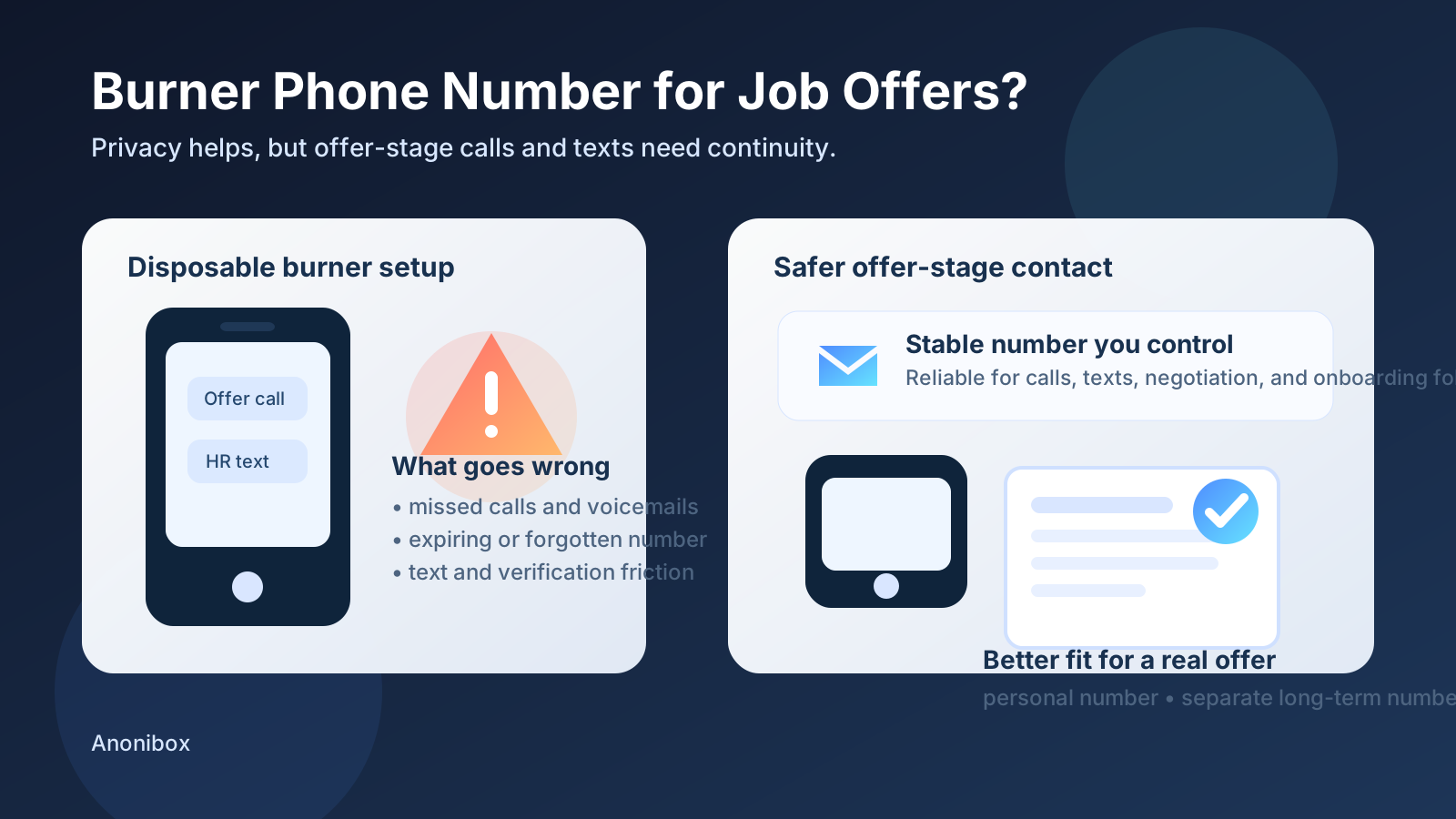
People often think most about email privacy during a job search, especially when they are using separate inboxes to avoid spam. Phone numbers deserve the same attention. Employers still call to discuss compensation, confirm availability, explain deadlines, ask quick follow-up questions, or tell you a written offer is coming. HR teams may text to confirm documents, background-check timing, or next steps. That means the number you share at the offer stage needs to be reachable, stable, and fully under your control.
A burner phone number can help in some early, low-trust situations, especially if you are trying to keep unknown recruiters or sketchy listings away from your main line. But a real job offer is not an early-stage, low-stakes situation. It is a sensitive transition point where missed communication can cost you time, clarity, leverage, or even the offer itself. That is why the answer changes. The privacy benefit of a disposable line starts to matter less than the risk of interruption.
Short answer: privacy helps, but continuity matters more at the offer stage
If the question is should you use a burner phone number for job offers, the practical answer is usually no. A burner number may reduce exposure, but offer-stage communication is not just a one-time contact event. It often continues through verbal discussions, written paperwork, start-date questions, onboarding instructions, and last-minute clarifications.
A number that expires, gets rotated, is easy to forget, or is not consistently checked creates unnecessary risk. At this stage, the better goal is not maximum distance from the employer. It is controlled, dependable contact.
Why job offers are different from applications
During applications, many candidates are trying to limit spam and protect their privacy from job boards, aggregators, and third-party forms. In that context, being cautious about phone exposure makes sense. You may not trust every listing yet, and you may not want dozens of recruiters texting your personal line.
The offer stage is different. Now you are dealing with a specific employer or recruiter who is far enough along to discuss a real decision. The communication becomes more urgent and more detailed. They may call to walk through compensation, benefits, deadlines, relocation details, reference timing, or start dates. They may text because they need a quick answer before sending revised paperwork. Even if the written offer arrives by email, the phone number often becomes the fastest backup channel.
That is the core problem with a burner. Job offers are less about hiding and more about staying reachable without giving up control.
Why a burner phone number seems attractive
The idea is easy to understand. A burner number can feel safer because it creates distance between your main personal line and your job search. It may help you avoid spam, protect your privacy from unknown recruiters, and reduce the risk that your everyday number ends up everywhere.
Those are real advantages earlier in the process. But the same qualities that make a burner appealing can become liabilities at the offer stage:
- It may not be intended for long-term, high-stakes communication.
- You may check it less consistently than your main phone.
- You may retire it too soon.
- It may not support the same voicemail, text, or verification workflow you need later.
- It can be easy to forget which employers have which number.
In other words, a burner phone number can reduce exposure, but it can also reduce reliability. For job offers, that trade-off is usually not worth it.
What can go wrong if you use a burner number for job offers?
1. You miss a time-sensitive call
Offer-stage communication often moves quickly. A recruiter may call before sending the written offer. A hiring manager may want a same-day answer to a scheduling question. HR may reach out to resolve a detail before formal approval. If the burner number is not on the device you watch most closely, or if you silence it, forget it, or stop checking it regularly, you can easily miss something that matters.
2. The number expires or becomes unreliable
This is the biggest structural risk. A burner number is often temporary by design. That may be fine for one-off signups, but a job offer is rarely a one-off exchange. Negotiation, document review, acceptance, background checks, onboarding, and start-date adjustments can all stretch across more time than you first expect.
If the number disappears mid-process, the employer may assume you became unresponsive. Even if they still have your email, you have introduced confusion at the worst possible moment.
3. Text-based follow-up becomes messy
Many employers use text messages for quick coordination. A text may simply ask, “Do you have ten minutes for a call?” or “Can you confirm receipt of the revised offer?” That is convenient when it lands on a number you actively use. It is risky when it lands on a line that is treated as disposable or secondary.
Some burners also create friction around message history, app access, multi-device syncing, or basic convenience. None of those issues help you when compensation or timing is on the line.
4. Voicemail continuity can break
If you cannot answer a call, voicemail matters. Recruiters leave useful details there: callback requests, deadlines, next steps, or confirmation that an offer was sent. A burner setup is only as good as its voicemail reliability, and many people do not manage that with the same care as their main line.
If your voicemail greeting sounds temporary, generic, or poorly maintained, that can also make the interaction feel less polished than it should at a serious stage in the process.
5. Verification and identity checks may become harder
Some hiring workflows include one-time passcodes, portal verification, interview rescheduling links, or HR systems that depend on a stable contact method. A burner number can complicate that if you lose access, change devices, or stop using the line before the process fully ends.
Not every employer will do this by phone, but enough do that it is worth planning for.
6. You may create the wrong kind of friction
A real employer does not need your deepest personal data on day one, but by the offer stage they do need dependable contact. If the number feels unstable, leads to missed messages, or forces repeated clarification, the employer may not call it a “burner problem” out loud. They may simply experience you as harder to reach.
That does not mean you must expose your main number to everyone. It means the number you choose for the offer stage should behave like a long-term professional channel, not a disposable one.
When could a burner number still be acceptable?
There are a few narrow cases where someone may still use one successfully. For example, maybe the number is technically separate but stable enough that you will keep it active for the entire process and check it constantly. In that case, the real question is whether it is still functioning like a true burner or whether it has effectively become a dedicated job-search number.
That distinction matters. If the line is stable, monitored, voicemail-ready, and yours to keep, it starts to look less like a disposable burner and more like a deliberate secondary number. That can be a good solution. The problem is not merely that the number is different from your main one. The problem is when it is too temporary for the stage of the relationship.
Better alternatives than a burner number
A personal mobile number you already manage well
For many job seekers, the safest practical option is still their normal personal mobile line. It is stable, monitored, and likely to stay with them through the whole transition. If you are comfortable with the privacy trade-off, this is often the easiest choice.
A separate long-term number you control
This is often the best middle ground. A dedicated job-search number can protect your primary line from spam while still giving employers a stable, professional contact path. The key is that it should be long-term enough to remain active through offer, acceptance, onboarding, and any loose ends after that.
A stronger email privacy strategy for early-stage exposure
Sometimes people reach for a burner phone number because the whole search feels too exposed. Often the better fix is to reduce exposure earlier in the funnel. For example, using a separate inbox for job boards, low-trust signups, and early screening can cut down on spam without making late-stage phone communication fragile. That is where a tool like Anonibox can fit naturally: protecting your inbox during early-stage outreach while you keep offer-stage contact methods stable and reliable.
Best practices if you are expecting a job offer call or text
- Use a number you can keep active for the full process. Think beyond the first call.
- Check the line consistently. Do not rely on a contact path you monitor only occasionally.
- Keep voicemail professional. A simple greeting with your name is enough.
- Save key details elsewhere. Write down deadlines, salary figures, or follow-up items after important calls.
- Avoid switching numbers midstream. That creates confusion and increases the chance of missed messages.
- Verify suspicious outreach before engaging deeply. Privacy still matters, especially if an “offer” appears unexpectedly.
How to think about scams without breaking legitimate communication
Job-offer scams are real, and caution is healthy. But the answer is not usually to make yourself hard to reach with a throwaway line. A better approach is to keep a stable number while verifying the employer carefully. Check the company domain, confirm the recruiter identity, review whether the role matches your real application history, and be skeptical of anyone pushing you to act immediately through unusual channels.
In other words, do not solve a scam problem by weakening your own communication setup. Solve it by improving your verification habits.
Red flags that make a burner number even riskier
- You have already moved into formal offer discussions.
- The employer is sending documents, portal invites, or time-sensitive updates.
- You may need the same number during negotiation and onboarding.
- You are likely to travel, change devices, or reduce attention to the burner line.
- You are using a number that might expire, rotate, or become inaccessible quickly.
If any of those are true, the argument against a burner becomes much stronger.
A quick decision checklist
Before giving a phone number to an employer at the offer stage, ask yourself:
- Will I still have this number next week, next month, and after I accept?
- Do I check it as reliably as my main line?
- Can it receive calls, texts, voicemail, and any likely verification steps without friction?
- Am I using this number because it is genuinely stable, or just because I want distance?
- Would a dedicated long-term number solve the privacy problem more cleanly?
If those questions make the burner look fragile, that is the answer. Use something more dependable.
Final answer: should you use a burner phone number for job offers?
Usually no. A burner phone number can help reduce exposure earlier in a job search, but real job offers depend on stable communication across calls, texts, voicemail, verification, negotiation, and follow-up.
The better choice is usually a number you control and plan to keep active: either your personal mobile number or a separate long-term number dedicated to your search. That gives you the privacy you need without adding continuity risk at the exact stage where missed communication matters most.