Yes, you can use Google Voice for job referrals if the number is stable, monitored, and able to receive calls and texts reliably. It can be a smart way to protect your personal number during networking and recruiter follow-up, but only if you treat it like a real long-term contact method rather than a throwaway line.
For most people, Google Voice works best as a separate job-search number you check consistently. That gives you more privacy without making yourself hard to reach when a referral turns into a recruiter call, an interview request, or a time-sensitive follow-up.
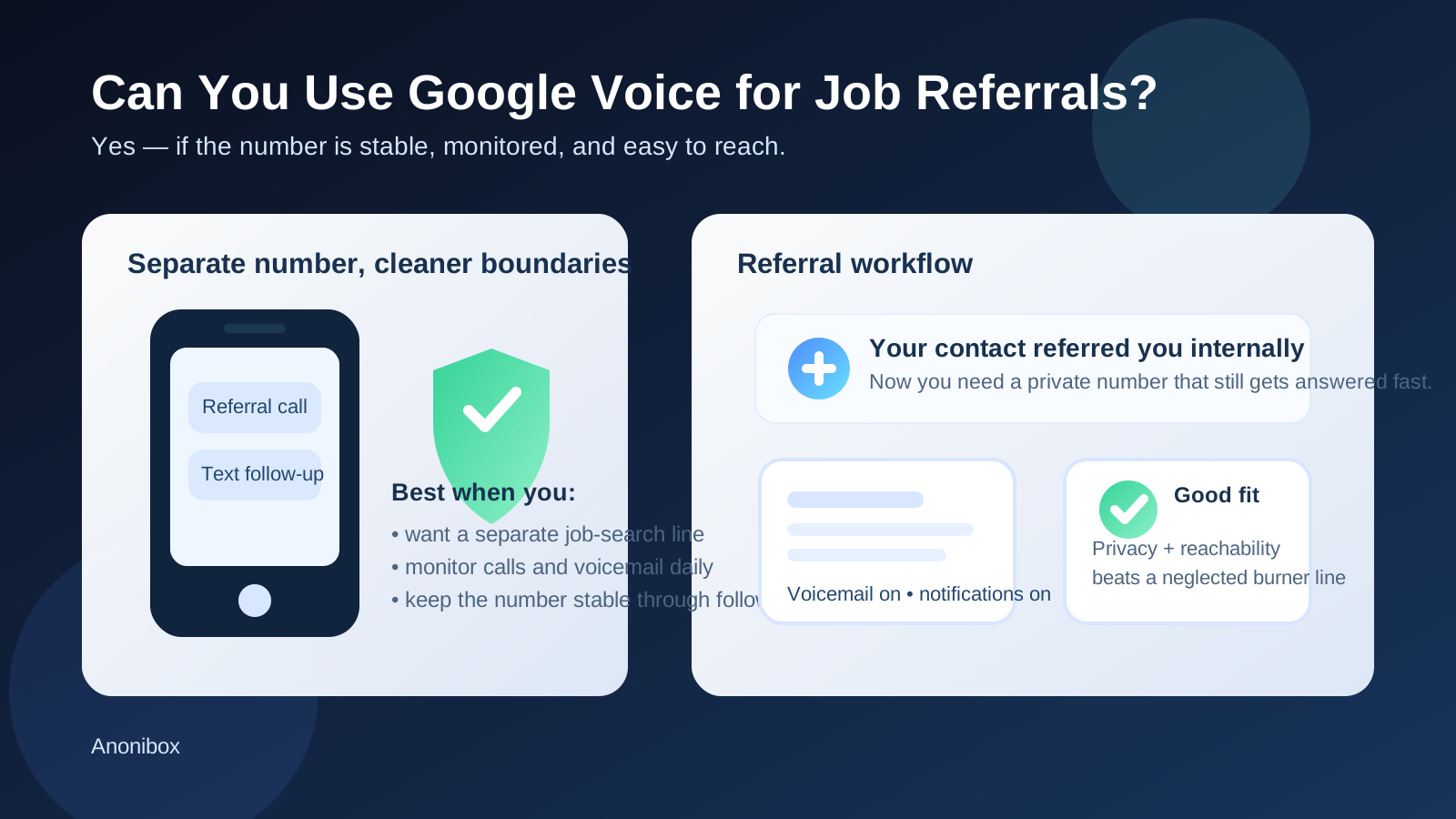
Job referrals sit in an awkward middle ground. They are usually more personal than a cold job application, but less formal than a written job offer. A friend, former coworker, recruiter, or professional contact may pass your name along and expect a quick reply. Sometimes that entire exchange stays in email or LinkedIn messages. Sometimes it quickly moves to calls or texts when someone wants to schedule a screening conversation, confirm interest, or ask for a current résumé.
That is why the phone-number question matters. If you use your everyday personal number everywhere, you may end up with recruiter calls, networking follow-ups, and future spam mixed into the same line you use for family, friends, banking alerts, and everything else. If you use a completely disposable number, you risk missing something important. Google Voice can be a practical middle ground because it gives you a separate number without forcing you into a short-lived burner workflow.
Short answer: Google Voice can be a good fit if reliability comes first
If you are asking can you use Google Voice for job referrals, the most honest answer is yes, often. It can help you keep referral-related calls and texts separate from your main personal number, and that can make your job search feel more organized and more private.
But the benefit only holds if the number stays active and you actually monitor it. A referral is not just a privacy exercise. It is a relationship-driven opportunity. If someone recommends you internally and the first callback goes to a number you never check, the privacy gain is not worth much.
Why Google Voice appeals to job seekers handling referrals
1. It separates networking from your everyday personal life
Referrals often come through weak ties: a former teammate, an old classmate, a recruiter you have not spoken to in months, or a professional contact from an online community. Using a separate number can help you participate in those conversations without handing out the same personal number you use everywhere else.
That separation can be useful even when nobody is doing anything wrong. It simply reduces unnecessary exposure and keeps your job-search activity easier to track.
2. It can reduce long-term clutter
Not every referral becomes a real lead. Some turn into vague conversations, some go quiet, and some lead to future recruiter outreach you did not explicitly ask for. A separate number can keep that follow-up from spreading into your main line for months.
3. It can make your search easier to manage
When referral calls and messages land on their own number, you can review them more intentionally. That makes it easier to see patterns, return calls promptly, and separate serious opportunities from low-value noise.
4. It offers more continuity than a burner number
A true burner mindset is often too fragile for referral workflows. Referral conversations can stretch across days or weeks. Someone might introduce you now, a recruiter might reach out next week, and an internal hiring team might follow up later. Google Voice is more useful when you want a separate line that can stay available through that whole process.
Why referrals are different from ordinary job applications
With a normal job application, you may be filling out forms on job boards or company career pages where privacy and spam control are major concerns. Referrals are different because trust and responsiveness matter more. The person referring you is often putting their name behind yours. If they say, “I sent your profile to the hiring manager,” they expect you to be reachable.
That means the best contact method is not the one with the most distance from your identity. It is the one that gives you enough privacy and enough reliability. That balance is exactly where Google Voice can work well, as long as you set it up seriously.
When Google Voice makes sense for job referrals
- You want a separate job-search number without exposing your main personal line everywhere.
- You expect recruiter calls or texts after a referral and want those messages organized in one place.
- You are networking widely and do not want every contact to keep your primary number long term.
- You can monitor the number consistently and respond quickly when someone reaches out.
- You want continuity from referral to screening to interview scheduling without changing numbers halfway through.
In these cases, Google Voice can be more practical than either extreme: more private than your main number, but more stable than a temporary phone solution.
What are the downsides or risks?
Missed calls are the biggest practical risk
The biggest failure mode is not branding or professionalism. It is simple reachability. If notifications are off, voicemail is not configured, or you forget to check the line, you can miss the exact call that mattered. Referrals often move faster than expected because the other person assumes you are already warm and interested.
Some people still prefer a standard mobile number
Not every recruiter or hiring manager thinks deeply about phone providers, but some people do expect ordinary, stable contact details during a job search. Google Voice is usually fine for routine communication, but if you know you are entering a high-touch process, you still need to make sure the number behaves like a dependable primary contact channel.
Switching numbers later can create friction
If you start the referral process with one number and later move conversations to another line, that can create confusion. The cleaner approach is to choose a number at the beginning that you are comfortable keeping through the next stage if the referral becomes serious.
Privacy is not the same as invisibility
A separate number helps with organization and exposure control, but it does not make you anonymous in any meaningful hiring sense. Once a real employer is evaluating you, your résumé, email history, LinkedIn presence, and interview discussions matter much more than the phone service behind your number.
Best practices if you use Google Voice for job referrals
Set up voicemail before you need it
Your voicemail should sound professional and simple. A short greeting with your name is enough. Referrals often lead to first calls you are not fully expecting, and a clean voicemail helps you look organized rather than hard to reach.
Turn on notifications and actually watch them
This sounds obvious, but it is where people fail. A separate number only works if you see incoming calls and texts quickly. If you are using it for referrals, treat it like a real business channel during your search.
Use it consistently across referral-related conversations
If you give the number to one networking contact, another recruiter, and a hiring coordinator, keep your communication consistent. That reduces confusion and makes follow-up smoother.
Keep your email strategy aligned
Phone privacy works better when your email workflow is also organized. Many job seekers use a separate inbox for applications, networking, or lower-trust signups so their main personal inbox does not become a long-term recruiting archive. For earlier-stage privacy needs, a tool like Anonibox can help you segment signups or lower-stakes workflows, while a stable number handles the conversations that need continuity.
The key is matching the tool to the stage. A referral is usually more important than a random mailing-list signup, so the contact channel should be stable enough to support real follow-up.
Be ready to keep using the number if the referral works
If the referral leads to a screening call or interview invitation, do not suddenly abandon the number. Continuity matters. The smoother your contact trail is, the less likely you are to miss scheduling details or create avoidable back-and-forth.
When Google Voice is probably not the best choice
- You rarely check it. A neglected separate number is worse than a well-managed personal one.
- You are already deep in an active hiring process and want to avoid any chance of communication gaps.
- You prefer one stable number for everything and are disciplined enough to manage privacy in other ways.
- You are using the number in a short-term, disposable way rather than as a dependable job-search contact method.
If any of those apply, your main personal mobile number may be the better choice, especially if you are comfortable with the privacy trade-off and care most about effortless reachability.
How to decide whether Google Voice is right for your referral workflow
Ask yourself a few practical questions:
- Do I want to keep referral calls and texts away from my main personal number?
- Can I monitor this number every day without fail?
- Would I be comfortable keeping this number through screenings and interviews if the referral turns into a real process?
- Am I using this number for organization and privacy, or am I trying to make myself hard to trace?
- Would missing a same-day callback be a serious problem for the kinds of roles I am pursuing?
If your answers point toward a stable, monitored, separate line, Google Voice can be a strong option. If your answers point toward convenience and certainty above all else, your primary mobile number may still be better.
A simple workflow that works well
- Choose one number early. If you plan to use Google Voice, do it before you start broad networking.
- Set up voicemail and notifications. Do not wait until after you hand out the number.
- Use a professional email alongside it. Keep phone and email equally reliable.
- Respond promptly. Referral opportunities cool off quickly when follow-up drags.
- Keep records. Note who referred you, where they work, and which conversation led to which callback.
This is what makes a privacy-minded workflow actually useful. The goal is not just reducing exposure. The goal is staying organized while remaining easy for the right people to reach.
Final answer: can you use Google Voice for job referrals?
Yes. Google Voice can be a good option for job referrals when you want a separate number that protects your privacy better than your everyday personal line while still staying reliable enough for calls, texts, voicemail, and follow-up.
The trade-off is simple: if you manage it well, it gives you cleaner boundaries and better organization. If you treat it casually, it can cost you responsiveness at the exact moment a referral becomes valuable. For most job seekers, that means Google Voice is useful not as a disposable trick, but as a stable job-search number that you genuinely monitor and keep active through the next stage.