Yes, you can use Hotmail for job referrals, but it works best when the address is professional, stable, and checked consistently.
A clean Hotmail inbox is usually fine for referral introductions, while old usernames, weak inbox habits, or throwaway setups can hurt credibility and make follow-up easy to miss.
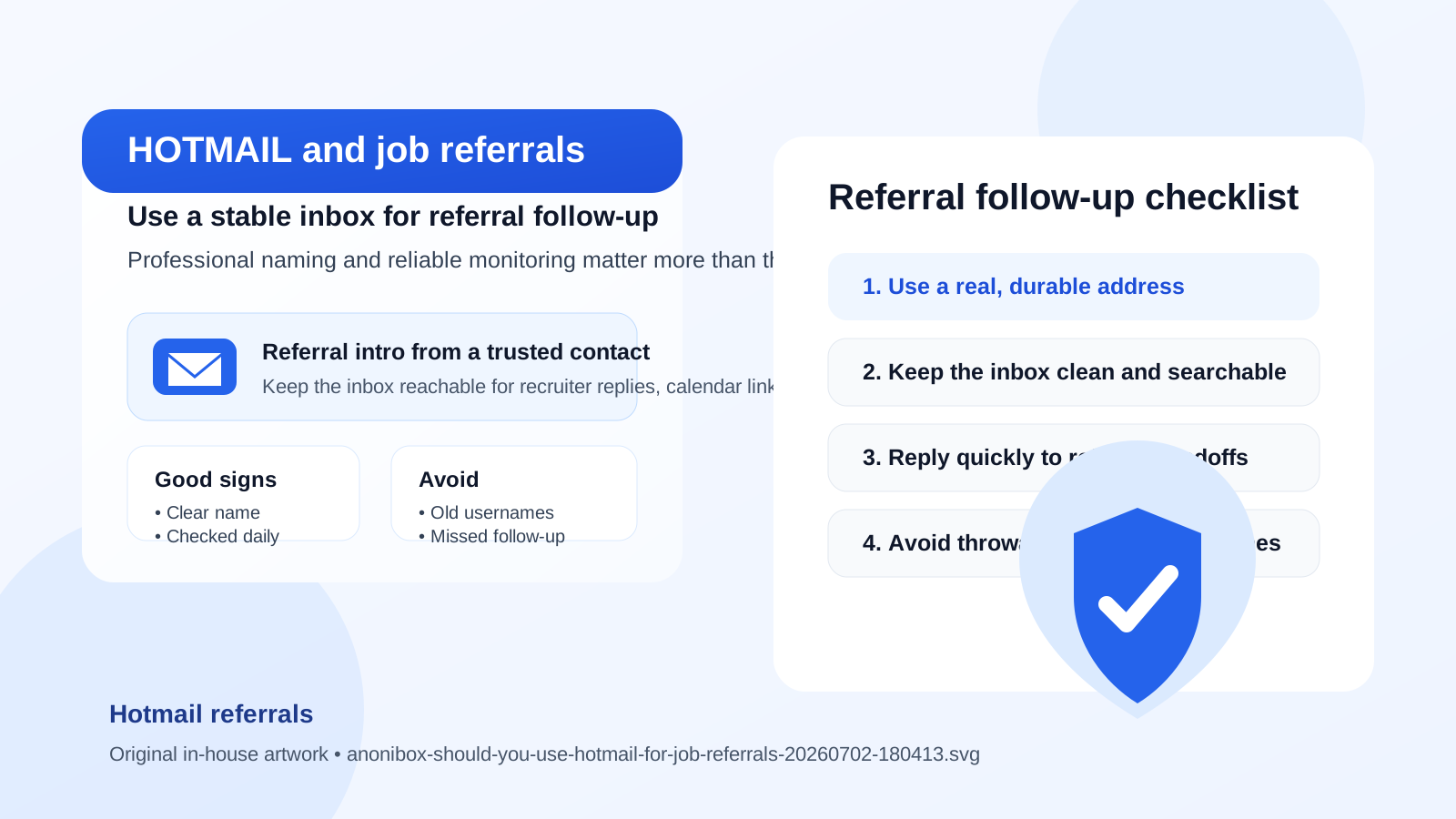
That is the practical answer behind searches for should you use hotmail for job referrals. Referrals are different from cold applications because someone is putting their name behind you. When a friend, former coworker, manager, or recruiter forwards your details, they are not just sharing contact information. They are lending trust. Because of that, the email address you attach to the referral matters a little more than it might in a random job-board submission.
The good news is that most employers are not rejecting people just because they use Hotmail. The bigger issues are whether the address looks normal, whether you respond quickly, and whether the inbox feels dependable enough for recruiter follow-up. A polished Hotmail address can work. A chaotic one can create doubt even when the referral itself is strong.
Why referrals are different from ordinary applications
In a normal application flow, a recruiter often evaluates your résumé first and your contact details second. With a referral, the order can feel reversed. Someone may mention you in an email, forward your résumé internally, or send your name to a hiring manager before you ever fill out the formal application. That means your contact details can become part of the first impression earlier in the process.
If the referred candidate uses a sensible address, this is usually a non-issue. If the email looks dated, cluttered, or unserious, it can distract from the recommendation. That does not mean Hotmail is automatically a bad choice. It means the way you use it matters.
When Hotmail is perfectly fine for job referrals
You have a clean, professional address
If your address is something close to your real name and easy to recognize, Hotmail is usually fine. Employers care more about clarity than prestige. An address that looks like a normal adult account is much easier to trust than one full of nicknames, random numbers, or old internet-era jokes.
You monitor the inbox closely
Referrals often move faster than cold applications. A recruiter may reply to the referring employee, copy you, and expect a response the same day. If you already check your hotmail inbox regularly and keep notifications sensible, it can work just as well as any other mainstream provider.
You want to keep referrals separate from your main personal inbox
Some job seekers use one address for personal life and another for career-related communication. That is often smart. If your hotmail account is your dedicated professional or job-search inbox, it may actually be a better referral address than your crowded everyday email.
Where using Hotmail can go wrong
1. The address itself looks unprofessional
This is the biggest risk, and it has almost nothing to do with hotmail as a brand. A clean address like firstname.lastname feels normal. An address that looks childish, confusing, or obviously ancient can make the referral feel less polished. When someone is sticking their neck out for you, avoid giving them an address that creates avoidable friction.
2. You treat the inbox like an archive instead of an active work channel
If your hotmail inbox is full of unread newsletters, old promo mail, and forgotten signups, important follow-up can get buried. Referrals depend on timing. Missing a scheduling email or delayed reply can make you look less interested than you actually are.
3. You use a throwaway or low-stability setup
Referrals are not a good place for disposable email habits. A referral can lead to screening calls, interview scheduling, document requests, and more than one round of follow-up. If the inbox may disappear, forward unreliably, or stop being monitored, it becomes a weak link in a process that depends on continuity.
4. The inbox is tied to weak recovery or device habits
If you use the account on old devices, rarely update recovery settings, or cannot quickly access it away from home, you raise the chance of missing something important. Referral-based opportunities sometimes move on short notice.
Does Hotmail hurt credibility with recruiters?
Usually, no. In most cases, recruiters care more about responsiveness and professionalism than the exact provider. Hotmail is familiar enough that it does not automatically create a red flag. What can hurt credibility is the overall presentation around it:
- a messy or unserious username
- slow replies
- missed scheduling emails
- an inbox that looks abandoned
- mixed signals between résumé, LinkedIn profile, and referral contact details
In other words, the provider is rarely the whole story. The email account becomes a problem only when it reflects poor organization or low trustworthiness.
How to make a Hotmail address safer and more professional for referrals
Use a name-based format if possible
If you still have an old or awkward username, consider using a better address for professional outreach. The best structure is simple, readable, and close to your real name.
Clean the inbox before you start networking
Create folders or rules if you need them. Star important messages. Archive noise. Referrals often generate quick back-and-forth communication, and you do not want that thread buried under years of random mail.
Check recovery settings
Make sure you can regain access to the account if something goes wrong. Update your recovery options and confirm you can log in from the devices you actually use during your search.
Turn on sensible security
A professional email account should not be easy to lose. Use a strong password and any reasonable account-protection features available to you. You do not need to make dramatic claims about perfect security, but basic account hygiene matters.
Reply like a professional
The inbox name is only part of the impression. The way you answer matters just as much. Short, timely, clear replies do more for your credibility than switching providers ever will.
Should you use a separate address for referrals instead?
Often, yes. A separate job-search or networking inbox can be useful if you want cleaner tracking, less personal clutter, and better privacy boundaries. For referrals specifically, though, the separate inbox still needs to be durable. This is not the place for a temporary email address that you might abandon after a week.
If you use a separate address, treat it like a real professional account: check it daily, keep it stable, and make sure it appears consistently across your résumé, portfolio, and LinkedIn profile when appropriate.
This is also where a tool like Anonibox fits naturally, but only in the right context. Anonibox can be helpful when you want a separate inbox for low-stakes research, anonymous browsing, or early-stage signups that may create spam. For a genuine referral, though, a stable long-term inbox is usually the better choice because referrals can keep producing follow-up well after the introduction.
When you should not use Hotmail for a referral
- Your address looks obviously unprofessional.
- You rarely check the inbox.
- The account has weak recovery or frequent login issues.
- You plan to abandon the address soon.
- You are mixing serious referral conversations with a chaotic personal inbox you do not manage well.
In those cases, the smarter move is not necessarily “switch away from Hotmail forever.” It is to choose a better managed professional inbox for this stage of your job search.
A practical referral workflow that works
- Choose one stable professional inbox. If Hotmail is that inbox, great. If not, use the one you can manage best.
- Make sure the address looks clean. Fix the presentation problem before the referral happens, not after.
- Give the same address to the person referring you. Consistency reduces confusion when they forward your résumé or make an introduction.
- Watch the inbox closely for a few days after the referral. Referral replies are often faster than cold-application replies.
- Respond quickly and clearly. The value of a referral drops if the candidate seems slow or hard to reach.
Quick checklist: should you use Hotmail for job referrals?
Use Hotmail if most of these are true:
- Your address looks professional.
- You can monitor it daily.
- You trust the account to remain accessible.
- You want a separate but stable inbox for career communication.
- You can respond quickly to referral-related follow-up.
Choose another inbox if most of these are true:
- The username feels dated or awkward.
- You often miss messages there.
- The account is overloaded with clutter.
- You only use it casually and do not trust it for important follow-up.
- You were thinking about using something temporary or disposable.
Final answer
Yes, you can use Hotmail for job referrals, and for many people it will be completely fine. The real test is not whether the provider is fashionable. It is whether the inbox looks professional, stays accessible, and supports fast follow-up after someone introduces you.
If your hotmail address is clean and well managed, it can work well for referrals. If it is messy, outdated, or unreliable, the better move is to use a more professional, stable address before the referral goes out. That way the attention stays on your qualifications and the strength of the recommendation, not on avoidable contact friction.