Usually no—Telegram should not be your main channel for receiving or managing a job offer.
It can be acceptable for a quick heads-up after you independently verify the employer, but the actual offer, deadlines, and documents are usually safer in email and official HR systems you can verify and reference later.
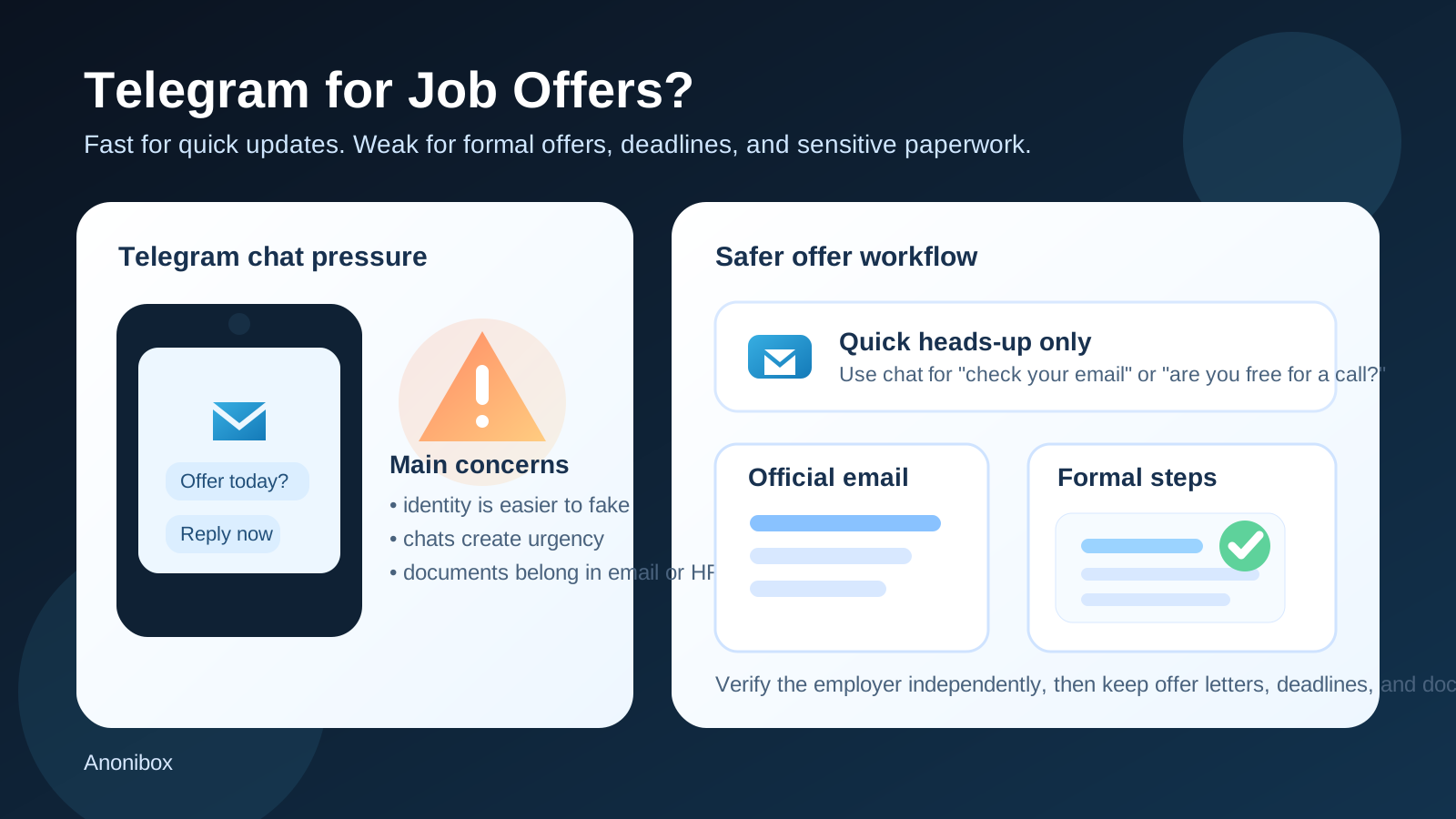
That is the practical answer behind searches for should you use telegram for job offers. Telegram is fast, informal, and common in some industries, so it is not shocking when a recruiter or founder wants to send a quick message there. The problem is that speed and familiarity can make a job offer feel legitimate before you have actually confirmed who is contacting you, what company they represent, and where the formal paperwork belongs.
Offer-stage communication is different from early recruiter outreach. By the time an employer is ready to make an offer, the details matter more: compensation, deadlines, revised terms, start dates, background-check steps, and onboarding instructions. That is exactly when a casual messaging app becomes a weaker default. Telegram can be fine as a side channel. It is usually a poor source of truth.
Why Telegram comes up at the offer stage at all
There are legitimate reasons Telegram appears in hiring. Some founders already live there. Some remote teams use it internally. Some international recruiters prefer it because candidates respond faster on chat than email. In crypto, startup, freelance, and cross-border hiring circles, Telegram may feel almost normal.
So a Telegram message about a job offer is not automatically fake. The real issue is that Telegram removes or weakens some of the trust signals candidates usually rely on. An email from a company domain, a formal calendar invite, and an HR portal all give you more context to verify. A chat handle and a profile photo do not.
Short answer: acceptable for coordination, weak for the actual offer
If a recruiter messages on Telegram to say, “Check your email, the written offer just went out,” that can be fine after you already know the employer is real. If they say, “Can you take a five-minute call in ten minutes?” that can also be reasonable.
Where Telegram becomes a bad default is when the whole offer process starts living there. Salary numbers sent only in chat, pressure to accept quickly through messages, requests for identity documents, or onboarding steps without a verifiable company email trail are all reasons to slow down.
Why job offers need better channels than interviews sometimes do
During interviews, a messaging app might be used for quick scheduling or a last-minute link change. At the offer stage, the stakes change. Now you may need a reliable record of:
- the verbal offer and the written offer
- the exact compensation package
- response deadlines
- revisions to title, location, or start date
- benefits summaries and policy documents
- background-check or onboarding instructions
That kind of information is easier to verify and easier to reference later when it comes through official channels. Telegram messages can be screenshotted, of course, but that is not the same as having a clean paper trail from a company domain or a verified hiring system.
Main risks of using Telegram for job offers
1. Identity is easier to fake
This is the biggest problem. Telegram display names, usernames, avatars, and bios are easy to copy. A scammer can claim to be a recruiter, reuse a company logo, and create urgency before you have much time to verify anything. A real offer should hold up when you check the company website, the recruiter’s LinkedIn profile, the careers page, and the sender’s official email address.
If the person contacting you cannot back the Telegram chat up with verifiable company details, treat that as a warning sign.
2. Telegram can expose more personal profile data than you want
Depending on your settings, Telegram may expose your phone number, username, profile photo, status details, or other contact signals. Even if the role is legitimate, you may not want every recruiter or staffing contact to have permanent access to your personal messaging space.
Job seekers often think carefully about using separate inboxes for applications because they want to reduce spam and keep privacy boundaries intact. The same logic applies here. If you are careful enough to protect your email trail, it makes little sense to open a personal chat channel too casually.
3. Chat apps create pressure and urgency
Telegram is built for fast interaction. That can be useful, but it can also lower your guard. A message that says “Offer approved, reply in 30 minutes” feels urgent in a way that email often does not. Scammers use that emotional speed on purpose. Even legitimate recruiters can accidentally create pressure that makes you respond before you review documents carefully.
For job offers, a little friction is healthy. You want enough distance to read the details, compare the terms, and think clearly.
4. Sensitive documents do not belong in casual chat
Offer-stage communication can eventually involve IDs, tax forms, payroll details, background-check links, signed letters, home addresses, or other sensitive data. Telegram is usually the wrong place to normalize sending any of that. A real employer may use chat for convenience, but important paperwork should move to a more formal system quickly.
5. Record-keeping is weaker
Even if both sides are real and well-meaning, Telegram is not ideal for maintaining a clean offer record. When was the deadline? Which version of the compensation details was final? Was the signed letter attached in chat, emailed, or uploaded to a portal? The more the process sprawls across casual messages, the easier it is to lose clarity.
When Telegram may be reasonable
There are situations where Telegram can be acceptable enough to use carefully:
- the recruiter first contacted you from a verifiable company email address
- you already completed interviews through normal channels
- the company is in a sector or region where Telegram use is genuinely common
- the chat is only for quick coordination, not for the official offer itself
- you independently confirmed the company and role before responding
In those cases, Telegram is still best treated as a convenience layer, not the main container for the entire offer process.
What is fine to handle on Telegram
- confirming that the recruiter is about to call
- quick scheduling adjustments
- a reminder to check your email or portal
- a simple acknowledgement that you received the written offer elsewhere
Those are narrow, low-complexity tasks. They do not require Telegram to become the formal record.
What should usually stay off Telegram
- the only copy of the written offer letter
- detailed compensation breakdowns with no email follow-up
- passport, ID, tax, or payroll information
- background-check links you have not independently verified
- pressure to sign or accept immediately inside chat
- software downloads or attachments from an unverified contact
If an employer insists that all of this must happen in Telegram and resists moving the formal parts to email or a company system, your caution should go up, not down.
Best practices if you receive a job-offer message on Telegram
Verify the employer outside Telegram
Look up the company website, careers page, recruiter profile, and official email domain. If necessary, call the company through a public number and ask whether the recruiter is real.
Ask for the formal offer in email or the HR portal
If the offer is legitimate, this request should not be controversial. Serious employers understand that candidates want a clean record.
Do not send sensitive documents in chat by default
Move identity and onboarding steps into whatever official workflow the company uses. If they do not have one, ask questions before sending anything.
Slow down if the tone becomes pushy
Pressure is not proof of fraud, but it is one of the most common ingredients in job scams. If someone is rushing you to accept before you can verify details, that matters.
Keep your own notes outside the app
If the recruiter shares a deadline, salary number, or promised next step verbally or in chat, write it down in your own records. Do not rely on memory and do not rely on a chat thread alone.
How Telegram fits into a broader privacy strategy
Privacy-minded job seekers often use different contact layers for different stages. A tool like Anonibox can help at the noisy front edge of the funnel, where you are testing job boards, gated downloads, or low-trust signup forms and do not want your primary inbox soaked in recruiter spam forever.
But once the process becomes real—especially once you reach interviews and offers—you usually want more stability, not less. That means a dependable email address you control, a professional phone setup, and formal records you can return to later. Telegram may still have a role, but it should not replace the channels that are better suited to important decisions.
Red flags that make Telegram a much worse idea
- the recruiter refuses to use a company email address
- the company has no credible website or verifiable job listing
- you are promised a job with almost no real interview process
- you are asked to pay for equipment, training, or processing fees
- you are pressured to share ID or bank details too early
- the recruiter wants to keep everything off email for no good reason
Any one of those may justify slowing the process down. Several at once are a strong reason to step back completely.
A quick decision checklist
- Did I verify the employer outside Telegram?
- Do I have a company-domain email trail for the formal parts?
- Am I being asked to share sensitive data in chat?
- Would I feel comfortable referencing this chat later if terms changed?
- Is Telegram only a convenience layer, or is it becoming the whole offer process?
If Telegram is just a heads-up channel and everything important is backed by official communication, it can be workable. If Telegram is the only place the offer exists, that is usually not a good sign.
Final answer
Usually no—Telegram is not the best primary channel for job offers. It can be useful for quick coordination after you independently verify the employer, but formal offer letters, deadlines, documents, and onboarding details are usually better kept in email and official company systems.
The safest approach is simple: verify first, use chat sparingly, and keep the real offer trail somewhere more formal. That gives you the speed of Telegram when it is genuinely helpful without letting convenience override privacy, verification, and common sense.