LinkedIn Messages can work for quick offer-stage coordination after you verify the employer, but they are a poor place to keep the only copy of your offer letter, compensation details, deadlines, or onboarding instructions.
For most job seekers, the safest approach is simple: let LinkedIn support the conversation, then move the actual offer into company email or the employer’s hiring system as soon as possible.
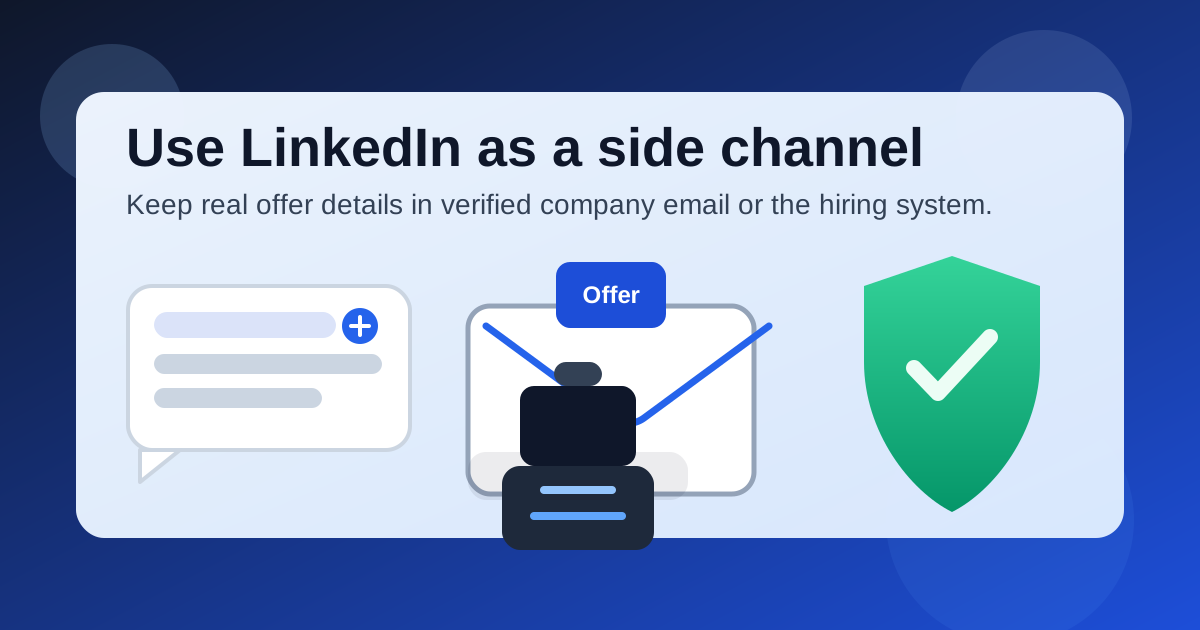
That is the real answer behind the question should you use LinkedIn Messages for job offers. LinkedIn is one of the most normal places for recruiters and hiring managers to contact candidates. Because it feels professional, it is easy to assume that a message there is automatically safe enough for sensitive offer-stage details. Sometimes it is fine as a side channel. It is rarely the best place to keep the whole offer process.
Offer-stage communication is different from casual networking or even early interview scheduling. By the time an employer is talking about salary, deadlines, background checks, start dates, or equipment, you need a channel that is easy to verify, easy to search, and easy to save. LinkedIn Messages can help you stay responsive, but they should not replace a formal record.
Why this question comes up in the first place
LinkedIn sits in an awkward middle ground. It is not a random social app, but it is not a formal hiring portal either. A lot of real recruiting starts there. You may have already used LinkedIn to connect with a recruiter, respond to outreach, confirm interview availability, or ask clarifying questions about a role. So when the process moves toward an offer, it can feel natural for the conversation to continue in the same thread.
There are also practical reasons people allow it:
- It is fast and familiar.
- You can see the recruiter’s profile and company affiliation at a glance.
- You may not want to share your personal phone number immediately.
- Some hiring managers use LinkedIn more actively than email during busy stretches.
None of that is inherently bad. The risk comes from mistaking a convenient communication layer for a trustworthy system of record.
Short answer: useful for coordination, weak as the main offer channel
If a verified recruiter sends a quick LinkedIn message saying, “We just emailed your formal offer — let me know if you have questions,” that is usually fine. If someone wants to negotiate compensation, collect personal information, or rush you into a decision entirely inside LinkedIn DMs, that is where things start to look shaky.
LinkedIn Messages are best used for brief updates, quick confirmations, and low-stakes follow-up after the employer has already established a formal channel. They are much weaker when used as the only place where the real offer lives.
When LinkedIn Messages are reasonable at the offer stage
There are situations where LinkedIn is a perfectly normal supporting channel:
- You already know the role is real. The company, recruiter, and interview process all check out independently.
- The formal offer exists elsewhere. The official letter and key details are also in company email or a secure hiring portal.
- The messages are brief and practical. Things like “Did you receive the letter?” or “Can we talk tomorrow?” are low risk.
- The employer is not avoiding normal channels. They are willing to email, schedule calls, and document important details properly.
- You are using LinkedIn for continuity, not secrecy. The message thread supports the process instead of replacing it.
In that setup, LinkedIn can be convenient. It keeps communication moving without carrying more trust than it deserves.
Why LinkedIn Messages become risky for job offers
1. A professional-looking profile is not the same as verification
LinkedIn lowers your guard because it looks like a business environment. A real name, a company logo, a polished headshot, and a credible tone can make a fake or misleading contact feel safe. Scammers know this. Some clone real recruiters. Others create vague agency profiles and rely on urgency to keep candidates from checking carefully.
If an offer-related message appears in LinkedIn, do not treat the platform itself as proof. The person still needs to be verified outside the message thread.
2. Offer terms are too important for a flimsy paper trail
Job offers often involve details you need to review more than once: compensation, title, reporting structure, start date, contingencies, benefits timing, deadlines, and sometimes negotiated revisions. DMs are a bad home for that kind of information. Threads get long. Messages get buried. Important details are easier to miss or misremember.
Email is not perfect, but it is far better for archiving, forwarding, comparing versions, and keeping the formal record together.
3. LinkedIn exposes more of your profile than plain email does
When you interact in LinkedIn Messages, the other side is not just seeing an address. They are seeing your profile, your work history, your visible activity, your network cues, and sometimes signals about how actively you are job hunting. That may be fine in a legitimate process, but it is still more exposure than a simple email conversation.
If you are being cautious, discreet, or selective about your job search, that extra visibility matters.
4. Fast chat can create artificial pressure
Offer-stage conversations already carry emotion. People worry about losing leverage, missing deadlines, or mishandling a negotiation. Chat-based platforms amplify that pressure because they feel immediate. A rushed “Can you confirm tonight?” lands differently in a DM than in a formal email thread with attached documents.
That speed can be useful for logistics. It can also push you to make decisions before you have verified the sender, reviewed the terms carefully, or asked for a formal copy of what you are agreeing to.
What should never live only in LinkedIn Messages
A simple rule helps here: if the information affects your legal, financial, or onboarding record, it should exist somewhere more formal than LinkedIn.
That includes:
- the actual offer letter
- salary, bonus, equity, or commission terms
- start date commitments
- background-check instructions
- identity documents
- tax, payroll, or banking details
- benefits enrollment instructions
- equipment or shipping paperwork
If an employer is real, there should be no problem sending those items through a company domain or secure portal.
How to verify a LinkedIn offer message before you trust it
Check the recruiter or hiring manager independently
Look beyond the message itself. Does the person appear on the company website, a credible staff page, or a long-standing LinkedIn history that matches the employer? Do their details line up with the interview process you already experienced?
Confirm the role and context
A real offer should connect cleanly to a real hiring flow. You should be able to trace it back to interviews, assignments, or a known position. If the offer seems disconnected from anything you actually applied for, slow down.
Ask for the formal offer in company email
This is the cleanest test. A legitimate employer should be able to send the offer from an official domain or direct you to the normal hiring system. If they avoid that request, you have learned something important.
Compare names, domains, and timing
If the LinkedIn contact says they work for a company, the email domain, scheduling links, and document flow should match that claim. Sloppy mismatches do happen in recruiting, but they should be explainable.
A safer way to use LinkedIn Messages during the offer process
- Acknowledge the message briefly. You can stay polite and responsive without committing to the platform as your main record.
- Request the formal documents elsewhere. Ask for the offer letter and any sensitive next steps by company email or through the employer’s official system.
- Keep your notes outside LinkedIn. Save the recruiter name, company, offer date, response deadline, and any promised changes in your own records.
- Review before responding under pressure. A DM is not a reason to skip careful reading or negotiation prep.
- Share only what is necessary. Do not upload identity documents or payroll information just because the conversation feels professional.
This gives you the convenience of LinkedIn without turning it into the foundation of a serious employment decision.
What about LinkedIn InMail?
InMail can feel more official because it often comes from recruiters, premium accounts, or people tied to a real hiring function. That helps a little, but it does not change the core rule. InMail is still best treated as an opening or supporting channel, not as the final home for offer documents and sensitive onboarding details.
Think of it as a better front door, not a better filing cabinet.
When a separate inbox still helps
Many job seekers use a separate email strategy to keep recruiter traffic and job-board clutter away from their main personal inbox. That can be smart, especially during early-stage exploration, lead forms, talent-community signups, or wide outbound applications. A privacy-first tool like Anonibox can help you keep that early noise compartmentalized.
But once an employer is making a real offer, stability matters more than disposable convenience. Offer letters, negotiation follow-up, and onboarding steps belong in an address you control long term and check reliably. The goal is not maximum throwaway distance at every stage. The goal is matching the tool to the trust level.
Red flags that mean LinkedIn should not stay the primary channel
- The sender refuses to move the process to company email.
- The offer appears before a normal interview or evaluation process.
- You are pushed to act immediately without reviewing formal documents.
- You are asked for personal documents, banking details, or tax information in chat.
- The role details are vague, inconsistent, or hard to verify independently.
- The contact tries to move you from LinkedIn straight to WhatsApp, Telegram, or another informal channel without explanation.
- The profile looks thin, recently created, or strangely disconnected from the employer.
Any one of these may have an innocent explanation. Several together are a strong reason to pause.
A quick decision checklist
Before you rely on LinkedIn Messages for any offer-related step, ask yourself:
- Have I independently verified the recruiter or hiring manager?
- Do I have the actual offer in company email or an official portal?
- Am I using LinkedIn only for coordination rather than as the sole record?
- Would I be comfortable if this exact information were buried in a message thread later?
- Am I being asked to share anything sensitive before the formal process is clear?
If the answers are mostly strong, LinkedIn is probably serving the right limited role. If not, the platform is carrying too much of the process.
Final answer
Yes, you can use LinkedIn Messages for job offers in a limited way — but only after you verify the employer and only if the real offer exists outside the chat. LinkedIn is useful for quick clarification and timing. It is not a strong place to store the only version of an offer letter, compensation terms, or onboarding instructions.
The smartest move is to treat LinkedIn as a supporting channel, not the official home of the offer. That keeps you responsive without giving up the verification, paper trail, and control that offer-stage decisions deserve.