Usually no—Discord should not be your main channel for receiving or managing a job offer.
It can be acceptable for a quick heads-up after you independently verify the employer, but the actual offer, deadlines, and documents are usually safer in email and official HR systems you can verify and reference later.
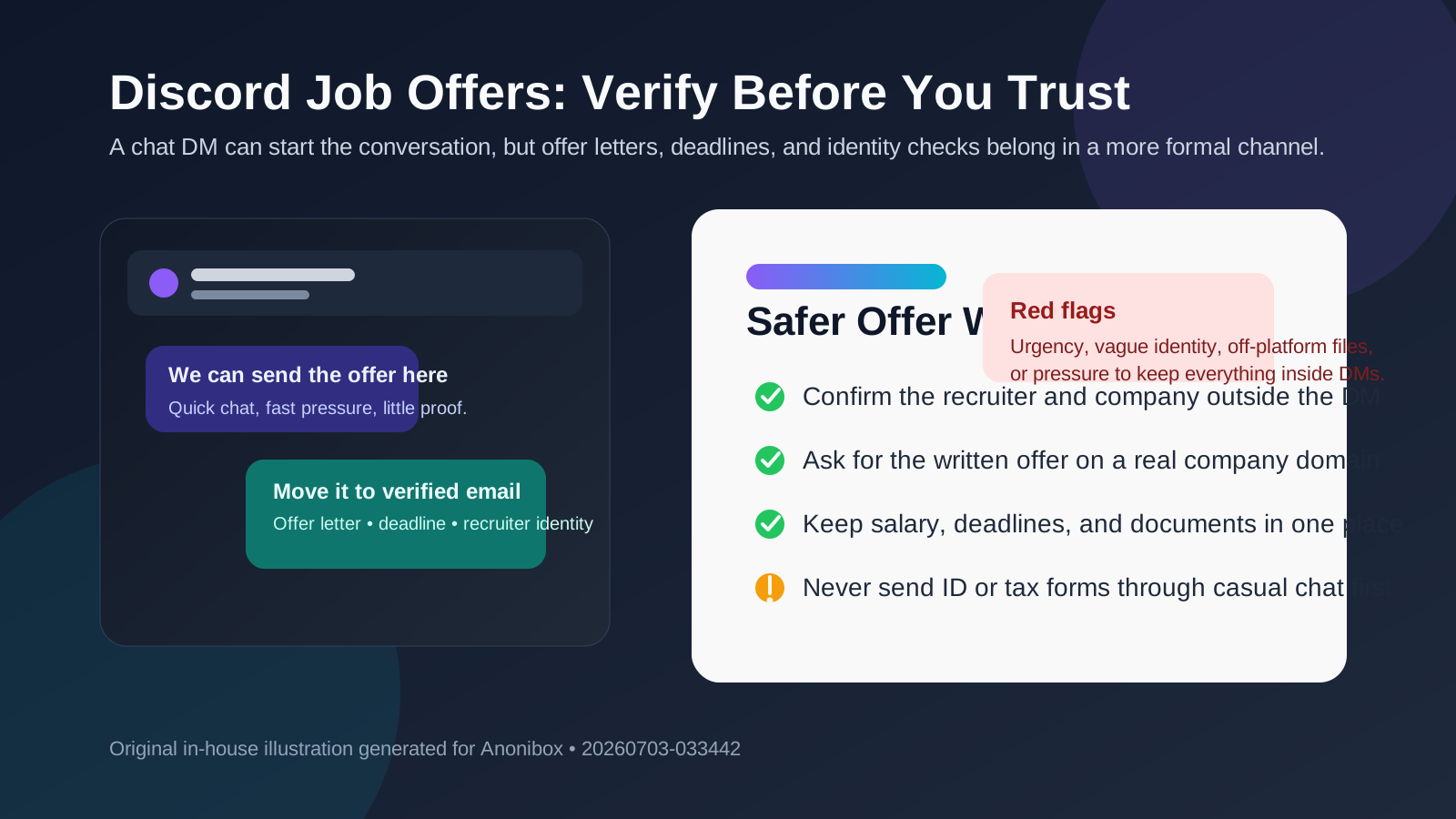
That is the practical answer behind searches for should you use Discord for job offers. Discord is fast, familiar, and common in online communities, gaming circles, startup groups, creator spaces, and some remote-first teams. Because of that, it is not shocking when a recruiter, founder, hiring manager, or community moderator first reaches out there. The problem is that a real job offer is the point in the hiring process where details matter most, and Discord is not built to be your safest source of truth for those details.
An offer stage is not just a casual conversation. It usually involves compensation, deadlines, revised terms, start dates, paperwork, references, background checks, or onboarding steps. When those details live only in a casual chat thread, it becomes easier to miss something, harder to verify who sent it, and more likely that pressure or confusion works against you. Discord can be a side channel. It is usually a weak primary channel.
Why Discord comes up during job offers at all
There are real situations where Discord shows up late in hiring:
- You found the role through a community server, open-source project, or creator network.
- The company is small and informal, so the founder uses the same tools they already use with the community.
- A recruiter or hiring lead wants to send a quick heads-up before the formal paperwork is ready.
- You have already spent part of the interview process in Discord voice or direct messages.
None of that automatically means the opportunity is fake. Some legitimate teams really do build relationships in community channels. But legitimate interest does not remove the need for verification. If anything, a real employer should understand why you want the formal offer itself moved into a channel with clearer identity, better records, and less ambiguity.
What Discord is okay for at the offer stage
Discord can still be useful for a few things:
- A quick message that says an offer is coming soon
- Scheduling a call to discuss terms
- Answering a small follow-up question after you already verified the employer
- Pointing you to the official email, HR portal, or signed document platform where the real offer lives
That is very different from using Discord as the place where the entire offer lives. A short heads-up is fine. A salary number in a DM is not enough. A disappearing or buried message thread is not enough. A file from an unverified account is definitely not enough.
Why Discord is risky as the primary offer channel
Identity is easier to fake
Discord usernames, profile photos, server nicknames, and direct messages can look convincing without proving much. A scammer can imitate a recruiter name, copy branding, or speak confidently about a role you really applied for. If you are excited about an offer, that confidence can feel like proof when it is not.
Important details get scattered
Offer-stage communication often involves a lot of moving parts: compensation, benefits summaries, deadline extensions, revised start dates, equipment questions, or onboarding forms. Discord threads can become fragmented fast, especially if some of the conversation happened in a server, some in direct messages, and some in voice chat. That makes it harder to review exactly what was promised.
Pressure tactics work better in chat
Scammers and sloppy employers both benefit from speed. A message like “We need your answer tonight” or “Send your details here now so we can finalize everything” feels more urgent in a chat app than in a formal email chain. Discord’s pace can push you to respond before you verify.
Sensitive files do not belong in casual DMs first
Real offers can lead to sensitive next steps: identity documents, tax forms, bank information, background-check details, or home-address confirmation. Those are exactly the things you should not send casually to an unverified Discord account just because the conversation feels familiar.
Your account may mix personal and professional worlds
Many people use Discord for friends, hobbies, gaming, or communities that have nothing to do with work. That can blur boundaries. Even if a legitimate recruiter messages you there, it may not be the place you want salary negotiations, contract terms, or onboarding instructions mixed into your normal personal notifications.
What a real job offer should include somewhere more formal
A legitimate job offer does not have to begin formally, but it should become formal quickly. At minimum, you should expect the official version of the offer to move into a better channel such as:
- a company-domain email address
- an official HR or recruiting platform
- a document-signing system you can verify independently
- a scheduled call that is then followed by written confirmation
The written record should clearly state the employer, the role, compensation or pay structure where appropriate, expected start timing, and any deadlines or next steps. If the person offering you the job resists putting the details somewhere verifiable, that is a problem.
A safer workflow if someone sends a job offer on Discord
1. Slow the process down
You do not need to accept or share sensitive information just because a message arrived quickly. Thank them, express interest, and ask for the official written offer by email or through the company’s normal recruiting workflow.
2. Verify the company independently
Do not rely on the Discord profile alone. Check the company website, the careers page, the recruiter’s LinkedIn profile if appropriate, and any prior interview emails you already received. If the company is real, the contact identity should connect to something outside the chat app.
3. Match the offer to the process you already had
Ask yourself whether this message fits the hiring path so far. Did you actually interview with this company? Did names, dates, and role details stay consistent? Is the pay wildly different from what was discussed? Sudden mismatches matter.
4. Move documents to email or an official system
If the employer is legitimate, the next step should be easy: “Please send the written offer to my email” or “Please share the formal paperwork through your HR platform.” Reasonable employers do this every day.
5. Keep your records organized
Save the official offer, deadline, and onboarding instructions in one place you control. This is where a stable, monitored inbox matters. If you used a separate inbox strategy earlier in the job search to reduce spam or protect your main address, make sure the offer-stage address is still reliable and checked often. Anonibox can be useful for separating early public-facing signup noise from your main inbox, but final offer handling should stay in an address you can keep, monitor, and reference without interruption.
Red flags that make a Discord offer especially suspicious
- The sender refuses to move the conversation to a company-domain email.
- The offer arrives before any real interview or evaluation process.
- You are asked to pay for equipment, software, training, or “verification.”
- You are pushed to send identity documents or banking information directly in chat.
- The company name, website, or recruiter identity cannot be verified independently.
- The salary is unusually high for very little scrutiny.
- You are told to keep everything inside Discord and not use other channels.
Any one of those signs deserves caution. Several together should make you stop completely until you verify the situation.
When Discord might be acceptable anyway
There are narrow cases where Discord is a reasonable secondary channel. For example, maybe you joined a niche developer community, interviewed with a small team you already know, and the founder pings you there to say, “Good news — offer coming to your email in 10 minutes.” That is fine. The issue is not the ping itself. The issue is whether the real offer becomes anchored to a verifiable written record outside the chat.
In other words, Discord can be the knock on the door. It should not usually be the filing cabinet.
Quick checklist: should you trust a Discord job offer message?
- Can you verify the employer outside Discord?
- Did the role and hiring process already exist before this DM?
- Will they send the official offer through email or a real HR system?
- Are you being asked for sensitive information too early?
- Do the compensation, deadline, and next steps make sense?
- Would this still look legitimate if you removed the urgency from the conversation?
If the answer to several of those is no, treat the situation as risky until proven otherwise.
Final answer: should you use Discord for job offers?
Usually no. Discord can be fine for a quick heads-up or a light follow-up after you independently verify the employer, but it is usually the wrong place for the actual offer, the official terms, and any sensitive onboarding details.
The safest approach is simple: let Discord start the conversation if it must, then move the offer itself to a formal, verifiable channel as quickly as possible. That gives you clearer records, better privacy, and far less room for scams, misunderstandings, or pressure tactics at the moment when the details matter most.