Telegram can be acceptable for a low-stakes job referral if you already trust the person, verify who they are, and move important follow-up to email or another stable channel quickly.
It is usually a poor primary channel for unknown contacts, sensitive documents, or referral conversations where you need clear identity, professionalism, and a reliable paper trail.
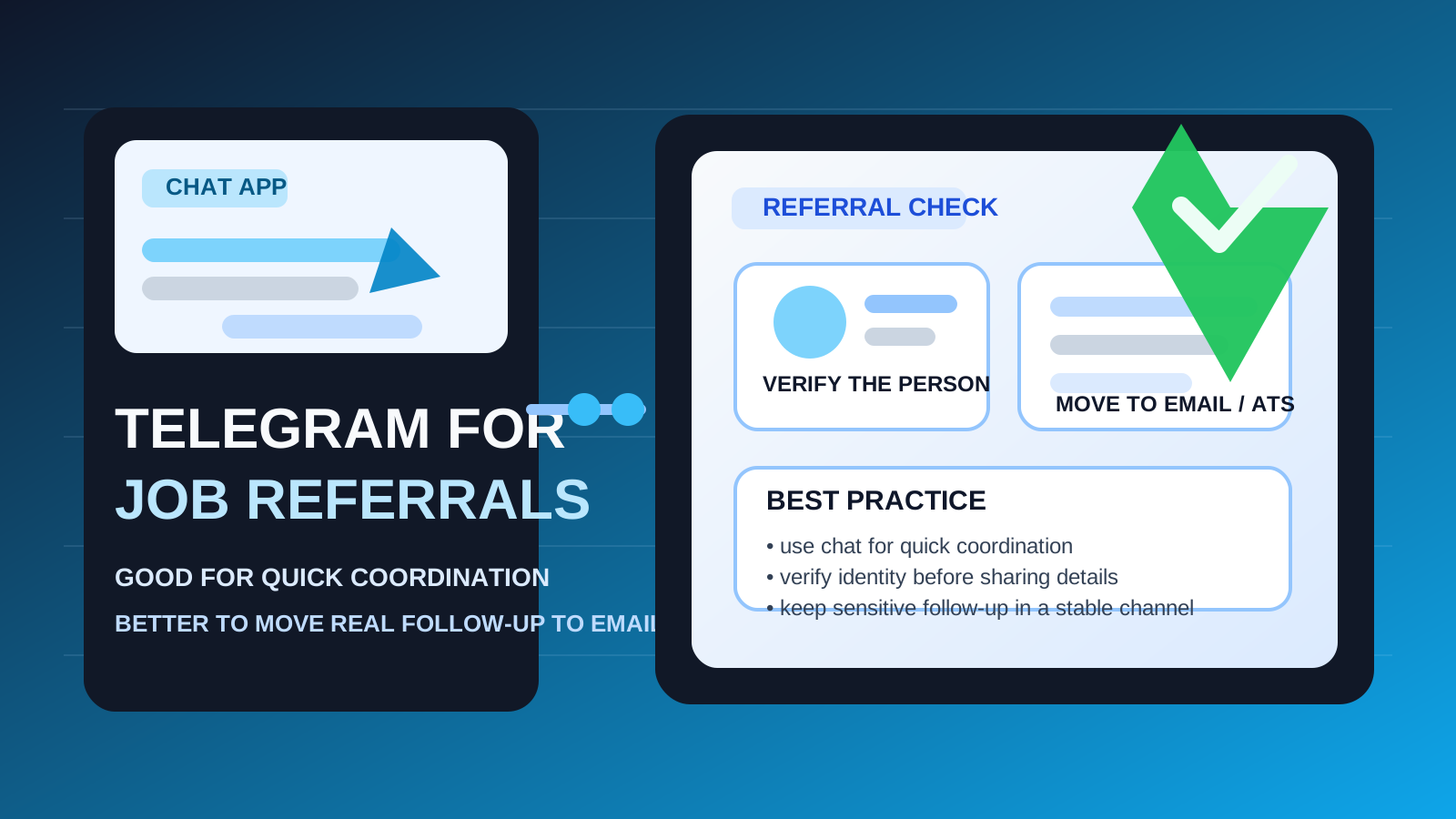
That is the practical answer behind the question should you use Telegram for job referrals. People often get referrals through communities, founders, alumni groups, contractors, or friends-of-friends, and many of those conversations start in messaging apps rather than formal email. Telegram is fast, familiar, and easy to use across devices, so it is not surprising when someone says, “Message me there and I’ll refer you.”
But speed is not the same as trust. A referral is valuable because it connects your name to another person’s credibility. If the channel makes identity hard to verify, encourages rushed chatting, or keeps everything inside an informal thread, the referral can become less useful and sometimes riskier. The best approach is to treat Telegram as a possible coordination tool, not automatically as the best place to handle the whole process.
Short answer: yes for light coordination, no for the whole referral workflow
If a real person you know says Telegram is the easiest place to coordinate, using it briefly is usually fine. You can confirm interest, share a public profile link, ask which role they mean, and arrange the next step. That part is low risk.
Where Telegram becomes weaker is when the thread turns into the main record for your job search. Referrals often lead to résumé sharing, recruiter introductions, scheduling, role details, and follow-up questions. Those steps usually benefit from a more professional and durable channel, especially if you do not know the person well.
Why people use Telegram for job referrals in the first place
There are understandable reasons this happens. Telegram is common in startup circles, online communities, remote-work groups, crypto communities, and international networking spaces. A person may genuinely prefer it because it feels faster than email and less formal than LinkedIn.
For referrals, Telegram can be handy when:
- someone is introducing you informally and only needs a quick way to confirm your interest
- you are already part of a trusted community where members frequently connect people to openings
- the referral is time-sensitive and the person wants a quick response before sending your name internally
- the next step is simple, like “send me your LinkedIn URL” or “which role are you applying for?”
Used that way, Telegram is basically a lightweight bridge. The problem starts when people confuse a convenient bridge with a strong foundation.
Main privacy and trust risks
1. Identity is not always easy to verify
A referral only helps if the person is who they say they are. On Telegram, usernames, profile photos, and display names can look convincing without actually proving much. If someone claims they work at a company or can refer you internally, you still need to verify that independently.
This matters even more when the conversation starts from a group chat, channel, or forwarded contact. A legitimate-seeming profile is not the same thing as a legitimate employee or recruiter.
2. Informal chat can make you overshare
People drop their guard in chat apps. They reply faster, write shorter messages, and often share files or personal details without the same caution they would use in email. That can lead to sending a résumé, phone number, location details, or other personal context before you have confirmed whether the referral is real or useful.
3. Telegram is weak as a professional record
Referrals work best when there is a clear handoff: who referred you, which role they meant, what next step they suggested, and how the company wants to continue. A chat thread can handle that in theory, but it is not the strongest place to preserve a clean professional trail over time.
Email or LinkedIn messages are usually easier to search later, easier to forward internally, and easier to tie to a formal application process.
4. Scammers love the urgency of messaging apps
Telegram is fast, and that speed can be useful, but it also creates pressure. Scammy referral messages often lean on urgency: “apply now,” “send your résumé immediately,” “message this hiring manager now,” or “we can fast-track you today.” The faster the thread moves, the less time you spend verifying whether the opportunity is real.
5. Your personal boundaries can get messy
If you use Telegram with friends, hobby groups, or public communities, job-search conversations can blend into your private life. That may not be dangerous on its own, but it can make your search feel noisier and less controlled than it needs to be.
When Telegram can make sense for a job referral
Telegram is most reasonable when the referral contact is already low-risk and the conversation stays narrow.
- You already know the person in real life or through a strong mutual connection.
- You can verify their role through a company site, LinkedIn, or another credible source.
- The message is only coordinating the intro, not replacing the formal application process.
- You are not sending sensitive documents or personal identifiers through the chat.
- The conversation will move to email, LinkedIn, or the employer’s application system quickly.
In that scenario, Telegram is just a convenient handshake before the real process starts somewhere more stable.
When you should avoid it
You should be much more cautious if the referral comes from a stranger, a vague group contact, or someone who refuses to identify themselves clearly.
- The person will not verify who they are.
- They will not point you to a real company role or careers page.
- They want your résumé, phone number, or other details before basic verification.
- They push you away from email or LinkedIn for no good reason.
- The “referral” sounds more like a shortcut to a guaranteed job than a normal introduction.
That last one matters. Real referrals can improve your chances, but they do not usually come with promises of instant hiring, payment requests, or bizarre urgency.
A safer workflow if someone wants to refer you on Telegram
1. Verify the person first
Before you send anything useful, confirm the person exists in a way that makes sense. Look for a company page, staff listing, LinkedIn profile, or another trace that connects them to the employer they mention.
2. Keep the first exchange minimal
A short message is enough: confirm the role, ask how they know about it, and ask what the proper next step is. You do not need to dump your entire job story into a chat right away.
3. Move to a stronger channel for real follow-up
If the referral looks legitimate, ask to continue through company email, LinkedIn, or the official application link. That protects you in two ways: it creates a cleaner record and it makes impersonation much harder.
4. Share only what the stage actually requires
If all they need is your LinkedIn URL or résumé, send only that. Do not volunteer more than necessary. Referral coordination is not a reason to send ID documents, financial details, or anything that belongs much later in a verified hiring process.
5. Use separate job-search contact details when helpful
If the referral comes from a broad community or a semi-public networking space, it can be smart to use a separate email for follow-up. That way, if the contact turns out to be noisy, low-quality, or overly persistent, your main inbox does not become the long-term landing zone.
This is one place Anonibox can fit naturally: not as a magic privacy shield, but as a practical way to keep early-stage referral follow-up separate from your primary inbox while you decide whether the opportunity is worth deeper engagement.
What Telegram is good at in this context
Telegram is not useless here. It does a few things well:
- quick replies when a referrer needs to know whether you are interested
- simple coordination for “send me the role link” or “I’ll introduce you after lunch” moments
- community networking in groups where people genuinely share openings and introductions
If you keep it within that lane, Telegram can be practical. Problems show up when people try to make it carry the entire process.
What better alternatives usually look like
For most job referrals, these channels are stronger once the conversation becomes real:
- LinkedIn messages: useful when professional identity matters and you want visible context.
- Company email: usually the cleanest option for referral details, résumés, and formal next steps.
- The official careers page: best when the referrer simply wants you to apply and then mention your name internally.
- A phone call: sometimes useful if the person knows you well and the conversation is more nuanced.
Telegram can still be part of the path, but it rarely needs to be the center of it.
Red flags that mean you should slow down
- The contact claims they can guarantee a job if you act fast.
- The company name is vague, hidden, or inconsistent.
- You are asked to move money, pay a fee, or buy anything.
- You are told not to use the official application process.
- The person becomes evasive when you ask basic verification questions.
- The “referral” turns into pressure to join another app, channel, or off-platform scheme immediately.
A legitimate referrer may prefer convenience, but they should not be allergic to clarity.
A quick decision checklist
Before using Telegram for a referral, ask yourself:
- Do I know who this person is, or can I verify them quickly?
- Is Telegram just for coordination, or is it becoming the whole hiring channel?
- Would I feel comfortable if this exact conversation were my only record later?
- Am I sharing only what is necessary for this stage?
- Would email, LinkedIn, or the official application route make more sense right now?
If those answers feel solid, a brief Telegram exchange is probably fine. If several answers feel shaky, step back and move the conversation into a stronger channel.
Final answer
So, should you use Telegram for job referrals? Sometimes, yes — but mostly as a coordination tool, not as the permanent home for the referral process.
If the contact is real, the role is clear, and the next step is simply confirming interest or sharing a link, Telegram can work. But if identity is unclear, the conversation gets sensitive, or you need a more professional record, move quickly to email, LinkedIn, or the employer’s formal process. That gives you the convenience of fast messaging without letting a casual chat channel control an important part of your job search.