Instagram DMs can work for a warm referral intro, but they are usually a poor place to handle the full referral process.
Usually only as the opener — if someone is offering a job referral through Instagram, move the real details to email, LinkedIn, or the employer’s application flow as soon as possible.
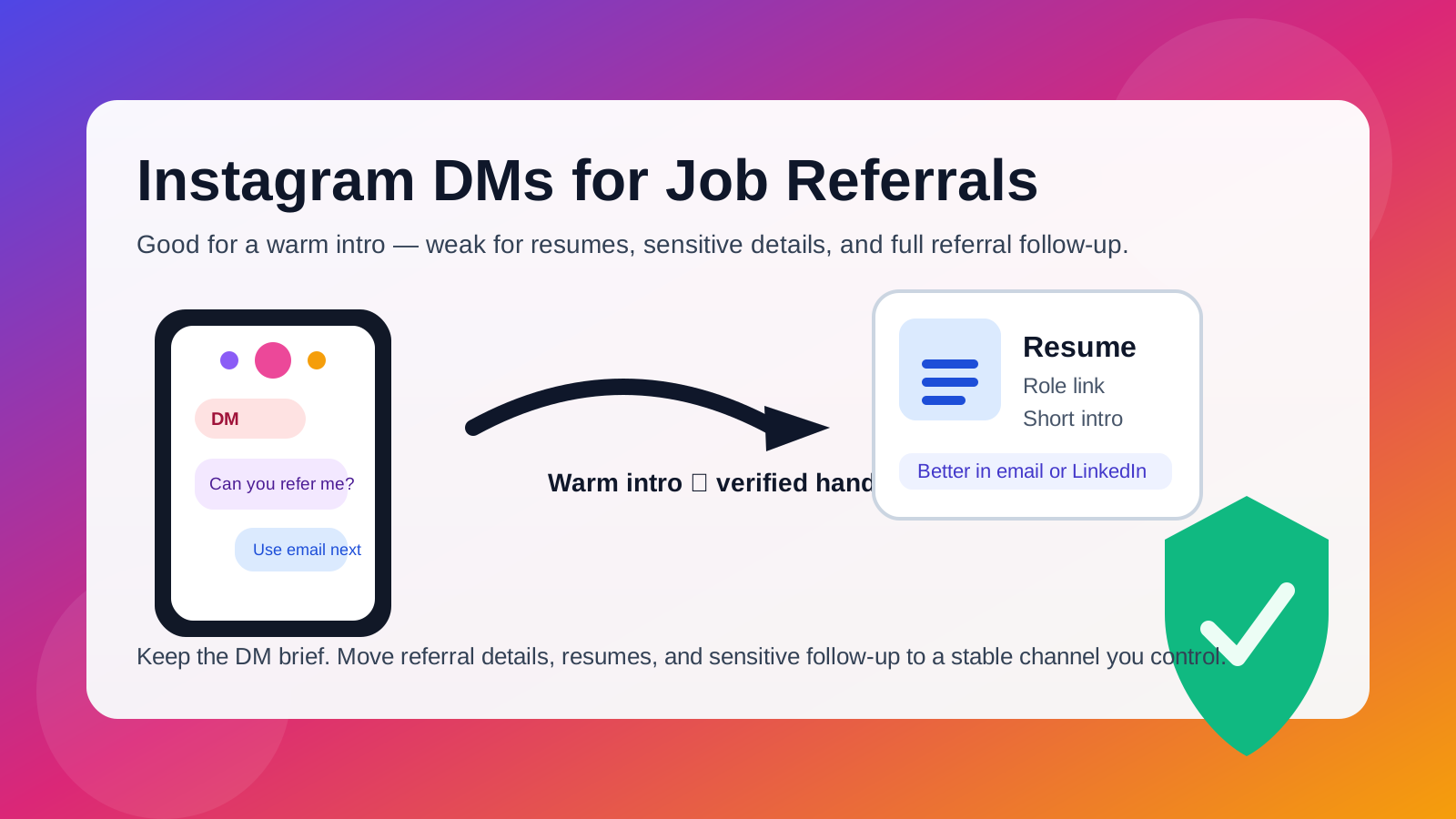
That is the practical answer behind searches for should you use instagram dms for job referrals. Instagram can be useful for first contact in creator work, hospitality, beauty, fitness, local retail, community-based hiring, and other spaces where people genuinely network through social platforms. But a referral is not just a casual chat. A real referral usually involves context about the role, a resume or portfolio, follow-up timing, and some level of trust that the person helping you is real and well placed to help.
Instagram DMs are not great at that part. They blur your personal and professional identity, make recordkeeping messy, and create a space where fake helpers or low-quality outreach can look more legitimate than they really are. A good referral workflow is not about avoiding Instagram entirely. It is about using Instagram for the one thing it does reasonably well — opening the conversation — and then moving the rest somewhere cleaner.
Why this question comes up in the first place
Not every job referral starts in a corporate setting. Plenty of people hear about openings through creators, niche communities, small business owners, alumni, former coworkers, or industry contacts who happen to be easiest to reach on Instagram. If someone has been following your work, liking your portfolio posts, or seeing your content in a local scene, a DM can feel natural.
That is especially true when the opportunity is tied to public-facing work: social media management, design, events, brand collaborations, studio work, hospitality, beauty services, music, photography, real estate marketing, wellness, and creator-adjacent roles. In those circles, Instagram sometimes acts like a lightweight directory, portfolio, and networking layer all at once.
So the issue is not that Instagram DMs are automatically fake. The issue is that a referral is more serious than a casual hello. Once the conversation becomes “send me your resume,” “I can recommend you,” or “apply here and I will flag your name internally,” the process needs more structure than a DM thread usually provides.
Short answer: fine for the intro, weak for the actual referral workflow
If you already know the person, share mutual context, or can independently verify them, Instagram DMs can be fine for a short opening note. They can also work for a quick “thanks, I’m interested” reply, a role link request, or a lightweight follow-up.
What they do poorly is carry the whole referral process. Important details get buried. Screenshots and links scatter across the thread. Your resume ends up tied to a personal social app. And if the person is not who they claim to be, the channel makes it easier for them to borrow credibility long enough to get what they want.
When Instagram DMs can be acceptable for referrals
- You know the person already: a former coworker, classmate, client, or genuine community contact.
- The role fits Instagram-native networking: creative, community, local business, or creator-adjacent work.
- The DM stays lightweight: a quick intro, a role link, or a basic interest check.
- The other person is happy to move channels: they suggest email, LinkedIn, or the official application path once it gets serious.
- You can verify them independently: their real name, company, and relationship to the role all check out outside Instagram.
In other words, Instagram works best as the doorbell. It is much weaker as the filing cabinet.
Where the risk shows up
1. Personal identity leaks in earlier than necessary
When you use Instagram DMs, you are not just sharing a message inbox. You are often exposing your profile, social habits, visual identity, interests, and network. Sometimes that is harmless. Sometimes it is more personal context than a referral conversation actually needs.
If you prefer to keep your job search discreet, that matters. A normal email introduction gives someone your message and your resume. Instagram often gives them a much wider view of your personal life.
2. Fake helpers are easier to stage
Someone does not need much to look believable on Instagram: a polished headshot, a decent bio, some reposted company content, and a few mutual followers. That does not mean they can actually refer you. It may not even mean they work where they say they do.
A fake referrer can waste your time, collect your resume, pull you into shady side channels, or pressure you into low-trust steps. Referrals rely on trust signals, which is exactly why a casual visual platform can be a weak place to assess them.
3. Resume and role details get messy fast
A useful referral normally needs a few concrete things: the exact job link, the version of your resume you want submitted, maybe a short note on why you fit, and a way to follow up. In email, that can be one tidy message. In Instagram DMs, it often becomes scattered across multiple replies, screenshots, story reactions, and missed notifications.
That is not just inconvenient. It increases the odds that the other person forgets a detail, forwards the wrong file, or loses momentum entirely.
4. Social pressure can replace clear process
Instagram is built to make people answer quickly. That can be helpful for casual networking and bad for careful decisions. You may feel pressure to reply instantly, send materials before you are ready, or keep chatting in a tone that feels too casual for something that affects your career.
A referral should make the next step clearer. It should not make the process feel more rushed and less documented.
5. Sensitive follow-up does not belong there
Once the conversation starts touching portfolios, phone numbers, scheduling, interview prep, internal team details, or private documents, Instagram DMs stop being a good primary channel. Even if the person is real, the app is not a great long-term home for important hiring information.
A safer way to handle Instagram-based referrals
Step 1: confirm the person is real
Before you treat the referral seriously, verify the person outside Instagram. Check their LinkedIn profile, company page, public team page, or other independent signals that they actually work where they say they do and are in a position to help.
Step 2: keep the DM short and specific
If you are reaching out first, do not write a huge life story in chat. Keep it simple: mention the role, say why you are contacting them, and ask whether they would be open to a referral or quick guidance. Short messages are easier to answer and easier to move out of the app.
Step 3: move to a better channel once they say yes
If the person is willing to help, shift the real materials to email or LinkedIn. That gives you a cleaner record and makes it easier for them to forward your information internally. If there is an official application page, use that too. A real referral usually works alongside the normal hiring flow, not instead of it.
Step 4: send one tidy referral packet
Make it easy for the referrer. Send the job link, your current resume, and a short note they can actually use. Do not drip information across five messages. The cleaner you make the handoff, the more likely the referral actually happens.
Step 5: protect your inbox and contact details thoughtfully
If the opportunity still feels early or low-trust, keeping your main inbox out of the first round can help. That is one place a separate inbox strategy can be useful. Anonibox can help when you want distance from random follow-up or spammy outreach during early job-search conversations. But once a referral becomes real, move the important follow-up to a stable email account you control, monitor, and plan to keep.
Red flags that make Instagram referral requests riskier
- The person refuses to identify themselves outside Instagram.
- They claim they can refer you but cannot point to a real role or team.
- They want your resume but avoid email or LinkedIn completely.
- Their account looks thin, recently changed, or inconsistent with the company brand.
- They push you toward Telegram, WhatsApp, a form, or another off-platform step immediately.
- They ask for money, verification fees, equipment payments, or sensitive personal data.
- The conversation feels strangely urgent for what should be a normal referral.
Any one of those is worth slowing down for. Several together usually mean the “referral” is not something you should trust.
Are Instagram DMs ever better than LinkedIn or email?
For the opening message, sometimes yes. Instagram can feel more natural than LinkedIn in communities where people already use it to show work and make introductions. It can also be more likely to get seen quickly. But that advantage fades once the conversation turns practical.
LinkedIn and email win on structure, searchability, professionalism, attachments, and long-term follow-up. If a referral is legitimate, moving the process into one of those channels should make everything easier. If the other person resists that move, that resistance is useful information.
A quick checklist before you trust an Instagram referral
- Do I know this person, or can I verify them independently?
- Is there a real job link or credible company context?
- Am I being asked for normal materials, or for odd personal details?
- Has the conversation moved into a stable channel yet?
- Would I feel comfortable explaining this workflow to a cautious friend?
If the answers feel solid, Instagram may be fine as the starting point. If they feel shaky, keep your materials close and slow the process down.
Final answer: should you use Instagram DMs for job referrals?
Usually only as the opener. Instagram DMs can be useful for a warm introduction, a quick check on a role, or a first hello in communities where social networking is normal. They are not usually the best place to keep resumes, private details, and the full referral workflow.
The safest move is simple: use the DM to connect, verify the person, then move the real referral process to email, LinkedIn, or the employer’s application system. That keeps the social convenience while giving you better privacy, cleaner records, and a much lower chance of confusing a casual chat with a trustworthy hiring process.