Yes, you can use text messages for job interviews in limited situations, especially for scheduling, confirmations, and quick updates. Texting is convenient, but it should support a professional interview process rather than replace a clear email trail for important details.
If an employer wants to handle everything by text, move carefully. Text messages can be useful during a job search, but they also expose your phone number, blur personal boundaries, and make scam outreach easier to disguise as legitimate recruiting.
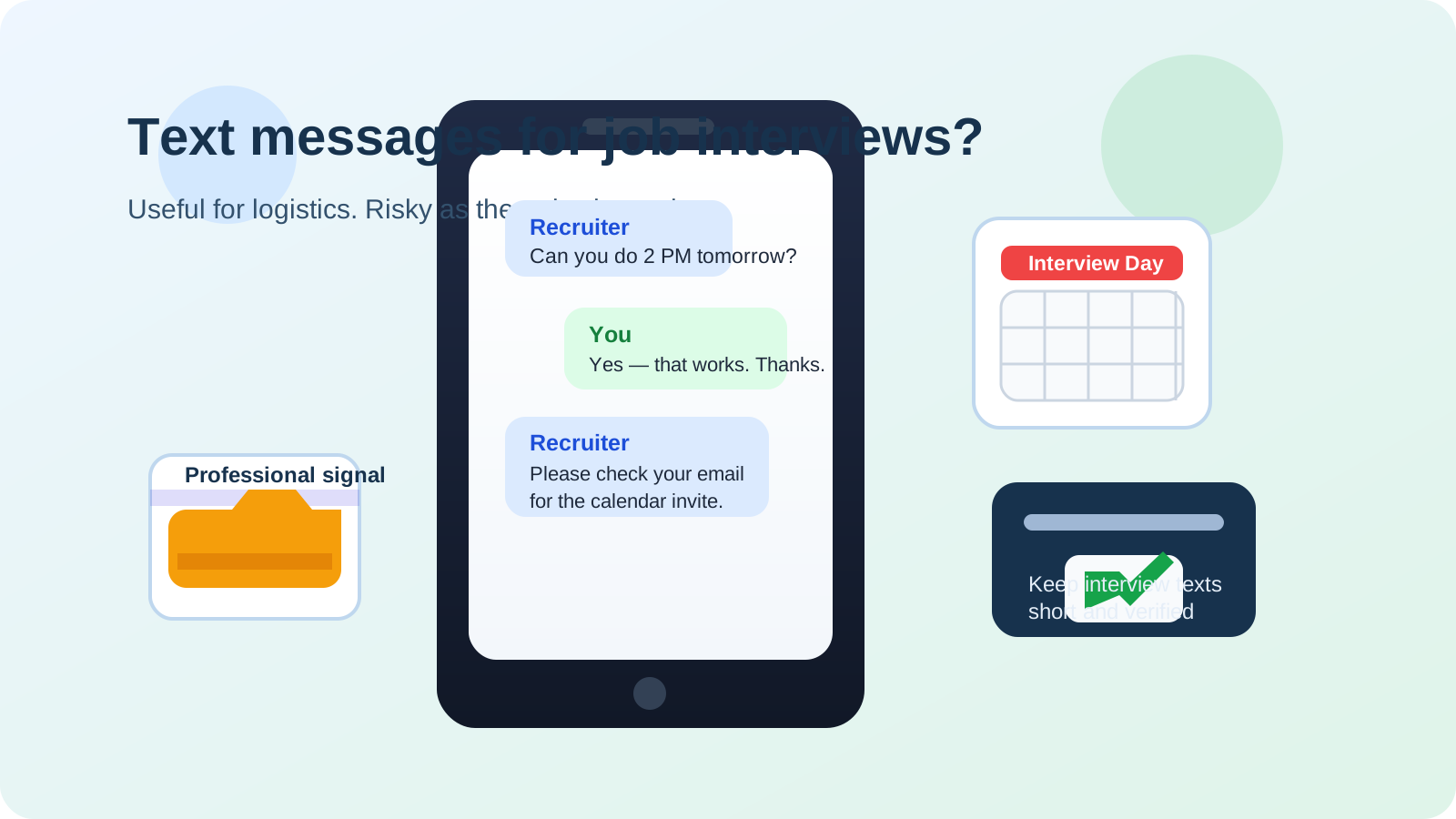
When text messages make sense for job interviews
Texting is often fine for the small logistical parts of an interview process. If a recruiter needs to confirm the time, send a quick reminder, or tell you they are running five minutes late, a text message can be the fastest and least annoying option for both sides.
Good interview-related uses for text messages include:
- Confirming that you are available for a screening call
- Sending a short reminder on the morning of an interview
- Sharing last-minute logistics, like a suite number or meeting-room change
- Letting you know an interviewer is delayed
- Prompting you to check email for a calendar invite or video link
In those cases, texting works because the message is short, practical, and easy to act on. It saves time without trying to turn your whole interview into a chat thread.
When text messages are a bad primary channel
Texting becomes less helpful when the conversation starts carrying information that should be easier to review, forward, or verify later. Interview communication usually becomes more serious once you are discussing prep materials, role expectations, assignments, compensation ranges, or anything involving documents and deadlines.
Text messages are usually the wrong main channel when someone wants to:
- Explain the full job description only by text
- Send sensitive attachments or ask you to send personal documents back
- Run an entire interview through chat without a clear reason
- Push you to move immediately to another app like WhatsApp or Telegram
- Make a role sound urgent but refuse to provide a company email trail
If the communication is important enough that you may need to review it later, email is usually better. If it is sensitive enough that you would hesitate to send it in a normal text conversation with a stranger, that is also a sign to slow down.
Why job seekers like texting during interviews
There is a reason this keyword matters: job seekers do not always want another phone call, and employers do not always want another long email chain. Texting can feel efficient, especially when interviews are moving quickly.
The main benefits are practical:
- Speed: short scheduling questions get answered quickly.
- Convenience: you can confirm details without stopping your day for a call.
- Lower friction: some recruiters use text as a simple reminder channel.
- Better responsiveness: a quick reply can keep interview momentum moving.
For legitimate employers, these are real advantages. The problem is not the existence of text messages. The problem is treating text as automatically trustworthy just because it feels familiar.
The privacy and scam risks you should think about
Your number can spread farther than you expect
Once your phone number is attached to multiple applications, recruiter databases, and job-board profiles, you lose a lot of control over who may contact you later. Even if the first employer is real, your number can still lead to more spam, more recruiter blasts, and more cold outreach than you wanted.
Texts feel urgent, which scammers love
Scam job offers often use text because people react quickly to text notifications. A message that says “We reviewed your application, reply now for immediate interview” feels personal and time-sensitive, even when it is low-effort fraud.
You may not get enough context
A short text is fine for “Can you do 2 PM tomorrow?” It is not ideal for identifying who the recruiter is, how the hiring process works, what company is involved, or whether the role itself is legitimate. Text strips away context, and scammers benefit when you fill in the gaps yourself.
It can blur work-search and personal life
If you use your main personal number everywhere, job-interview communication can follow you long after the interview ends. That may mean late-evening messages, follow-ups from recruiters you do not remember, or a trail of unknown numbers you now have to manage.
Best practice: use text for logistics, not trust
The smartest rule is simple: use text messages for convenience, but do not use them as your main proof that an employer is real.
A legitimate process can include text messages, but it should still have other professional signals around it, such as:
- A real company website and careers presence
- A recruiter or hiring manager who can be identified clearly
- Email communication from a company domain when details matter
- A calendar invite, meeting link, or formal follow-up you can review later
- A hiring process that makes sense for the role
If the only thing making the opportunity feel real is that someone texted you confidently, that is not enough.
How to handle interview texts professionally
You do not need to sound stiff to be professional. The best interview texts are short, clear, and boring in a good way.
Examples:
- Confirmation: “Thanks, 2:00 PM UTC tomorrow works for me. Looking forward to speaking with the team.”
- Delay notice: “I’m here and available. Just let me know if the interview timing has shifted.”
- Link issue: “Hi, I’m ready for the interview, but the meeting link is not loading on my side. Could you resend it?”
That tone works because it is friendly, direct, and easy to understand. You do not need emojis, oversharing, or long chatty updates. Save the fuller questions for email or the interview itself.
When to move the conversation back to email
There is nothing rude about shifting important details to email. In fact, it often makes the process smoother.
Ask for email if you need:
- The official interview time and time zone in writing
- A calendar invite or video meeting link
- Preparation instructions
- A written description of next steps
- Any exchange involving attachments, forms, or personal documents
A simple line like “Could you send the interview details by email as well so I can keep everything organized?” is completely reasonable. Good recruiters usually appreciate it.
Should you use your main personal number?
Not always. If you are applying broadly, talking to several recruiters, or using multiple job boards, a dedicated job-search number is often a better choice than your everyday personal line.
A separate number helps you:
- Keep interview communication organized
- Reduce the long-term spam burden on your main number
- Set a professional voicemail just for hiring conversations
- Retire or mute the number later if it becomes noisy
That same separation principle also works for email. If you are trying to keep your search tidy, a separate inbox matters just as much as a separate number. Anonibox can help you create cleaner email separation for early-stage applications or signups where you want less long-term inbox clutter, while your phone strategy handles the interview side more carefully.
Red flags in interview-related text messages
Some texting patterns should make you pause immediately.
- The sender refuses to identify the company clearly.
- The “interview” is only a text chat with no sensible explanation.
- You are told to switch to Telegram, WhatsApp, or another app right away.
- You are promised fast hiring before any serious evaluation.
- You are asked to share sensitive information by text.
- You are told to pay for training, software, equipment, or a background check.
- The tone is pushy, vague, or oddly generic.
One of these signs alone does not prove fraud, but several together should push you toward verification before you keep replying.
A simple decision checklist
Before you rely on text messages during an interview process, ask yourself:
- Is this message only handling logistics, or is it trying to replace a real hiring process?
- Can I identify the company and the person contacting me?
- Do I have a clean email trail for important details?
- Am I comfortable using this phone number for job-search outreach?
- Would a separate number and separate email setup make this easier to manage?
If the answers are mostly good, texting is probably fine as a supporting tool. If the process feels rushed, vague, or overly chat-based, protect your information first.
Final answer
Yes, you can use text messages for job interviews, but only as a practical support channel. They work well for confirmations, reminders, and last-minute logistics. They work poorly as the only record of an important hiring conversation.
The safest approach is to treat text as convenient, not authoritative. Keep the serious details in email, verify who is contacting you, avoid sending sensitive information by text, and consider using a separate number if you want more privacy. That gives you the speed of texting without giving up control over your job-search communication.