Usually, no – not as your primary way to apply for a job.
Text messages can work for quick follow-up or scheduling, but email or an official application form is usually better for privacy, recordkeeping, and scam protection.
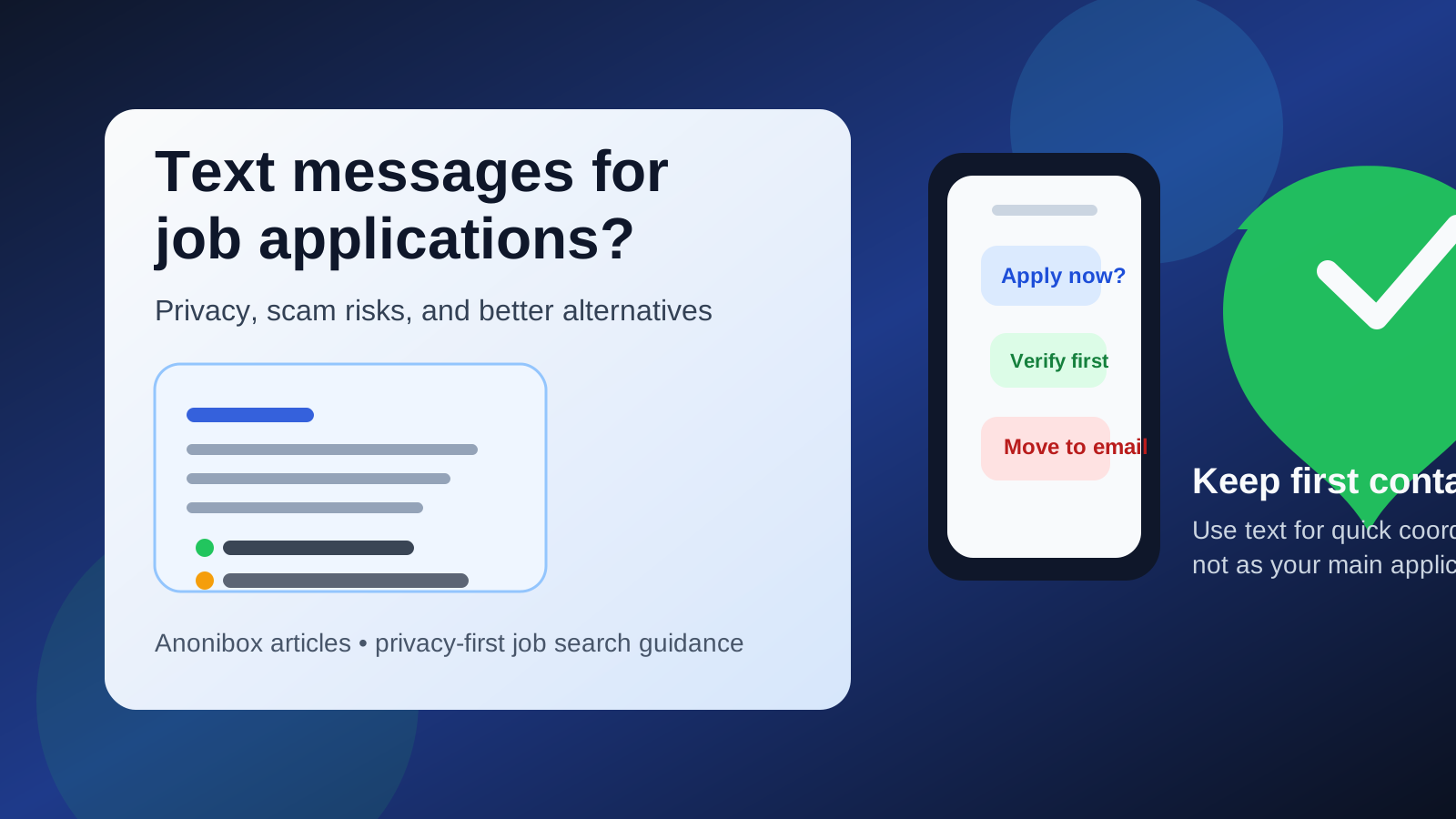
If a job post says “text us to apply,” it does not automatically mean the opportunity is fake. Some small businesses, shift-based employers, and local service roles really do use texting to screen candidates quickly. But that does not make texting the best default channel for most job applications.
When you apply by text, you give up some of the structure that makes job hunting safer and easier to manage. Resumes are harder to review in a message thread. Details get buried fast. It is easier to impersonate a recruiter over SMS than through a verified company system. And if you are applying to multiple jobs, your personal phone can quickly turn into a mix of legitimate follow-ups, spam, and scam messages.
So the right answer to should you use text messages for job applications is not a flat yes or no. It is this: use text only when the employer is clearly legitimate, the role naturally fits a faster communication style, and you can move the conversation to a more stable channel before sharing anything sensitive.
Why some employers ask candidates to text
Texting shows up most often in hiring situations where speed matters more than formality. A restaurant manager may want to fill a shift next week. A warehouse recruiter may need to confirm availability the same day. A home-services company may want a fast way to ask whether you have a license, your own transportation, or weekend availability.
In those cases, texting can help with:
- quick first contact after a short job posting,
- confirming that you are still interested,
- asking one or two screening questions,
- setting up a call or interview time,
- sending a link to a formal application portal.
That last point matters. Text can be a useful doorbell. It is much weaker as the full front door.
Why text is usually a poor primary application channel
1. It creates a weak paper trail
Email threads and application portals are easier to search, organize, and revisit. They also handle attachments, job descriptions, and follow-up instructions better. Text threads are fine for “Are you free at 3 PM?” They are not great for keeping track of résumé versions, job titles, interview links, salary ranges, and next steps.
2. It exposes your personal number earlier than necessary
When you text first, you are often leading with your personal phone number before the employer has earned much trust. That can be fine for a role you researched carefully, but it is not ideal when you are dealing with unknown listings, recruiter databases, or job-board reposts.
3. It is easier for scammers to look convincing
Fake recruiters love text because it feels urgent and casual. A message that says “We saw your application, reply immediately to continue” can push people into fast decisions. Once the conversation starts, scammers often try to move you toward gift-card fraud, fake equipment purchases, bogus background-check fees, or identity theft.
4. It encourages rushed communication
Text messages are built for speed, not depth. That can make you feel like you need to answer instantly, even when the smart move is to slow down, verify the company, and read the posting carefully.
5. It is awkward for resumes and formal materials
Some employers will ask you to text a resume as a file or even paste basic details into a thread. That can work in a pinch, but it is clumsy compared with a proper application workflow. It also makes it easier to miss details, send the wrong file, or lose track of where your information went.
When texting can be reasonable
There are situations where texting is perfectly acceptable, especially if you treat it as a first step instead of the whole process.
- Local hourly hiring: retail, hospitality, delivery, events, trades, and similar roles sometimes use text for quick screening.
- Small businesses: an owner-manager may genuinely prefer text because they do not use a large applicant tracking system.
- After you already applied elsewhere: if the text follows a real application you submitted through a company site or reputable job board, it may simply be a faster contact method.
- Scheduling only: text is often fine for confirming interview times, parking instructions, or “please check your email” follow-ups.
Notice the pattern: texting is strongest when it supports a real hiring process, not when it replaces one entirely.
When you should be cautious or say no
Be more careful when:
- the job post is vague and does not clearly identify the employer,
- the listing asks you to text before you can learn basic role details,
- the number is personal-looking and there is no company website to verify it,
- the recruiter refuses to move to email or a formal application page,
- you are asked for sensitive information too early,
- the conversation becomes pushy, urgent, or oddly secretive.
If a hiring contact cannot offer a verifiable company domain, a clear role description, or a formal next step, texting them is usually not worth the privacy trade-off.
A better workflow for most job seekers
If you want to stay reachable without turning your phone into a magnet for spam, a better approach is:
- Apply through the company site or a trusted board first. That gives you a cleaner record of where your information went.
- Use email as your main channel for first-contact details. Email handles resumes, written instructions, and links better than text.
- Use text only for short coordination. Keep it for confirming a call, an interview time, or that you received a message.
- Move serious conversations to verified channels. Offer details, forms, policy documents, and identity checks should not live in a text thread.
If privacy matters to you, this is where separation helps. Some job seekers use a dedicated job-search email or a temporary inbox for early-stage signups, then switch to a stable address once an opportunity becomes real. Used carefully, a tool like Anonibox can help you keep first-contact clutter out of your permanent inbox while you decide which employers deserve deeper engagement. The same principle applies to your phone number: not every listing needs direct access to your primary personal line on day one.
What if the job post says “text to apply”?
If the employer clearly asks for texts, do not overcomplicate it – just keep the first message short, professional, and low-risk.
A safe structure looks like this:
- your name,
- the specific role,
- a short expression of interest,
- a note that you can email your resume or complete a formal application.
Example:
Hi, this is Jordan Lee. I saw your posting for the warehouse associate role and I am interested. I have relevant inventory and shipping experience. Happy to send my resume by email or complete your application process if the position is still open.
That message is enough. You do not need to text your full address, date of birth, identification details, or anything financial. Let the employer prove legitimacy before you share more.
Red flags in text-based job applications
- They offer the job almost immediately without a real screening process.
- They push you to move to WhatsApp, Telegram, or another app for “HR onboarding.”
- They ask for banking details, identity documents, or verification codes before a verified interview.
- They want you to buy equipment, software, or training up front.
- The number cannot be tied back to a real business presence.
- The grammar, timing, and pressure tactics feel more like spam than hiring.
One or two of these may just mean the employer is disorganized. Several together usually mean you should stop responding.
How to protect yourself if you do text
- Verify the company independently. Find the official website yourself instead of trusting the link in the text.
- Keep the first exchange minimal. Share interest and basic qualifications, not sensitive identity data.
- Ask for an email follow-up. A real employer should be able to send details from a business address.
- Save screenshots. If something turns sketchy later, a record helps.
- Do not share one-time codes. No legitimate recruiter needs login or verification codes sent to your phone.
- Trust the pace. Good employers may move quickly, but they do not need you to panic.
Should you ever use only text and nothing else?
Usually not. Even if the role started over text, the process should become more formal as it gets more serious. Interview invitations, job descriptions, onboarding instructions, and offer documents belong in email or an official system where you can review them properly.
If an employer insists on doing everything by text from start to finish, that does not automatically make them fraudulent – but it does lower your visibility and control. For most professional, remote, knowledge-work, and office roles, it is below the standard you should expect.
Quick decision checklist
Before you apply by text, ask yourself:
- Is the employer clearly identifiable and legitimate?
- Does the role naturally fit fast text-based outreach?
- Am I comfortable sharing my number with this source right now?
- Can I move the process to email or a formal application quickly?
- Are they asking for anything beyond a brief first contact?
If the employer is real, the message is minimal, and the next step becomes more formal, texting may be fine. If the listing is vague and the whole process stays inside a message thread, it is usually better to walk away.
Final answer
For most people, text messages should not be the main channel for job applications. They are too weak for recordkeeping, too easy to exploit, and too quick to expose your personal number to spam or scams.
Texting works best as a small supporting tool: a short introduction for a legitimate local role, a quick screening question, or interview scheduling after you already know who you are dealing with. For everything else, email and official application systems give you more privacy, more clarity, and more control.
That balance lets you stay responsive without handing your whole job search over to a text thread.