Yes — using a separate calendar for job offers is usually a smart move if you want to keep recruiter meetings, decision deadlines, and onboarding steps out of your main calendar.
It helps with privacy and organization, as long as you still treat that calendar as a reliable place to track time-sensitive actions you cannot afford to miss.
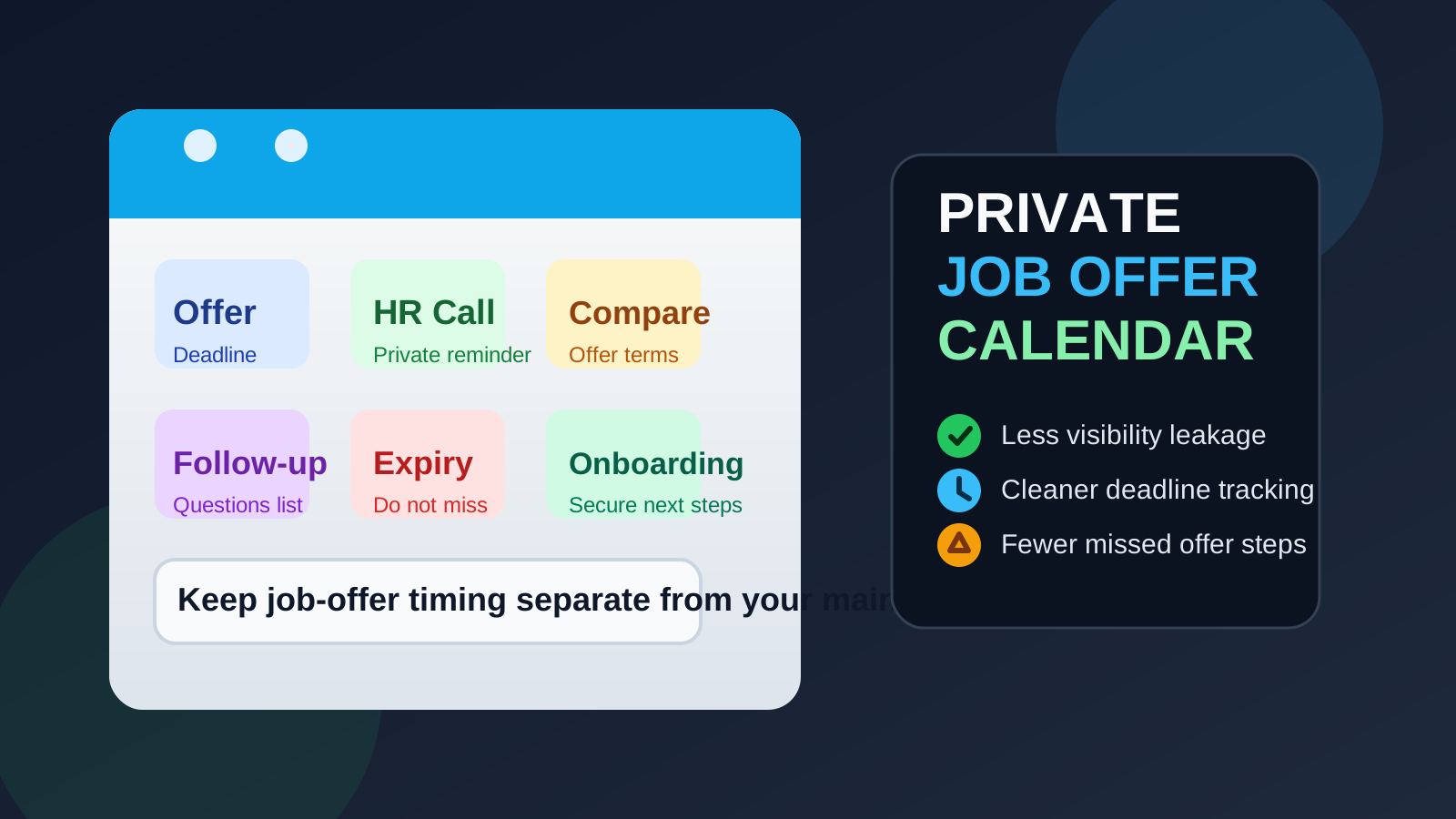
By the time you reach the offer stage, the job search stops being casual. You may be comparing compensation packages, scheduling calls with recruiters or hiring managers, reviewing deadlines for acceptance, and coordinating reference checks, background steps, or early onboarding paperwork. Those tasks are easy to lose when they sit next to personal appointments, work meetings, school pickups, or everything else already living on your everyday calendar.
That is why a separate calendar can be useful. It gives job offers their own space, reduces accidental visibility, and makes it easier to see what actually matters over the next few days. If you already use a separate inbox or a privacy-first tool like Anonibox for parts of your job search, a dedicated calendar is the scheduling equivalent: it keeps the process organized without mixing it into the rest of your life more than necessary.
Why the offer stage is different from the rest of the job search
Applications are mostly outbound. Interviews are mostly scheduling and preparation. Offers are different because they combine privacy, urgency, negotiation, and paperwork all at once.
At this stage, you may need to keep track of:
- Offer expiration dates
- Calls to clarify salary, equity, benefits, or start date
- Internal deadlines for giving an answer
- Follow-up reminders after a verbal offer
- Background check or onboarding appointments
- Time blocks to compare multiple offers side by side
Those details are important enough that they deserve their own system. Missing an interview is bad. Missing an offer deadline can cost you the opportunity entirely.
What a separate calendar helps you avoid
1. Privacy leaks
If you store job-offer calls on a shared household calendar, a visible work account, or a family calendar that others can browse, you may reveal more than you want. Even vague event titles can expose that you are negotiating a move, considering another employer, or planning onboarding elsewhere.
A separate calendar gives you more control over who can see event names, notes, locations, attachments, and reminders. That matters even if nobody around you is trying to snoop. A lot of privacy loss happens through convenience, not malice.
2. Missed deadlines buried under routine events
Main calendars get noisy. When job-offer tasks sit next to grocery reminders, recurring meetings, dentist appointments, and group notifications, the urgent items can blend into everything else. A dedicated calendar reduces that clutter so an acceptance deadline or compensation call stands out.
3. Accidental crossover with your current employer
If your current work account manages part of your calendar life, using that same space for external offer conversations is risky. Admin visibility, synced devices, searchable notifications, and meeting previews can expose more than you intend. A separate calendar avoids turning your current employer’s tools into a record of your exit planning.
4. Weak comparison habits
Offer decisions are not just about one call. You may need time to compare salary, remote expectations, benefits waiting periods, relocation timing, or competing deadlines. A dedicated calendar makes it easier to reserve decision blocks instead of making a rushed choice between unrelated calendar noise.
When using a separate calendar makes the most sense
A separate calendar is especially useful when:
- You are juggling more than one active offer or late-stage process
- You share your normal calendar with family, a partner, or coworkers
- Your main calendar runs through your current employer
- You want job-search reminders separated from your personal life
- You need a clear place to track expiration dates, negotiation checkpoints, or onboarding tasks
If none of those apply, your main calendar may still work. But even then, a separate calendar often makes the final stage calmer because it creates a clean mental boundary around important decisions.
What should go on that calendar?
A separate job-offer calendar works best when it includes the high-value items that can affect your decision or timeline.
- Verbal offer calls
- Offer review time blocks
- Deadlines to respond
- Follow-up reminders if a promised document has not arrived
- Negotiation calls or benefit clarification calls
- Background check, identity verification, or onboarding steps after acceptance
- Decision windows when you want uninterrupted time to compare options
You do not need to overbuild it. The goal is clarity, not administrative theater. If an event will matter to your decision, your response time, or your privacy, it belongs there.
What should stay out of it?
A dedicated calendar is useful, but it should not become a storage drawer for every sensitive detail.
- Do not paste full compensation breakdowns into event titles.
- Do not include private notes you would hate to expose in a notification preview.
- Do not attach sensitive documents unless you trust the calendar account and device security.
- Do not use obvious event names if other people may glance at your screen.
Plain, practical naming usually works best. Something like “Offer review call” or “Benefits questions — follow-up” is often enough. You can keep deeper notes in a separate secure document if needed.
How to set up a useful job-offer calendar
Use a separate account if possible
The cleanest setup is a calendar that lives on an account used only for job-search activity. That makes permissions, device syncing, and notification settings easier to manage. If your calendar platform supports multiple calendars under one account, that can still work, but a separate account gives stronger separation.
Turn on reminders that fit real deadlines
Offer-stage scheduling is not just about showing up. It is about preventing silence, delay, and forgotten decisions. Use reminders for:
- 24 hours before a call
- 2 to 4 hours before an offer expires
- The morning of a planned negotiation follow-up
- A same-day reminder to check whether written paperwork arrived
You are not trying to create notification overload. You are trying to make sure the truly expensive mistakes do not happen.
Block time for decision-making
One overlooked benefit of a separate calendar is that it can reserve time to think. Offer decisions get worse when every action is reactive. Schedule short blocks to compare salary, benefits, commute realities, or remote expectations before you answer under pressure.
Keep time zones and travel in mind
Late-stage conversations often happen across time zones, especially for remote roles. A dedicated calendar makes it easier to spot mismatches before they become embarrassing or costly. This matters even more if you are speaking with companies in multiple regions at once.
Should you use your main personal calendar instead?
You can, and for some people it is totally fine. If your personal calendar is private, lightly shared, and well-organized, it may already be the safest place to keep offer activity. The question is not whether a main calendar is always wrong. The question is whether it creates extra exposure or clutter for you specifically.
If your personal calendar is already crowded, shared with family, mirrored on smart displays, or mixed with travel and household logistics, a separate calendar becomes much more attractive. The more visible and noisy your normal setup is, the more value you get from separation.
Common mistakes people make at this stage
- Putting job-offer events on a work-managed calendar
- Using event titles that reveal too much at a glance
- Relying on memory instead of reminders for expiration dates
- Forgetting to schedule time to compare multiple offers
- Mixing family logistics and job deadlines until both become harder to see
Most of these mistakes are not dramatic on their own. They become expensive because the offer stage is compressed. One missed call or one forgotten deadline can force a rushed answer.
A simple checklist before you rely on a separate calendar
- Can you access it quickly from the device you actually use?
- Are notifications private enough for your situation?
- Are deadlines and calls clearly labeled without oversharing?
- Have you added follow-up reminders, not just the main event?
- Would you still see critical items if you got busy for a day?
If the answer is yes, you probably have a good system. If not, simplify it before the pressure increases.
Final answer
Yes, using a separate calendar for job offers is usually worth it. It creates cleaner deadline tracking, lowers the odds of privacy leaks, and gives late-stage job-search decisions the space they need.
The best setup is not the fanciest one. It is the one that helps you see offer deadlines clearly, protects sensitive scheduling from unnecessary visibility, and keeps you from missing the small steps that matter when an opportunity is finally on the table.
If you already separate your job-search inbox from your everyday email, treating your calendar the same way is a sensible next move.