Yes, you can use HEY Email for job offers if the address looks professional, you check it consistently, and you treat it as a stable inbox for important documents and deadlines.
No, it is not the best choice if you rarely monitor it, use a confusing address, or still treat it like a low-commitment side inbox after the hiring process becomes serious.
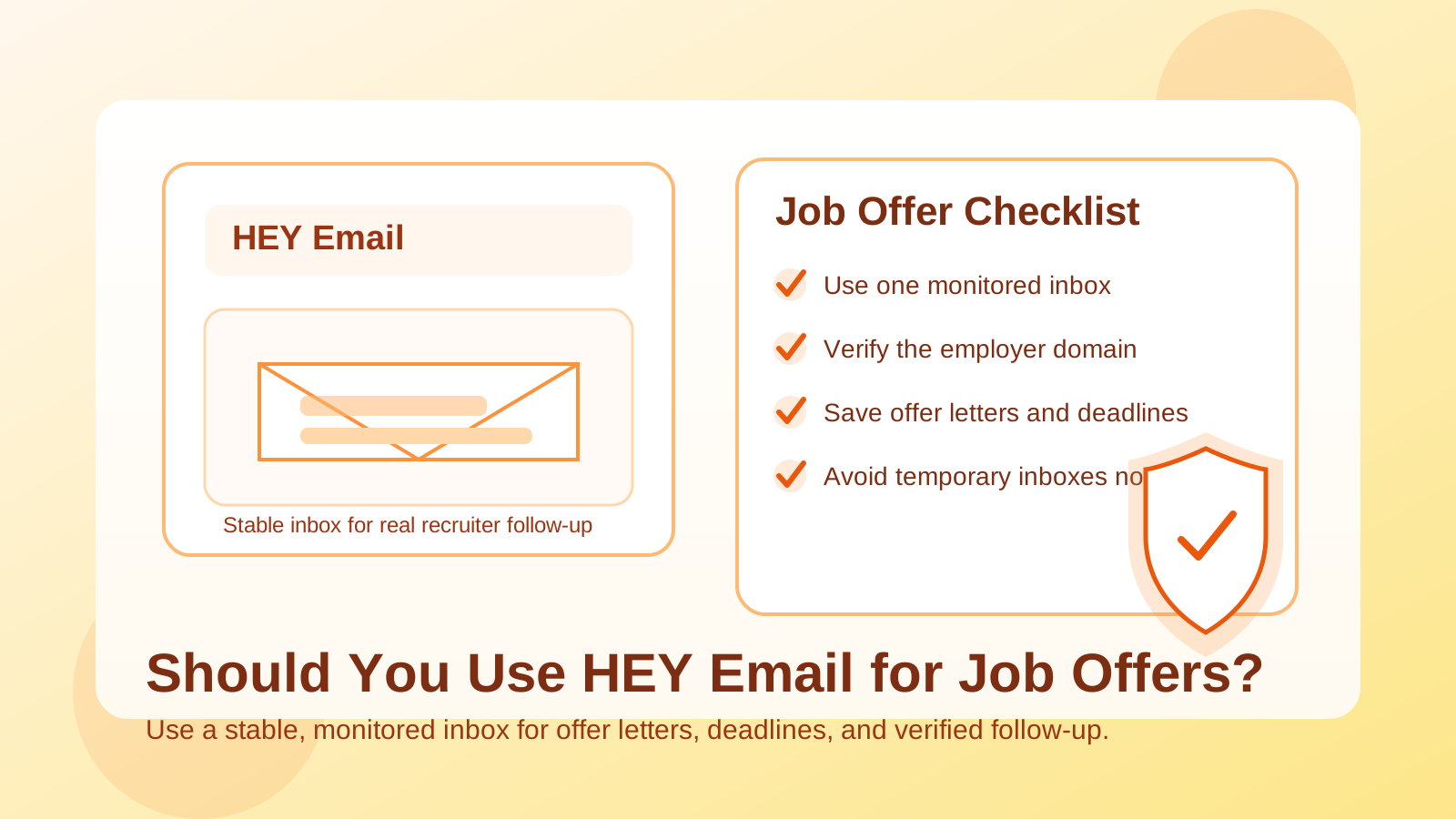
That is the short answer, but the real decision is about reliability and privacy more than brand name. By the time an employer is discussing compensation, start dates, benefits, or written offer letters, your email address is no longer just a contact field on an application form. It becomes part of a live workflow that may include sensitive attachments, deadline reminders, interview-to-offer follow-up, and next-step instructions from recruiting or HR.
So if you are asking whether HEY Email is a smart inbox for job offers, the right question is not “Is HEY allowed?” It is “Will this specific HEY inbox keep me reachable, organized, and careful at the point when mistakes matter more?”
Why offer-stage email matters more than application-stage email
Early in a job search, people often want distance between their main inbox and all the random traffic that comes with signups, job boards, newsletters, and recruiter outreach. That is where a temporary inbox or a dedicated separate address can help. But once you are at the offer stage, the tradeoffs change.
An offer-stage inbox may need to handle:
- written offer letters or compensation summaries
- deadlines to accept, reject, or negotiate
- benefits overviews or onboarding checklists
- background-check or portal instructions
- requests to confirm your legal name, address, or start-date details
- messages from both recruiting and HR rather than one recruiter alone
At that point, stability matters more than novelty. A temporary inbox may have been useful when you were protecting your main address from spam. A real job offer is different. You want an inbox you can trust yourself to monitor every day, save documents from, and keep available if the process stretches into negotiations or onboarding.
Why HEY Email can be a good fit for job offers
1. It is a real long-term inbox, not a disposable one
That alone makes it more appropriate for offer-stage communication than a throwaway address. Employers do not need you to use Gmail or Outlook specifically. They need you to use an address that is stable, reachable, and unlikely to disappear halfway through the process.
If your HEY address is one you actively use and plan to keep, that is already a strong point in its favor.
2. It can help you keep job-search communication separate from everyday noise
One reason people like dedicated job-search inboxes is that important messages are easier to spot when they are not buried under shopping receipts, newsletters, family threads, school notices, and random account alerts. A separate inbox can be especially helpful at the offer stage because deadlines tend to be short and details are easy to miss.
If HEY is the inbox you use for serious job-search communication, it may help you keep offer-related messages cleaner and easier to track than an older personal address with years of clutter.
3. It supports better privacy boundaries than reusing your oldest main address everywhere
Some job seekers do not want their oldest personal email attached to every recruiter, ATS, staffing firm, and salary-guide form they encounter. HEY can work as a middle ground: more stable and professional than a temporary inbox, but still separate from the address tied to the rest of your daily life.
That can be useful if you expect a long search, want to preserve cleaner boundaries, or simply prefer not to have job-offer traffic mixed into your oldest personal inbox forever.
When HEY Email is not the best choice
HEY is not automatically the wrong choice for job offers, but it is also not automatically the best one. There are a few situations where another inbox may serve you better.
You do not check it often enough
The biggest risk is not the provider name. The biggest risk is using an inbox you neglect. Offer-stage communication often moves faster than application-stage communication. If you only open that address occasionally, you could miss a time-sensitive question, an updated letter, or a response to your negotiation.
Your address looks confusing or too informal
Recruiters usually care much more about responsiveness than provider choice, but presentation still matters. An address based on your name or initials looks far safer than one built around jokes, slang, or random numbers. If your HEY address is clean and readable, fine. If it looks unserious, use a better one.
You are still treating it like a disposable experiment
If you originally created the inbox as a low-commitment test and do not intend to keep using it, the offer stage is the wrong time to keep improvising. Once compensation details and next-step documents are involved, you want continuity. Switching to a monitored long-term address before things get serious is usually safer than switching in the middle of the offer exchange.
Privacy and security questions to think about
Offer-stage email is not only about receiving a message. It is also about what might arrive in it and what you might be asked to send back.
Offer letters and attachments can contain sensitive details
A written offer may include compensation numbers, legal names, addresses, start dates, and signatures. That does not mean HEY is unsafe. It means you should treat any offer-stage inbox as a place that may temporarily hold personal or financially sensitive information.
Not every email asking for documents is automatically legitimate
Even if you are deep in a hiring process, keep verifying who is writing to you. Check the sender domain carefully. Make sure the request matches the company and the people you have been speaking with. A fake or hijacked thread is still possible if you stop paying attention just because the word “offer” appears in the subject line.
Email is often only part of the process
Many legitimate employers eventually move sensitive paperwork into a secure HR portal, e-signature workflow, or onboarding system. That is normal. A good offer-stage email address helps you receive the invitation and instructions, but it should not be the only place where critical documents live forever. Save copies where appropriate and follow the employer’s official process.
Best practices if you use HEY Email for job offers
- Use one consistent address from offer to onboarding. Do not bounce between multiple inboxes unless you have a clear reason and communicate the change cleanly.
- Check it daily, including spam or screening areas if relevant. An offer deadline can be missed by simple neglect.
- Verify the sender before opening sensitive attachments or sharing data. Match names, domains, and context against earlier communications.
- Save important emails and attachments promptly. Keep a local copy of offer letters, compensation summaries, and timeline details so you are not relying on memory.
- Use a professional reply style. The inbox brand matters less than being clear, prompt, and organized.
- Do not send unnecessary identity documents over casual back-and-forth email. If a company has a proper portal or secure workflow, use that instead of over-sharing in plain email threads.
When to move from temporary email to a stable inbox
This is where many people get tripped up. A temporary inbox can be useful early in the funnel: testing a job board, accessing a gated resource, or protecting your main address from low-trust noise. But the offer stage is where that strategy usually stops making sense.
If you used Anonibox or another temporary email workflow while filtering low-value signups or recruiter clutter, that was the right tool for that earlier job. Once a company becomes real and the conversation reaches interviews or offers, a monitored long-term inbox is the safer choice. HEY can work well in that role if it is the inbox you truly plan to watch and keep.
A quick checklist before replying to a job offer in HEY
- Does the sender match the employer domain you have been dealing with?
- Have you read the entire message carefully for deadlines, attachments, and next steps?
- Have you saved a copy of the offer letter or compensation summary?
- Are you replying from the same professional address used throughout the process?
- If the employer asks for sensitive information, are they directing you to a real portal rather than casually asking for too much over email?
- Have you set aside time to monitor follow-up after your reply, especially if you are negotiating?
So, should you use HEY Email for job offers?
Yes, if it is a real inbox you actively monitor, the address looks professional, and you want a separate but stable place for offer-stage communication. For many job seekers, that is a reasonable and practical setup.
No, if HEY is just a side inbox you barely check, if the address looks sloppy, or if you are still relying on throwaway habits when the process has already become serious. At the offer stage, the cost of missing one important message is simply higher.
The provider itself is usually not the deciding factor. Reliability is. If HEY helps you stay organized, protect your privacy, and respond promptly to verified employer communication, it can be a perfectly good choice for job offers.