Yes, you can use HEY Email for job referrals, and it can be a smart choice if you want a cleaner, more private inbox for referral conversations.
It is usually a better fit than a disposable address for ongoing referral follow-ups, but you should still think about professionalism, long-term access, and how the address looks to the person referring you.
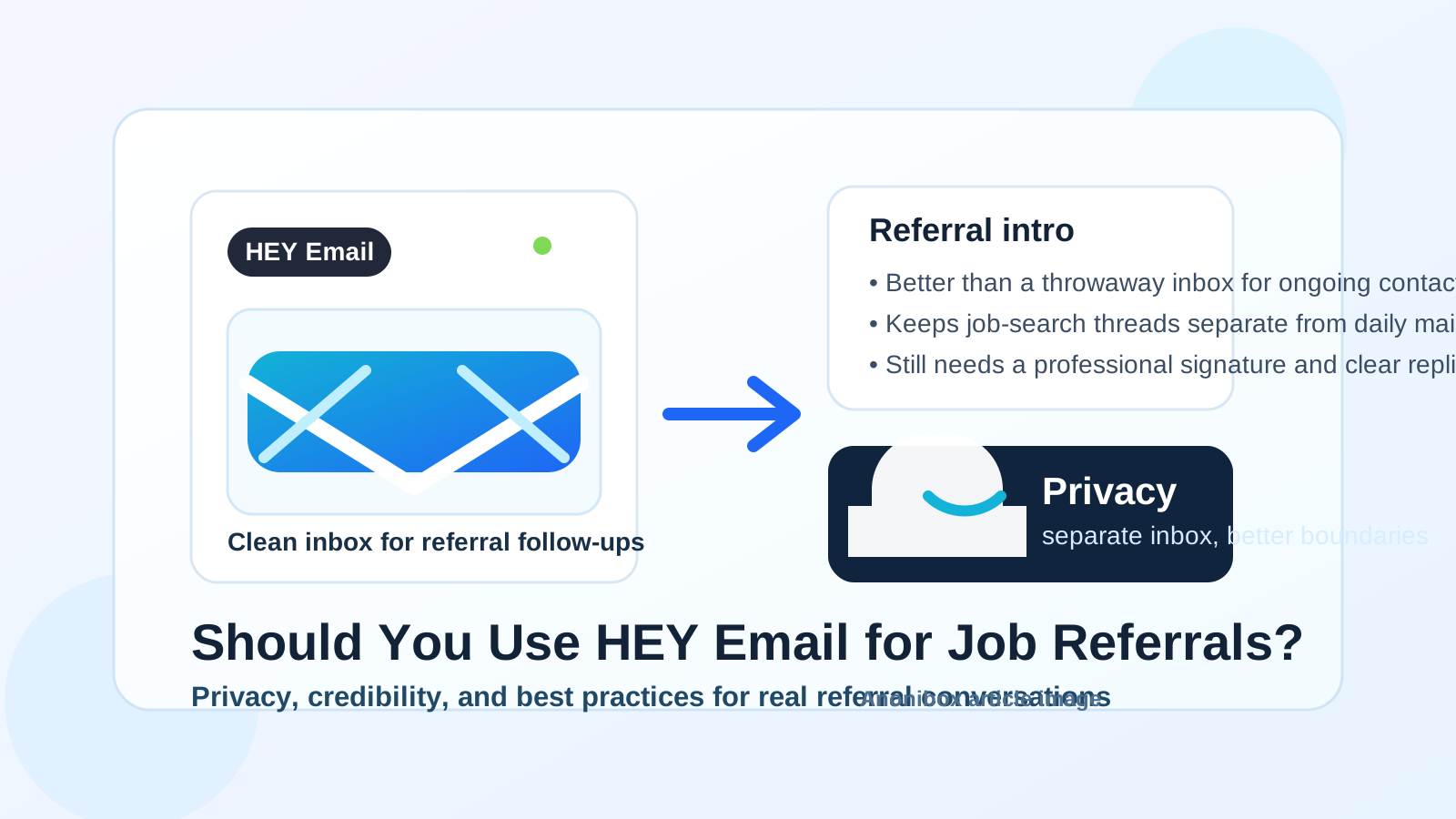
Job referrals sit in a different category from random newsletter signups or one-off free trials. A referral can turn into a real conversation with a colleague, former manager, recruiter, or internal employee who is putting some of their own reputation on the line to help you. Because of that, the email address you use matters more than it would for a disposable form fill.
That is where HEY Email can make sense. It is a real inbox, not a throwaway mailbox, so it gives you continuity if the referral turns into back-and-forth messages, scheduling, shared documents, or recruiter introductions. At the same time, it can help you keep referral traffic separate from your main personal or work inbox, which is often exactly what privacy-conscious job seekers want.
Why referral emails are different from ordinary applications
When you apply through a public job board, you are often dealing with a form, an applicant tracking system, or a recruiter inbox that expects structured contact information. Referrals are more personal. They often begin with messages like:
- “Can you send me your résumé and the role link?”
- “I can introduce you to the hiring manager if you want.”
- “Reply here and I’ll forward your information internally.”
- “Let me know which role you want referred and I’ll submit it.”
That means your inbox is not just receiving automated notifications. It may become the thread people use to introduce you, ask follow-up questions, or pass along updates. A stable email account is usually more appropriate than a temporary inbox for that kind of interaction.
Where HEY Email can help
HEY Email is useful for referrals because it gives you a real, persistent address while still letting you keep some distance between your job search and the rest of your life.
1. It keeps your job search separated from your everyday inbox
If you use one email account for everything, referral threads can get buried between receipts, personal mail, newsletters, family messages, and general work clutter. A dedicated HEY inbox can keep referral messages visible and easier to manage.
That matters because referrals sometimes move fast. If someone introduces you internally and asks for a quick reply, you do not want that message lost under twenty unrelated emails.
2. It is more credible than a disposable address
A temporary inbox can be useful in very early, low-trust situations, especially when you are trying to avoid spam from signups or unknown platforms. For example, if you are just testing whether a job board, lead form, or employer newsletter is worth hearing from, a privacy tool like Anonibox can be a practical shield for that first layer of exposure.
But a referral is usually different. If a real person is introducing you for an actual role, you generally want an address that looks stable enough to support a continuing conversation. HEY Email can do that. It signals that you are using a real inbox, even if it is not your long-time personal account.
3. It gives you control without forcing you to use your work email
Many job seekers do not want referrals mixed into a current employer’s mailbox, and that instinct is healthy. A work-managed inbox can expose your search to retention policies, employer visibility, synced devices, or simple accidental discovery. Using a separate HEY account for referrals can be a cleaner boundary.
4. It can reduce noise if referrals lead to recruiter outreach
Sometimes a referral does not stop with the referring employee. It leads to recruiter follow-up, scheduling emails, assessments, reminders, and role updates. Keeping those in a separate inbox can make the whole process easier to track.
When HEY Email may not be the best choice
Using HEY Email for job referrals is not automatically perfect in every situation.
If the address looks unfamiliar to the referrer
Some people are used to Gmail, Outlook, or a custom-domain address. A HEY address is not suspicious, but it may be less familiar. That usually is not a big problem, though if you are networking in a very traditional environment, you may prefer whichever professional address feels most neutral and conventional.
If you rarely check the account
The best privacy setup in the world still fails if you do not monitor it. If you create a separate HEY inbox for referrals but only look at it occasionally, you can miss time-sensitive replies. A referral can cool off quickly if you do not answer within a reasonable window.
If the referral is likely to become long-term professional contact
Sometimes a referral turns into an ongoing relationship with a recruiter, hiring manager, or industry contact. In that case, ask yourself whether HEY is the address you want associated with that relationship over time. If yes, great. If not, you may want to start with the inbox you expect to keep using professionally.
Privacy and credibility trade-offs
The real question is not just “Can I use HEY Email?” It is “What am I trading off by using it?”
On the privacy side, HEY can be good:
- It lets you separate referral conversations from your main inbox.
- It avoids exposing your current work address.
- It gives you a stable alternative to a throwaway account.
- It can help you keep referral-related attachments and conversations organized.
On the credibility side, HEY is usually fine, but not magic:
- It still needs a professional display name.
- You still need clear, timely replies.
- You should avoid quirky handles or overly casual usernames.
- The quality of your communication will matter more than the provider name.
In other words, HEY Email can support a professional image, but it does not create one by itself. The address should be simple, readable, and connected to the version of your name that appears on your résumé and LinkedIn profile.
How to use HEY Email well for referrals
Use a straightforward address format
If possible, use a variation of your real name rather than a nickname, joke, or old internet handle. Referrals work best when people can immediately connect your email address with your résumé and public profile.
Set a clean display name
Your display name should match how you want to be known professionally. That sounds obvious, but many people forget to change the default setup when they create a new inbox.
Check it consistently
Referral threads often contain quick asks: send a résumé, confirm interest, pick a time, or reply with a specific role number. If you use a separate inbox, treat it like an active job-search channel, not a storage drawer.
Keep your replies crisp and helpful
If someone refers you, make their life easier. Reply promptly, include the role link when relevant, attach the right file version, and thank them. Good referral etiquette matters more than the fact that you are using HEY.
Know when to graduate from a privacy-first setup
If a referral turns into interviews, offer discussions, or legal paperwork, make sure the account you are using is one you can maintain without friction. A disposable inbox is usually too fragile for that stage. A stable HEY inbox can work, but only if you are comfortable keeping it active.
HEY Email vs a temporary inbox for job referrals
This is where a lot of people get stuck. They want privacy, but they also want to look credible.
A temporary inbox is best when your goal is to limit exposure in low-trust or early-stage situations: unknown forms, one-off downloads, early lead generation, or sites you are not ready to trust with your permanent address. A tool like Anonibox can make sense there because the objective is to protect your main inbox from noise and long-tail spam.
Referral conversations are usually more relationship-driven. Someone may come back to your message later, forward it internally, or expect a reply after a pause. For that reason, HEY is usually the better choice if the referral is real and worth pursuing. It gives you separation without looking like you might disappear tomorrow.
Red flags to watch even if you use a separate HEY inbox
A cleaner inbox does not automatically make a referral safe. Stay cautious if:
- The “referral” immediately pushes you to move to Telegram, WhatsApp, or another off-channel chat without context.
- You are asked for sensitive information too early.
- The role details are vague or inconsistent.
- The company domain and contact behavior do not line up.
- The person offering the referral cannot clearly explain the role or their connection to it.
Your email choice can reduce clutter and exposure, but it does not replace common-sense verification.
A simple decision checklist
- Do I want referral conversations separated from my main personal inbox?
- Is this a real referral that may require follow-up over days or weeks?
- Is my HEY address simple and professional enough to share confidently?
- Will I actually check this inbox consistently?
- Would a temporary inbox be too fragile for this stage of the process?
If your answers are mostly yes, HEY Email is probably a reasonable choice.
Final answer
Yes, HEY Email can be a good option for job referrals if you want a real inbox that keeps referral messages separate from your everyday mail. It is usually more appropriate than a disposable address for ongoing referral conversations because it offers more continuity and looks more stable.
The key is to use it like a professional communication channel: keep the address simple, check it regularly, reply clearly, and switch away from purely temporary tools once the conversation becomes real. If you want privacy without looking flaky, that balance is exactly where HEY Email can work well.