Usually yes—using your personal email for informational interviews is fine if the address is professional, stable, and easy for people to reach.
But if you are doing a lot of outreach or want tighter privacy and better organization, a separate career inbox is often a smarter long-term setup than relying on your everyday personal email alone.
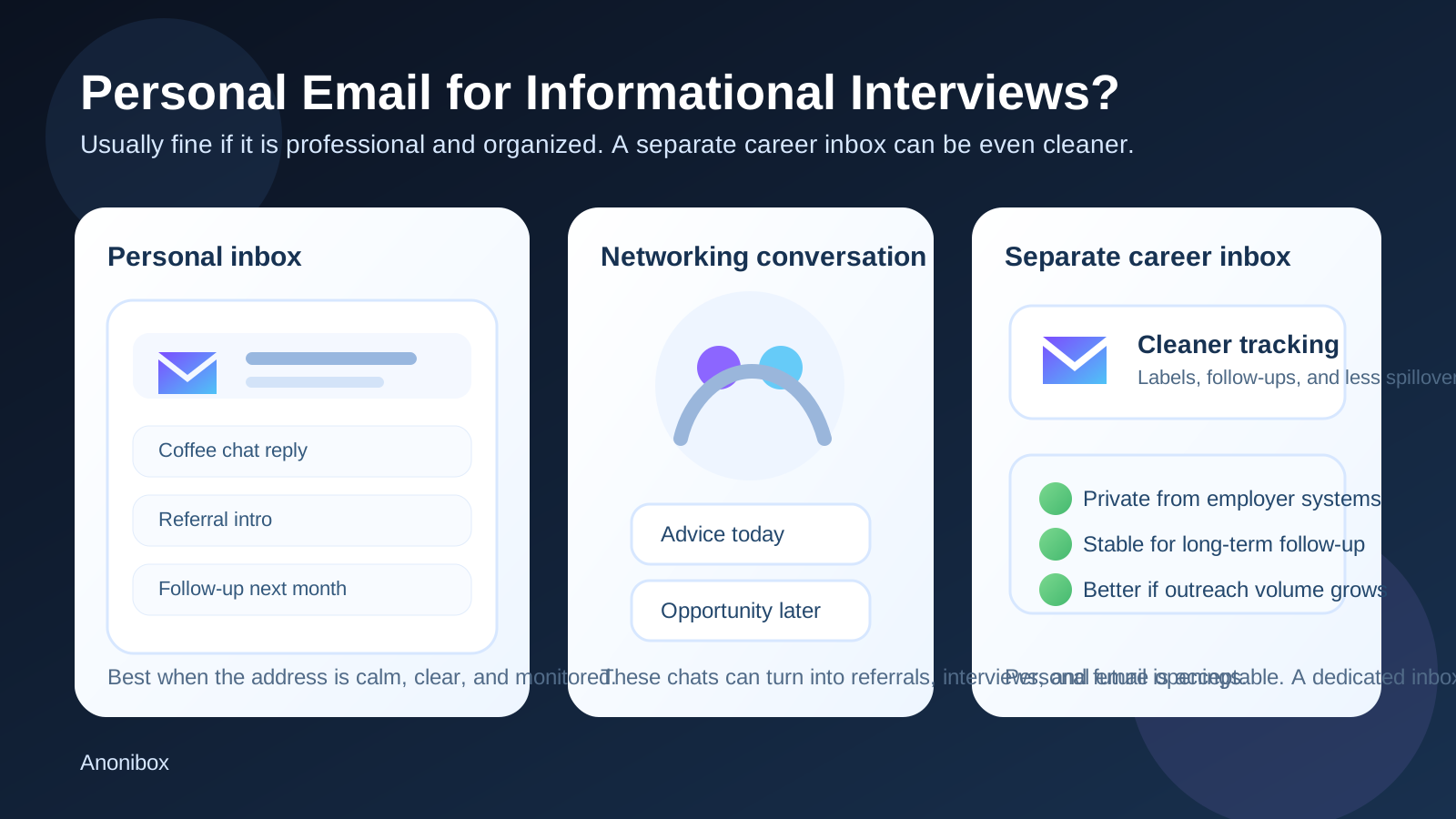
That is the practical answer behind the search for should you use your personal email for informational interviews. Informational interviews are more personal than formal applications and more professional than casual social messaging. They often begin as a quick request for advice, but they can turn into referrals, recruiter introductions, portfolio reviews, interview invitations, or a note months later saying, “A role just opened—want me to connect you?” Because of that, the email address you use matters more than people expect.
Your personal email is usually better than your work email for this kind of conversation because you actually control it. At the same time, “personal” does not automatically mean “best.” Some personal inboxes are clean and professional. Others are overloaded with newsletters, shopping receipts, app alerts, and years of random signups. The right answer depends on whether your current inbox helps you stay reachable and organized or makes career conversations harder to manage.
Why this question matters for informational interviews
Informational interviews sit in an awkward middle ground. You are not formally applying yet, so the conversation can feel low-stakes. That often makes people use whatever inbox is already open. But informational interviews have a long tail. A single 20-minute conversation can lead to a follow-up question, an introduction to another person, or a future opening that appears long after the original message.
If you choose the wrong inbox, the downside is usually not immediate disaster. It is friction. You miss replies because the thread got buried. You forget who offered to reconnect in three months. You expose your main long-term inbox more widely than you wanted. Or you mix career networking with everyday personal clutter until both become harder to manage. That is why the best setup is the one that balances professionalism, privacy, and long-term reliability.
Short answer: personal email is usually acceptable, but not always ideal
For most people, a personal email address is a perfectly acceptable way to handle informational interviews. In fact, it is often the normal choice. It is your own account, you keep access if you change jobs, and it does not tie your networking activity to an employer-controlled system. If the address is simple, name-based, and monitored regularly, most professionals will not think twice about it.
The caution is practical rather than dramatic. If your personal inbox is chaotic or if you are planning a larger networking campaign, a dedicated job-search or career-networking inbox can work better. The issue is not that personal email looks unprofessional by default. The issue is that many people underestimate how much outreach, follow-up, and long-tail communication informational interviews can create over time.
Why personal email often works well
1. You control it long term
This is the biggest advantage. Informational interviews can lead somewhere months later, and your personal email usually stays with you no matter where you work. That continuity matters. If someone wants to reconnect, forward your details, or refer you after a role opens, you still own the thread and the address.
2. It keeps networking out of employer systems
Using a personal inbox avoids the privacy problems that come with work email. Your current employer does not need a record of your exploratory career conversations. Even if your workplace is not actively monitoring you, there is rarely a good reason to place personal career management inside an employer-owned system.
3. It usually feels normal and human
Informational interviews are often peer-to-peer conversations. A personal email can feel more natural than a heavily branded corporate address, especially when you are reaching out to alumni, second-degree connections, or people who are simply doing you a favor. It can make the interaction feel less transactional and more genuine.
4. It is easier to keep consistent across networking, referrals, and applications
If the conversation becomes a referral or a real interview process, using an email you already control makes the transition easier. You do not have to explain why your address changed halfway through the relationship, and the other person can find the old thread if they want to help later.
When your personal email may not be the best fit
Personal email stops being the obvious best choice when it creates mess, noise, or more exposure than you want.
1. Your inbox is already overloaded
If your main inbox is full of subscriptions, promotional mail, order confirmations, travel receipts, family logistics, and old account alerts, important networking replies can disappear fast. Informational interviews are often lightweight enough that a delayed reply feels like disinterest. A messy inbox creates risk without adding any real benefit.
2. You want clearer privacy boundaries
Some people are comfortable using the same personal inbox for everything. Others prefer to limit how widely that address circulates. If you expect your outreach to expand, using your long-term personal inbox everywhere may create more future spam, more recruiter drip campaigns, and more exposure than you want.
3. Your address is technically personal but not very professional
Most people do not need a perfect corporate-looking address, but clarity still matters. If your inbox name is hard to read, full of nicknames, or tied to an old online persona, it can add unnecessary friction. Informational interviews are forgiving, but you still want a message identity that feels adult, stable, and easy to trust.
4. You are running a high-volume networking campaign
If you are reaching out to dozens of people across multiple companies, a separate inbox can make tracking conversations much easier. That is not because your personal email is “wrong.” It is because organization becomes a real part of the job. At that point, labels, folders, and a cleaner inbox structure start paying off quickly.
Personal email vs. a separate networking email
This is usually the real decision. For informational interviews, the best alternative to personal email is not work email and not a disposable inbox. It is a stable, separate email account used for networking, applications, and referrals.
Your personal email is often good enough if:
- the address is professional and simple
- you check it regularly
- the inbox is not buried in noise
- you are doing moderate or occasional outreach
- you do not mind using the same address for general life and career conversations
A separate career inbox is often better if:
- you want to keep networking separate from everyday life
- you are protecting a confidential job search
- you are sending a lot of outreach
- you want cleaner labeling and search history for contacts and follow-ups
- you do not want your long-term personal inbox spread across many recruiter or networking threads
That is why the honest answer is not “never use personal email” or “always create a second account.” Personal email is usually acceptable. Separate email is often better when scale, privacy, and organization start to matter more.
Why work email is usually worse than personal email
If you are deciding between your work inbox and your personal inbox, personal almost always wins for informational interviews. Work email may look polished, but it creates obvious privacy and continuity problems. Your employer may be able to archive or access those messages. Your address reveals your current company. And if you leave your job, you lose the thread and the account.
Informational interviews belong to your long-term career, not to your employer’s infrastructure. Even if you are not actively trying to leave your role, those conversations are still yours. Personal email is usually the safer default for that reason alone.
What about temporary or disposable email?
This is where privacy-minded job seekers can overcorrect. A temporary inbox can be useful for low-trust signups, gated downloads, webinar registrations, job-board experiments, or career sites that look likely to create long-term spam. That is the kind of situation where a tool like Anonibox can make sense.
Informational interviews are different. You are not just collecting a verification link. You are starting a real human conversation that may continue later. A disposable address can look flaky, expire too soon, or create avoidable confusion if someone wants to reconnect. For actual networking, stability matters more than maximum short-term anonymity.
A simple rule works well here:
- Use temporary email for low-trust signups and one-off exposure.
- Use a stable personal or separate inbox for real informational interview conversations.
Best practices if you do use your personal email
Clean up the address if needed
If your personal email is based on your real name and easy to read, you may already be fine. If not, consider creating a cleaner version before doing broad outreach.
Use folders or labels
Create simple labels like Informational Interviews, Referrals, Follow Up, and Warm Contacts. That one habit makes personal email much more manageable.
Keep your signature simple
Your name, maybe a LinkedIn link, and perhaps a short descriptor are enough. Informational interviews do not need a heavy corporate signature block.
Check the inbox consistently
People offering advice or introductions often reply quickly and casually. If you only check the account once every few days, you may lose momentum. Fast, thoughtful replies matter more than having a fancy inbox strategy.
Separate newsletters from conversations
If your personal inbox is noisy, unsubscribe from obvious clutter or use filters so real replies do not get buried beneath promotional mail.
A practical workflow that works well
- Pick your main conversation inbox deliberately. Use your personal email if it is professional, stable, and manageable. If not, create a separate networking inbox before starting your outreach push.
- Use the same identity across channels. Make sure your email name, LinkedIn profile, and portfolio or résumé do not create unnecessary confusion.
- Track every conversation. After an informational interview, note who you spoke with, what you learned, when to follow up, and whether they offered an introduction.
- Move low-trust exposure elsewhere. If you need to sign up for sketchier career resources or gated content, use a temporary inbox instead of exposing your main conversation address everywhere.
- Keep long-term relationships in a stable account. If someone may refer you later, your inbox needs to still exist when that message arrives.
Red flags that matter regardless of inbox choice
Even informational interviews can lead to low-quality or suspicious contact. Be cautious if:
- someone pushes you off email to a random chat app immediately
- they refuse to identify their role or company clearly
- the tone shifts from advice to pressure around a vague opportunity
- you are asked for documents, payment, or sensitive personal data too early
- the message feels copied, generic, or oddly urgent
Your email strategy helps with privacy and organization, but it does not replace basic judgment.
Quick checklist before you choose your inbox
- Is my personal email address professional and easy to understand?
- Will I still have access to this inbox months from now?
- Is my main personal inbox calm enough to handle networking follow-up well?
- Do I want to keep career conversations separate from daily personal life?
- Am I doing enough outreach that a separate inbox would improve organization?
If your personal email passes those tests, it is usually fine. If several answers make you hesitate, a separate networking inbox will probably serve you better.
Final answer
Yes, you can usually use your personal email for informational interviews. It is often a reasonable and professional choice because you control it, keep it long term, and avoid tying networking to your employer’s systems.
But “personal” is not automatically “optimal.” If your inbox is cluttered, if you want stronger privacy boundaries, or if you are doing a lot of outreach, a separate career inbox is often the cleaner setup. The real goal is not to look ultra-private or ultra-formal. It is to use an inbox that is stable, professional, easy to monitor, and organized enough to support real relationships if the conversation turns into something bigger.