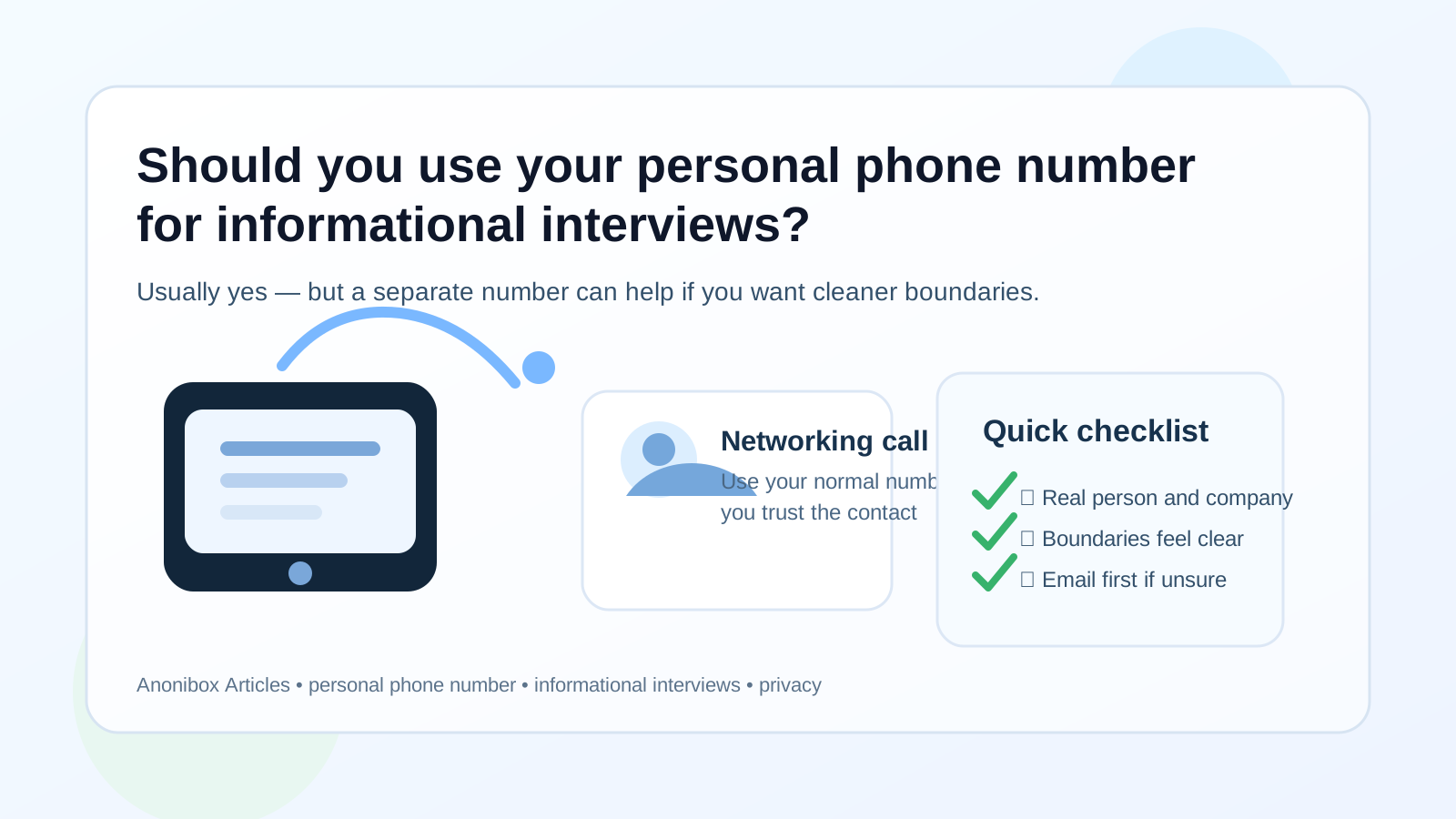
Usually yes — using your personal phone number for informational interviews is fine if you control the line, answer it reliably, and are comfortable mixing networking calls into your everyday phone.
A separate number can still be the smarter choice if you want more privacy, cleaner boundaries, or less follow-up from recruiters and professional contacts over time.
Informational interviews are different from formal job interviews. They are usually lower pressure, more relationship-driven, and less urgent than a real hiring process. You are not talking to someone because they need to fill a role by Friday. You are talking because you want insight into a company, a team, an industry, or a career path.
That difference matters when you decide which contact details to share. A hiring manager coordinating a same-week interview may need quick access to you by phone. A professional contact agreeing to a 20-minute networking call usually does not need the same level of immediate access. That does not mean you should never use your personal number. It means you should be more intentional about when it helps and when email is enough.
Short answer: your personal number is usually acceptable
If the informational interview is with a legitimate professional contact, a recruiter you chose to talk to, or someone from a real company you researched, your personal phone number is usually a reasonable option. It is normal, convenient, and often the easiest number for you to answer.
For many people, that is the entire answer. They use their normal number, keep their voicemail professional, take the call, and move on. Informational interviews do not automatically require a separate phone setup.
The better question is not “Is a personal number allowed?” It is “Do I want this conversation and any follow-up tied to the same number I use for everything else?”
Why someone might ask for your phone number for an informational interview
There are legitimate reasons a contact may prefer a phone number instead of relying only on email:
- Scheduling is easier: some people prefer a quick text or call instead of a long email thread.
- The meeting itself may be by phone: not every informational interview happens on Zoom or Google Meet.
- Last-minute changes happen: a delayed meeting, changed number, or missed calendar invite is easier to fix quickly by phone.
- The contact may be senior or busy: some people simply default to phone because it is the channel they actually check.
None of that is unusual. A phone number can make the conversation smoother, especially if the person is doing you a favor by fitting you into a busy schedule.
Why you might hesitate to use your personal number
The hesitation is understandable too. Even though informational interviews are lower risk than random job-board submissions, your personal number is still a real piece of personal data.
1. It can blur your boundaries
Your personal number is usually attached to your everyday life: family, friends, banking alerts, deliveries, doctors, and everything else. Once you start handing it out for networking, career advice, and exploratory conversations, that line between personal and professional life gets thinner.
2. Follow-up can extend longer than expected
An informational interview might start as a one-time chat and turn into future check-ins, recruiter outreach, referrals, or “just circling back” messages months later. That is not always bad, but you should decide whether you want that on your main number.
3. Not every contact stays neatly within one conversation
Most professionals are respectful. Some are not. A person who starts with a helpful career conversation might later text repeatedly about openings, introductions, or unrelated opportunities. Again, not a disaster — just a trade-off.
4. Your number can spread further than intended
Once shared, contact details sometimes get forwarded. A mentor may pass your number to a colleague. A recruiter may save it to a system. Someone may add you to a contact list for convenience. That can be helpful, but it also reduces your control.
When using your personal phone number makes the most sense
Your personal number is usually the best choice when the setting is trustworthy and the convenience is worth it. It often makes sense when:
- You know exactly who you are speaking with and why.
- The person works at a real company you have already researched.
- You are comfortable continuing the relationship if the conversation goes well.
- The call is time-sensitive and phone is the easiest way to coordinate it.
- You do not expect high-volume outreach from lots of contacts at once.
In those situations, using your personal number is practical and normal. Informational interviews are often built on trust and convenience. If you are trying to make networking easier, adding unnecessary friction can work against you.
When a separate number may be the smarter choice
Even if your personal number is acceptable, it is not always the best choice. A separate number may be better when:
- You are doing a wide networking push across many companies or industries.
- You want to protect your personal boundaries during an active job search.
- You are reaching out to people you do not know personally and cannot fully vet yet.
- You expect the informational interviews may turn into recruiter outreach or referral chains.
- You simply prefer to keep career exploration off your main personal line.
A dedicated number is not just for paranoid people. It is a clean organization tool. It gives you a layer between exploratory career conversations and the number you use for daily life. When the search ends, you can keep it, mute it, or retire it without affecting your main line.
Think of it the same way people think about email privacy. If you already use a separate inbox for networking or early job-search outreach, pairing that with a separate number can make the whole process feel calmer and easier to manage. Anonibox can help with the email side of that workflow, especially when you want to keep exploratory conversations from cluttering your main inbox too early.
Should you ever use a work number?
Usually no. A personal number is almost always safer than a work-controlled number for career conversations.
If your current employer issued the phone, pays for the plan, manages the device, or can review logs or notifications, it is a poor place for informational interviews. Even if nobody is actively monitoring you, there is no upside in mixing career networking with employer-controlled communications when a personal line is available.
That is one of the clearest comparisons here: if the choice is personal number versus work number, personal usually wins easily.
Phone call, text, or email: what is best for informational interviews?
Often the smartest workflow is email first, phone second. Email gives you documentation, context, and a less intrusive starting point. Once the conversation is set, a phone number can be useful for the actual call or for last-minute logistics.
That makes informational interviews different from random recruiter outreach. You do not need to lead with maximum availability on day one. You can build trust first, then decide whether giving a phone number helps.
A good rule of thumb:
- Email first when you are initiating contact or confirming legitimacy.
- Phone number later when the conversation is booked or clearly real.
- Separate number if you expect repeated outreach or want stronger boundaries.
Best practices if you use your personal number
Keep your voicemail professional
A simple greeting with your name is enough. If you miss the call, you want to sound prepared and reachable.
Do not over-share by text
A phone number is for scheduling and conversation. It is not a reason to send sensitive personal information, identity documents, or anything you would hesitate to email securely.
Verify unexpected follow-up
If the conversation suddenly turns into a job offer, referral push, or request for documents, slow down. Informational interviews can lead to real opportunities, but that does not mean every follow-up deserves instant trust.
Set expectations politely
If you prefer calls during certain hours or want email for follow-up, say so. Most professionals will respect reasonable boundaries.
Save contacts with context
Label the number with the person’s name, company, and why they called. Networking gets messy fast if your recent calls turn into a list of unknown numbers.
Red flags that mean you should pause before sharing your number
- The person is vague about who they are or where they work.
- The conversation moves unusually fast from “career advice” to pressure-filled recruiting.
- You are pushed off email immediately without a clear reason.
- The contact asks for sensitive personal information unrelated to a networking call.
- The opportunity sounds too good, too urgent, or too secretive.
Informational interviews should feel informational. If the conversation starts feeling like a funnel into a vague “opportunity” that depends on urgency and pressure, caution is warranted.
A quick decision checklist
Before sharing your number, ask yourself:
- Do I trust this person and the company enough to move beyond email?
- Would I be comfortable if this contact followed up again later?
- Do I want career networking on my main personal number?
- Would a separate number make my search feel cleaner or safer?
- Is there any sign this is more about pressure than genuine professional conversation?
If the contact is credible and you are comfortable, your personal number is probably fine. If the situation feels wide-open, high-volume, or boundary-heavy, a separate number is worth considering.
Final answer: should you use your personal phone number for informational interviews?
Usually yes. For most legitimate informational interviews, a personal phone number is normal, practical, and easier than inventing extra complexity.
But “fine” is not the same as “best for everyone.” If you value privacy, expect a lot of networking activity, or want cleaner separation between your job search and your daily life, a dedicated number can be a smart upgrade. The right choice is the one that keeps you reachable without giving away more access than you actually want.
That balance matters. Informational interviews are supposed to open doors, not make your personal life feel more exposed than it needs to be.