Yes, LinkedIn Messages are usually a good first follow-up channel for networking events when you want a professional, low-pressure way to reconnect after meeting someone.
They work best for a short thank-you, a reminder of where you met, or a light next step, but if the conversation turns into a referral, interview lead, or scheduled meeting, email is usually the cleaner long-term channel.
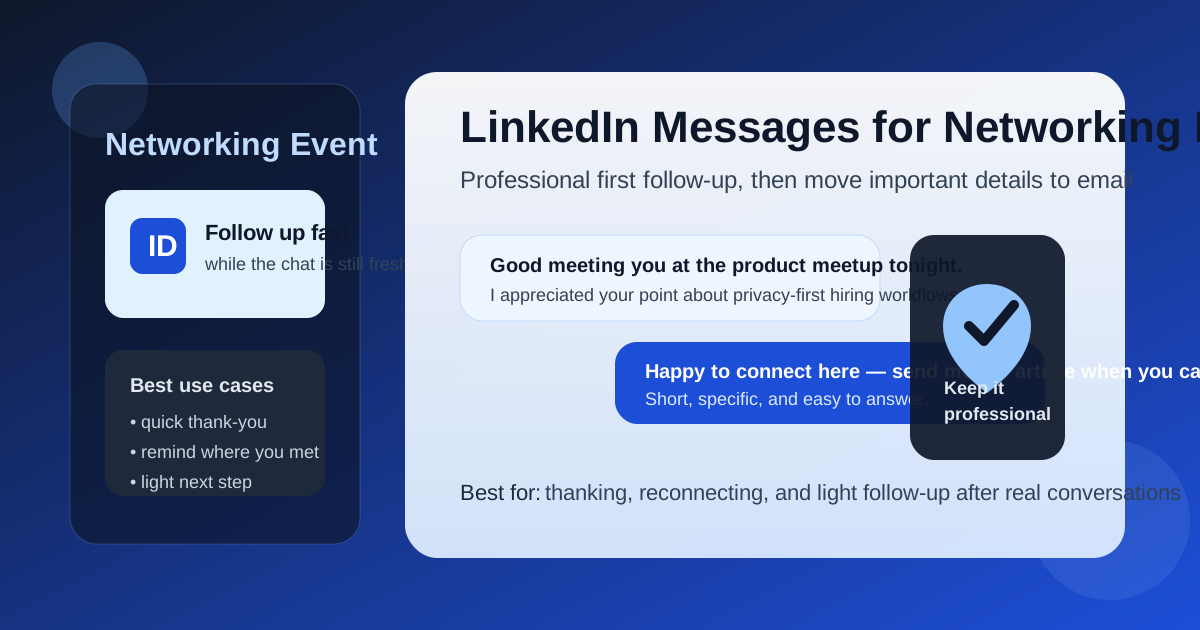
That is the practical answer behind searches for linkedin messages for networking events. People meet at conferences, alumni mixers, hiring events, meetups, trade shows, panels, and community gatherings all the time, then hit the same question a few hours later: should I follow up in LinkedIn Messages, send an email, wait for them to reach out, or leave it alone?
LinkedIn often makes sense because it feels professional without feeling too formal. You do not need someone’s personal phone number. You do not need to guess their current work email. You can remind them who you are in the same place where your name, role, and background are already visible. That makes LinkedIn a natural follow-up tool. But natural does not mean perfect. It has trade-offs around visibility, message overload, casual tone, and missed follow-up that matter more than most people realize.
Why LinkedIn Messages feel like the obvious post-event channel
Networking events create a weird middle ground. You have had a real interaction, but the relationship is still thin. Sending a text can feel too personal. Sending a long email can feel heavy if you only chatted for five minutes by the coffee station. Doing nothing means the connection may disappear before either of you remembers the conversation clearly.
LinkedIn sits right in the middle of that gap. It already frames the interaction as professional. It lets you connect the message to a profile. It also makes it easier for the other person to place you quickly, especially if they met a lot of people at the same event.
That convenience is the biggest reason LinkedIn Messages work well after networking events. They lower the friction of reintroducing yourself while keeping the interaction inside a professional context.
Short answer: yes for first follow-up, not for everything
If you had a normal, useful conversation at a networking event, LinkedIn Messages are often one of the best first follow-up options. They are especially strong when your goal is to say good meeting you, reference the conversation, and keep the door open without forcing the other person into a more personal channel immediately.
Where people get into trouble is treating LinkedIn like the final home for every next step. It usually is not. Once the conversation becomes concrete, such as sharing a résumé, scheduling a coffee chat, coordinating a referral, or following up on a specific opportunity, email is often easier to search, manage, and revisit later.
When LinkedIn Messages are a strong choice
You met briefly but want to keep the connection alive
This is probably the best use case. Maybe you spoke after a panel, during a meetup break, at a conference booth, or in line before a talk. The conversation was real, but not deep enough to justify a long message somewhere more personal. A short LinkedIn note is a clean way to continue.
You do not have their email and do not want to guess it
Guessing work emails can feel pushy, and many people do not share public contact information freely anymore. LinkedIn gives you a legitimate route without forcing you into awkward detective work.
You want to sound professional without sounding intense
A thoughtful LinkedIn follow-up can feel lighter than email. That matters when the relationship is new and the right tone is “good conversation, let’s stay in touch,” not “please process this as formal correspondence.”
The next step is small
If the next step is just sharing an article, thanking them for their advice, connecting after the event, or asking one simple question, LinkedIn often handles that well.
When LinkedIn is the wrong main channel
You need reliable scheduling
If someone agrees to a coffee chat, an informational conversation, or an interview-related discussion, email and calendar invites usually work better. LinkedIn is easy to ignore, and details like time zones, meeting links, or reschedules can get messy fast.
You need to send documents or longer context
LinkedIn is not the best home for résumés, portfolios, multi-step background information, or anything else that deserves a cleaner thread. Once the discussion becomes substantive, move it somewhere more stable.
The person clearly prefers email
If they gave you a card, mentioned their email, or said “send me your résumé,” take the hint. Matching the preferred channel is usually better than insisting on LinkedIn because it feels easier to you.
The message could sound like a pitch
LinkedIn inboxes are crowded with recruiters, vendors, and generic networking scripts. If your note is going to be longer, more nuanced, or more specific to a real opportunity, email can help it feel more deliberate and less like platform noise.
Privacy trade-offs most people overlook
LinkedIn Messages may be professional, but they are still part of a platform built around visibility and attention. That matters if you care about privacy during a job search or career transition.
Your profile is part of the message
When you message someone on LinkedIn, you are not just sending words. You are also sending your headline, photo, current employer, public activity, shared connections, and any awkward profile details you forgot to clean up. If your profile is stale, thin, or too revealing, the message inherits that problem.
Important messages can disappear into a busy inbox
Some people live in LinkedIn. Others check it once every two weeks. Even a thoughtful follow-up may get buried under recruiter spam, sales outreach, random connection requests, and event notifications.
It can blur the line between professional and casual too quickly
Because LinkedIn feels conversational, people sometimes send messages that are too long, too familiar, or too vague. That is a tone problem, not a platform problem, but the platform can make the mistake easier.
You still should not overshare
A networking-event follow-up does not need your entire career story, your frustrations with your current employer, or a detailed explanation of your job-search strategy. Keep the message specific and professional. New contacts do not need a privacy dump.
How to write a LinkedIn networking follow-up that actually works
The best messages are short, contextual, and easy to answer. The person should be able to read it quickly and remember exactly who you are.
1. Mention where you met
Do not make them guess. Reference the conference, meetup, panel, alumni event, or hiring fair right away.
2. Anchor the message in one real detail
Mention the topic you discussed, the question they answered, or the session you both attended. One concrete detail does more work than a paragraph of generic friendliness.
3. Keep the ask small or skip the ask entirely
Not every follow-up needs a request. Sometimes “good meeting you, I appreciated your point about X” is enough. If you do ask for something, keep it modest.
4. Make the next step obvious
If you want to stay connected, say that. If you want to continue the conversation later, suggest it lightly. If you want to send something useful, do it without creating homework.
A simple message might look like this in practice: it was great meeting you after the analytics panel at the conference today; I appreciated your point about moving from operations into product; I wanted to connect here and stay in touch. That is enough. It is human, specific, and easy to receive.
Common mistakes that make LinkedIn follow-up worse
- Sending a wall of text: long messages feel demanding, especially after a brief in-person conversation.
- Acting like the relationship is closer than it is: keep the tone warm, but not overfamiliar.
- Pitching too fast: asking for a referral, job lead, or favor in the first follow-up often feels transactional.
- Copy-pasting the same note to everyone: event follow-up becomes forgettable when it reads like a template blast.
- Moving to personal channels immediately: do not rush a new contact toward texting, WhatsApp, or a private number unless there is a clear reason.
Timing matters more than people think
For most networking events, the best window is usually the same day or the next day. That gives the other person enough time to settle down after the event but keeps the interaction fresh enough that they still remember the conversation.
Wait a week, and the message often feels colder. Send it ten minutes after walking away, and it can feel a little too eager unless there is a clear reason. The right timing is usually prompt, not immediate.
When to move the conversation off LinkedIn
LinkedIn is often the front door, not the whole house. Once there is a concrete next step, moving the thread can make the relationship easier to manage.
Email is usually better when you need searchable logistics, résumé sharing, calendar coordination, or a more stable thread that will still make sense in a month. If the relationship becomes meaningful, you want the follow-up to live somewhere you can actually organize.
This is also where inbox strategy matters. Temporary email is useful for noisy event registrations, sponsor downloads, giveaways, or gated resources. It is usually not the right place for real person-to-person networking follow-up. If you want privacy without losing continuity, a stable separate inbox is a better fit. That is the kind of situation where a service like Anonibox can be useful: not as a throwaway mailbox for real human connections, but as a cleaner boundary between serious follow-up and event-related clutter.
A practical decision checklist
- Did we have a real enough conversation that a short follow-up makes sense?
- Is LinkedIn the easiest professional channel available right now?
- Can I remind them who I am in one sentence?
- Is my ask small, clear, and reasonable?
- If this turns into something real, am I ready to move it to email or calendar?
If those answers are mostly yes, LinkedIn Messages are probably a strong choice.
Final answer
Yes, you should often use LinkedIn Messages for networking events, especially for the first follow-up after a real conversation. They are professional, light, and easy to connect to the context of where you met.
Just do not ask LinkedIn to carry more than it should. Use it to reconnect, thank, and open the next step. Then, if the conversation becomes important, move the details into a more stable channel. That balance protects your privacy, respects the other person’s boundaries, and gives the connection a much better chance of turning into something useful.