Yes, a burner phone number can be a smart choice for networking events if you want a privacy buffer between new contacts and your primary personal number.
It works best for conferences, meetups, career fairs, and alumni events where you may share contact details widely, but it is usually a temporary boundary tool rather than the only number you should rely on long term.
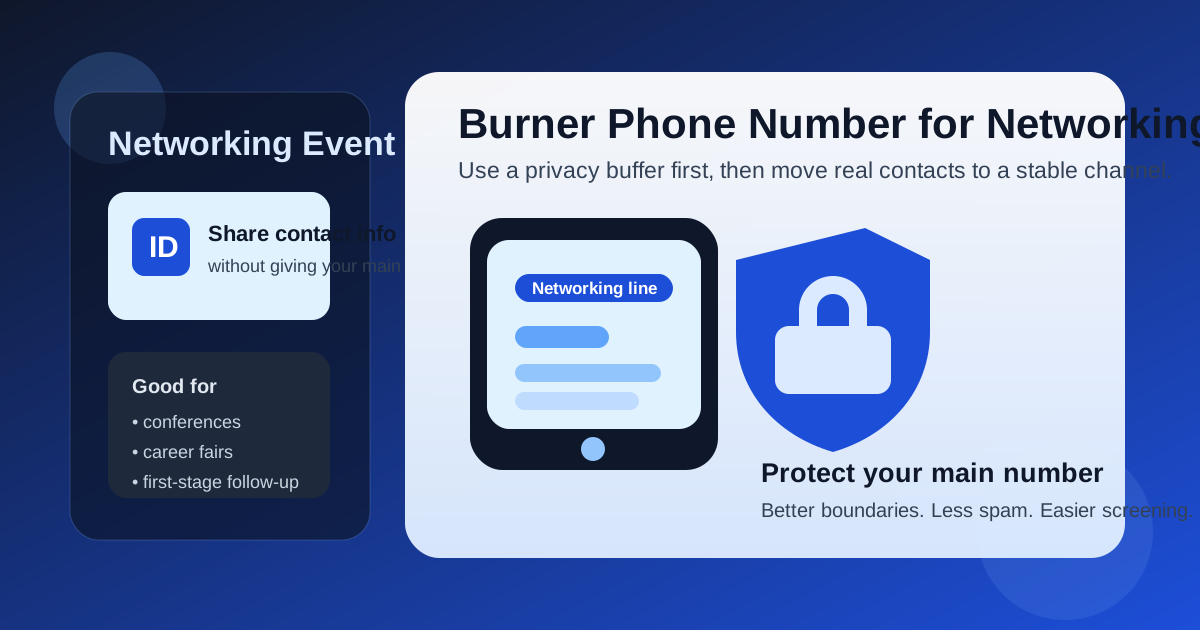
That is the practical answer behind searches for should you use a burner phone number for networking events. When you meet a lot of new people in one day, you face a small but real privacy trade-off. You want to be reachable. You want to follow up professionally. But you may not want every recruiter, vendor, organizer, casual connection, or vague “let’s keep in touch” contact to have your main phone number forever.
A burner number can help because it creates distance. You still have a real phone contact you can share when a conversation feels promising, but you are not immediately handing out the same number tied to your personal life, bank alerts, family messages, and long-term digital identity. For people who are privacy-conscious, actively job hunting, changing industries, or simply tired of spam calls and random text threads, that separation can be useful.
Still, a burner number is not automatically the right answer for every event. Sometimes it is helpful. Sometimes it adds friction. And sometimes a separate email or LinkedIn follow-up is the cleaner move. The goal is not to hide from normal networking. The goal is to control how much direct access new contacts get before trust is earned.
Why this question comes up at networking events
Networking events are awkward by design. You may speak with ten or twenty people in a few hours, but only two or three of those conversations may become meaningful later. That makes phone-number sharing feel different from other career situations.
At a conference or meetup, contact exchange often happens fast. Someone asks if they can text you a resource. A recruiter offers to send openings. A founder says to follow up next week. A fellow attendee wants to stay in touch after a useful conversation. None of that is unusual. The issue is volume and uncertainty.
Unlike a formal interview process, event networking usually begins before you know who will actually matter. A burner phone number gives you a way to stay open without treating every new contact like a permanent inner-circle connection.
What a burner phone number helps with
1. It limits long-term exposure of your main number
Your primary phone number tends to spread slowly over time. Once it is in enough databases, contact lists, event apps, recruiter notes, and group texts, it becomes hard to pull back. A burner number slows that process down. You can share a reachable number without giving every new person the one you use for everything else.
2. It helps separate serious contacts from event noise
Some networking-event follow-up is valuable. Some is harmless but unnecessary. Some turns into low-quality recruiter outreach, sales pitches, or vague “checking in” messages. A burner number lets you sort the signal from the noise before deciding who should get your main contact details.
3. It can reduce spam after conferences and lead-heavy events
Large events often generate more follow-up than people expect. Your contact details might be shared in attendee lists, sponsor tools, booth scans, or panel follow-up flows. A burner number can absorb that spillover better than your main personal line.
4. It gives you cleaner boundaries during a job search
If you are networking while employed, exploring a career change, or speaking to many recruiters at once, a separate number can keep your search from bleeding into your everyday life. That kind of boundary can be especially helpful if you want to mute event-related calls outside working hours or retire the number later.
When a burner number makes sense
A burner number is usually most helpful in situations like these:
- Large conferences: you may meet many people quickly and not know which contacts will matter later.
- Career fairs and hiring events: recruiters often move fast and may add you to future outreach lists.
- Industry mixers: lots of light-intent connections, only some of which become real relationships.
- Cross-functional or public events: useful conversations, but not enough trust yet to share your main number widely.
- Privacy-sensitive job searches: especially if you are balancing networking with a current role and want tighter boundaries.
In those settings, a burner number acts like a screening layer. It keeps you available without forcing immediate permanence.
When it is probably the wrong main channel
Not every networking situation needs a burner number. Sometimes the better choice is a separate email, LinkedIn Messages, or your normal number used selectively.
If the connection is already trusted
If you are reconnecting with a former colleague, a close alumni contact, or someone introduced through a strong mutual connection, a burner number may feel unnecessary. In those cases, the extra layer can make the interaction more mechanical than helpful.
If follow-up will depend on reliable scheduling
If the next step is a coffee chat, mentor call, interview referral, or time-sensitive handoff, reliability matters more than distance. You do not want to miss an important message because the number was temporary, lightly monitored, or treated like a low-priority inbox.
If your real concern is not phone privacy
Sometimes the problem is not your number. It is the volume of email, the messiness of contact management, or the fact that you are meeting too many low-quality people at once. In those cases, a separate email strategy or a better networking workflow may solve more than a burner number does.
What a burner number does not solve
A burner number gives you separation, not magic. It does not make sketchy people trustworthy. It does not guarantee that spam stops. It does not replace judgment about which contacts deserve a response. And it does not remove the need for a more stable communication channel when a relationship becomes real.
It is best to think of a burner number as a boundary tool. It helps you control initial access. It does not eliminate the normal work of professional follow-up.
Best practices if you use one
Use it actively, not carelessly
A burner number only helps if you actually monitor it. If you hand it out and then check it once every few days, you may miss useful follow-up from people you genuinely wanted to hear from.
Move good contacts to a stable channel
When a conversation becomes real, do not keep it stuck in the burner-number stage forever. If someone becomes a meaningful contact, shift to a more permanent setup such as your regular phone number, your main networking email, or a stable inbox you actually manage long term.
Do not overshare just because the number is separate
A burner number should not make you careless. You still should not send sensitive personal details, verification codes, or identity documents by text to people you barely know. The separate number changes the boundary, not the need for basic caution.
Keep your voicemail and text tone professional
If the number might receive legitimate recruiter or networking follow-up, set it up like a real professional line. A clear voicemail greeting and polite text style go a long way.
Pair it with a thoughtful email strategy
Many people do better when they treat phone and email differently. A burner number can handle first-contact reachability, while a stable separate email can handle actual follow-up. That balance is often stronger than trying to make one disposable channel do everything. If you want a cleaner inbox boundary without turning real relationships into throwaway communication, a tool like Anonibox can be helpful for the email side of that workflow.
Common mistakes
- Using the burner number forever: if the relationship becomes important, move it somewhere more stable.
- Forgetting to check it: privacy is not useful if it makes you miss good opportunities.
- Giving it to everyone automatically: not every event interaction needs phone access at all.
- Using it as a substitute for judgment: a separate number does not make weak contacts strong.
- Mixing it up with your main line inconsistently: if you switch back and forth randomly, you lose the organizational benefit.
Burner number vs. personal number vs. LinkedIn vs. separate email
If you are deciding between channels, the best option depends on the relationship stage.
- LinkedIn Messages: good for light follow-up after a short event conversation.
- Separate email: strong for longer follow-up, resource sharing, and searchable threads.
- Personal number: best for trusted contacts or situations that need dependable, ongoing access.
- Burner number: best when you want initial reachability without giving your main number broad exposure.
That comparison matters because many people use a burner number when a lighter channel would have been enough. If all you really need is to reconnect after a panel, LinkedIn may be better. If you expect a back-and-forth about opportunities, a separate email may be better. The burner number sits in the middle: more direct than LinkedIn, less personal than your primary line.
Red flags during networking-event follow-up
If a new contact moves too fast, the problem is not the number type. It is the person. Be cautious if someone you just met starts pushing for private chats, asks for sensitive information, sends vague job promises, or tries to rush you into off-platform conversations without basic context. A burner number can soften the downside, but it should not override your instincts.
The same applies to recruiters or event contacts who become oddly aggressive. Professional follow-up should feel clear and respectful, not urgent and invasive.
A practical decision checklist
- Am I likely to meet a lot of low-trust or early-stage contacts at this event?
- Do I want people to be able to text or call me directly, or would LinkedIn or email be enough?
- Will I actually monitor the burner number if I share it?
- Do I have a plan to move valuable contacts to a stable channel later?
- Am I using the separate number for better boundaries rather than out of fear or disorganization?
If most of those answers support separation, a burner number is a reasonable choice.
Final answer
Yes, you should consider using a burner phone number for networking events when you want privacy, better boundaries, and less long-term exposure of your main number. It can be especially useful at conferences, career fairs, and large networking events where many new contacts may want direct access before trust is established.
Just treat it as a first-stage communication tool, not a permanent hiding place. Use it to control access, screen follow-up, and reduce noise. Then move worthwhile contacts to a more stable channel once the relationship becomes real. That approach gives you the upside of being reachable without turning every brief event conversation into lifelong access to your personal phone.