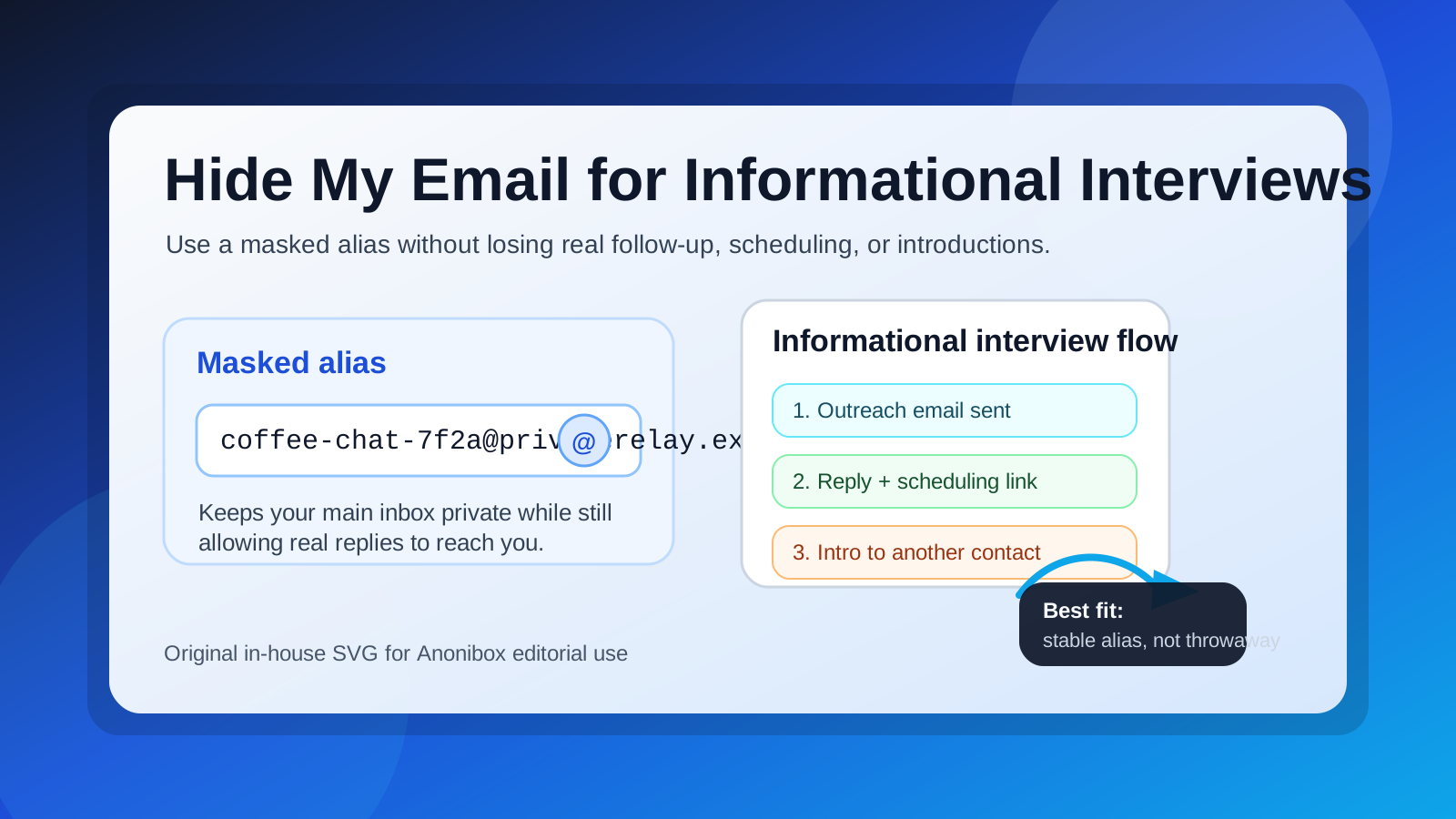
Yes — you can use Hide My Email for informational interviews, but it works best when the alias forwards reliably and stays active long enough for real follow-up. If you expect scheduling links, thank-you notes, introductions, or later career conversations, a stable alias is usually safer than anything disposable.
That is the key trade-off: Hide My Email gives you more privacy than sharing your main inbox, but informational interviews often turn into ongoing relationships rather than one-off signups. Used thoughtfully, it can be a smart middle ground.
Why this question matters
Informational interviews sit in a very different category from coupon signups, webinar registrations, or low-trust free-trial forms. You are usually contacting a real person: an alum, a recruiter, a hiring manager, a founder, a former coworker, or someone a mutual contact introduced. Even when the first exchange is small, the relationship can become more important over time.
Someone might reply with a quick yes today, but they might also follow up next week with a scheduling link, send a referral two months later, or remember you when a role opens. That means your contact method needs to do two things at the same time:
- protect your personal inbox from unnecessary exposure
- stay dependable enough for slower, human follow-up
Hide My Email can absolutely help with the first goal. The real question is whether your setup also supports the second one.
What Hide My Email is actually good at
Hide My Email is useful because it lets you share an alias instead of exposing your main address directly. Messages still reach you, but the other person does not immediately get your core inbox identity. For privacy-conscious job seekers, that is appealing. You can start a conversation without handing your primary address to every platform, directory, conference registration form, or cold outreach contact.
For informational interviews, that privacy buffer can be valuable if you are:
- currently employed and keeping your search discreet
- contacting people through alumni groups or industry communities you do not fully trust yet
- trying to keep networking messages out of your everyday personal inbox
- limiting how widely your real address gets shared in professional circles
That makes Hide My Email more serious than a throwaway inbox, but still more private than using your everyday account everywhere.
When Hide My Email works well for informational interviews
1. Early outreach to a real person
If you are sending a thoughtful first message to ask for 15 or 20 minutes of career advice, a masked alias can work perfectly well. The other person can reply normally, and you still keep your main address private.
2. Networking platforms with uncertain privacy practices
Some alumni portals, professional communities, event platforms, and “contact this mentor” tools are useful but noisy. They may send reminders, newsletters, or other messages you never asked for. An alias can help you stay reachable without making your main inbox part of that system forever.
3. Career exploration before you trust the channel
If you are exploring a new field, reaching out to people in adjacent industries, or reconnecting with loose contacts, using an alias gives you a little breathing room. You can see who replies and which conversations matter before exposing more of your long-term contact identity.
4. Organizing networking separately from daily life
Even if forwarded messages still land in your primary mailbox, aliases can be filtered, labeled, and tracked. That makes it easier to keep informational-interview outreach separate from receipts, family email, school notices, and everything else competing for attention.
Where Hide My Email can create friction
The weak point is not whether messages can arrive. The weak point is continuity. Informational interviews often evolve into a chain of small professional interactions, and that is where a privacy tool can either help or get in the way.
Reply consistency matters
If your alias setup makes replies confusing, the conversation starts feeling messy. You do not want someone to answer one address and then see later follow-up come from a totally different identity without context. That does not always break the relationship, but it adds unnecessary friction.
Long-tail follow-up is common
Not every helpful response comes quickly. Someone may answer after a conference, after a launch week, or after catching up on email later. If you disable the alias too soon, forget which alias you used, or stop monitoring the inbox underneath it, you can miss the exact message that mattered.
Introductions raise the stakes
Informational interviews often lead to “You should talk to my colleague” or “I can introduce you to someone on that team.” Once a second or third person is involved, your contact channel needs to feel stable. A fragile setup makes a warm introduction feel colder than it should.
Some people prefer straightforward professional contact
Most people will not care what tool sits behind your email address, but some professionals do feel more comfortable when the address looks stable and easy to remember. Hide My Email is usually fine, but it is still smarter when the rest of your communication is clear, polite, and consistent.
Hide My Email vs temporary email vs a separate networking inbox
These tools solve different problems, and mixing them up leads to bad decisions.
Hide My Email
Best when you want privacy without losing normal email functionality. It is useful for real outreach, replies, and controlled identity exposure.
Temporary email
Best for low-trust signups, one-time downloads, or quick access where long-term follow-up is unlikely. If you are only testing a platform or grabbing a resource before any real person is involved, a disposable option like Anonibox can be the smarter first step. But once an actual informational interview is happening, disposable email usually becomes too risky for follow-up.
Separate inbox
Best when networking has become a serious ongoing workflow. If you are doing informational interviews regularly, attending events, reaching out to alumni, and managing introductions every week, a dedicated inbox is often easier to live with than a patchwork of temporary and masked addresses.
In other words: Hide My Email is a middle-ground tool. It is stronger than throwaway email for real conversations, but it is not always better than running a separate stable networking mailbox.
Best practices if you use Hide My Email for informational interviews
Keep the alias active longer than you think you need
Do not treat the conversation like a same-day exchange. Give it room. Leave the alias active through follow-up, scheduling, thank-you notes, and any delayed replies.
Test forwarding before important outreach
Send yourself a message first. Then reply to it. Make sure messages arrive quickly, replies make sense, and nothing is disappearing into spam or a misconfigured folder.
Use one stable alias pattern for networking
If possible, avoid creating a completely different identity for every single person. Informational interviews benefit from continuity. A stable networking alias or a small number of reusable aliases is usually better than constant churn.
Filter the messages into a dedicated folder
If the point is better organization, make the organization real. Labels, folders, or rules can keep informational-interview threads together so you can find them later when you need to send a thank-you note or follow up on advice.
Do not sound disposable in the message itself
Your email provider matters less than your behavior. A thoughtful subject line, a clear reason for reaching out, a short ask, and a polite close matter far more than whether the alias sits behind Hide My Email, a custom domain, or another service.
When you should skip Hide My Email and use something else
Hide My Email is not the best answer in every situation. A different setup may serve you better if:
- you expect a long series of conversations over months
- you are actively building a recognizable professional identity
- you want every networking message in a truly separate mailbox instead of forwarded into your main one
- you may need cleaner account recovery or thread management later
- you are already doing enough outreach that a dedicated networking inbox would reduce confusion
In those cases, a separate professional or job-search inbox often beats alias forwarding. You give up a little convenience up front, but gain stability later.
A simple decision checklist
Before using Hide My Email for an informational interview, ask:
- Will this person possibly reply weeks or months from now?
- Am I likely to need introductions, scheduling links, or later follow-up from this thread?
- Does the alias forward reliably to an inbox I actually monitor?
- Can I reply cleanly without confusing the other person?
- Would a separate stable inbox serve this stage of my networking better?
If the alias is dependable and you are still in early or medium-trust outreach, it can be a strong choice. If the relationship may become ongoing and important, stability matters more than novelty.
Final answer
Yes, you can use Hide My Email for informational interviews, and in many cases it is a smart privacy-conscious option. It gives you a buffer between your main inbox and the outside world while still allowing real replies to come through.
But it is best when treated as a stable alias, not a disposable identity. Informational interviews are relationship-driven, and relationships need continuity. If your Hide My Email setup is reliable, monitored, and easy to reply from, it can work very well. If not, use a dedicated separate inbox instead and keep the disposable tools for lower-stakes signups.
The goal is simple: protect your privacy without becoming harder to reach. When your email setup does both, it is doing its job.