Usually no—not as your default. You can use your college email for career fairs when your student identity genuinely matters, but a stable inbox you control after graduation is usually the safer choice for recruiter follow-up.
The practical middle ground is simple: use your college address only when it helps you access a campus event or student-only employer program, keep a separate long-term job-search email for real conversations, and use a temporary inbox for low-trust signups, sponsor downloads, or one-off booth forms when you do not want your main inbox buried in marketing.
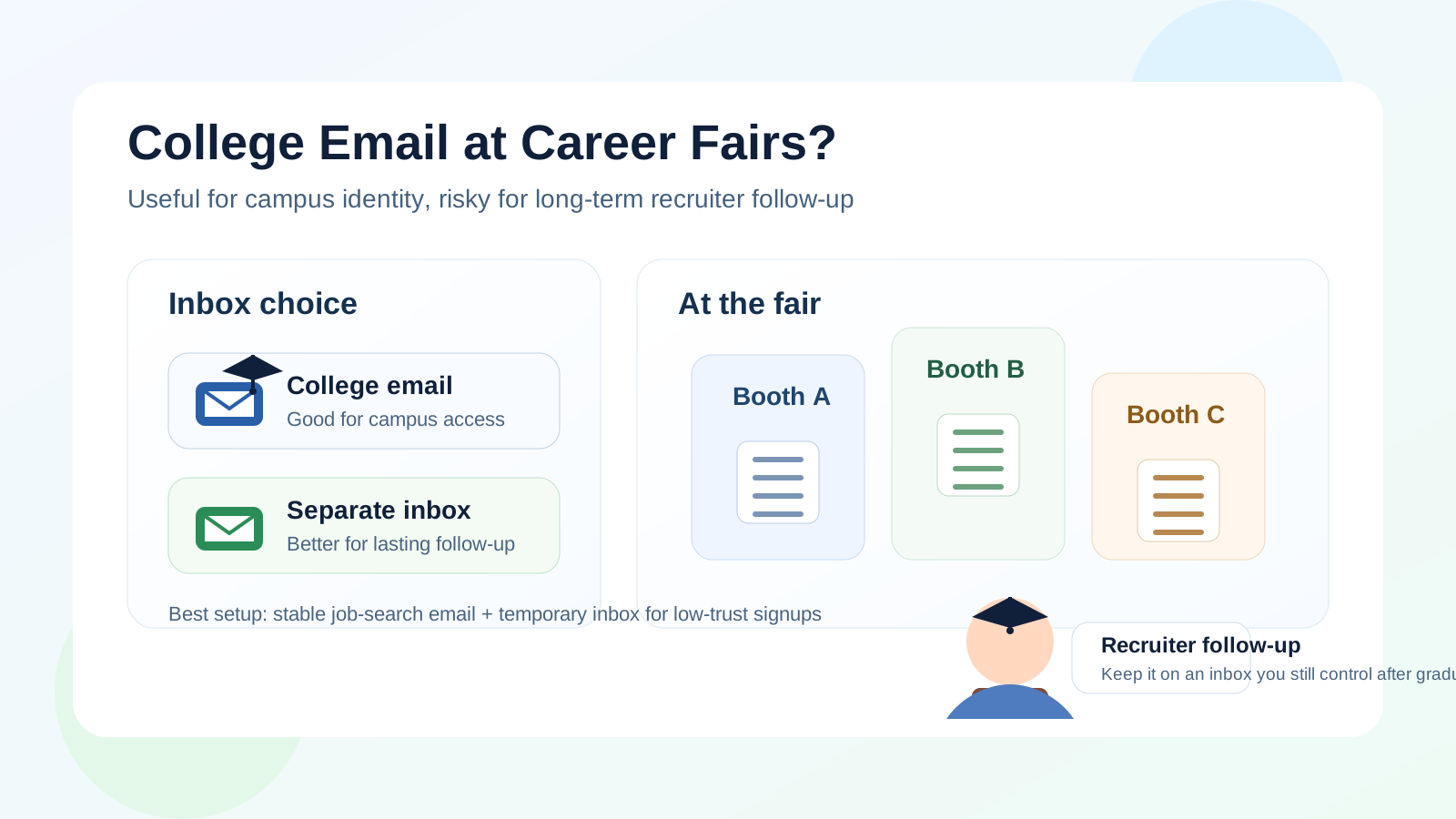
Why this question matters more at career fairs than students expect
Career fairs create a strange mix of formal hiring and high-volume lead collection. You may speak with ten employers in one afternoon, scan badge QR codes, submit interest forms on tablets, join talent communities, and hand over contact details to recruiters, campus ambassadors, and event sponsors. Some of those contacts are valuable. Many are just the start of a broad follow-up sequence.
That is why the email you use matters. A career fair is not the same as applying directly to one carefully chosen role. It is closer to giving your contact information to a whole stack of companies at once. If you use your college inbox for everything, you may end up mixing class announcements, financial-aid notices, internship reminders, and recruiter campaigns in one place. Worse, you may tie important follow-up to an address you could lose after graduation.
For students who care about privacy and organization, the best answer is not “always use college email” or “never use college email.” It is to match the address to the situation.
When a college email can make sense at a career fair
There are cases where a college email is reasonable, and sometimes even useful.
- University-hosted events: some campus career centers or employer sessions expect a student address for registration.
- Student-only opportunities: certain internships, co-ops, research programs, and new-grad pipelines are clearly targeted at enrolled students.
- Alumni and campus affinity: a school address can instantly signal that you belong to the institution hosting the event.
- Short-term access needs: you may need the address to unlock a fair platform, book an appointment, or retrieve event materials.
If that is the situation, using your college email is not automatically a mistake. It can be the simplest way to register and show that you are an active student. The problem starts when that same address becomes your default for every employer conversation after the fair.
The main risks of relying on your college email
1. You may lose access after graduation
This is the biggest issue. Some schools keep alumni accounts for years. Others restrict features, archive the mailbox, or remove access altogether after you leave. Recruiters do not operate on your school’s timeline. A conversation that starts at a fair in October could turn into an internship interview in January or a full-time opportunity months later. If the message lands in an inbox you no longer control, you can miss the moment completely.
2. Career-fair follow-up is often broader than you expect
Not every company you meet is writing a personal note. Many recruiters add students to newsletter-style sequences, event reminders, talent-community campaigns, and future-opportunities lists. That can be useful, but it can also create a lot of noise. If your college inbox is already full of campus communication, real recruiter messages may get buried fast.
3. School email is not the same as personal ownership
Your college email feels official, but it is still part of an institution you do not control. Account rules, forwarding policies, storage limits, and deactivation timelines belong to the school. For long-term career communication, most students are better off using an address they own directly.
4. It can make your job search harder to organize
If every class, professor, campus office, club, and recruiter is writing to the same inbox, your search gets messy. A separate professional inbox makes it much easier to filter, label, and respond quickly after a fair.
What is usually better than using your college email for everything?
For most students, the strongest setup is a dedicated job-search email that is personal, professional, and stable. That address should be one you can keep after graduation, after changing schools, or after moving between internships and jobs.
A good long-term inbox gives you:
- continuity after graduation
- clean separation from school administration email
- better filtering for recruiter follow-up and application updates
- less risk of missing opportunities in a crowded student mailbox
If you want even more control, you can pair that stable inbox with lighter privacy tools. For example, you might use an alias or a temporary address for low-stakes signups, vendor giveaways, or sponsor downloads at the fair, then move real employer conversations to your long-term inbox. That is where a tool like Anonibox can be useful: not as a replacement for serious recruiter follow-up, but as a buffer for the parts of the event that are more about lead capture than actual hiring.
A practical three-layer email strategy for career fairs
If you want a simple system that works, use three levels of trust.
Layer 1: college email for campus access only
Use your college address when the university event platform, student RSVP page, or employer verification process clearly expects it. This is about access and legitimacy, not long-term relationship management.
Layer 2: dedicated job-search inbox for real recruiter conversations
This should be the address you put on your resume, hand to recruiters you genuinely want to hear from, and use for applications after the fair. It should sound professional and be easy to monitor daily.
Layer 3: temporary or disposable inbox for low-trust forms
Some career fairs include sponsor booths, downloadable guides, raffles, webinar invites, and generic “join our talent community” forms that may produce more marketing than value. For those, a temporary inbox can protect your long-term address from unnecessary clutter. Just do not use a disposable inbox for anything you may need weeks later, such as interview scheduling, coding tests, or offer-related follow-up.
How to decide at the booth in real time
Students often need a fast rule while standing in front of a recruiter. Use this quick test:
- If it is only for event access or proving student status: college email is fine.
- If it is a company you seriously want to pursue: give your stable job-search email.
- If it is a vague signup, giveaway, or sponsor form: consider an alias or temporary inbox instead.
- If you are unsure how the email will be used: choose the address you will still control in six months.
That one habit prevents a lot of avoidable problems.
What to say if a recruiter asks for your student email
You do not need to make this awkward. If the recruiter wants to confirm you are a student, you can say something like: “My school email is for university access, but here is the address I use for applications and follow-up.” That keeps things professional while steering important communication to the inbox you actually want to manage long term.
Most recruiters will not care which address you prefer as long as it is clear, professional, and checked regularly. What matters to them is whether they can reach you reliably.
Common mistakes students make after career fairs
- Using the college inbox everywhere by default: convenient in the moment, messy later.
- Using a disposable inbox for serious conversations: fine for low-stakes forms, risky for interviews and offers.
- Forgetting to monitor the chosen inbox: even a perfect setup fails if you do not check it.
- Not recording who got which address: keep short notes on the companies you actually want to follow up with.
- Waiting too long to switch channels: if a conversation becomes real, move it to your stable professional inbox quickly.
Best practices before and after the fair
Before the event, set up one polished job-search inbox with a simple signature, a professional display name, and filters for recruiter mail. If you expect lots of registrations or sponsor traffic, prepare a separate temporary inbox as well. During the fair, be intentional about which address you give out. After the fair, follow up from the inbox you want associated with your long-term search so recruiters see a consistent contact point.
It also helps to save recruiter names, company names, and context immediately after each conversation. That way, when a message lands later, you know whether it came from a serious conversation, a talent-pool signup, or a general marketing list.
Final answer
You can use your college email for career fairs, but it usually should not be your default address for everything. It works best for student-status access and campus-specific registration, not for the long tail of recruiter follow-up that may continue well beyond the semester.
For most students, the smarter setup is a stable personal job-search inbox for real opportunities, with a temporary or disposable inbox reserved for lower-trust signups that may create spam later. That gives you the benefits of privacy, cleaner organization, and long-term reliability without making you harder for good recruiters to reach.