Usually yes. A burner email can be a smart way to handle career fairs when you want privacy, less spam, and cleaner follow-up without exposing your main inbox everywhere.
The catch is that a good career-fair burner email should be stable enough to monitor for a while. If it disappears too fast, you may miss real recruiter replies. The safest approach is usually a separate short-term address you control for the active hiring window, not a one-click inbox you forget the next day.
Career fairs compress a lot of exposure into a small amount of time. You may talk to ten employers in an afternoon, scan QR codes, join talent communities, register for follow-up webinars, and hand over your contact details to recruiting teams you barely know yet. That makes career fairs one of the easiest places for your personal inbox to get flooded with recruiter campaigns, event reminders, and generic hiring emails that keep coming long after the event ends.
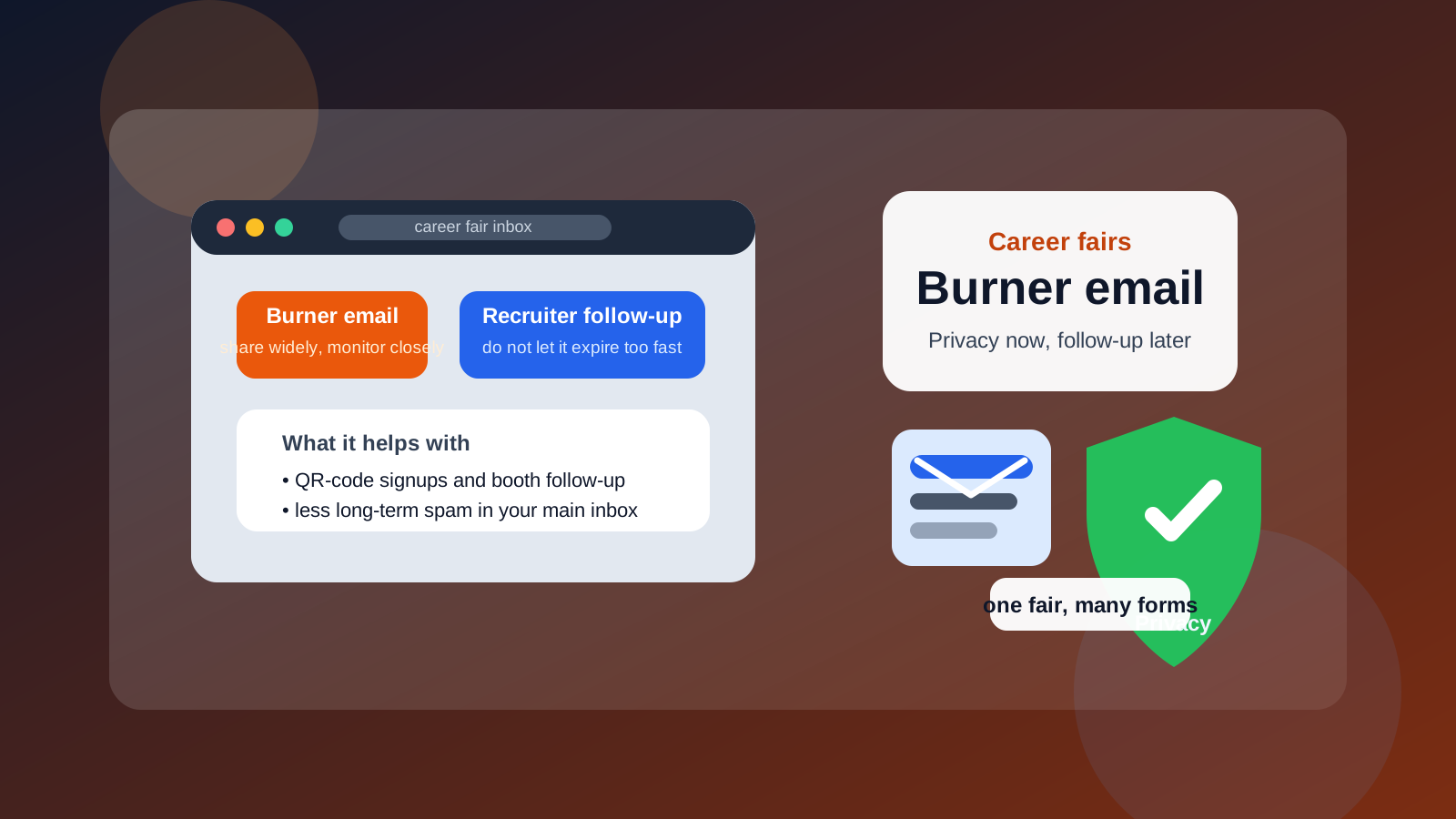
Short answer: yes, but use the right kind of burner email
If your goal is to protect your main inbox while still staying reachable, a burner email makes sense for career fairs. It gives you separation, helps reduce spam, and lets you walk away later if the address starts collecting too much noise.
But there is an important distinction here. A burner email for career fairs should not behave like a vanishing coupon inbox. Career fairs can lead to delayed recruiter follow-up, second-round outreach, internship invitations, and reminders to finish an application days or even weeks later. You want something disposable in the long term, not disposable in the next ten minutes.
Why career fairs create more email exposure than many people expect
People often think of a career fair as a few conversations and maybe a résumé handoff. In practice, it is a data-sharing event. Even when recruiters are acting normally and professionally, your email may pass through event software, registration forms, employer follow-up systems, applicant tracking systems, and marketing-style talent community tools.
That means one event can trigger all kinds of messages:
- recruiter follow-up after a quick booth conversation
- requests to complete a formal application later
- event recordings or employer webinars
- talent network invitations
- newsletter-style recruiting campaigns
- job alerts for roles you never seriously considered
If you use your everyday personal email for all of that, the noise can linger far beyond the fair itself. A burner email gives you a layer of distance so your main inbox does not become the permanent home for every employer blast and event signup tied to that day.
What a burner email is supposed to do at a career fair
For this use case, a burner email is best thought of as a buffer inbox. It is an address you can use widely during the event, keep active while real opportunities are still developing, and retire later if it becomes noisy.
That is different from two other common setups:
- Main personal email: easiest in the moment, but it gives up privacy and can clutter an inbox you probably want to keep clean.
- Truly temporary or disposable inbox: useful for one-off access, but risky if a recruiter replies after the inbox is gone.
A burner-style career-fair address sits in the middle. It is separate enough to protect your main email, but dependable enough to support actual follow-up.
When a burner email for career fairs makes the most sense
- You expect high volume. If you are planning to talk to a lot of employers, collect many QR codes, or register for multiple company sessions, your inbox exposure will spike.
- You want more privacy. You may not want your main long-term personal email copied into every recruiting tool and mailing list connected to the fair.
- You are testing the market quietly. If you are employed or not fully committed yet, a separate contact lane makes the process easier to control.
- You are a student or recent graduate. Career fairs often generate a mix of serious employer follow-up and generic recruiting traffic, so separation is useful.
- You want a cleaner post-event workflow. One inbox for fair-related outreach makes it easier to review, prioritize, and eventually shut things down.
If the event is tiny and you are only targeting one or two employers you already know well, a burner email may be optional. But for large fairs, campus recruiting events, industry expos, and multi-employer networking environments, it is often a practical upgrade.
When it is the wrong tool
A burner email can also be overused. If you make it feel too disposable, you create a follow-up problem instead of solving a privacy problem.
It is usually the wrong choice when:
- you cannot reliably monitor it for several weeks
- the address looks sketchy or unprofessional
- you plan to use it for a long, formal hiring process but may lose access
- you are applying to a dream employer that may contact you later in a slower process
In those cases, a more stable separate email may be better than a harder-disposable burner setup. The rule is simple: protect your privacy without becoming hard to reach.
Burner email vs separate email vs temporary email
Burner email
Best when you want a controlled address for a short-to-medium follow-up window and the option to retire it later. This is often a strong fit for career fairs.
Separate email
Best when you want a dedicated long-term job-search inbox that may stay useful across many events, applications, and recruiter conversations. It gives you the most stability.
Temporary or disposable email
Best for low-trust booth downloads, one-off registrations, or signups where you do not care about an ongoing relationship. A tool like Anonibox can be useful here when you simply need access to a link or file without feeding your main inbox into a long marketing sequence.
For many people, the smartest real-world setup is mixed. Use a stable burner-style or separate career-fair inbox for genuine recruiter contact, and reserve true temporary inboxes for low-value forms around the edges.
How to set up a burner email for career fairs the right way
1. Make it professional enough to share confidently
Recruiters do not need your address to look fancy, but it should look normal and readable. If the inbox name looks random or suspicious, it can undermine the benefit. Clean and simple wins.
2. Keep it alive through the follow-up window
This matters more than people expect. Do not create something you plan to abandon immediately after the event. Give it enough life to catch delayed recruiter messages, interview requests, or reminders to complete applications.
3. Check it consistently after the fair
The biggest failure mode is not the address itself. It is forgetting to watch it. For the first couple of weeks after a fair, check the inbox daily. After that, monitor it at a pace that matches the employers and roles you care about.
4. Use the same address consistently during the event
If you give one recruiter your main email, another your burner email, and a third a temporary inbox you will never see again, you create confusion for yourself. Pick a clear rule and stick to it.
5. Pair it with a clean follow-up system
Use folders, labels, or stars to separate serious recruiter conversations from generic event traffic. A burner email works best when you can quickly identify what deserves a response and what can safely be ignored.
How to use it at the fair without missing real opportunities
Not every booth interaction deserves the same level of trust. That is why a career-fair email strategy should be selective rather than all-or-nothing.
- Real recruiter conversation: use the burner-style address you actively monitor.
- Employer asks you to apply later: use the same monitored address so the thread stays connected.
- Random giveaway, vendor sheet, or generic newsletter signup: this is where a more temporary address may be enough.
- Promising company you genuinely want to pursue: make sure the contact method you give is one you will still be checking when they circle back.
The point is not to hide from every employer. The point is to avoid handing your main inbox to every system and every form by default.
Common mistakes to avoid
- Letting the inbox expire too fast. This is the biggest risk and the easiest way to lose recruiter follow-up.
- Using a sloppy-looking address. Privacy is good; looking unserious is not.
- Treating all fair interactions the same. A serious recruiter conversation is different from a random booth signup.
- Failing to reply from the same address. Consistency makes threads easier for both you and the recruiter.
- Using it for important personal logins unrelated to the fair. A burner address should be a boundary tool, not a permanent identity anchor.
A quick decision checklist
- Will I share my email with many employers in a short time?
- Do I want to keep recruiter and event traffic out of my main inbox?
- Can I monitor this address through the full follow-up period?
- Do I need a real contact method for serious recruiters and a more disposable option for low-trust signups?
If the answer to those questions is mostly yes, a burner email is probably a smart move.
Final answer
So, should you use a burner email for career fairs? Usually yes—especially if you want privacy, less spam, and a cleaner job-search workflow. It is one of the easiest ways to keep career-fair exposure from taking over your personal inbox.
Just make sure your burner email is not so temporary that it breaks recruiter follow-up. The best career-fair setup is usually an address you can share widely today, monitor reliably for the next few weeks, and retire later if it becomes more trouble than it is worth.