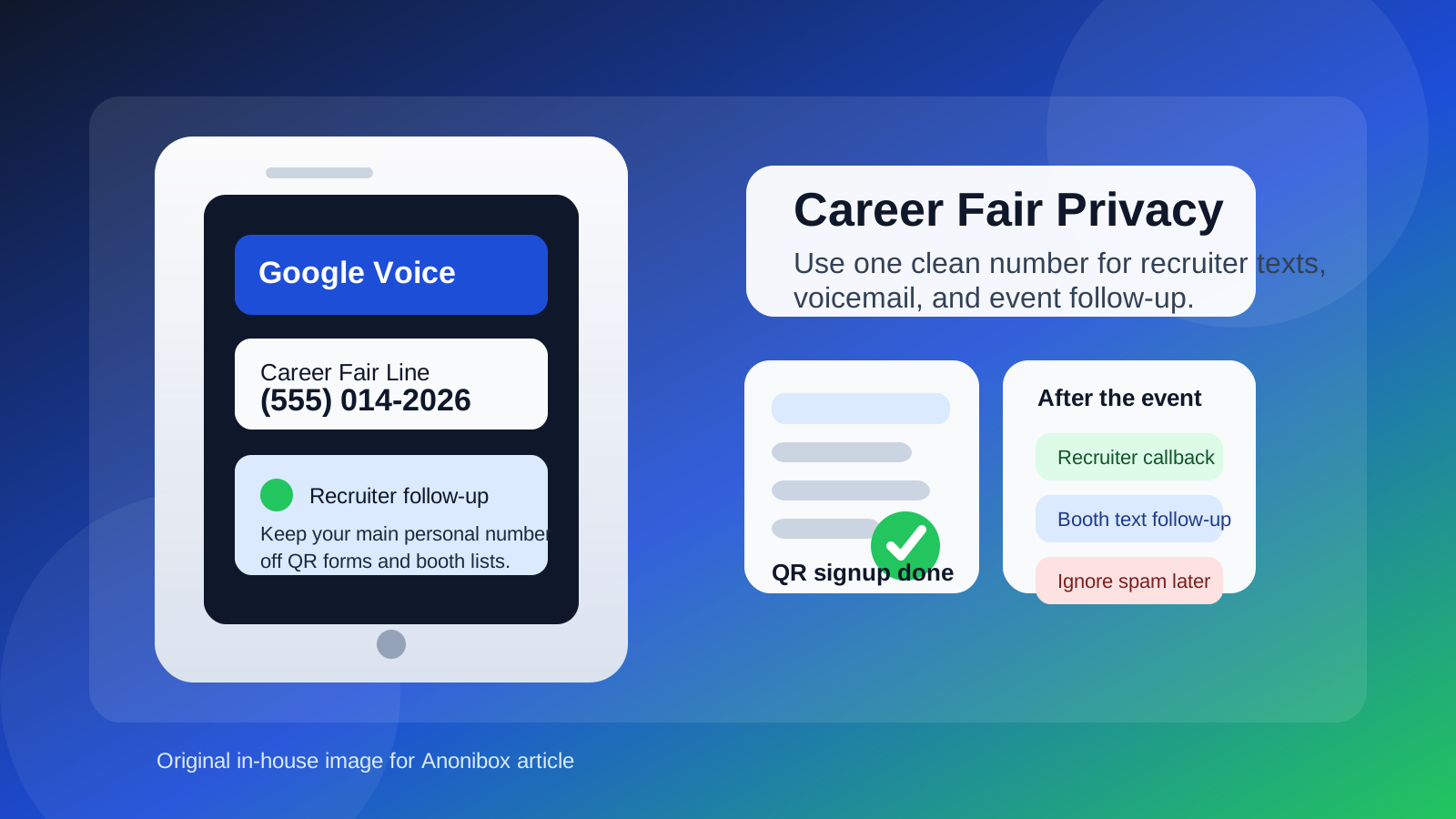
Yes, you can use Google Voice for career fairs, and for many job seekers it is a smart way to stay reachable without putting your main personal number on every recruiter form, booth scan, and follow-up list.
It works best as a separate, stable callback number for career-fair conversations—not as a magic privacy shield and not as a throwaway line you stop checking before recruiters reply.
Why this question matters at career fairs
A normal job application usually sends your contact details to one employer through one careers page. A career fair is messier. In one afternoon, you might hand over a resume, scan multiple QR codes, sign up for talent communities, join event apps, and talk to recruiters who later share your information internally. That is useful when the follow-up is real, but it also means your phone number can spread farther than you intended.
That is why Google Voice comes up so often in job-search privacy conversations. Career fairs create a middle ground between a one-to-one application and a broad public signup. You want recruiters to reach you, but you may not want your everyday number tied to every list, text thread, and event database you touch.
Short answer: when Google Voice is a good fit
Google Voice is usually a good fit for career fairs when you want a separate number for recruiter texts, screening calls, voicemail, and scheduling, but you still need a line that feels stable and professional. It is especially useful if you are attending a high-volume campus fair, an industry expo, or a hiring event where your details may end up with many employers in a short time.
It is less useful if you treat it like a disposable trick and then stop monitoring it. Recruiters do not always follow up the same day. Some reach out a week later after candidate review, and a number that exists only briefly can cost you a legitimate opportunity.
What Google Voice does well for career fairs
1. It gives you separation without a second phone
The biggest advantage is simple: you get a separate number without carrying another device. That makes it easier to protect your main personal line while still looking reachable and organized to employers.
If you are scanning employer forms all day, that separation matters. You do not have to decide in every moment whether a particular booth deserves your long-term personal number. You can use one dedicated fair-and-job-search number instead.
2. It helps you organize recruiter follow-up
Career-fair outreach can blur together fast. One recruiter texts about an internship, another leaves a voicemail about a virtual info session, and a third sends a follow-up after reviewing your resume. When all of that lands in a dedicated number, it is easier to keep context straight.
You can tell yourself, “This line is for fairs, recruiter contact, and active job-search follow-up.” That is cleaner than letting event traffic mix with family, friends, deliveries, banking alerts, and everything else on your main number.
3. It gives you a better privacy boundary
Google Voice does not make you anonymous, but it can reduce how widely your primary number spreads. That matters because career-fair data often has a long tail. An employer may keep your details for future roles, an event platform may keep your registration, and a staffing contact may message later than you expected.
A separate number gives you more control if that follow-up becomes noisy. You can filter it, de-emphasize it, or eventually retire it without disrupting your core personal line.
4. Voicemail and call screening can reduce chaos
Not every recruiter call comes at a convenient time. A separate number lets you keep a professional voicemail, screen unknown calls more calmly, and return the important ones when you are ready. That is especially useful during a busy fair week when you may be juggling classes, work, interviews, and travel.
What Google Voice does not solve
It is not a guarantee against spam
If you share the number widely enough, some low-value outreach may still reach it. The benefit is that the noise lands in a separate lane instead of your main personal line.
It is not ideal if you never test it
Do not assume any separate number setup will behave exactly the way you expect. Test calling, texting, voicemail, notifications, and any forwarding behavior before the event. The worst time to discover a setup problem is when a recruiter is trying to confirm an interview slot.
It is not a replacement for judgment
A separate number improves boundaries, but it does not turn every message into a safe one. Scam texts, vague recruiter outreach, and suspicious requests are still possible. If someone pushes you to click strange links, share sensitive data, or move immediately to another platform, the fact that the number is separate does not make the interaction trustworthy.
Google Voice vs your main number vs a burner number
These options sound similar, but they solve different problems.
Your main personal number
This is easiest if the event is small, low-volume, and focused on a few employers you already trust. It gives direct access, but it also creates the most long-term exposure.
Google Voice or another stable separate number
This is usually the best middle ground for active job seekers. It keeps you reachable for legitimate follow-up without tying every fair interaction to your primary day-to-day number.
A very short-lived burner number
This can be useful in low-trust situations, but it is often too fragile for real career-fair recruiting. A recruiter may not call until next week. If your number has already gone cold, the privacy gain was not worth the missed callback.
That is why the best answer is often not “use the most disposable option possible.” It is “use the most controlled option that still supports real follow-up.”
When Google Voice is probably the best choice
- You are attending multiple career fairs over a short period.
- You expect QR-code signups, employer app registration, or booth form fills.
- You want recruiter texts and voicemails separated from your personal life.
- You are exploring a job change quietly and want tighter boundaries.
- You already use a separate job-search email and want your phone workflow to match.
- You want the option to scale down that contact lane later if it becomes noisy.
In those cases, a dedicated number is practical, not paranoid. It simply makes the contact environment easier to manage.
When your regular number may be fine
- The event is small and targeted.
- You expect to speak with only a few employers.
- You already know the companies well.
- You do not mind long-term recruiter access to your main line.
- You prefer the fewest moving parts possible.
A separate number is a boundary tool, not a rule. If the exposure is low and the event is high-trust, your normal number may be perfectly reasonable.
How to use Google Voice well at a career fair
Set it up before the event
Test texts, missed-call alerts, voicemail, and any forwarding settings. Make sure you understand how messages arrive and where you will check them.
Use it consistently
If this is your career-fair number, put it on the resume version, QR contact page, or digital card you expect recruiters to use. Mixed numbers create confusion and missed follow-up.
Keep the voicemail professional
A simple greeting with your name is enough. You do not need to explain that the number is “temporary” or “for career fairs.” The goal is professionalism, not disclosure of your workflow.
Label contacts fast
After each meaningful conversation, save the contact with the company name and a quick note such as “engineering internship booth” or “healthcare analyst recruiter.” Career fairs create memory blur, and that tiny habit pays off later.
Move strong leads into a longer-term process
If an employer becomes a serious opportunity, keep the channel monitored and organized. You can continue using the same number through the hiring process, or you can transition later if needed. Just do it intentionally, not because you forgot to maintain the line.
How this fits with your email strategy
Phone privacy works better when it matches your email strategy. A lot of job seekers think carefully about inbox clutter but forget that phone exposure can get messy just as quickly after a big event.
A practical setup often looks like this:
- a stable email address for legitimate recruiter follow-up,
- a separate phone number for calls and texts tied to the search, and
- a temporary inbox workflow for low-trust downloads, one-off booth promos, or mailing-list signups that do not need a long-term reply channel.
That is where Anonibox can fit naturally. If you want access to a brochure, webinar link, giveaway, or generic event list without feeding your primary inbox, a temporary address can help. For real recruiter conversations, though, you usually want a stable email plus a stable callback number.
Red flags after you share any number
- Messages that never clearly identify the employer or role.
- Pressure to click unfamiliar links right away.
- Requests for money, equipment purchases, or upfront fees.
- Demands for sensitive documents before the company is verified.
- Requests for one-time verification codes.
- Pushy attempts to move immediately to another platform without context.
Those are reasons to slow down and verify independently. A separate number helps contain the exposure, but it does not replace normal caution.
A quick decision checklist
Before you use Google Voice for a career fair, ask yourself:
- How many employers and platforms will likely get this number?
- Do I want recruiter follow-up separated from my main personal line?
- Will I reliably monitor the number for at least a few weeks?
- Would email alone be enough, or do I genuinely want a phone channel?
- Am I choosing a stable contact workflow rather than the most disposable one?
If the honest answers point toward volume, uncertainty, and a need for cleaner boundaries, Google Voice is usually a sensible choice.
Final answer
Yes, you can use Google Voice for career fairs, and for many people it is one of the best ways to balance privacy with reachability. It lets you accept recruiter texts, voicemails, and scheduling calls without placing your main personal number on every event form and follow-up list.
Just use it as a controlled, professional contact lane—not as a throwaway identity. Test it before the event, monitor it carefully afterward, and pair it with a clean email workflow. Done well, it gives you better boundaries without making you harder for the right employers to reach.