Yes, Proton Mail can be a good choice for career fairs if you want a more private inbox without making recruiter follow-up unreliable.
It is usually a better fit than throwaway temp mail for real career fair conversations, because recruiters often reply later with application links, interview requests, and follow-up questions.
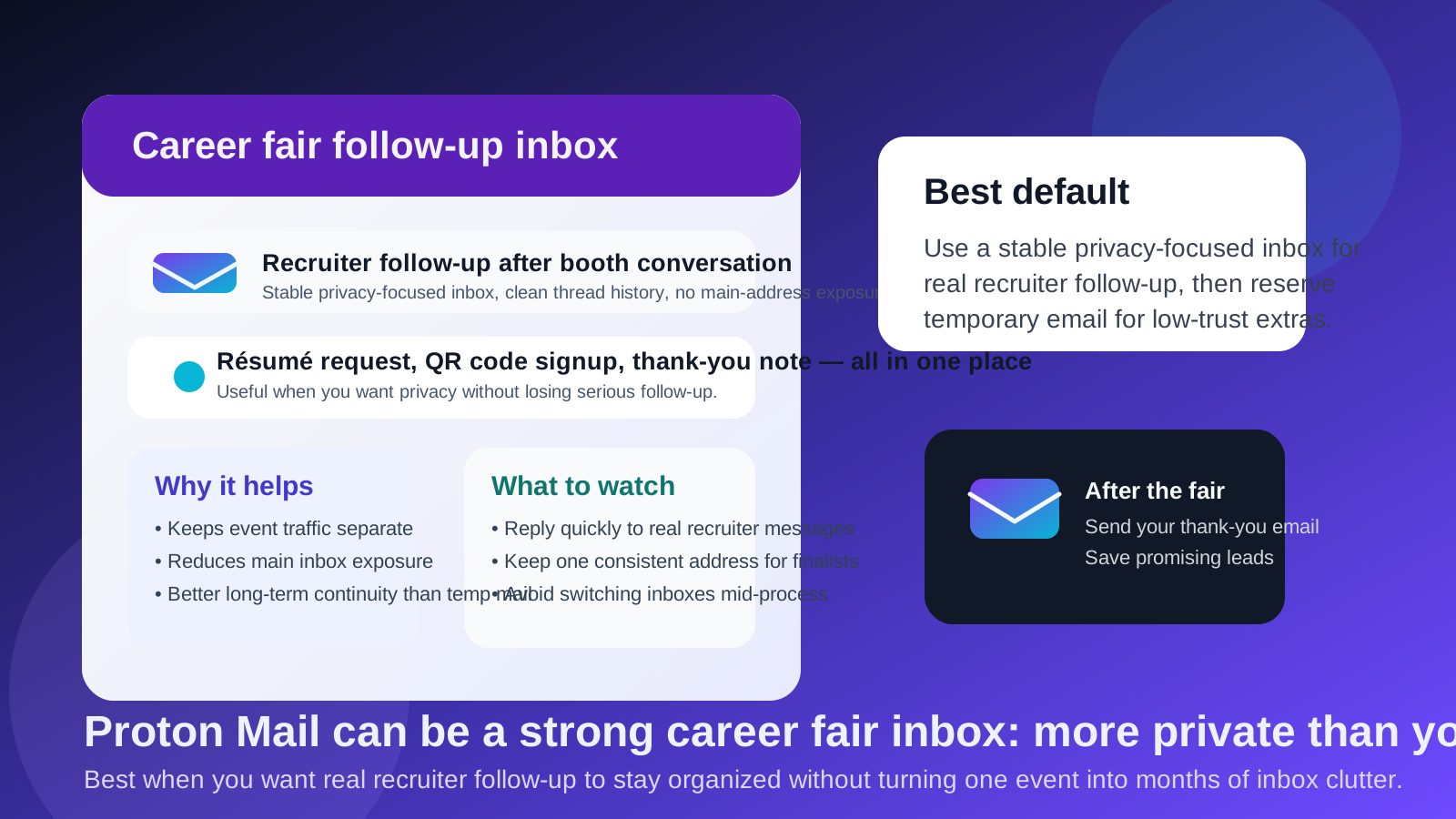
Why this question matters at career fairs
Career fairs compress a lot of contact sharing into a short window. You may scan event QR codes, upload a résumé to an employer portal, join a mailing list for a booth, hand over your contact details to recruiters, and send same-day thank-you emails after conversations. That creates a privacy problem fast, because not every interaction deserves your oldest personal inbox.
At the same time, career fairs are not the same as low-trust coupon signups or one-time downloads. Some of the people you meet may turn into real interviews, referrals, or internship leads. That means the inbox you use needs to do two jobs at once: reduce unnecessary exposure and still support dependable follow-up.
That is where Proton Mail makes sense for some job seekers. It is not disposable, so it can handle a longer conversation. But it can still give you cleaner separation than using the same address tied to years of shopping accounts, newsletters, and random online logins.
Short answer: Proton Mail is often a smart middle ground
If you want something more durable than temporary email but more privacy-conscious than your main personal or work address, Proton Mail is a strong middle-ground option for career fairs.
It is usually more practical than a disposable inbox because recruiter replies often arrive later, not just in the moment. It is also often better than using your work email, which can create obvious privacy and visibility issues. The main caveat is that you still need to monitor it carefully and use it consistently once a conversation becomes real.
What Proton Mail does well for career fairs
1. It keeps event traffic out of your main inbox
Career fairs can create far more email than people expect. Even one afternoon can trigger recruiter follow-up, talent community invites, event recap emails, webinars, role alerts, and future-campus-recruiting campaigns. If you use your main personal address everywhere, that traffic can keep arriving for months.
A separate Proton Mail inbox gives you a cleaner boundary. You still receive the messages you need, but you do not automatically blend them into the inbox you use for everything else in your life.
2. It is more reliable than temporary email for real opportunities
Temporary email can be useful for low-trust forms, gated downloads, and one-off resources you do not care about later. Career fairs are different. A recruiter may message you that evening, three days later, or two weeks later. A disposable inbox is often too fragile for that kind of timeline.
Proton Mail works better when continuity matters. If someone wants to send a formal application link, confirm availability, or follow up after reviewing your résumé, a stable inbox is simply more practical.
3. It can make your search easier to organize
One underrated benefit of a dedicated career-fair inbox is clarity. When messages from recruiters, event platforms, and employer systems all land in one separate place, it becomes easier to track which booth led to which next step. That can be surprisingly helpful after a large fair where the details blur together.
You can also use folders, labels, or a simple manual system to separate “real lead,” “generic outreach,” and “follow up later.” That kind of organization matters more than people think when several employers contact you at once.
4. It offers a more professional long-term option than a throwaway address
A recruiter who liked your résumé will usually be more comfortable emailing a normal-looking long-term address than a temporary inbox that may disappear or look obviously disposable. Proton Mail avoids a lot of that friction. It still feels like a real inbox because it is one.
Where Proton Mail can still create problems
You still have to check it consistently
A separate inbox only helps if you actually watch it. If you create a career-fair address and then forget to monitor it for a few days, you can easily miss the exact messages you wanted to preserve. Privacy is not useful if it costs you real opportunities.
Switching addresses mid-process can get messy
If you meet a recruiter at a booth using one address, then apply later with a different address, and then reply from a third address, the thread can become harder to follow. This does not always break the process, but it can create unnecessary confusion. Once an employer looks promising, consistency usually matters more than experimentation.
A privacy-first inbox is not the same thing as a low-friction inbox
Proton Mail can be a strong choice, but it is not magic. You still need to write clearly, reply on time, check spam folders, and keep your inbox organized. An employer will judge your responsiveness more than your provider choice.
When Proton Mail is a good choice for career fairs
- You want separation from your main personal inbox: useful if you expect a lot of event-related follow-up.
- You want something more durable than temp mail: good when a conversation might continue for weeks.
- You do not want to use your work email: especially if you are job hunting discreetly.
- You are attending a large or mixed-quality event: some contacts may be worthwhile, others may just add noise.
- You are willing to monitor the inbox seriously: because reliability matters more than the provider brand.
When something else may be better
A dedicated non-disposable job-search inbox
If you already have a separate long-term inbox for your search and it is clean, professional, and easy to manage, you may not need to switch providers just for a career fair. The main goal is separation and reliability, not using a particular mail brand.
Temporary email for low-trust extras only
This is where Anonibox fits naturally. If a booth wants your email for a one-time brochure, a gated resource, or a generic giveaway you do not care about later, a temporary inbox can be useful. But that is different from the address you want a real recruiter to use. Temporary email is great for low-stakes signups; it is often the wrong choice for conversations that might become interviews.
Your main personal inbox
Your main inbox can still be fine if you are highly selective and only sharing it with a few employers you trust. But once a fair involves multiple scans, portals, and mailing lists, the clutter can grow quickly.
A practical setup for using Proton Mail at a career fair
1. Create one dedicated inbox before the event
Do this before you start registering, not halfway through the day. A single dedicated address is easier to remember, easier to type, and easier to keep consistent across conversations.
2. Decide what belongs there
Use it for recruiter conversations, booth follow-up, and serious application links connected to the event. If you also want to protect yourself from lower-value signup clutter, use temporary email only for the truly low-trust extras, not for the employers you may actually want to hear from.
3. Send same-day follow-up from the same address
If you promised a recruiter you would send your résumé, portfolio, or thank-you note, use the same inbox they already saw. That keeps the thread clean and makes it easier for them to recognize you.
4. Label messages by employer right away
After the fair, a few minutes of organization can save a lot of confusion. Sort messages by employer name, role, and next step. Career-fair follow-up is often more chaotic than traditional online applications, so simple organization pays off fast.
5. Move serious opportunities into a stable long-term workflow
If one conversation turns into a real hiring process, make sure you can keep using the same inbox consistently through interviews, scheduling, and offer-stage communication. The point is not to keep changing tools. It is to choose a setup you can maintain comfortably.
Common mistakes to avoid
Using throwaway email for real recruiter contact
If the conversation matters, use a stable inbox. Losing a good lead because the address was too temporary is an avoidable mistake.
Using your work address while searching quietly
This creates unnecessary visibility and account-control risk. A personal job-search inbox is usually safer.
Mixing too many inboxes at once
One address for the booth, another for the ATS, and another for follow-up sounds clever until you are trying to remember which recruiter has which contact information. Simpler is usually better.
Ignoring your inbox after the event
Career fair momentum fades quickly. If you choose a separate Proton Mail inbox, treat it like an active workstream for several days after the event.
Final answer
So, should you use Proton Mail for career fairs? In many cases, yes. It gives you a cleaner privacy boundary than your main inbox and a more dependable long-term option than temporary email.
For most job seekers, the best approach is simple: use a stable separate inbox for real recruiter follow-up, use temporary email only for lower-trust extras when appropriate, and keep your contact method consistent once an opportunity becomes serious. That balance protects your privacy without making you harder to reach when a good lead finally arrives.