Yes, SimpleLogin can be a smart choice for career fairs if you want a stable alias that protects your main inbox while still letting recruiters reach you after the event.
It is usually a better fit than a throwaway address when real follow-up may happen days or weeks later, because career fairs often turn quick introductions into delayed email conversations.
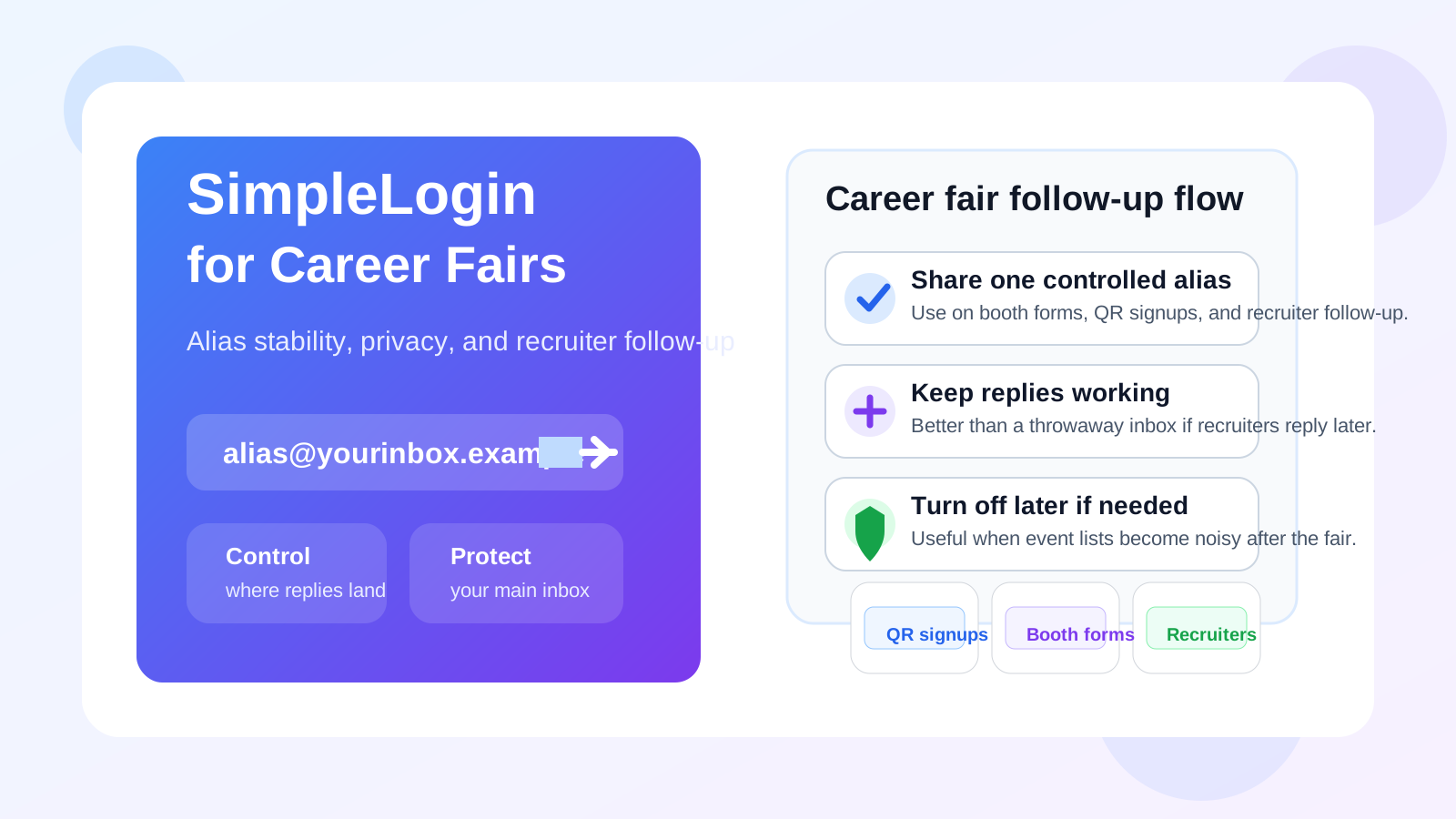
That is the practical answer behind the question should you use SimpleLogin for career fairs. Career fairs create a strange mix of urgency and uncertainty. You may scan QR codes at employer booths, upload your resume to event platforms, sign up for recruiter follow-up, join talent communities, and exchange contact details with people you have only spoken to for a few minutes. Some of those connections are valuable. Others turn into newsletters, generic hiring blasts, or vague recruiter outreach that keeps arriving long after the fair ends.
SimpleLogin sits in a useful middle ground between using your personal inbox everywhere and using a short-lived disposable address that may disappear before someone sends a real opportunity. If your goal is to reduce spam without breaking legitimate follow-up, an alias-based setup often makes more sense than either extreme.
If you already use privacy tools like Anonibox to avoid exposing your primary address too broadly, the same logic applies here: use a controlled address for early-stage contact, but keep it reliable enough that real recruiters can still reach you.
Why career fairs are different from ordinary signups
Career fairs are not the same as downloading a whitepaper or starting a free trial. The contact information you share there often moves across several systems at once. A recruiter may type it into an applicant tracking system. An event platform may keep it for future promotions. A company may add it to a campus or candidate newsletter. Another representative may follow up later with a role that was not even open on the day you met.
That makes career-fair email tricky. You want to be reachable, but you also want to stay in control. If you give out your main personal email to every booth, you may be dealing with low-value follow-up for months. If you use a purely temporary inbox, you may miss the one recruiter who circles back two weeks later with an interview invitation.
That is why this question is less about anonymity and more about controlled reachability. A good career-fair email setup should do three things:
- let you receive real replies from employers you care about
- keep random follow-up out of your primary inbox
- give you an exit path if a particular source becomes noisy
Why SimpleLogin can be a good fit for career fairs
SimpleLogin is useful in this situation because it is an alias service rather than a disposable inbox in the narrow temp-mail sense. That difference matters. A disposable email is excellent for one-time verification or a fast signup you do not expect to revisit. Career fairs are different. A conversation that starts at a booth on Tuesday may turn into a screening email next week, a request for availability next month, or a message about a related opening after the event is over.
With an alias-based approach, you are not forced to choose between total exposure and short-term access only. You can share an address that is not your main inbox, keep receiving replies, and still limit how broadly your primary identity spreads.
That makes SimpleLogin appealing for career fairs in particular because the follow-up window is unpredictable. Some employers move fast. Others do not. A stable alias gives you more room to stay reachable without handing your everyday inbox to every event form and recruiter database.
When using SimpleLogin for career fairs makes sense
Using SimpleLogin for career fairs is often a smart move when the event includes a lot of broad networking but only a smaller number of employers you genuinely expect to pursue. It works especially well if you want one address that feels professional enough to share, but you do not want every booth interaction tied directly to your main inbox forever.
It is a strong option when:
- you expect multiple employers to contact you after the event
- you want to keep recruiter traffic separate from personal mail
- you are signing up through QR-code forms, event apps, or booth tablets
- you want to track where follow-up is coming from
- you want the ability to disable or isolate an address later if it becomes noisy
For students, career changers, and active job seekers attending large fairs, this can be especially useful. A single event may expose your email to dozens of organizations, and not all of them will use that access carefully. A stable alias helps you stay open to real opportunities without making your primary inbox the long-term landing zone for every event list.
When SimpleLogin may be the wrong choice
SimpleLogin is not automatically the best answer for every career-fair situation. If you are already using a separate professional email account just for your job search and you are happy with that setup, adding another layer may not help much. Some people do better with a simple dedicated Gmail, Outlook, or custom-domain address that they can manage directly without introducing alias rules into the process.
It may also be the wrong fit if you are likely to forget which alias you used, if you are uncomfortable managing forwarded mail, or if you need an address that you plan to keep as your long-term public professional identity. In that case, a separate permanent email account may be more straightforward.
And if the fair involves very formal employer communication, background documents, or application portals that you expect to use for months, you may decide to move from an alias to a more permanent job-search inbox once a company becomes serious.
SimpleLogin vs temporary email for career fairs
This is the comparison that matters most for Anonibox readers. A temporary email service and an alias service solve related but different problems.
A temporary inbox is best when you need a fast address for a one-time form, quick access, or a signup you may never care about again. It is ideal when your priority is avoiding spam from uncertain sources and you do not expect important long-term replies.
A SimpleLogin-style alias is better when you want privacy but still need continuity. Career fairs often create exactly that need. You might not trust every booth enough to give them your primary email, but you also do not want a real recruiter’s follow-up to fail because the address expired or because you stopped watching it.
In practice, many job seekers can use both approaches:
- use a temporary inbox for low-value event downloads, one-off gated materials, or generic sponsor signup pages
- use a stable alias for employer conversations where follow-up could actually matter
That division keeps your setup human and practical. Not every interaction deserves the same level of permanence.
What about using a separate regular email instead?
A separate regular email account is still a very good option, and for some people it is the simplest answer. If you want one address for all job-search activity, a dedicated inbox can work better than juggling multiple aliases. The trade-off is that once that inbox gets overloaded, you have less granular control over where the noise came from.
An alias can be more precise. It gives you the option to route or shut off a specific contact stream later. That can be useful after a large career fair where you want to keep one employer’s messages but mute a flood of generic outreach from another source.
So the question is not whether aliases are universally better than separate email accounts. It is whether you want source-level control. For many privacy-conscious job seekers, that is the main advantage.
Best practices if you use SimpleLogin for career fairs
Use one clear alias for the event
If you are attending a single fair or a short cluster of fairs, keeping one consistent alias for that period is usually easier than creating a different one for every booth. It makes follow-up easier to track and reduces the chance that you forget which address you shared.
Keep your resume and email aligned enough to avoid confusion
If your resume includes a separate primary contact email, make sure your alias does not create a credibility problem. The goal is controlled privacy, not looking evasive. Use something clean and professional enough that a recruiter will not hesitate to write back.
Check follow-up promptly
Career-fair momentum can disappear fast. If you use an alias for the event, monitor it closely for the next several days and then periodically afterward. The value of a privacy setup drops fast if you miss the real messages you were trying to protect.
Move serious opportunities to a more permanent channel when appropriate
Once an employer becomes a real prospect, it is fine to shift the conversation to the address you plan to monitor long term. Privacy at the top of the funnel does not mean you need to stay behind the same alias forever.
Pair email privacy with phone discipline
If a fair is also collecting phone numbers, think about whether you want to share your main personal number with every employer. An email alias helps, but it does not solve the rest of your contact exposure by itself.
What to avoid
- Using a silly or disposable-looking alias that feels unprofessional
- Forgetting to monitor the alias after the event
- Treating every employer interaction like a one-time anonymous signup
- Using a temporary inbox where delayed recruiter follow-up is likely
- Assuming privacy tools replace normal job-search judgment
You still need to watch for scam outreach, suspicious links, vague recruiter messages, and pressure to move into sketchy channels. A cleaner email strategy helps, but it does not guarantee that every follow-up is safe or worth your time.
A practical setup for career fairs
If you want a simple playbook, this is a strong way to handle a career fair without overcomplicating it:
- Create or choose one professional-looking alias for the event.
- Use it for recruiter conversations, booth signups, and talent-community forms that may matter later.
- Use a temporary inbox instead for low-value sponsor downloads or one-off event extras you do not care about long term.
- Monitor the alias closely for at least a couple of weeks after the fair.
- Move promising employers into your longer-term job-search workflow once the relationship becomes real.
This approach respects how career fairs actually work. Some contacts are fleeting. Some become meaningful later. Your email strategy should reflect that instead of forcing every interaction into the same bucket.
How this fits a broader privacy strategy
Career fairs are one part of a larger job-search privacy problem. The same questions come up across job applications, networking events, informational interviews, recruiter outreach, and resume databases: how reachable should you be, how much spam are you willing to absorb, and how much of your primary identity do you want to expose early?
That is where tools like Anonibox and alias services complement each other. Anonibox-style temporary email is useful when the interaction is uncertain, disposable, or likely to create noise. A stable alias is useful when the interaction is uncertain but may still matter later. A separate permanent job-search inbox is useful when you want a long-lived professional channel. They are not all interchangeable, but together they let you match the tool to the level of trust and follow-up you actually expect.
Quick decision checklist
Before you choose your career-fair email strategy, ask yourself:
- Do I expect real recruiter follow-up after this event?
- Do I want to protect my main inbox from booth signups and mailing lists?
- Would a temporary inbox be too short-lived for this situation?
- Would a separate regular job-search inbox be simpler for me to manage?
- Do I want the option to shut off or isolate one source later?
If your answers point toward privacy plus continuity, SimpleLogin is often a strong choice.
Final answer
So, should you use SimpleLogin for career fairs? Usually yes, if you want more privacy than your main inbox gives you but more stability than a disposable address can offer.
It is a practical option for people who want to stay reachable for real employer follow-up without opening their primary email to every fair signup and recruiter list. It is not the only good approach, and it is not mandatory, but it is a smart middle-ground tool. For many job seekers, that balance is exactly what makes it useful.