Yes, you can use text messages for career fairs, but mainly for short logistics and light follow-up after a recruiter has clearly invited that channel.
For anything substantial, email is usually safer and more professional, and a separate number or separate inbox helps protect your privacy during the job search.
Why texting comes up at career fairs in the first place
Career fairs are fast, noisy, and built around brief conversations. You may speak with a recruiter for two minutes, hand over a resume, scan a QR code, and move on to the next booth. Because the setting is so compressed, job seekers often wonder whether text messages are the easiest way to stay visible afterward.
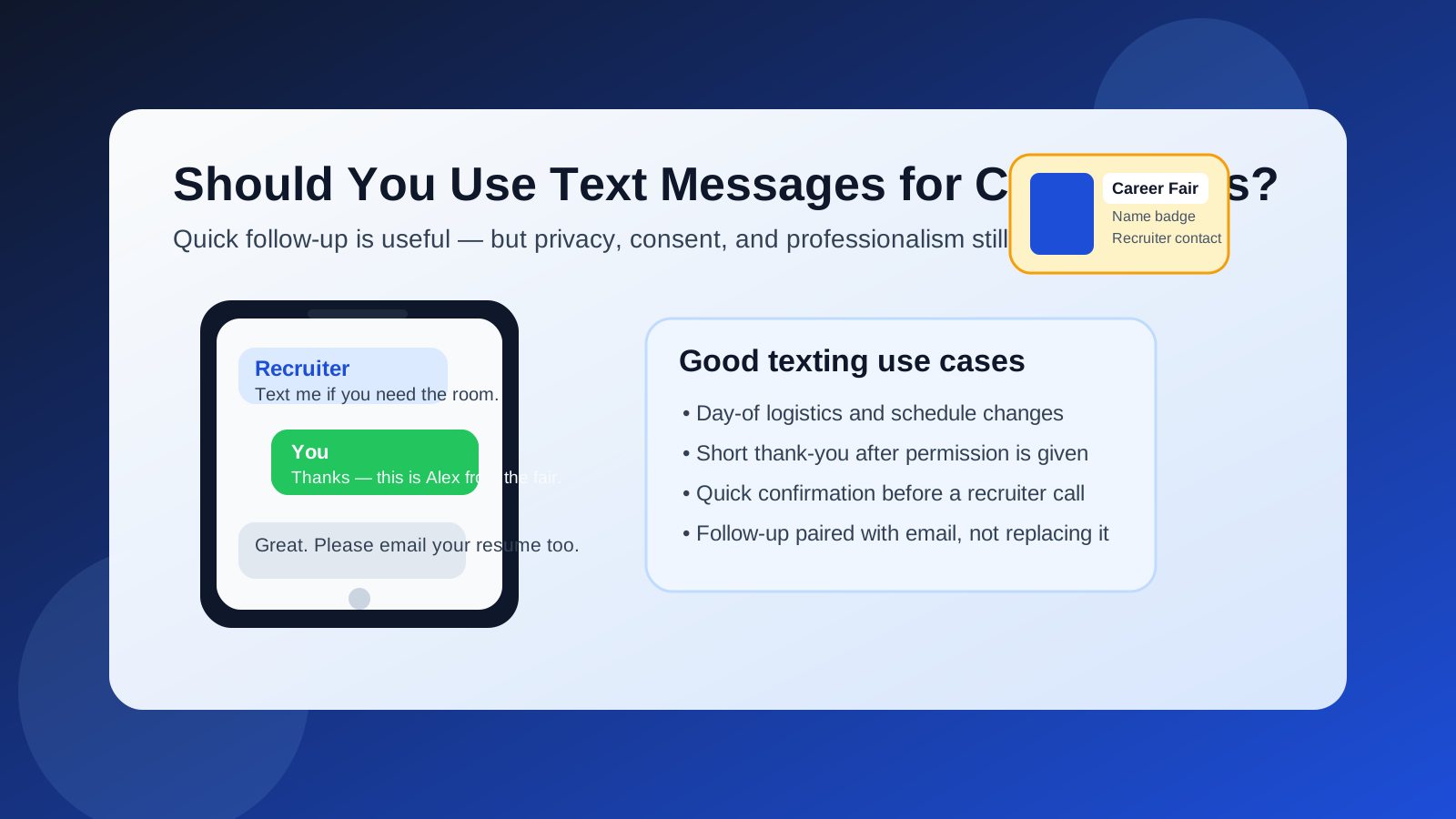
Sometimes they are. A recruiter might say, “Text me if you cannot find the interview room,” or “Send me a quick note so I can remember you from the fair.” In those moments, texting can be practical. It is immediate, easy to read, and useful for quick logistics.
But practical is not the same thing as ideal for every situation. Texting sits in a more personal channel than email. It can feel intrusive, informal, or hard to manage if you use it too early, use it too often, or give your main number to every employer at the event.
Short answer: texting works best for quick logistics, not for the whole relationship
The safest rule is simple: use text messages for brief, timely communication, not for your entire career-fair follow-up strategy. If a recruiter invites texting, a short message can help confirm your identity, handle same-day scheduling, or acknowledge a next step. If you are sending a detailed thank-you, following up on an application, or trying to make a professional impression after the fair, email usually does a better job.
That distinction matters because texting and email do different things well. Texting is fast and lightweight. Email is better for context, attachments, links, and a more polished professional tone. Most job seekers do best when they treat texting as a support channel, not the primary one.
When text messages make sense for career fairs
1. The recruiter explicitly tells you to text
If a recruiter hands you a card and says texting is fine, that is your clearest green light. At that point, you are not forcing an informal channel onto someone who does not want it. You are using the contact method they offered.
2. You need same-day logistics
Career fairs can lead to fast-moving next steps: a screening slot later that afternoon, a room change, a delayed recruiter, or a request to confirm arrival. Texting is excellent for that kind of short, time-sensitive communication.
3. You are confirming identity after a brief booth conversation
If a recruiter meets hundreds of candidates in one day, a quick text like “Hi, this is Maya — we spoke at the engineering fair about the data analyst internship” can create a useful memory anchor, especially when paired with a follow-up email.
4. You are keeping the message short and professional
One or two concise texts are very different from turning the interaction into a long informal chat. A short confirmation can help. A running message thread usually does not.
When texting is a bad idea
1. You are using it as your first major follow-up without invitation
If the recruiter never suggested texting, jumping straight into their phone with a long message can feel too personal. Email is normally the safer default after a fair unless the recruiter clearly points you elsewhere.
2. You want to send detailed information
Resumes, portfolio links, writing samples, and thoughtful thank-you notes are usually better over email. Texting makes those materials look squeezed into the wrong format.
3. You plan to send multiple reminders
Repeated texts can cross the line from organized follow-up into pressure. Career-fair recruiters often return to a large backlog of candidates after the event. If you need more than one brief note, email is usually the better channel.
4. You are privacy-conscious and only have one personal number
Your main number is valuable personal contact information. If you hand it out too widely, you may invite spam, cold recruiting, scam texts, or unwanted follow-up long after the fair is over.
The privacy risks of texting recruiters from career fairs
Texting feels casual, but the privacy trade-offs are real. Once your number is out, you do not fully control where it goes. A legitimate recruiter may save it in an ATS note, share it internally with another hiring manager, or reach out months later about a different role. That is not necessarily wrong, but it does expand your exposure.
There is also the scam problem. Job seekers are common targets for fake recruiter texts because the messages sound plausible: “We saw your resume at the fair,” “reply now to continue,” or “move to WhatsApp for immediate onboarding.” If you have been actively handing out your number, those messages may feel more believable than they should.
Another issue is boundaries. Text messages land in the same space as your family chats, delivery alerts, and personal conversations. Some people are fine with that. Others prefer a cleaner separation between job search communication and the rest of their life.
Best practices if you do use text messages for career fairs
Use a separate number if privacy matters to you
If you expect to attend multiple fairs, network heavily, or apply widely, a dedicated job-search number is often smarter than using your main line everywhere. It gives you a way to stay reachable without permanently tying every recruiter interaction to your primary personal number.
Keep the first text short
Your text should identify you quickly and give the recruiter enough context to remember the interaction. Long paragraphs rarely help.
- State your name
- Mention the career fair
- Reference the role or team
- Include one clear purpose
Move substantial communication to email
If you are sending a resume, following up on a role, or thanking the recruiter in a more thoughtful way, email is usually the better channel. You can still use text to say, “Thanks again — I just sent the follow-up email we discussed.”
Do not overshare by text
A recruiter does not need sensitive information over text. Do not send ID numbers, tax forms, banking details, or anything that would be difficult to recover if the conversation turns out to be fraudulent or misdirected.
Be careful with timing
Texting late at night, very early, or repeatedly over a weekend can make a poor impression. Even though texting feels instant, it still belongs to someone’s personal device.
Simple examples that work better than overthinking it
Here are a few message styles that are usually safer and more effective:
- After permission is given: “Hi Jordan, this is Elena from today’s university career fair. Thanks for speaking with me about the operations analyst role.”
- For logistics: “Hi Jordan, this is Elena from the career fair. I’m at the student center entrance now — just confirming the interview room number.”
- To bridge to email: “Thanks again for your time today. I just sent the resume and follow-up note we discussed by email.”
Each one is brief, clear, and easy to process. None tries to replace a proper application or a professional follow-up message.
Better alternatives when you want more control
If the real goal is not speed but organization and privacy, texting may not be the best first tool. In many cases, a separate email strategy is cleaner. You can still respond quickly without turning your phone number into the default contact method for every recruiter you meet.
That is where tools like Anonibox can fit naturally into a broader job-search privacy workflow. If you want recruiter follow-up emails, event registrations, employer newsletter signups, or booth QR-code submissions to stay separate from your main inbox, a dedicated temporary or compartmentalized email setup can reduce clutter while preserving your primary address for higher-trust contacts.
You can also combine approaches. For example, use a dedicated email for most career-fair follow-up, keep a separate number for time-sensitive calls or texts, and reserve your main personal number for employers that move into serious interview stages.
So, should you use text messages for career fairs?
Usually, yes — but only in a limited, intentional way. Text messages are useful for quick logistics, light confirmations, and brief follow-up when a recruiter has clearly invited that channel. They are much less useful as your main professional communication method after the fair.
If you want to protect your privacy, keep your texting short, use a separate number when practical, and shift anything substantial to email. That gives you the speed of texting without giving up control of your contact information or your professional tone.
The best outcome is not “text everything” or “never text.” It is using the right channel for the right moment. At a career fair, that usually means text for fast logistics, email for real follow-up, and a privacy-conscious setup that keeps your job search organized instead of spilling into every corner of your personal phone.