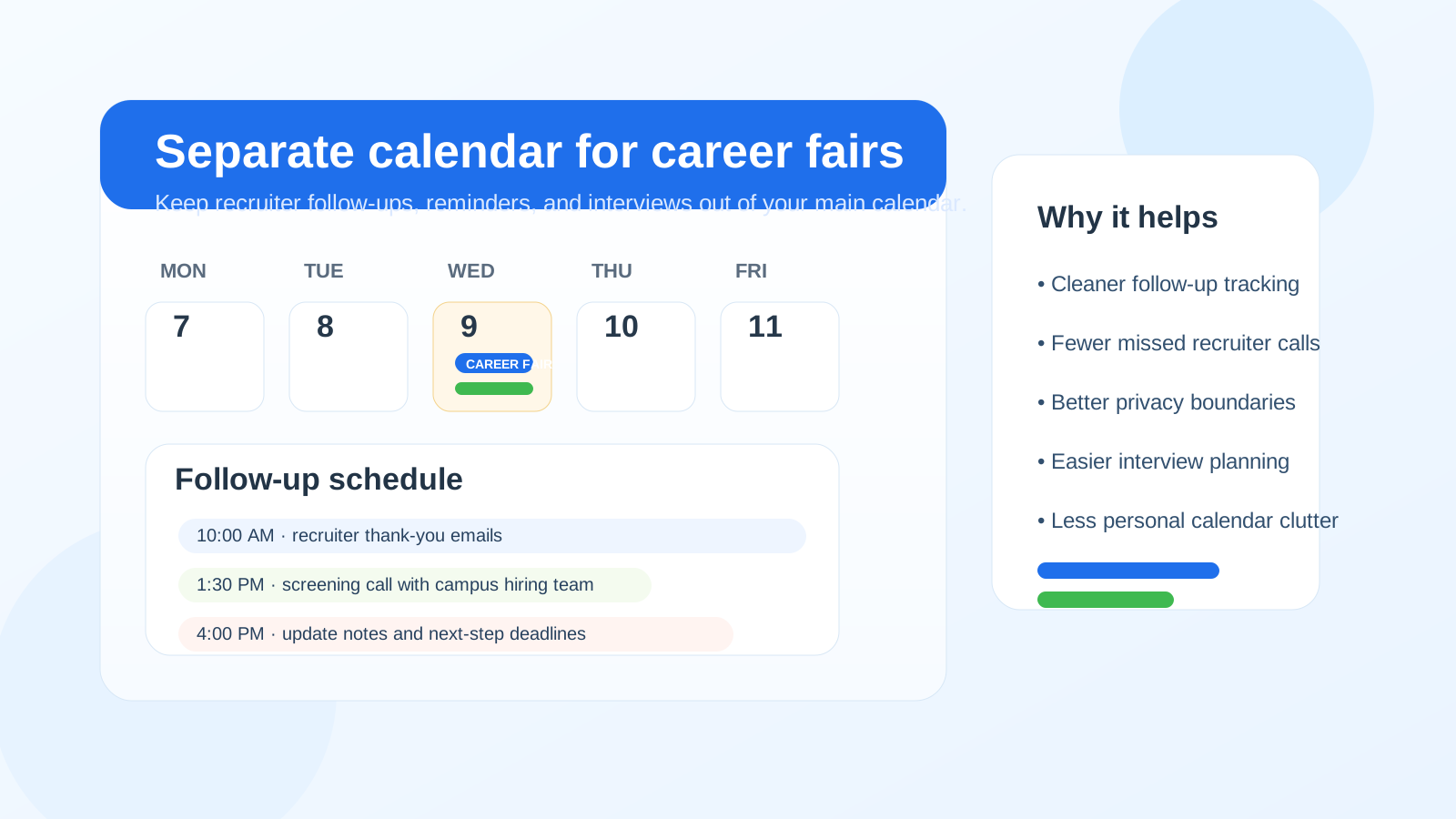
Yes — using a separate calendar for career fairs is usually a smart idea if you expect recruiter follow-ups, screening calls, or interviews afterward.
It is not mandatory for everyone, but it helps you keep names, deadlines, meeting links, and next steps organized without mixing job-search activity into your personal or work calendar.
Why this question matters more than it seems
A career fair can look simple from the outside. You show up, talk to recruiters, hand over a resume, and go home. In reality, one event often turns into a chain of follow-up tasks: thank-you emails, application deadlines, recruiter messages, screening calls, interview invitations, and reminders to send documents or portfolio links.
That is why the answer to should you use a separate calendar for career fairs is often yes. The fair itself may last only a few hours, but the scheduling mess can continue for days or weeks. If every reminder ends up mixed into your normal calendar, it becomes easier to miss something important or lose the context around a recruiter conversation.
Short answer: when a separate calendar helps most
A separate calendar is most useful when you are:
- talking to several employers at the same event,
- actively job searching and attending multiple fairs or networking events,
- trying to keep job-search activity separate from your current employer,
- coordinating follow-ups across email, phone, and LinkedIn, or
- managing interviews, application deadlines, and travel details at the same time.
If that sounds like your situation, a dedicated calendar is not overkill. It is a simple organizational tool that reduces friction when the fair turns into real opportunities.
What can go wrong if you use your main calendar?
Some people assume they can just drop career-fair reminders into whatever calendar they already use. Sometimes that works. But there are a few common problems.
1. Important follow-ups get buried
If your main calendar is already full of classes, work shifts, client meetings, family plans, or personal errands, career-fair reminders can disappear into the noise. A recruiter follow-up that matters to your job search should not compete with “pick up groceries” and “dentist appointment” for attention.
2. Job-search activity becomes visible in the wrong place
If you use a work-managed calendar or a shared family calendar, you may not want career-fair entries appearing there. Even if no one is actively monitoring it, many people prefer not to expose job-search activity more than necessary.
3. Context gets lost fast
A reminder called “follow up with Emma” is not very helpful a week later if you met three different Emmas and cannot remember which company she represented. A separate calendar encourages cleaner labels, notes, and structure.
4. Schedule changes are harder to manage
Career-fair follow-up often moves quickly. A recruiter may suggest a call the next morning. Another might send a screening link with a short deadline. A separate calendar makes it easier to reshuffle those items without disturbing the rest of your life.
Privacy advantages of a separate calendar
The privacy angle matters too. A separate calendar will not make you anonymous, and it does not create any legal or security guarantee. But it can reduce unnecessary exposure.
- Less spillover into work systems: You avoid putting job-search items into employer-managed tools if you are currently employed.
- Better boundary control: You decide exactly which notifications, devices, and apps display career-fair reminders.
- Cleaner account separation: If you already use a separate job-search email, matching it with a separate calendar keeps the workflow consistent.
- Lower chance of accidental sharing: Shared household calendars and team calendars can reveal more than you intend.
If you already use a privacy-focused inbox setup or a separate address through a tool like Anonibox for signups and follow-ups, pairing that with a dedicated calendar usually makes the entire process feel more organized.
What should go in a career-fair calendar?
A separate calendar works best when you use it for more than just the fair date itself. Good entries include:
- the career fair event time and location,
- booths or employers you want to visit first,
- follow-up deadlines such as “apply within 48 hours,”
- scheduled recruiter calls or virtual screenings,
- reminders to send thank-you messages,
- notes about promised documents, such as a portfolio or writing sample, and
- interview blocks that come from the event afterward.
The calendar becomes more useful when each entry answers three questions at a glance: who is it with, what is the next step, and when does it happen?
How to set up a separate calendar in a practical way
You do not need a complicated system. In most cases, ten minutes is enough.
Pick the account carefully
If you are currently employed, avoid creating the calendar inside your work account. Use a personal account you control instead. If you are a student, think about whether your school account is stable enough after graduation or whether a long-term personal account makes more sense.
Name it clearly
Give it a simple name such as “Career Fair Follow-Ups” or “Job Search – Events.” Clear naming matters because it helps you spot the right calendar quickly when adding reminders from email or mobile apps.
Use clean event titles
Instead of vague entries like “call recruiter,” write titles like “Call with Acme campus recruiter” or “Send thank-you to Deloitte career fair contact.” Specific titles reduce confusion later.
Add notes while they are fresh
Right after the fair, add short notes inside each event if your calendar supports them. For example: “met at engineering booth,” “asked for portfolio link,” or “said to apply by Friday.” Those small details are easy to forget and often matter during follow-up.
Set reminders with intent
Use one reminder before the event and another follow-up reminder afterward. Career fairs create a burst of activity, and one reminder is often not enough.
Should you use a separate calendar if you are only attending one fair?
Maybe, but it depends on how serious the follow-up is likely to be. If you are casually attending one campus event and only plan to talk to a couple of companies, a dedicated calendar may be unnecessary. You can often manage with a few carefully labeled reminders in your normal calendar.
But if that one fair is central to your job search, or if you expect multiple conversations to turn into interviews, the separate calendar still has value. The question is less about the number of fairs and more about the amount of follow-up complexity.
When you probably do not need a separate calendar
A separate calendar is helpful, not mandatory. You may not need one if:
- your current calendar is lightly used and easy to manage,
- you are only tracking one or two low-stakes follow-ups,
- you do not mind career-fair entries appearing in your normal schedule, and
- you already have a disciplined reminder system elsewhere.
The goal is not to create busywork. The goal is to reduce missed steps and unnecessary exposure. If your existing setup already does that well, a second calendar may not add much.
Best practices after the career fair
Once the event ends, a dedicated calendar becomes even more valuable. A few habits help:
- Schedule follow-up within 24 hours: Recruiter conversations go cold quickly if you wait too long.
- Block time for applications: If a recruiter suggests specific roles, reserve time to apply while the conversation is still fresh.
- Track interview windows separately: Do not let screening calls blend into general reminders.
- Review the calendar every evening for a few days: Career-fair opportunities often arrive in clusters.
- Retire old entries once the event cycle ends: Keeping the calendar tidy makes it easier to reuse for the next fair.
Common mistakes to avoid
- Using vague labels: “Recruiter call” is much less useful than naming the employer.
- Mixing everything into a work calendar: That can create privacy discomfort you did not need.
- Relying on memory instead of reminders: Career-fair follow-up is exactly the kind of task people think they will remember and then forget.
- Creating a separate calendar but never checking it: Separation only helps if you actually use the system.
- Keeping no connection between tools: If your email, notes, and calendar all live in different places, create a simple routine for syncing them.
A simple decision rule
If career-fair activity is likely to create multiple moving parts — follow-ups, applications, calls, reminders, interview prep, or privacy concerns — use a separate calendar. If the event is minor and your current setup is already clean, you can probably skip it.
In other words, the right answer is not “everyone must do this.” The right answer is that a separate calendar becomes more useful as soon as the fair produces real momentum.
Final answer
So, should you use a separate calendar for career fairs? For many job seekers, yes. It is a practical way to keep recruiter follow-ups organized, protect privacy boundaries, and avoid losing important next steps in a crowded personal or work calendar.
You do not need a complicated productivity system. A simple dedicated calendar, clear event names, and a few smart reminders are usually enough. If the career fair is just a one-off browse, your normal calendar may be fine. But if you want cleaner organization and fewer missed opportunities, a separate calendar is often the better choice.