Yes — in many cases, using a separate Gmail account for informational interviews is a smart way to stay professional and reachable without mixing career conversations into your oldest personal inbox.
No, you do not need a brand-new account for every conversation, but one dedicated Gmail account often gives you better privacy, cleaner follow-up, and fewer missed replies than using the same inbox you use for everything else.
Why this question matters
Informational interviews sit in an awkward middle ground. They are more personal and long-lived than one-click form signups, but less formal than an active interview loop or signed offer process. You are usually reaching out to a real person for insight, context, or perspective. If the conversation goes well, that same person may later introduce you to someone else, reply with useful resources, or remember you when a role opens up.
That is why inbox choice matters. An informational interview email address has to do more than receive one confirmation message. It has to support outreach, thank-you notes, delayed replies, scheduling links, calendar invites, and long-tail follow-up that may happen weeks or months later. A separate Gmail account can handle that well because it gives you continuity without forcing those conversations into the inbox tied to the rest of your life.
Short answer: a separate Gmail account is often the best default
If you expect ongoing networking, alumni outreach, mentor conversations, or exploratory job-search discussions, a separate Gmail account is usually a very practical setup. It gives you a mainstream, familiar email provider that most people recognize, while creating cleaner boundaries between personal life and career exploration.
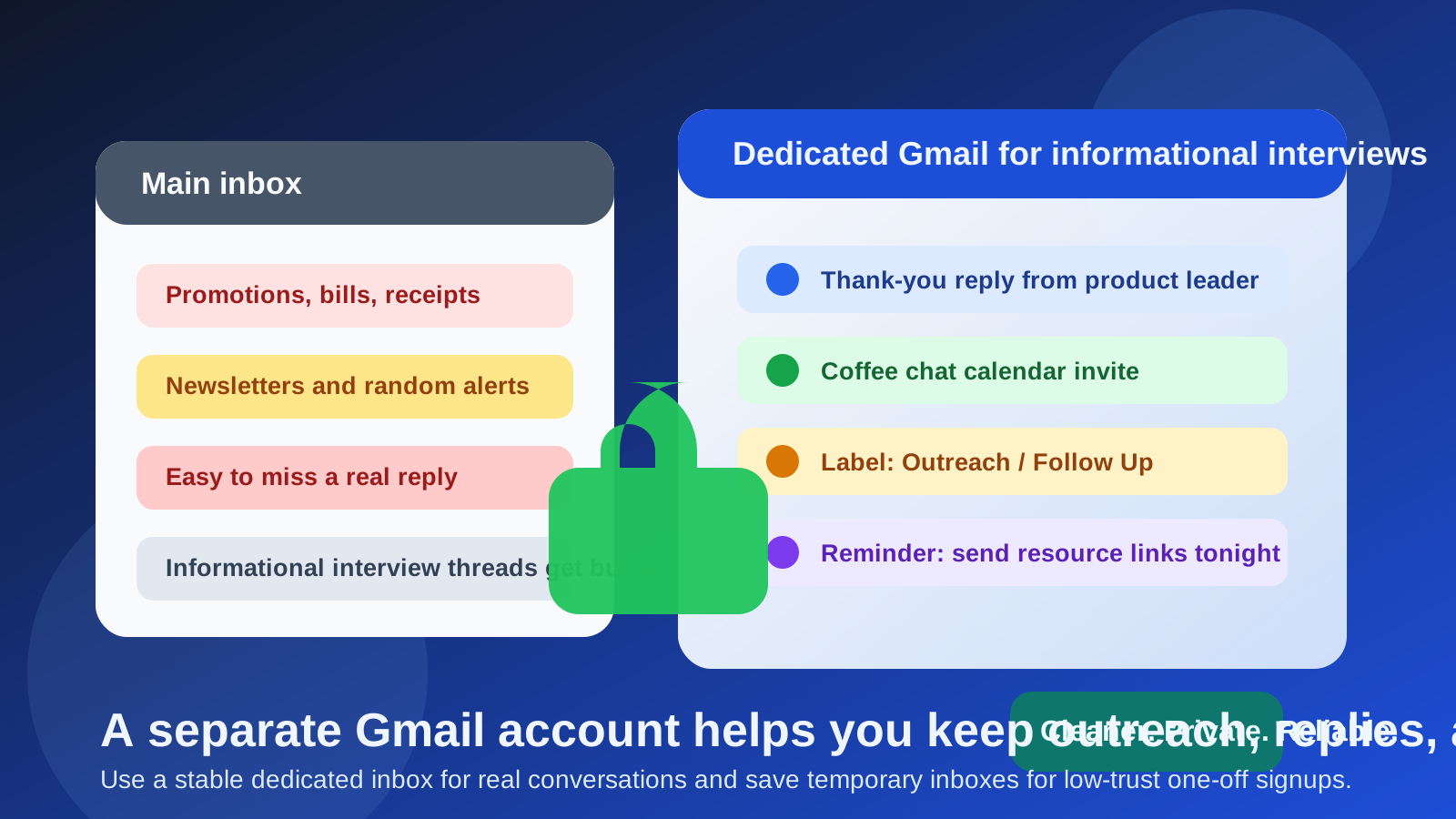
The biggest benefit is not that Gmail itself is magical. The benefit is separation. You can organize outreach more cleanly, protect your main inbox from extra exposure, and keep important replies from getting buried under shopping receipts, bank alerts, family logistics, or newsletters.
Why a dedicated Gmail account works well for informational interviews
1. It keeps follow-up visible
Informational interviews often produce messages you actually care about: a reply from an alum, a note with suggested reading, an introduction, or an invitation to continue the conversation later. Those messages are easy to lose in a cluttered everyday inbox. A separate Gmail account makes the signal much easier to spot.
2. It creates cleaner boundaries
Not everyone wants job-search or networking activity blended into the same inbox used for travel bookings, family plans, app logins, and random internet signups. A separate Gmail account creates a boundary without forcing you into a disposable setup that may be too fragile for real relationship-building.
3. It looks familiar and professional
Most people know what a Gmail address is. You are unlikely to create confusion by using one, and you do not need to explain the provider. A clean Gmail address is usually easier for people to trust than something obscure or obviously temporary.
4. It supports long-term continuity
Informational interviews can pay off slowly. Someone may not reply for a week. Someone else may answer quickly, then refer you to another person a month later. A separate Gmail account gives you a stable identity for that entire chain of communication.
5. It is simple to manage across devices
If you are networking around a full-time job, school schedule, or other responsibilities, you need an account you can check easily. Gmail works well on desktop and mobile, which makes it easier to respond promptly without overengineering the process.
When using your main Gmail is still fine
A separate account is helpful, but it is not mandatory for everyone. If your current Gmail address already looks professional, you keep the inbox reasonably clean, and you only schedule occasional informational interviews, then your main Gmail may be completely adequate.
The case for a separate Gmail account gets stronger when:
- you are doing repeated outreach across alumni, hiring managers, operators, or peers,
- you want better privacy from your everyday online identity,
- your main inbox is crowded enough to bury useful replies,
- you want a more intentional system for follow-up, or
- you are exploring career options quietly and do not want networking activity mixed into everything else.
Separate Gmail account vs main Gmail account
Main Gmail account
Your main Gmail account wins on simplicity. You already use it, probably know where messages go, and may already have your calendar and contacts connected. If it is well managed, there is nothing inherently wrong with using it for informational interviews.
The downside is clutter and exposure. Every additional networking conversation spreads that address further, and every useful reply has to compete with the rest of your personal life.
Separate Gmail account
A dedicated Gmail account trades a little setup work for much better control. You can keep all informational-interview outreach in one place, add labels or filters, monitor that inbox on purpose, and avoid attaching your oldest personal email identity to every networking conversation.
For many people, this is the sweet spot: stable enough for real follow-up, familiar enough to feel professional, and separate enough to make privacy and organization easier.
Separate Gmail account vs temporary email
This distinction matters. A temporary inbox is useful for low-trust and low-stakes situations. An informational interview is usually neither.
Temporary or disposable email can make sense when you are:
- unlocking a one-off download,
- testing a signup flow you do not trust yet,
- registering for something that looks likely to generate spam, or
- trying to protect your real inbox from broad marketing exposure.
That is where a service like Anonibox fits naturally. It can help you shield your main inbox during low-trust intake steps. But once you are dealing with a real person who may reply later, share resources, or continue the conversation, a stable dedicated Gmail account is usually the better tool. Informational interviews depend on continuity, and continuity is not where disposable inboxes shine.
Privacy benefits of a separate Gmail account
It reduces spread of your main personal address
Every time you use your oldest personal inbox, you increase the number of people, forms, newsletters, and systems connected to that address. A separate Gmail account limits that spread. You still share an address, but not the one tied to the broadest slice of your digital life.
It makes inbox hygiene easier
A dedicated account lets you archive, label, search, and monitor networking communication without touching unrelated messages. That is not just a convenience issue. Good organization lowers the chance that you miss a meaningful reply.
It gives you more intentional control
When you open a dedicated networking inbox, you are choosing to focus on outreach and follow-up. That makes it easier to handle the conversation thoughtfully instead of reacting to it while sorting unrelated life admin.
Where a separate Gmail account does not solve everything
It is still just an email account. It does not guarantee privacy, eliminate tracking, or make every interaction safe. You still need normal judgment about suspicious links, attachments, calendar invites, and messages from people you cannot verify. It also will not help if you create the account and then forget to monitor it.
In other words, a separate Gmail account improves separation and organization. It is not a blanket privacy or security guarantee.
Best practices if you use a separate Gmail account for informational interviews
Pick a clean, professional address
Use a straightforward name or initials if possible. Avoid joke usernames, old gamer handles, or cluttered addresses that create friction before the conversation even starts.
Set up recovery and security immediately
If you create a fresh account, secure it from the start. Use a strong password, set recovery options you control, and enable two-factor authentication if it fits your workflow. A dedicated networking inbox only helps if you can reliably access it.
Use a simple label system
You do not need a complicated workflow. A few labels are often enough:
- Outreach
- Need Reply
- Scheduled
- Follow Up Later
That alone can make informational interview follow-up much more manageable.
Check it consistently
The biggest failure mode is not the wrong provider. It is neglect. If you use a separate Gmail account, make sure it is on your phone, in your desktop mail flow, or in a routine you actually follow.
Keep a lightweight signature
A short signature with your name and maybe a LinkedIn profile can help. Keep it simple. Informational interviews are personal and conversational; they do not need a giant corporate-style footer.
Pair it with a clean calendar setup
If conversations turn into calls or coffee chats, make sure the scheduling side of your workflow is just as organized as the inbox. A separate inbox works best when reminders and meeting details are not scattered everywhere.
Common mistakes to avoid
Creating too many accounts
You do not need one Gmail account per contact, employer, or industry. One stable, dedicated account is usually enough.
Using a disposable inbox for real follow-up
Temporary addresses are useful in some places, but informational interviews are usually not one of them. If someone offers help and replies two weeks later, you want that thread to still be alive and easy to find.
Letting the dedicated account become a junk drawer
If you start using the separate Gmail account for every random signup, it will gradually turn into the same clutter problem you were trying to escape. Keep it intentionally focused.
Using a work-managed account instead
If you are exploring privately, a work account is usually the wrong trade. A separate personal Gmail account you control is a much cleaner default.
Assuming the account alone makes you organized
The tool helps, but habits matter. Labels, reminders, and consistent follow-up are what turn informational interviews into useful relationships.
A practical setup that works for most people
- Create one clean Gmail account dedicated to networking and informational interviews.
- Use it for outreach, replies, scheduling, and thank-you notes.
- Add a few labels for active conversations and follow-up.
- Check it regularly on both desktop and mobile.
- Use temporary email only for low-trust one-off signups where spam shielding matters more than ongoing contact.
That setup is simple enough to maintain and strong enough for real informational interview workflows.
Final answer
So, should you use a separate Gmail account for informational interviews? For many people, yes. It is one of the easiest ways to improve privacy, reduce clutter, and keep meaningful career conversations from disappearing into your everyday inbox.
The best version is usually one stable, professional Gmail account dedicated to networking and follow-up — not a disposable inbox, not a work-managed address, and not a chaotic personal mailbox full of unrelated noise. That gives you the balance informational interviews actually need: continuity, clarity, and better control.